

Look and wonder
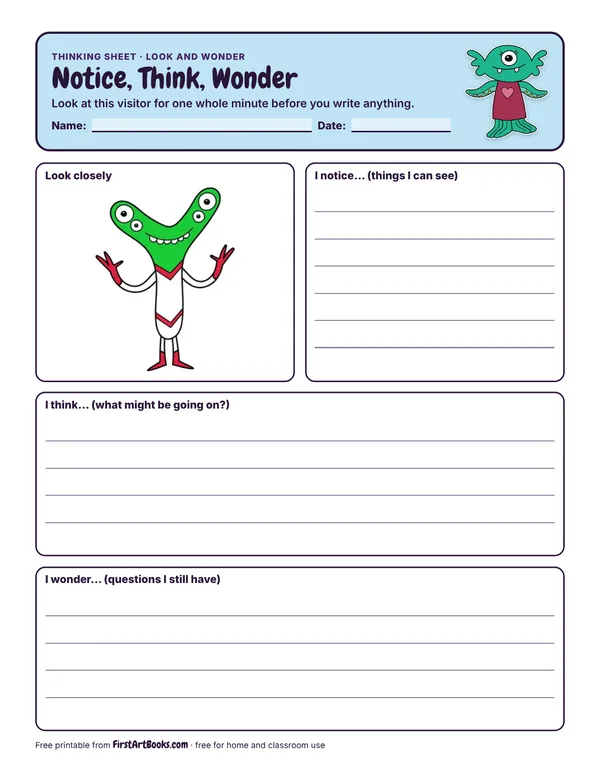
Notice, Think, Wonder
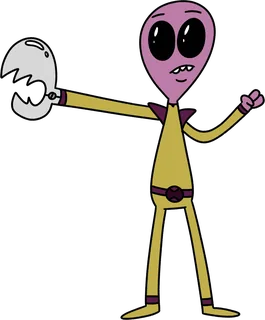
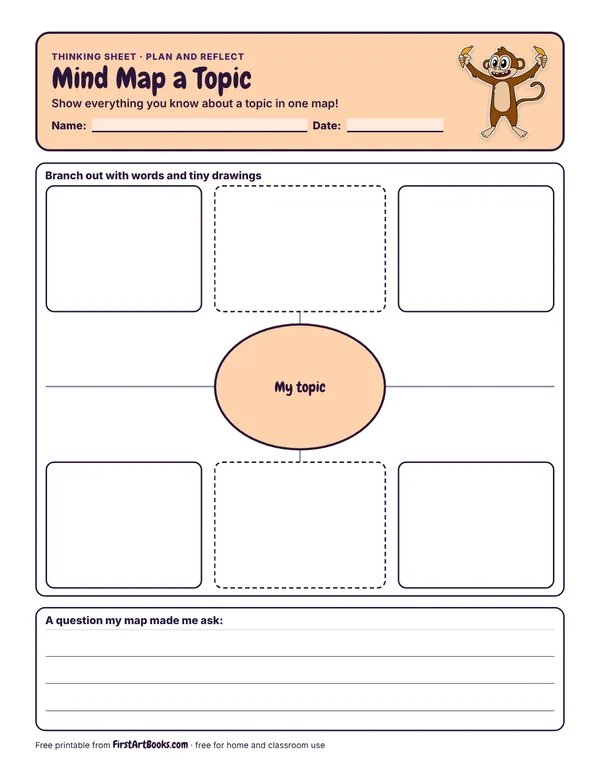
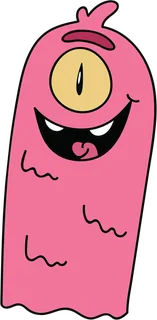
Study a strange little alien, then sort your ideas into what you notice, what you think and what you wonder.
500 free one-page printables that get kids noticing, wondering, planning and reflecting with a pencil. Each sheet mixes drawing boxes with short writing prompts and one of Kevin Coulston’s characters, so it works for early readers and confident writers alike.
Study a strange little alien, then sort your ideas into what you notice, what you think and what you wonder.
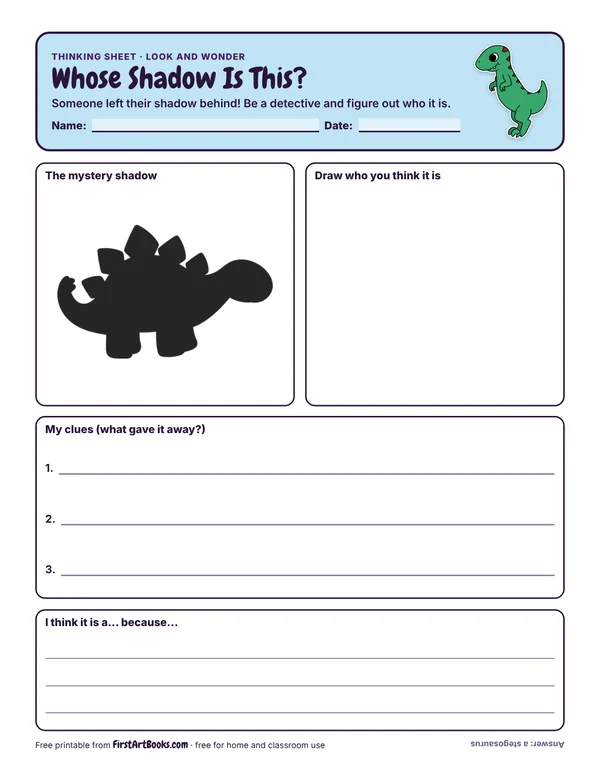
A mystery shadow. Use clues to guess who it belongs to, then draw what you think it really looks like.
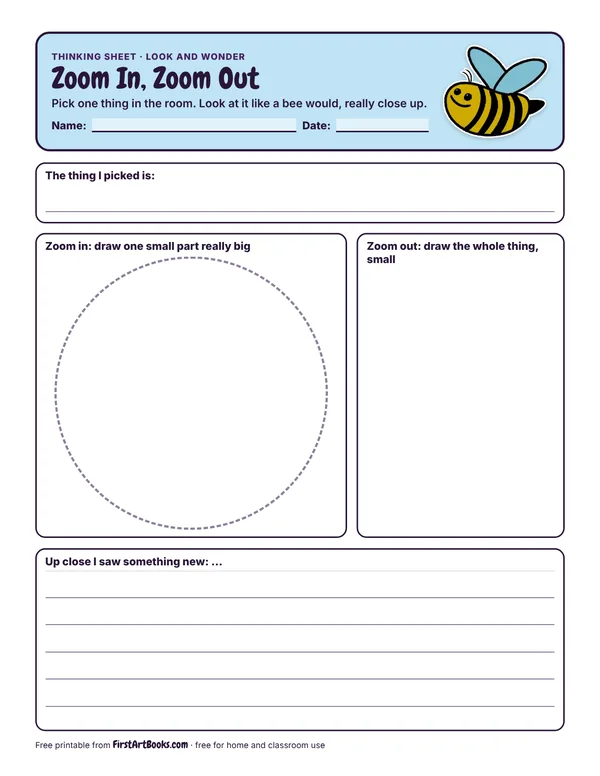
Pick one object. Draw a tiny part of it huge, then draw the whole thing small in its place.
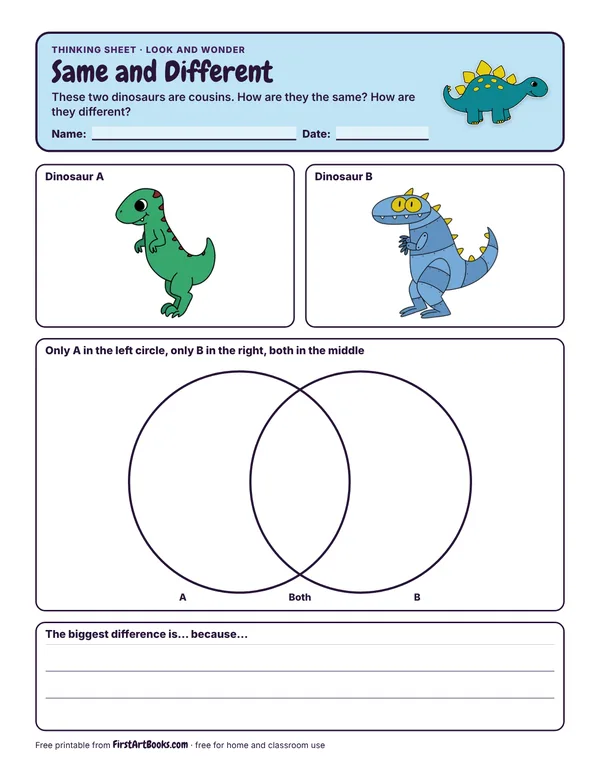
A cartoon velociraptor and a robot T. rex. Sort what they share and what makes each one special.
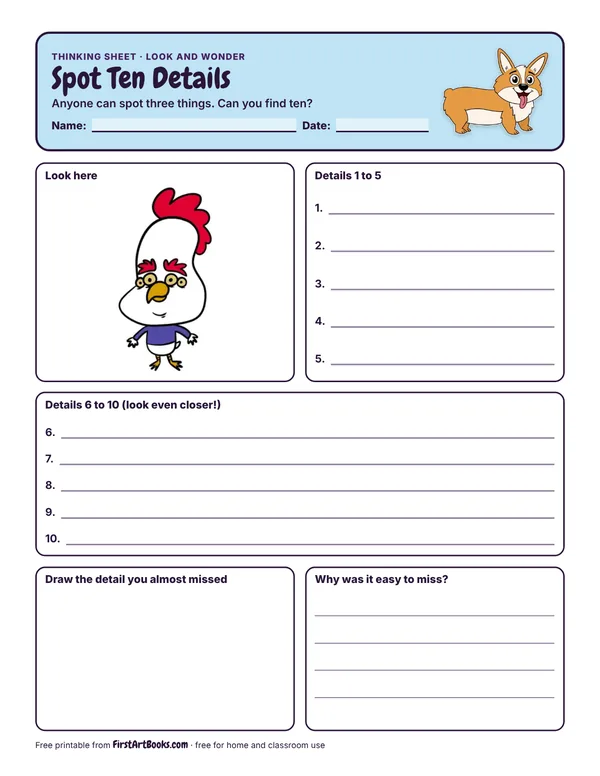
Find ten small details in one character. The last few are the hardest and the most interesting.
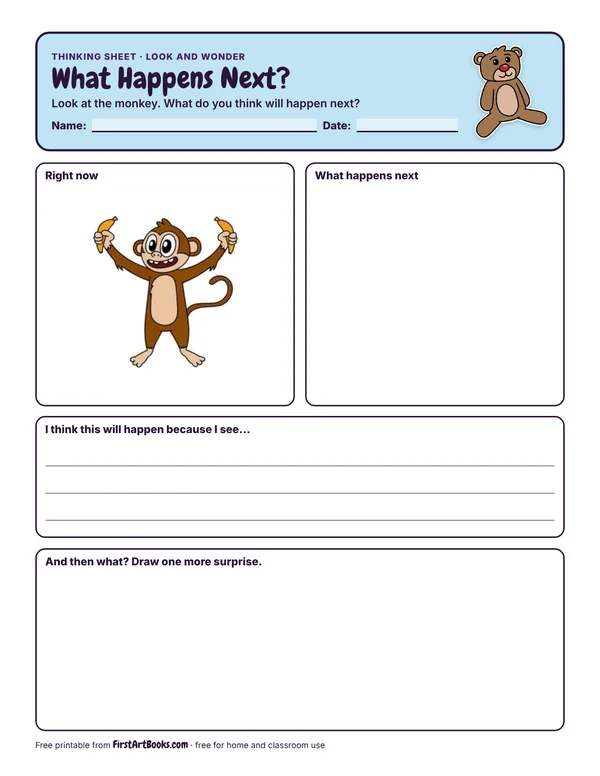
A monkey is up to something. Use clues in the picture to predict what happens next, then draw it.
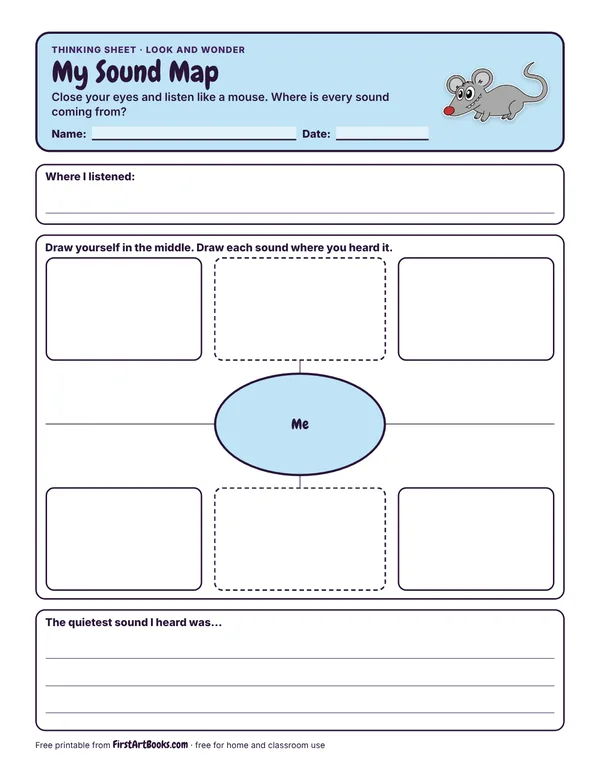
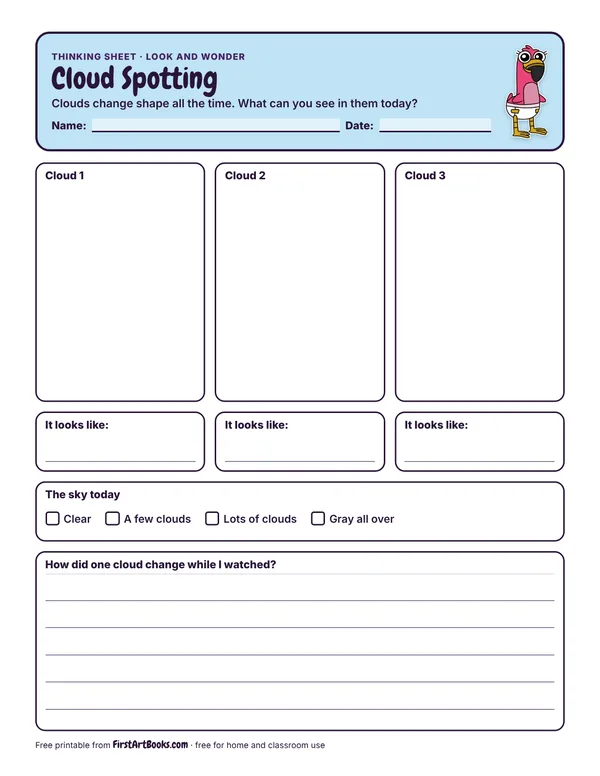
Look up and find animals, monsters and faces hiding in the clouds. Draw them before they float away.
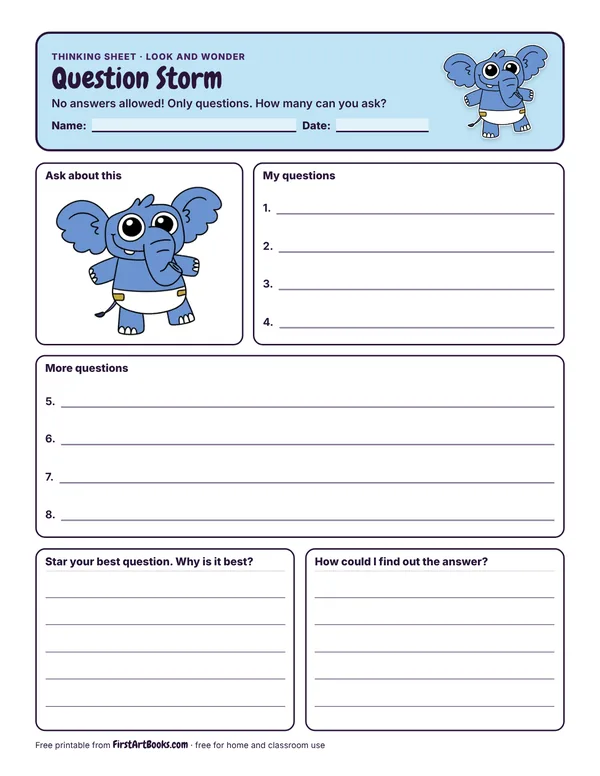
Write as many questions as you can about one elephant, then pick the best one to explore.
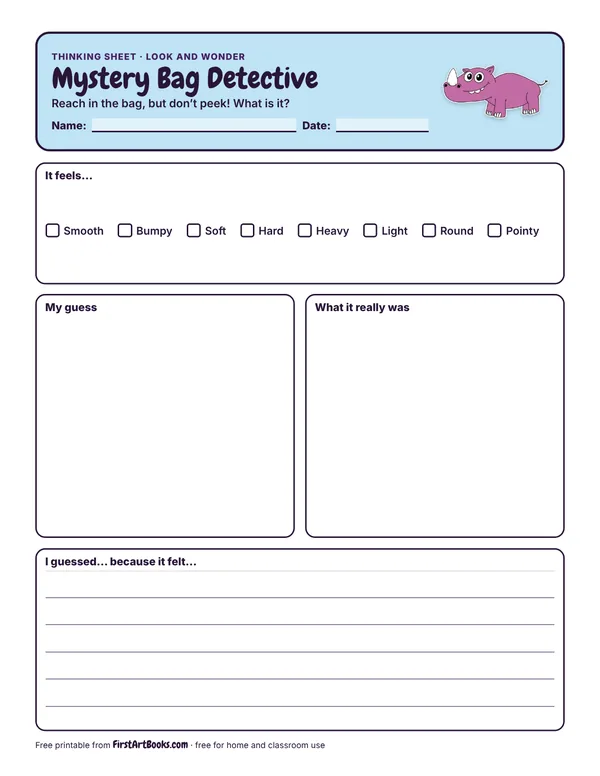
Feel an object hidden in a bag, describe it, draw your guess, then reveal and draw the real thing.
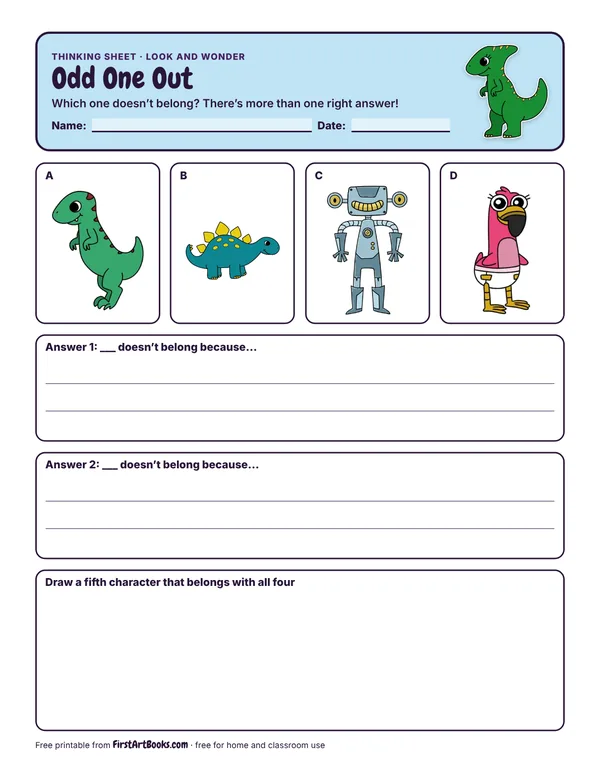
Four characters, one doesn’t belong. Or does it? Find more than one answer and explain each.

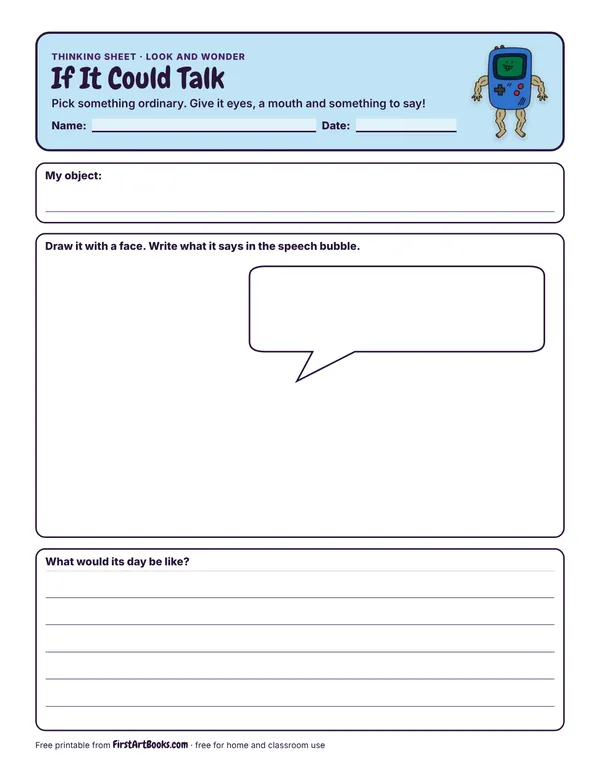
Give an everyday object a face and a voice. What would your pencil, shoe or lunchbox say?
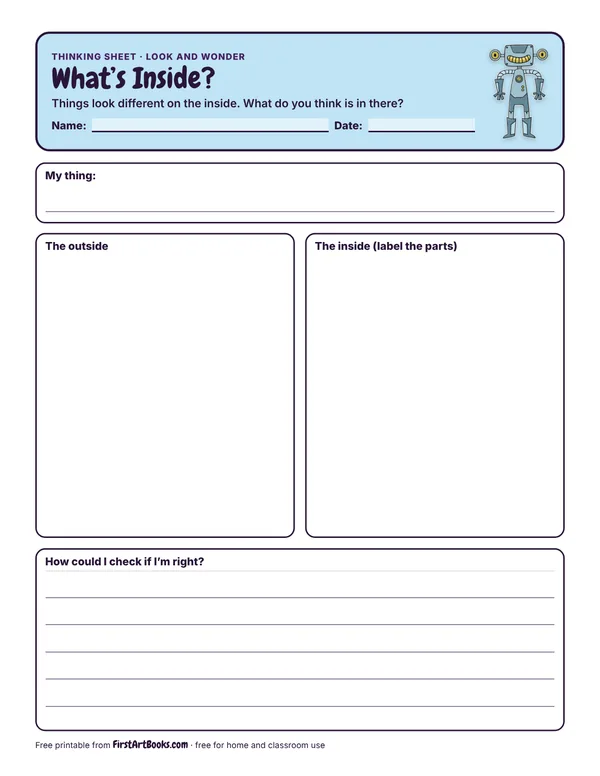
Draw the outside of something, then imagine the inside. Robots, backpacks, eggs and volcanoes welcome.
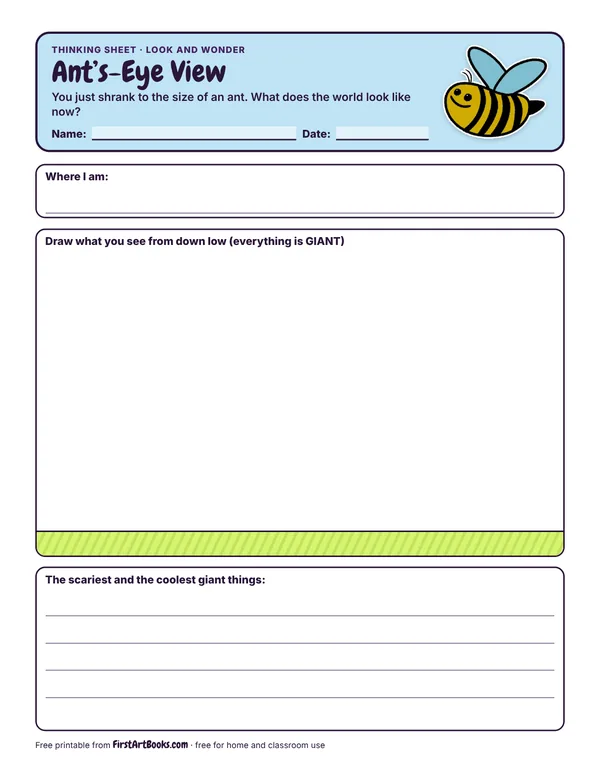
Shrink down to the size of an ant and draw the playground (or your desk) the way a tiny creature sees it.
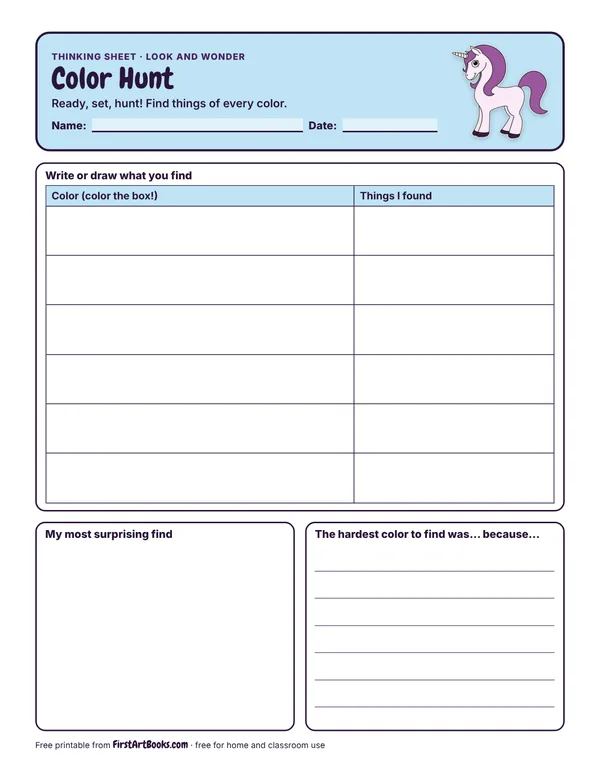
Hunt the room (or the yard) for things of every color, then draw the most surprising find.
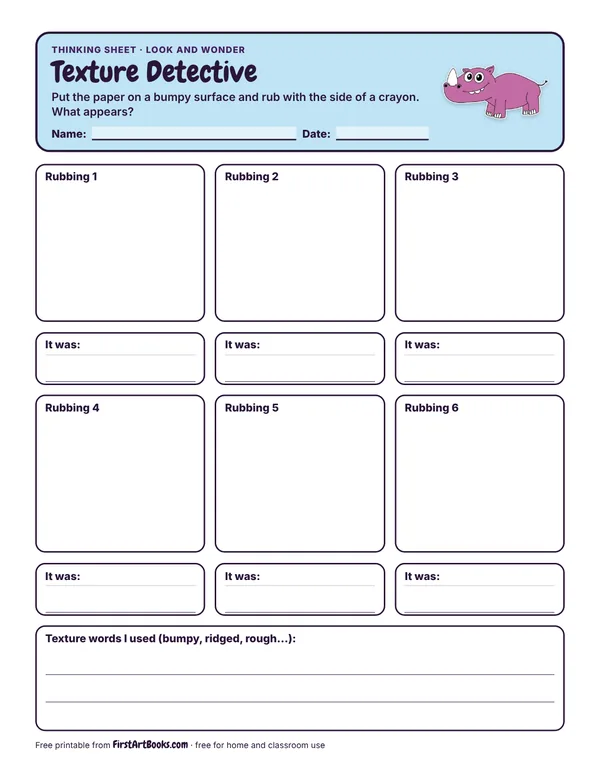
Make crayon rubbings of six textures, guess what each one is from and describe how it feels.
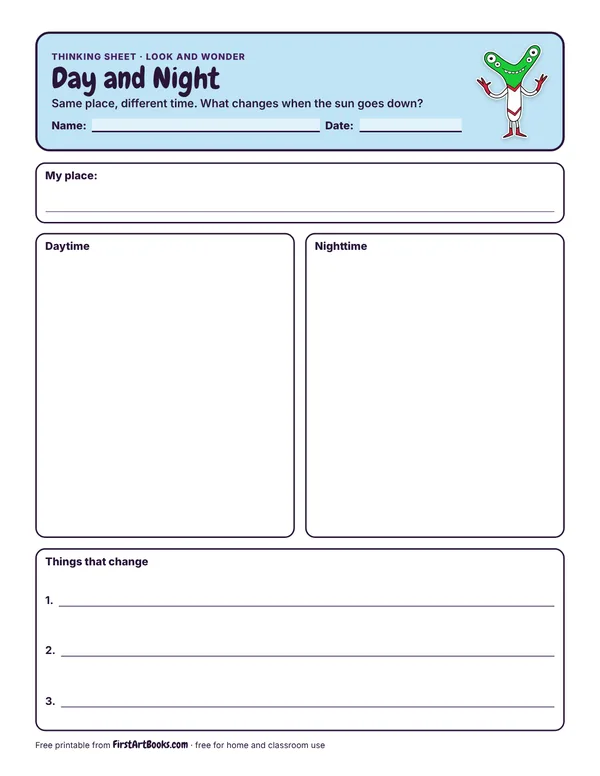
Draw the same place in the daytime and at night, then list everything that changes.
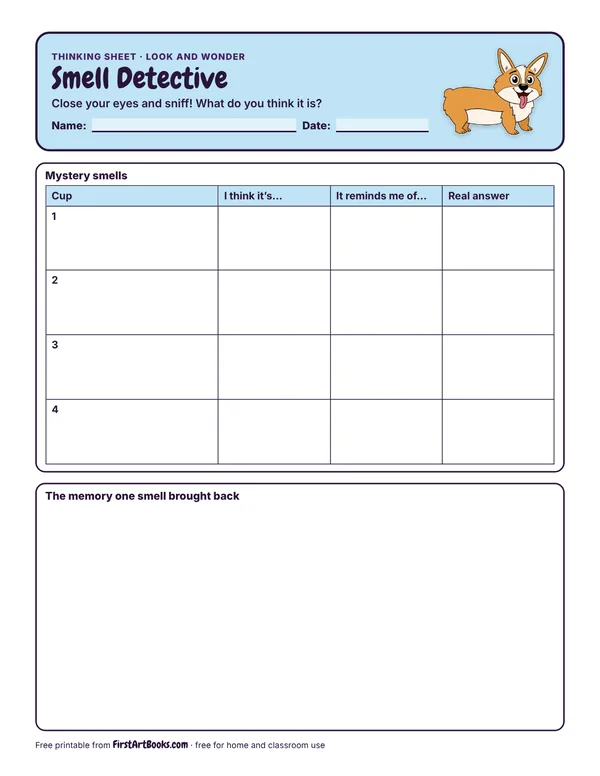
Sniff four mystery cups, guess what’s inside and draw what each smell reminds you of.
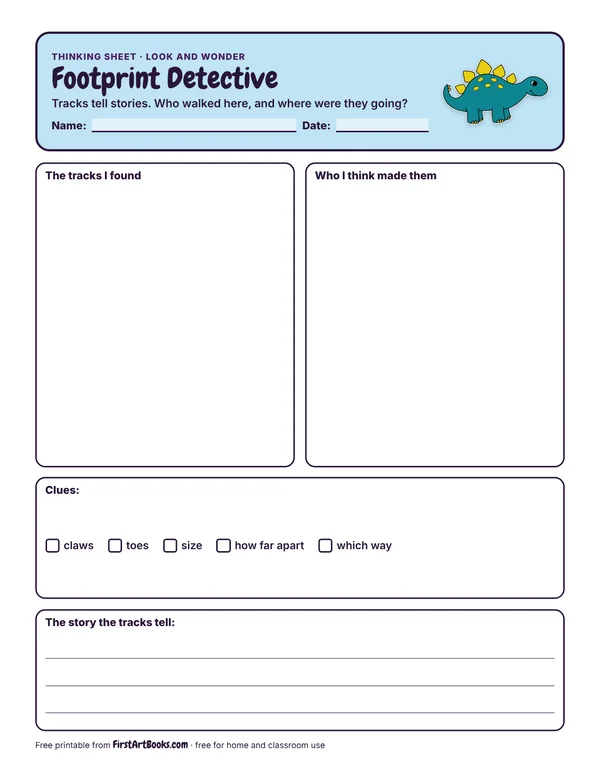
Who left these tracks? Draw tracks you find (or imagine) and figure out who made them.
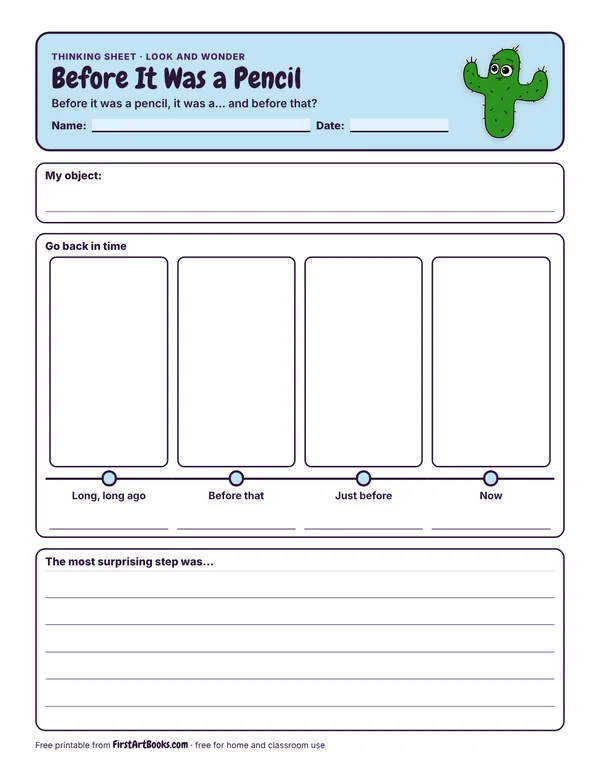
Every object has a past. Trace a pencil, a T-shirt or a cookie back through what it used to be.
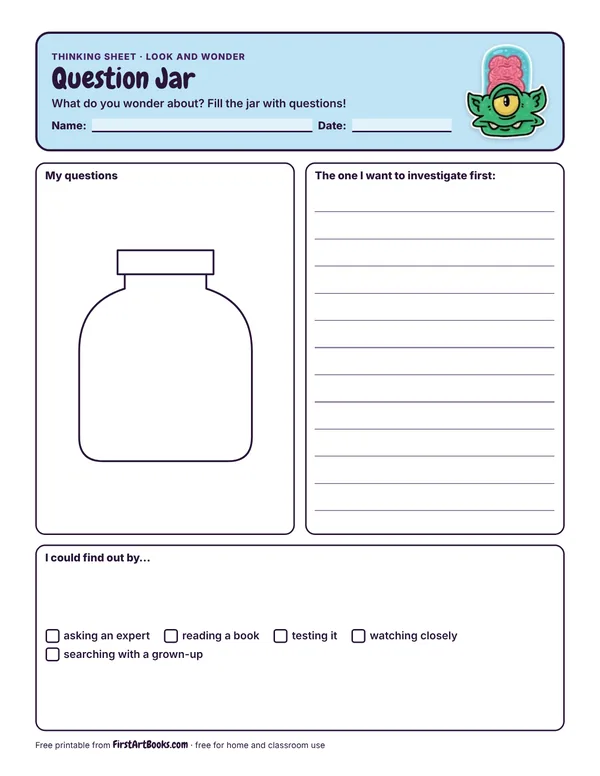
Fill the jar with your biggest questions, then pick one to investigate this week.
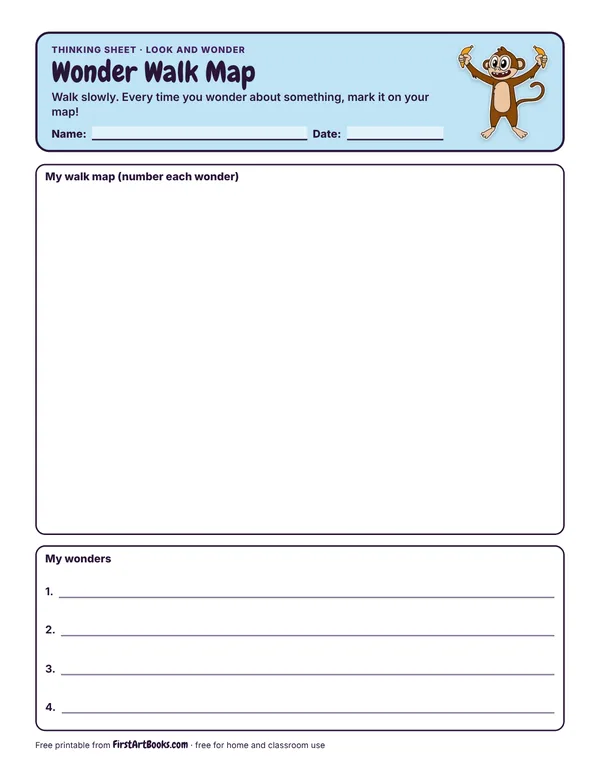
Take a slow walk and mark every wonder on a map: a strange bug, a funny cloud, a crack shaped like a dragon.
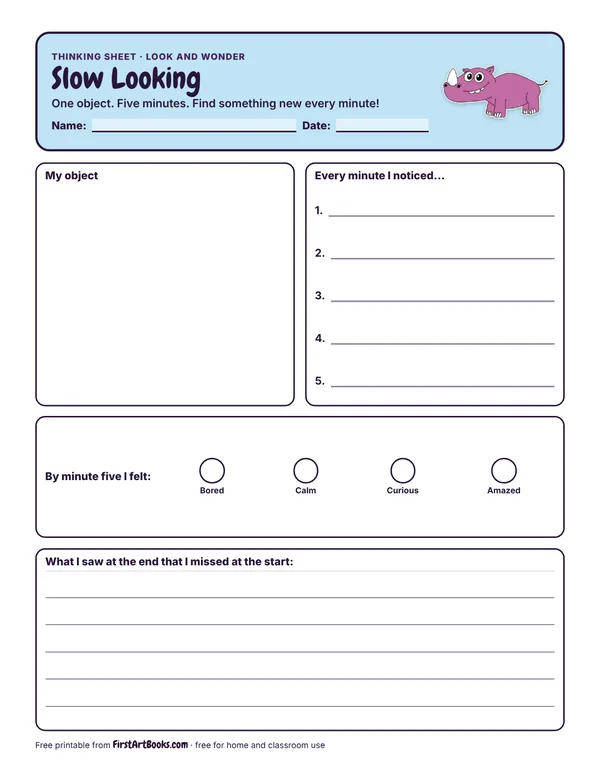
Look at one object for five whole minutes, writing something new each minute.
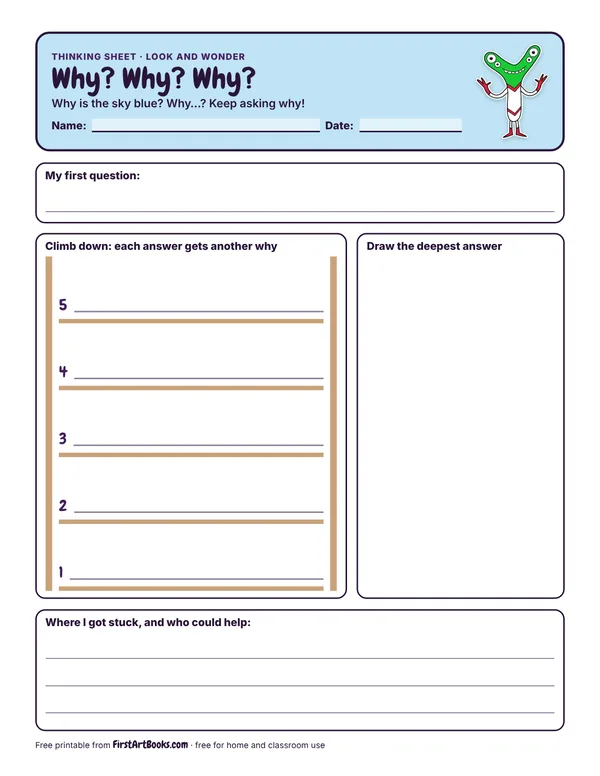
Ask “why?” five times in a row about something simple and see how deep you can go.
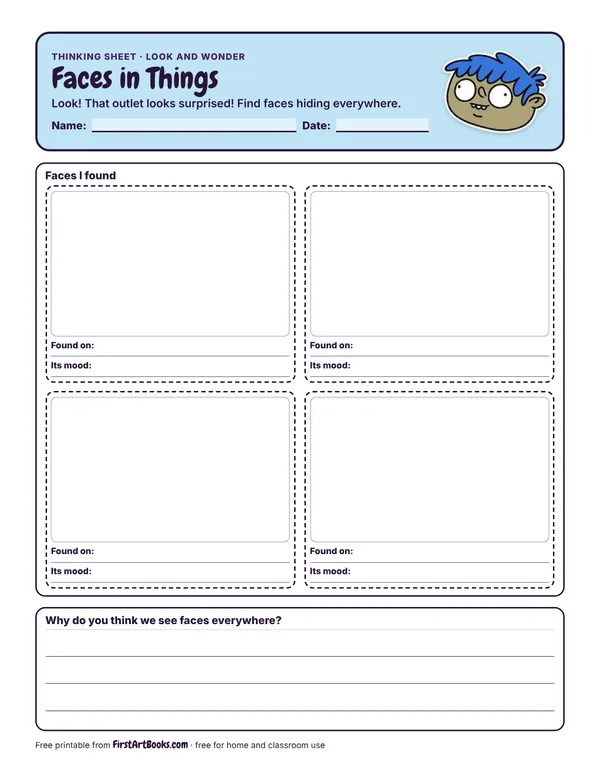
Hunt for faces hiding in everyday things: outlets, cars, houses and clouds. Draw the four best.
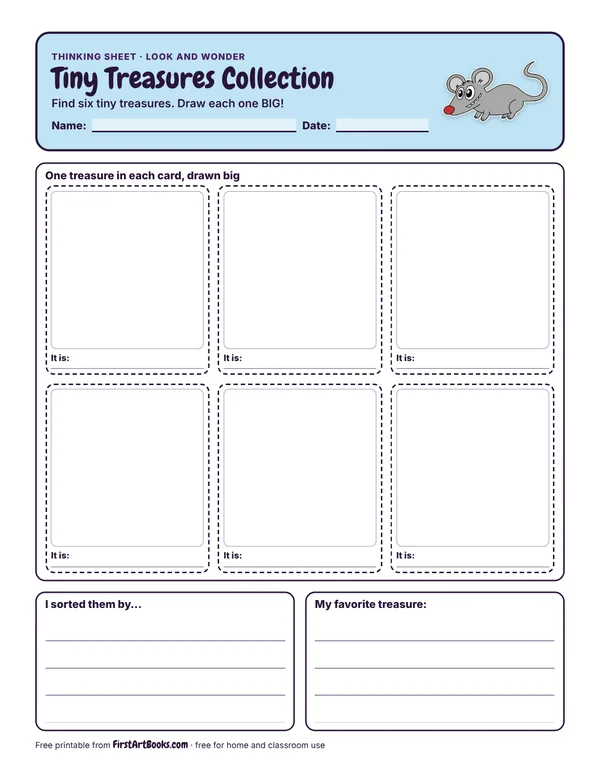
Collect six tiny treasures from outside, draw each one up close and sort them.
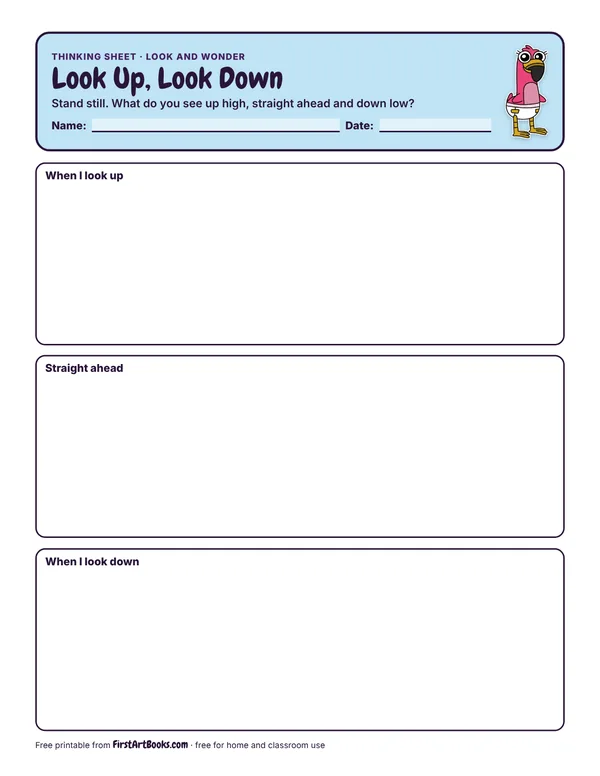
Stand in one spot and draw what’s above you, at eye level and under your feet.
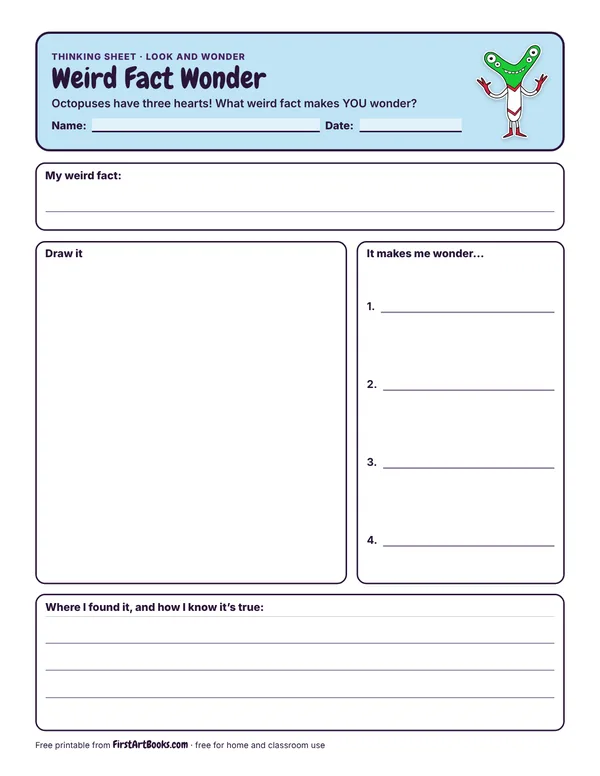
Pick a weird but true fact, draw it and write the questions it makes you ask.
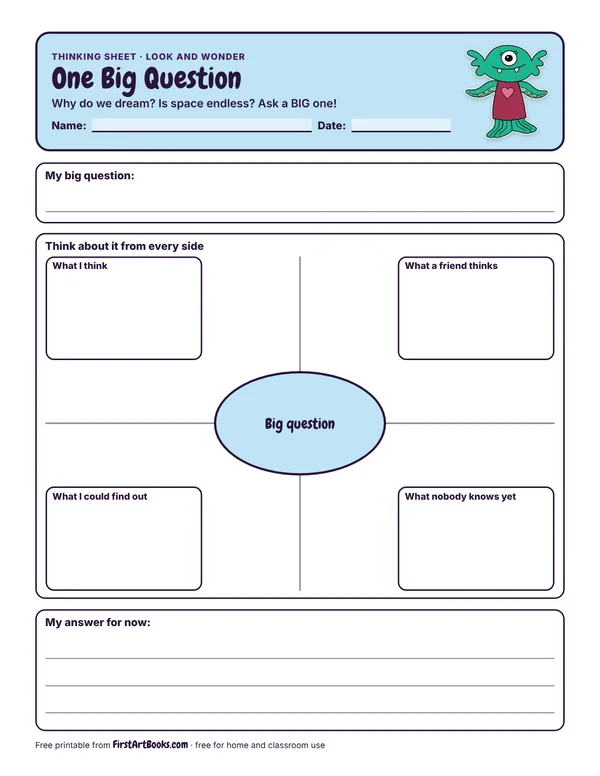
Ask a really big question with no easy answer, then explore it from different sides.
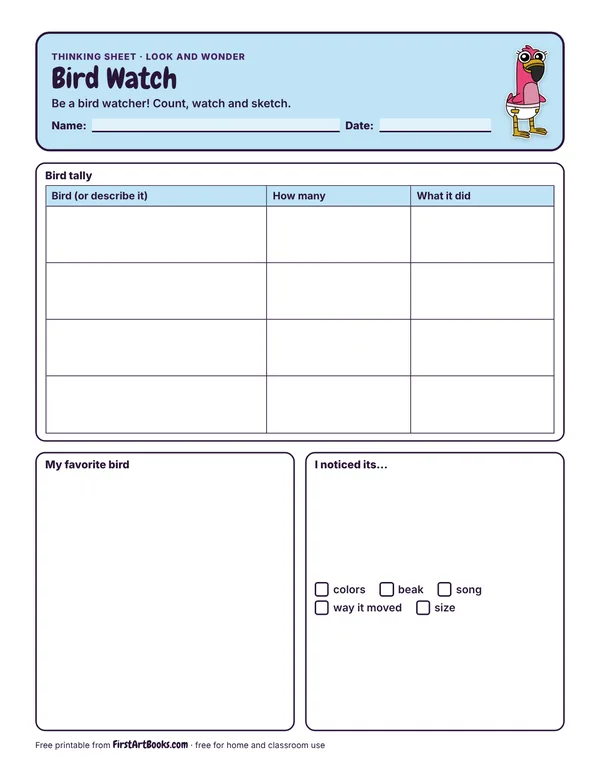
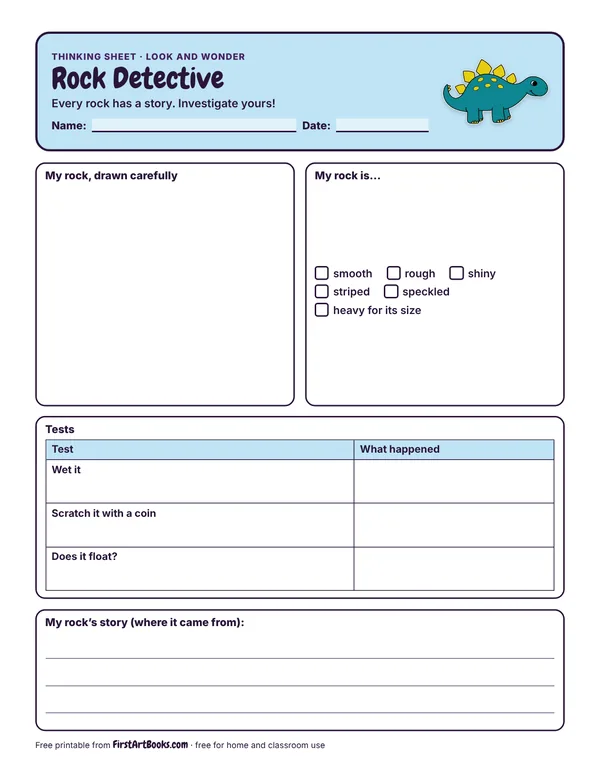
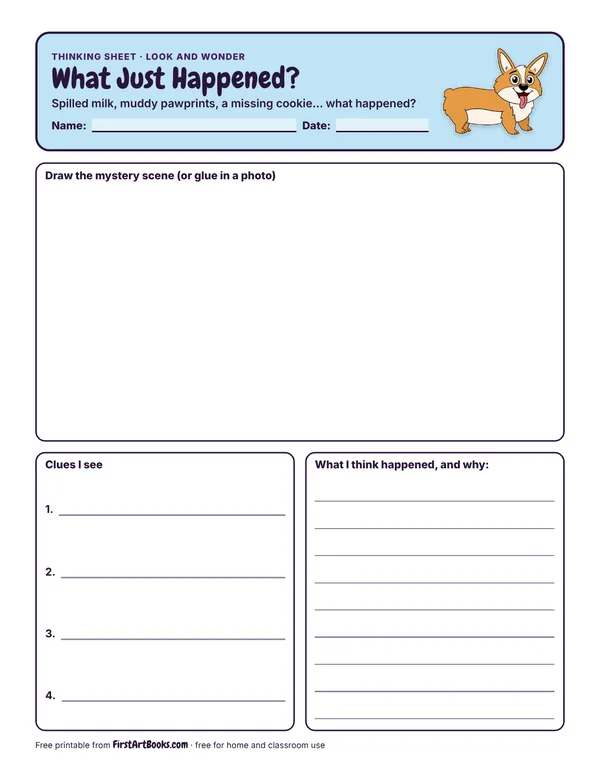
Look at a mystery scene and use clues to figure out what happened.
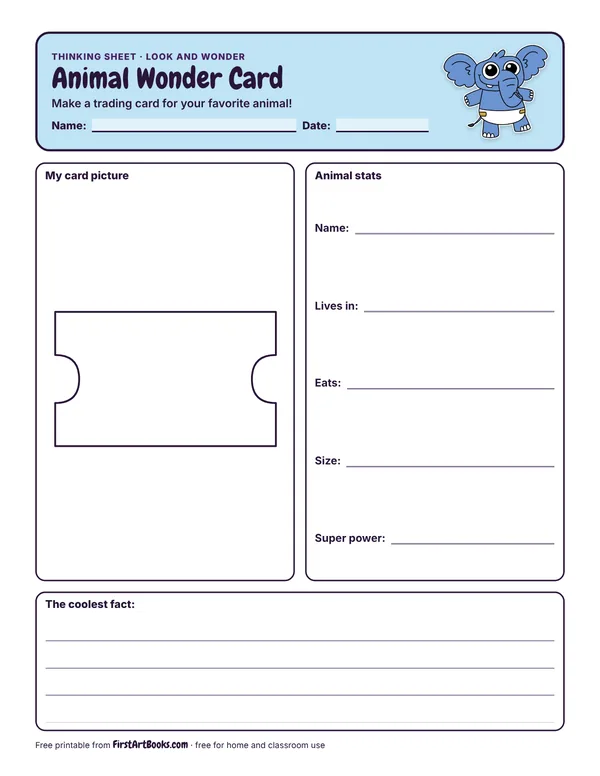
Make a trading card for any animal with a drawing, stats and a cool fact.
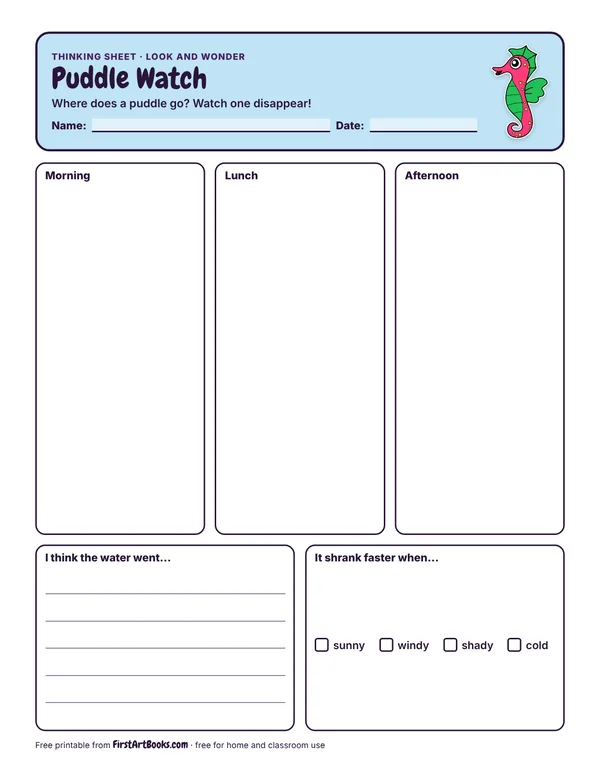
Trace a puddle’s edge in chalk, check it over the day and draw how it shrinks.
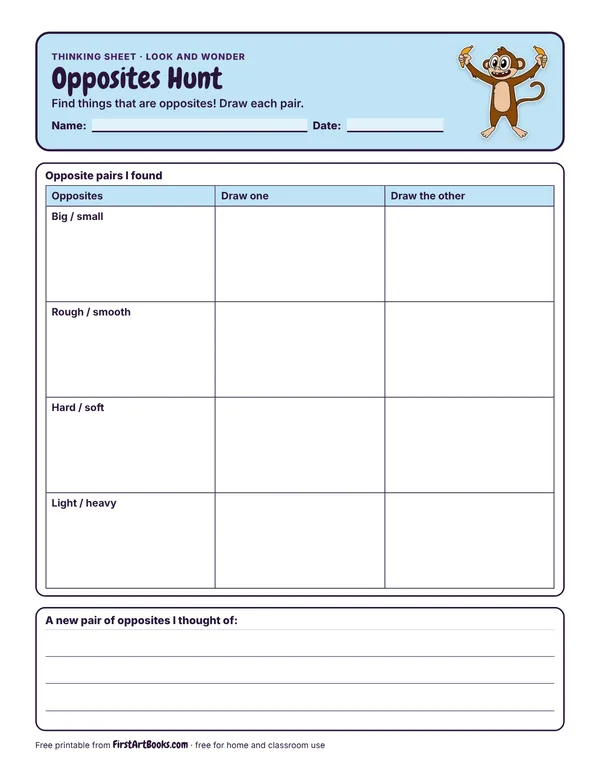
Hunt for opposites around you, like hot and cold or rough and smooth, and draw each pair.
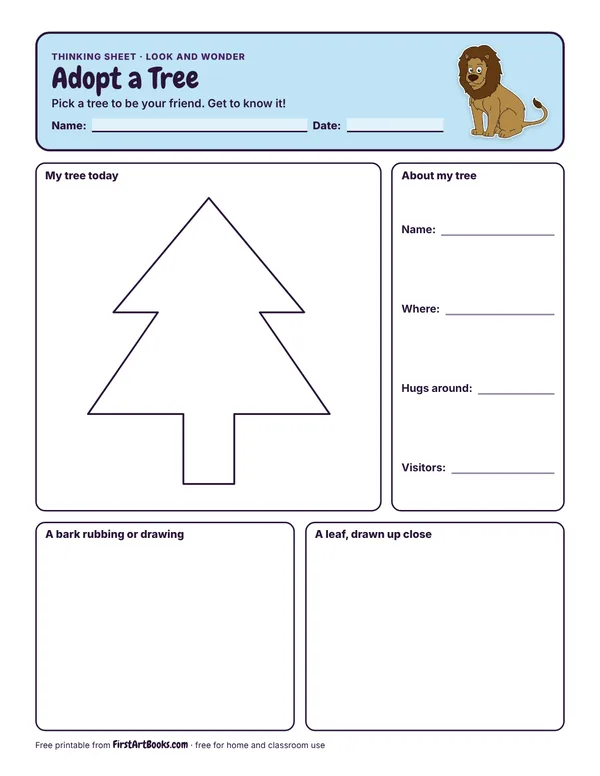
Pick a tree to visit all year: name it, measure it and draw its bark, leaves and visitors.
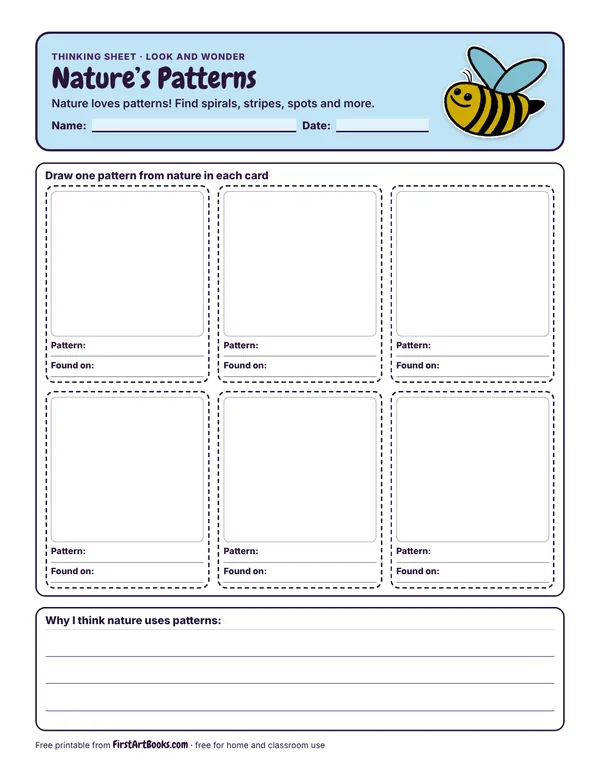
Find spirals, stripes, spots and hexagons in nature and draw each one.
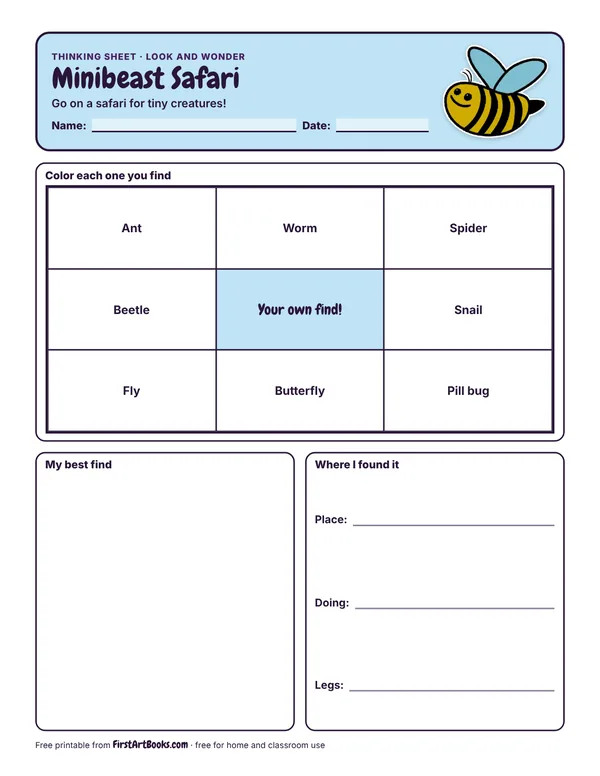
Go on a bug safari: lift logs, check leaves, tally what you find and draw the best one.
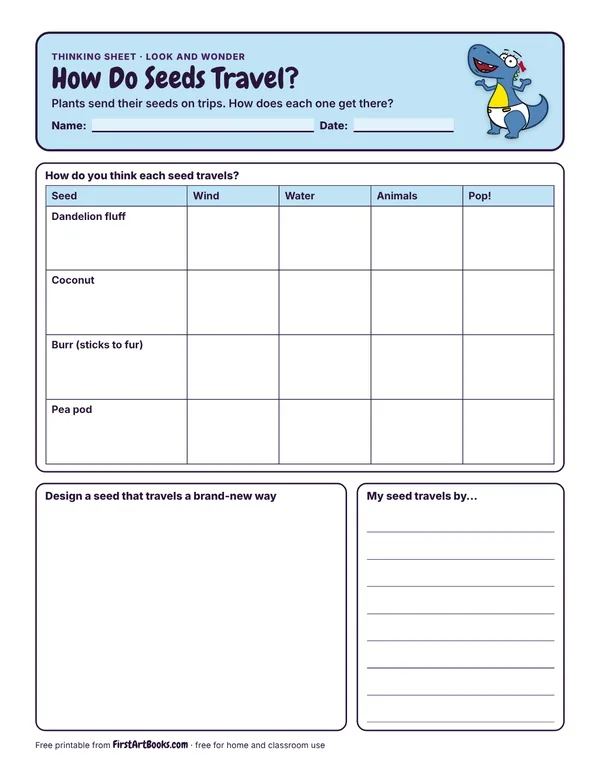
Seeds can’t walk, so how do they get around? Guess how four seeds travel, then draw a seed of your own design.
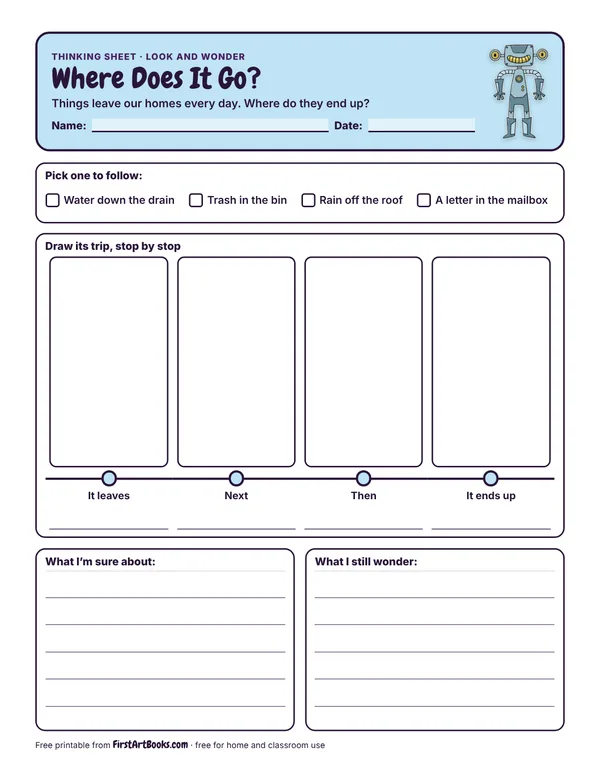
Follow the water down the drain, the trash in the truck or the rain off the roof. Draw where you think it ends up.
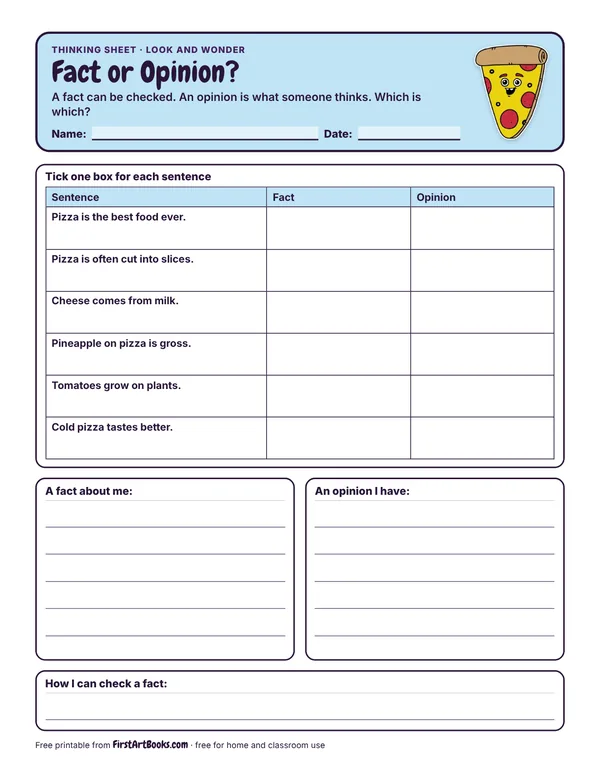
Sort pizza sentences into facts you can check and opinions people feel, then write your own of each.
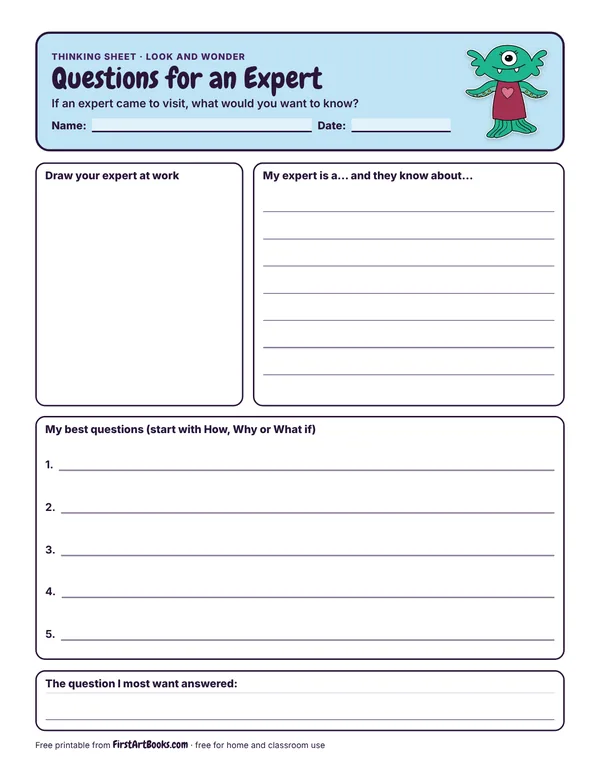
Pick an expert, like a vet, an astronaut or a baker, and write the questions you’d ask if they visited your class.
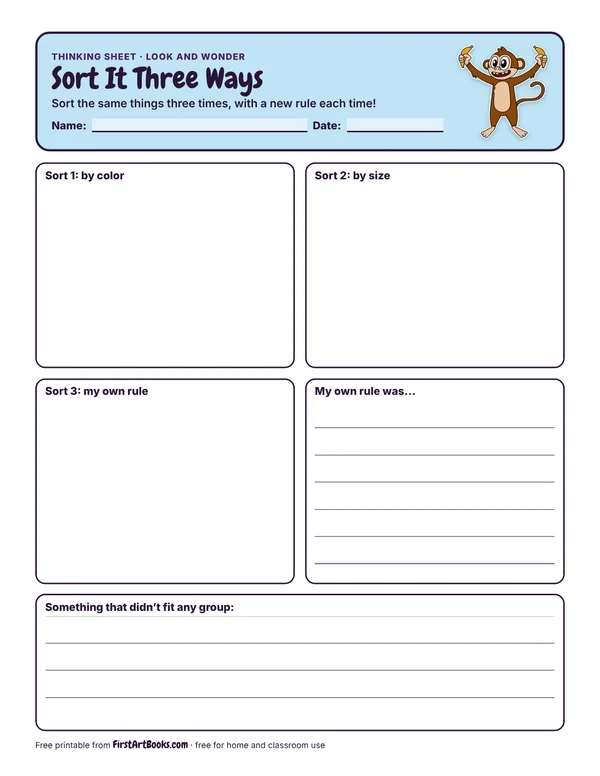
Grab a handful of buttons, blocks or crayons and sort them three different ways. Each sort needs a new rule.
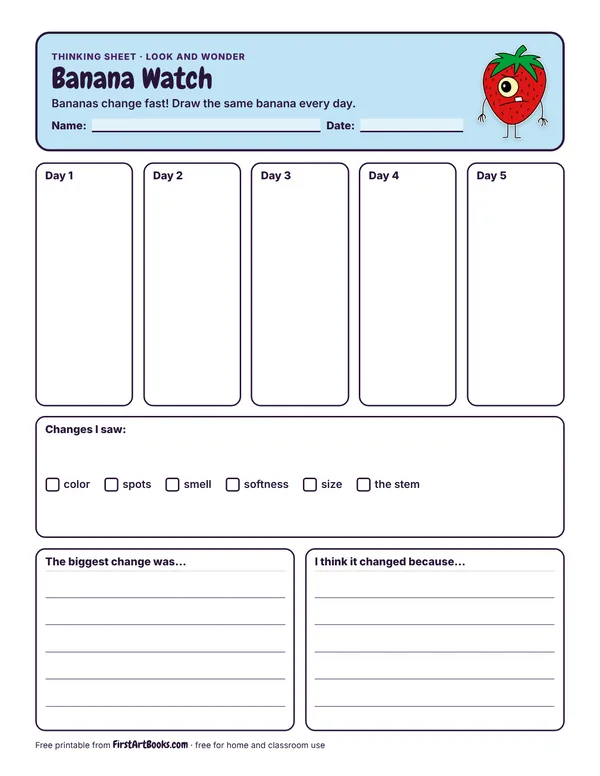
Watch one banana change over five days. Draw it each day and write what changed.
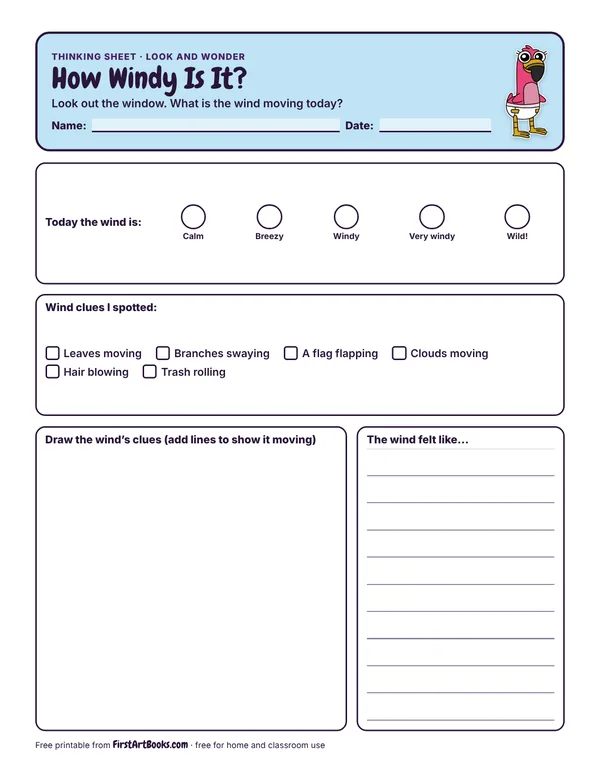
You can’t see wind, but you can see what it does. Look for clues outside and rate the wind from calm to wild.
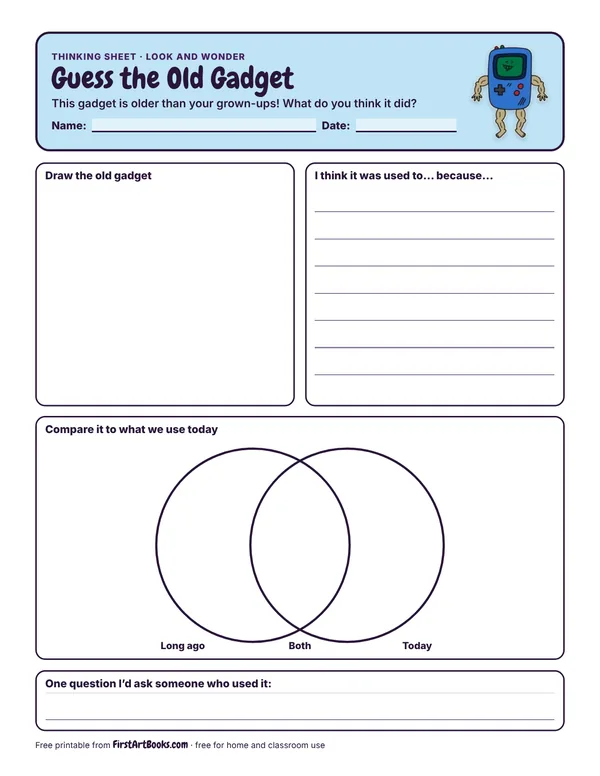
Look at an object from long ago, like a rotary phone or a typewriter. Guess what it did, then compare it to today.
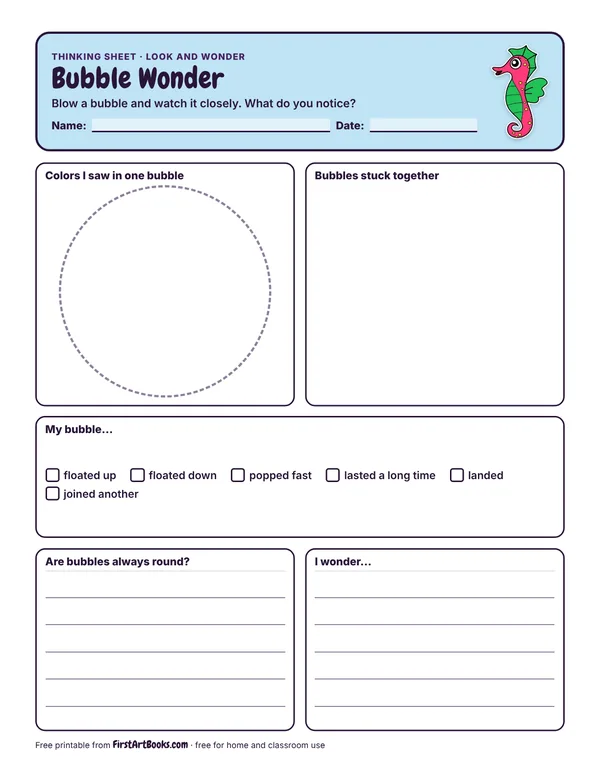
Blow bubbles and look closely: the colors, the shapes, how long they last. Then draw what you saw.
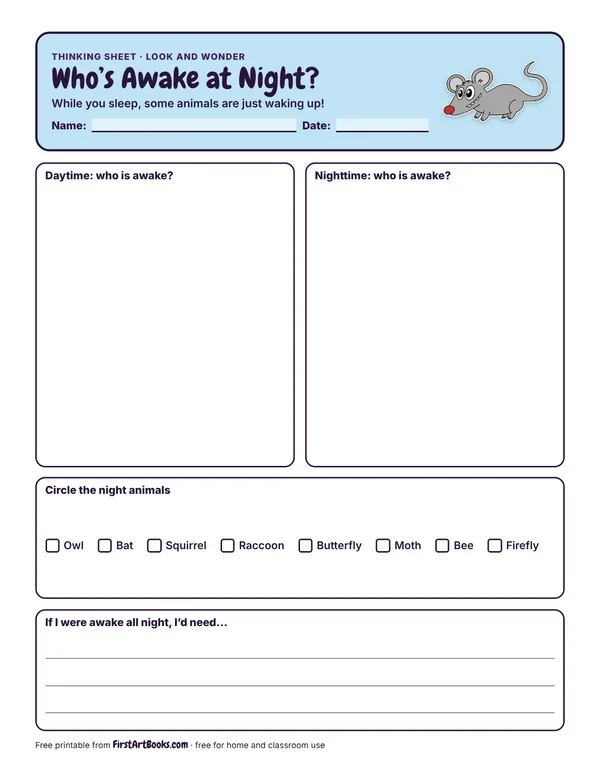
Some animals sleep all day and wake up at night. Draw who might be awake while you sleep.
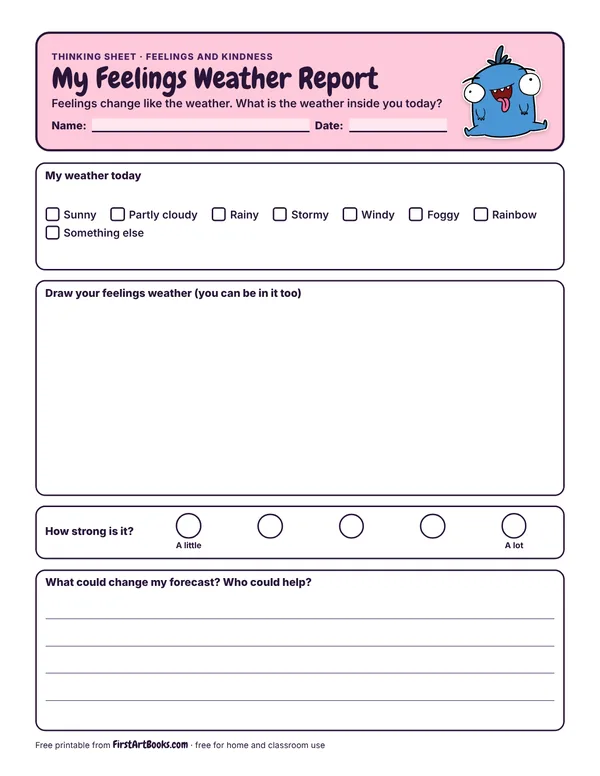
Show today’s feelings as weather: sunny, cloudy, stormy or something brand new.
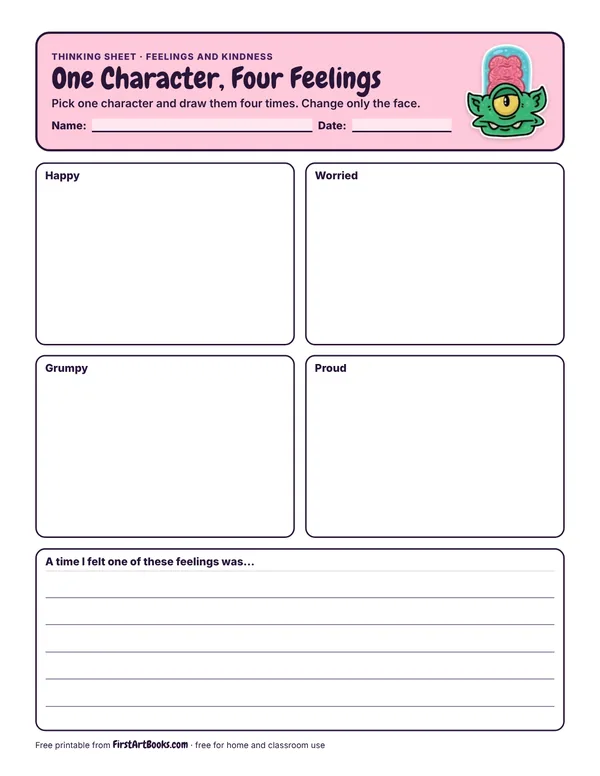
Draw the same character four times: happy, worried, grumpy and proud. Eyebrows do most of the work!
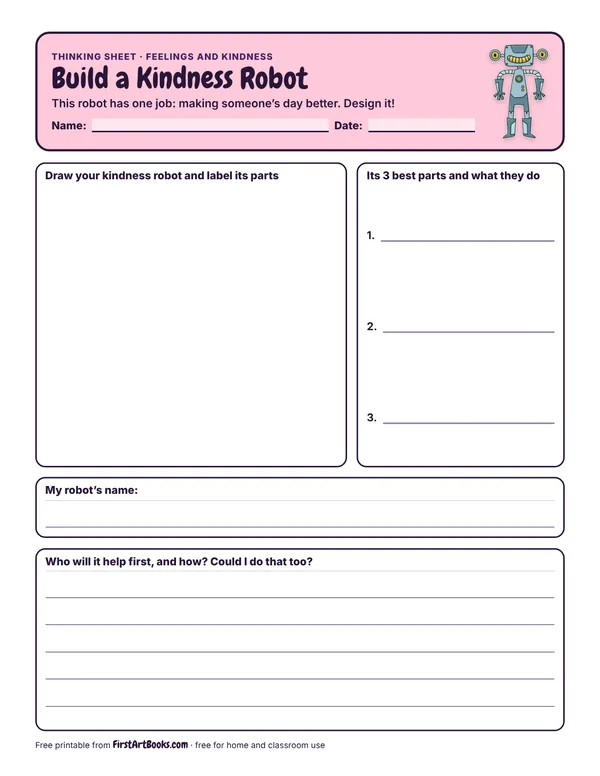
Design a robot whose only job is to be kind. Label its parts and decide who it helps first.
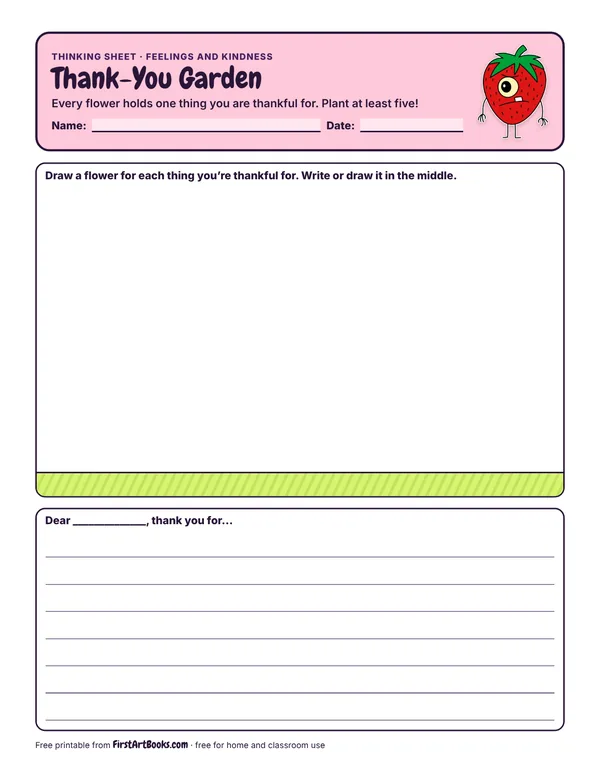
Grow a garden of things you’re thankful for, then write a short thank-you note to one person.
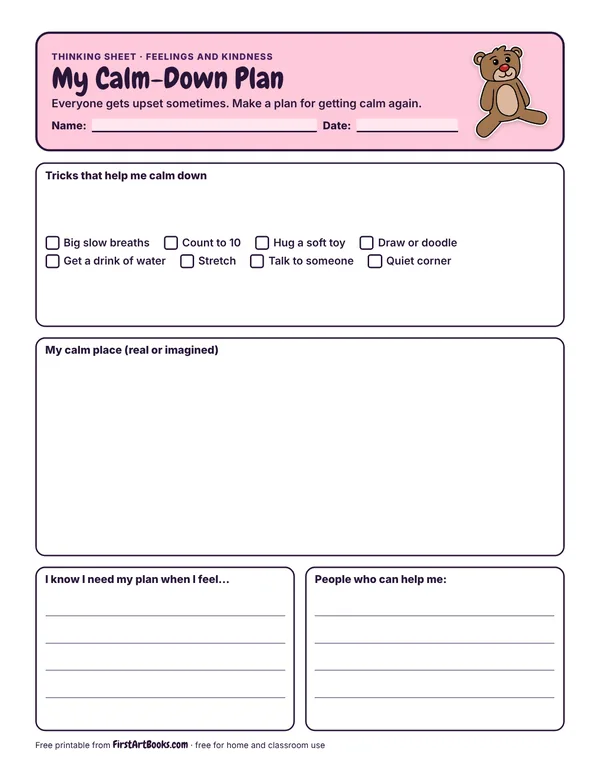
Pick the calm-down tricks that work for you, draw your calm place and name who can help.

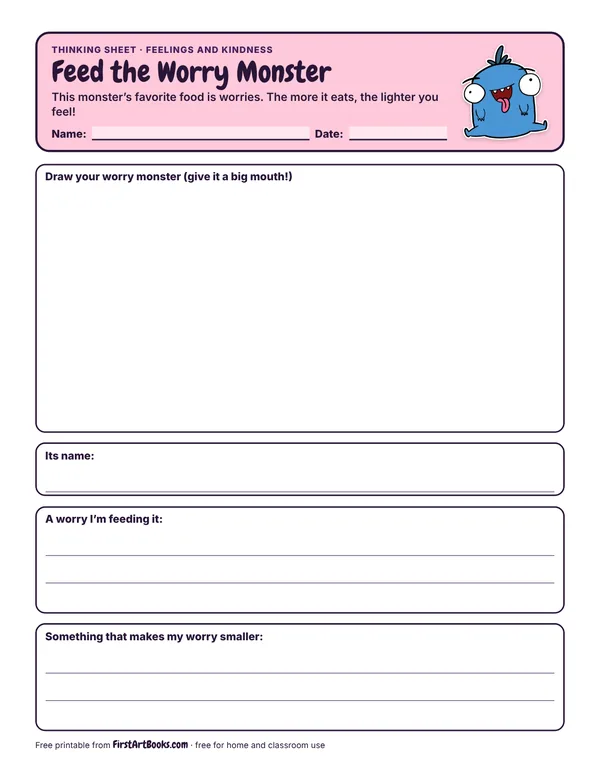
Design a friendly monster that gobbles up worries, then feed it one of yours.
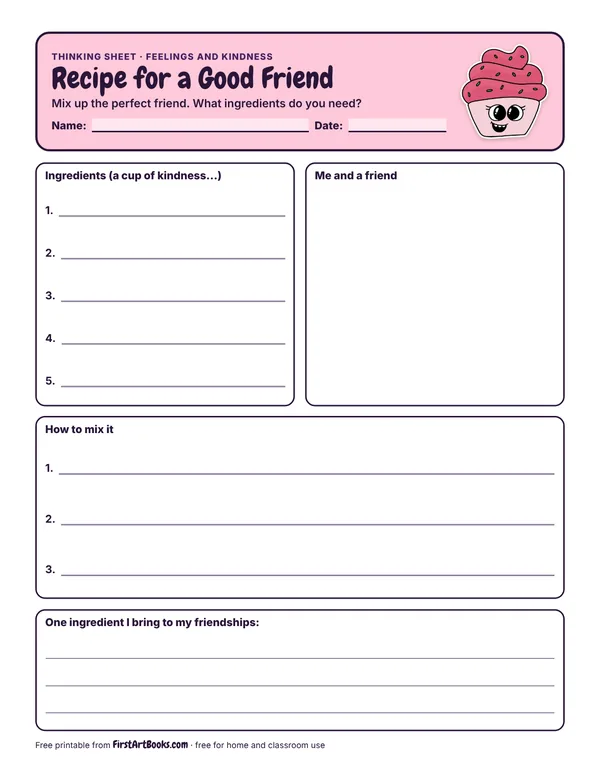
What goes into a great friend? Write the recipe with amounts, then draw you and a friend.
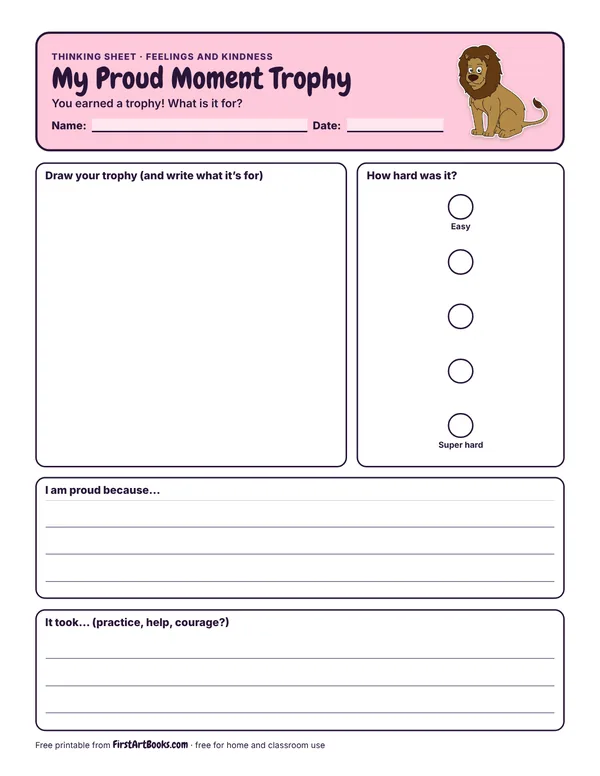
Design a trophy for something you worked hard at, and write what it took to get there.
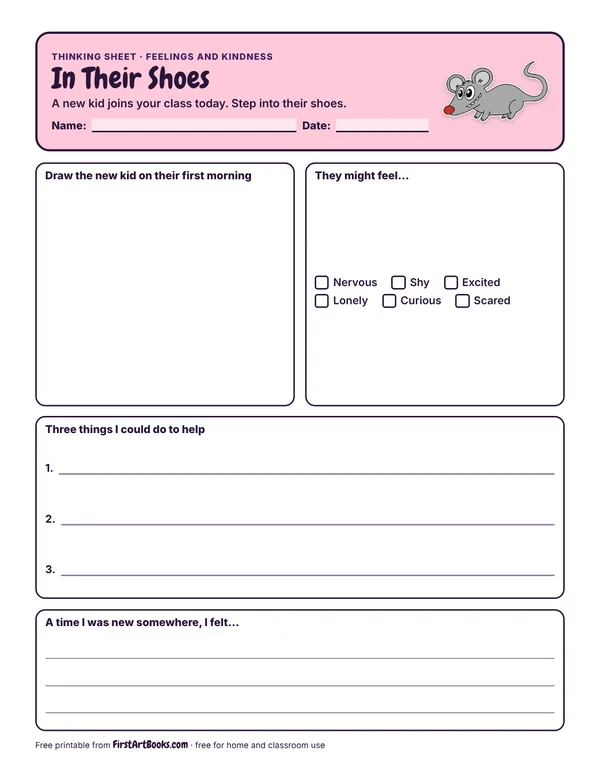
It’s the new kid’s first day. Imagine how they feel and plan three ways to help.
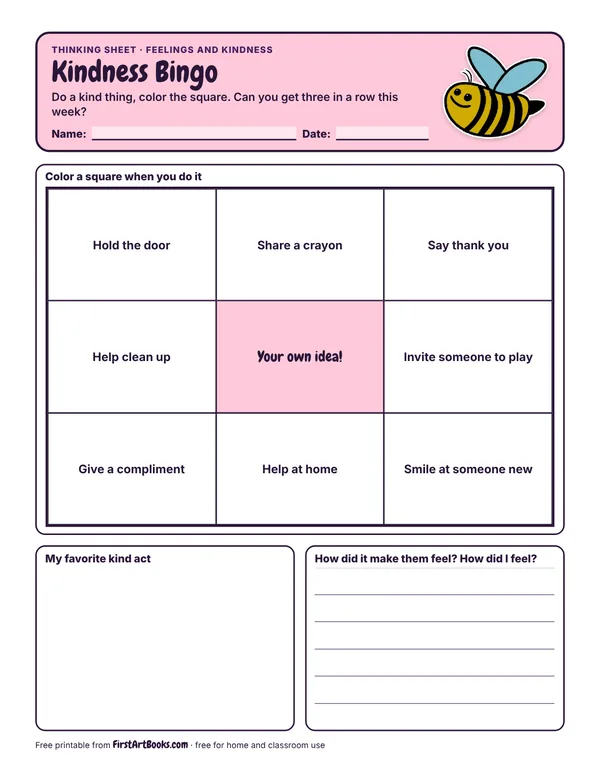
A week of small kind acts. Color a square for each one you do, and draw your favorite.
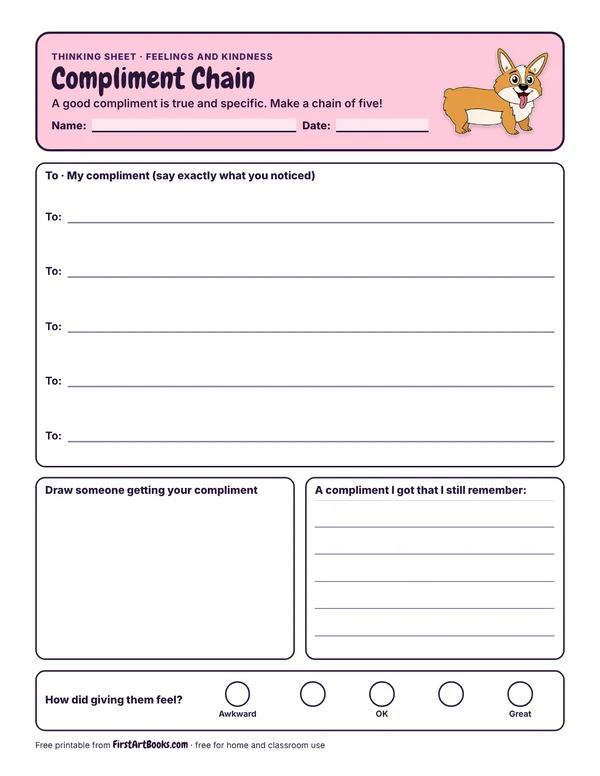
Write a real, specific compliment for five people, link them into a chain and draw one of them smiling.
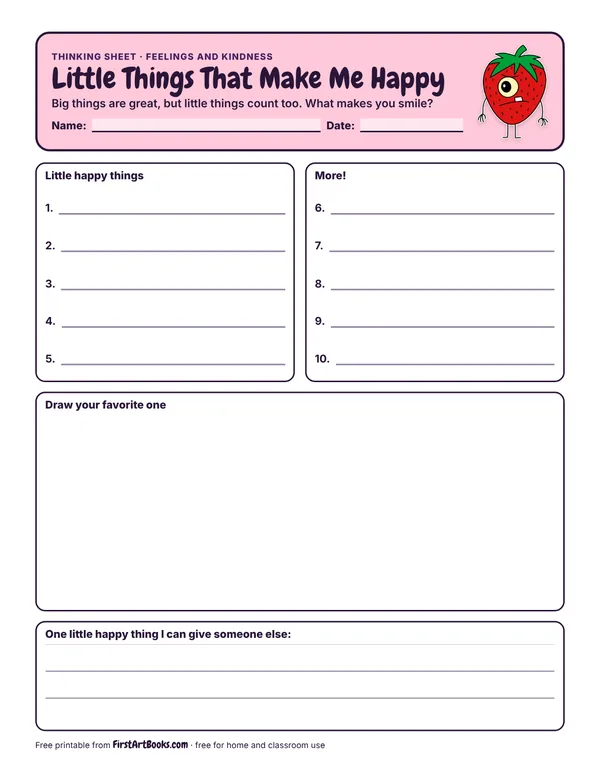
List ten small things that make you smile, from warm socks to a good joke, and draw your favorite.
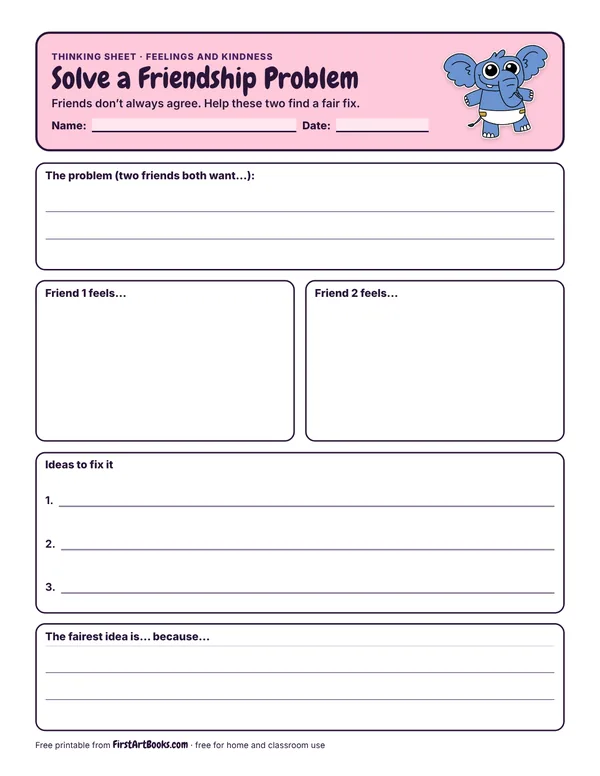
Two friends disagree. Name the problem, how each one feels and the ideas that could fix it fairly.
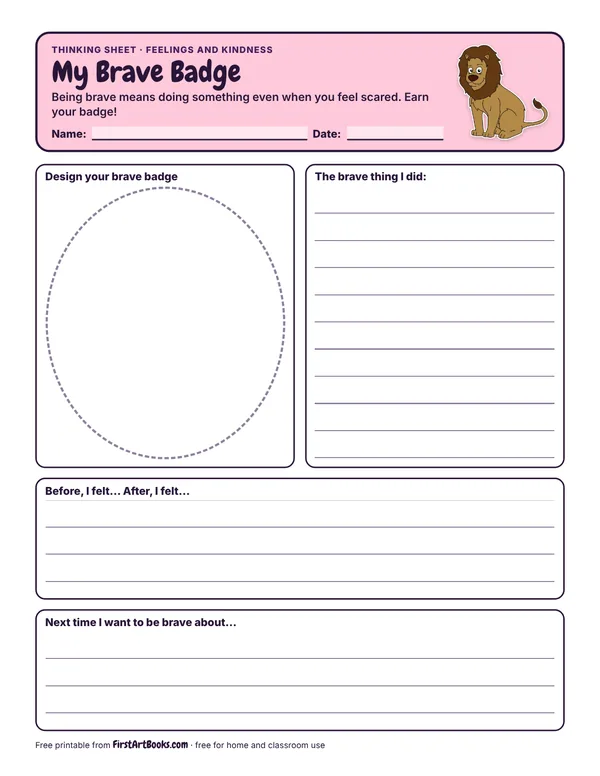
Design a badge for a time you were brave, even a little bit, and write how you did it.
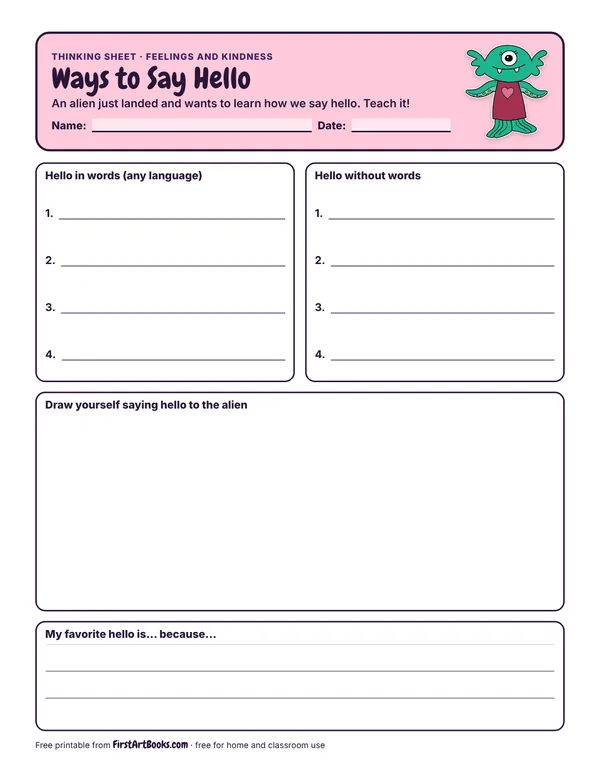
Collect ways to greet people (words, waves, languages) and draw a friendly hello.
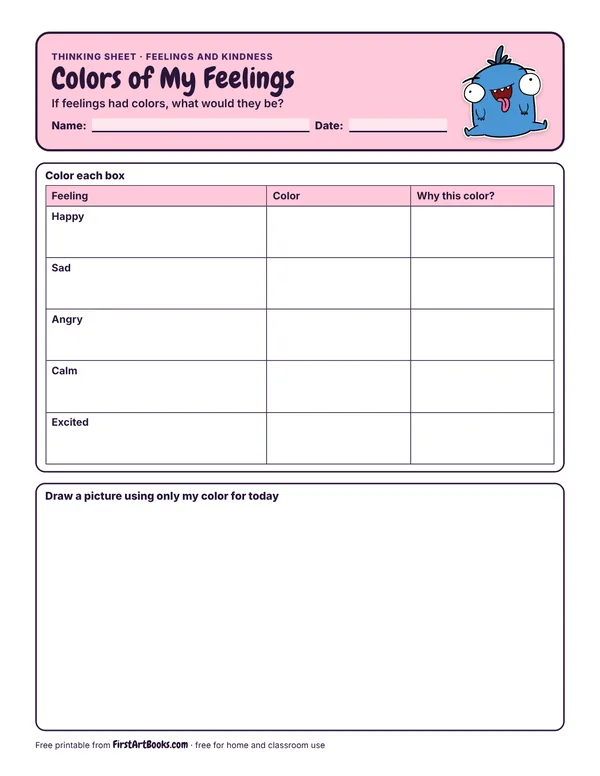
Pick a color for each feeling, explain why, and make a picture in today’s feeling color.
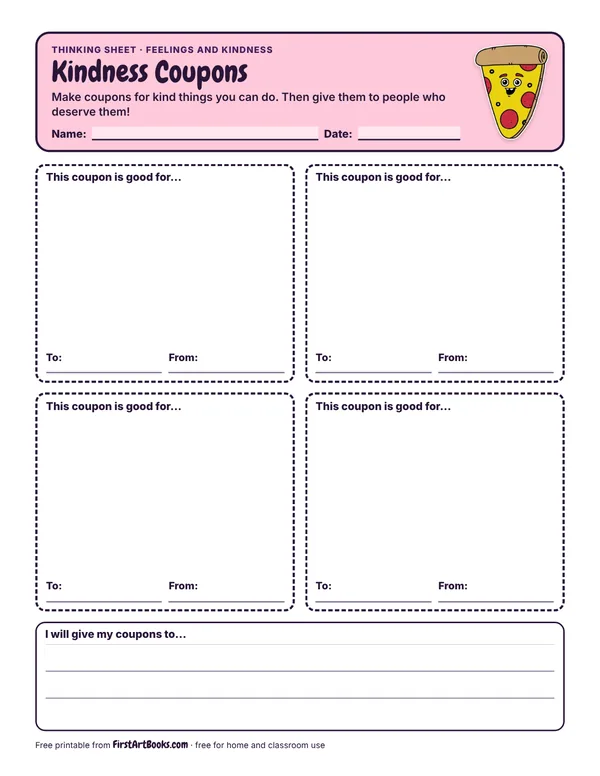
Make four coupons for kind things you will do, then cut them out and give them away.
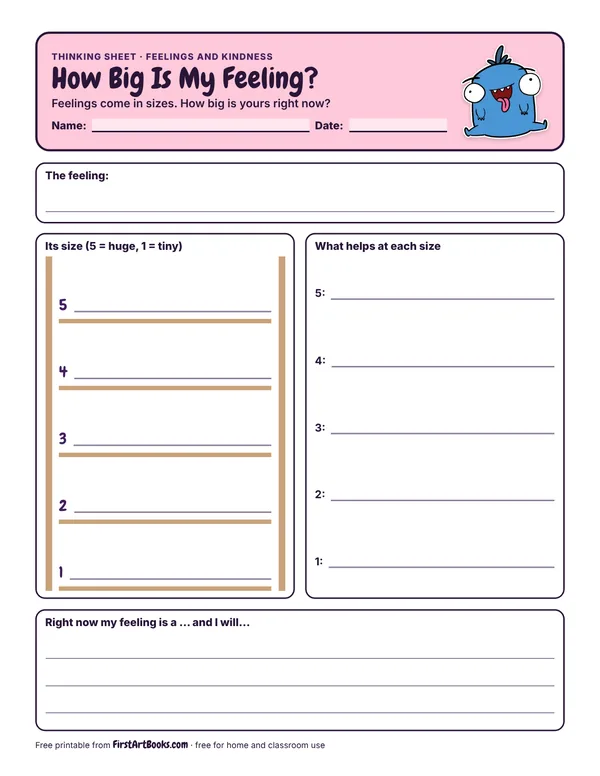
Rate a feeling from tiny to huge on a ladder, and match each size with something that helps.
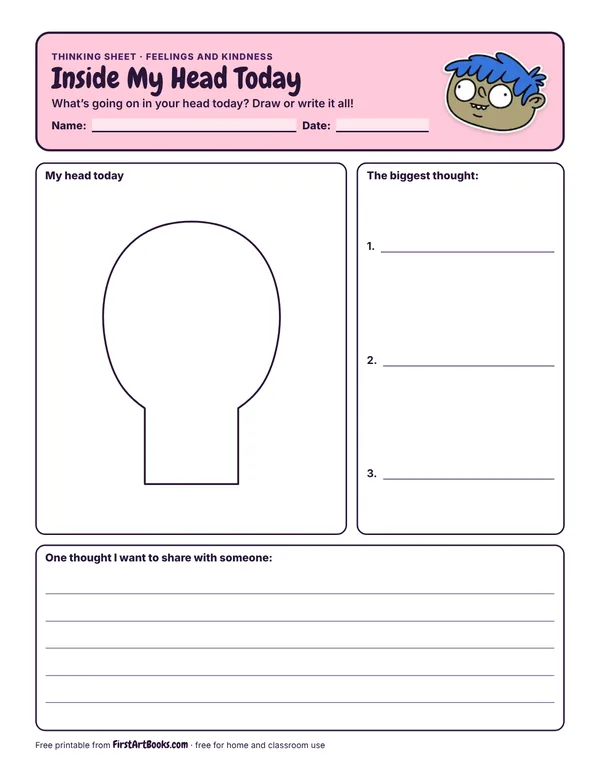
Fill the head with everything you’re thinking about today: big things, small things and silly things.
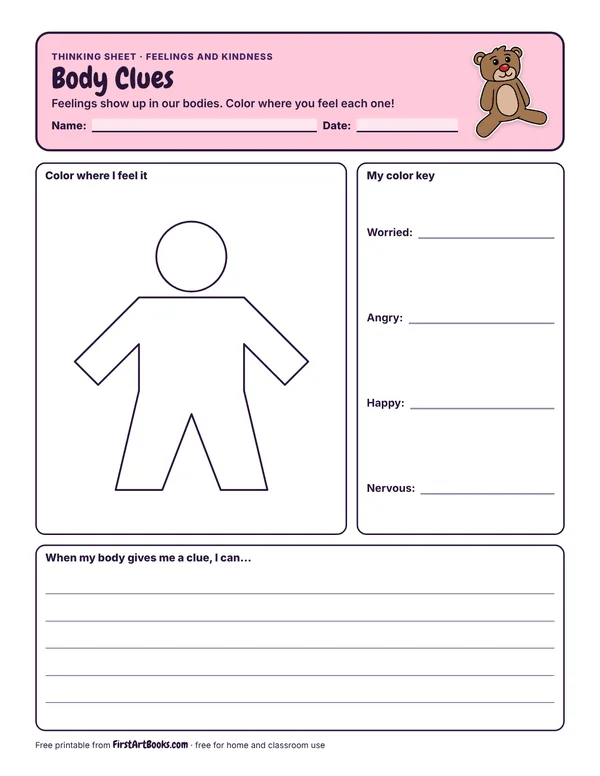
Where do you feel feelings in your body? Color the outline to show where worry, anger and joy show up.
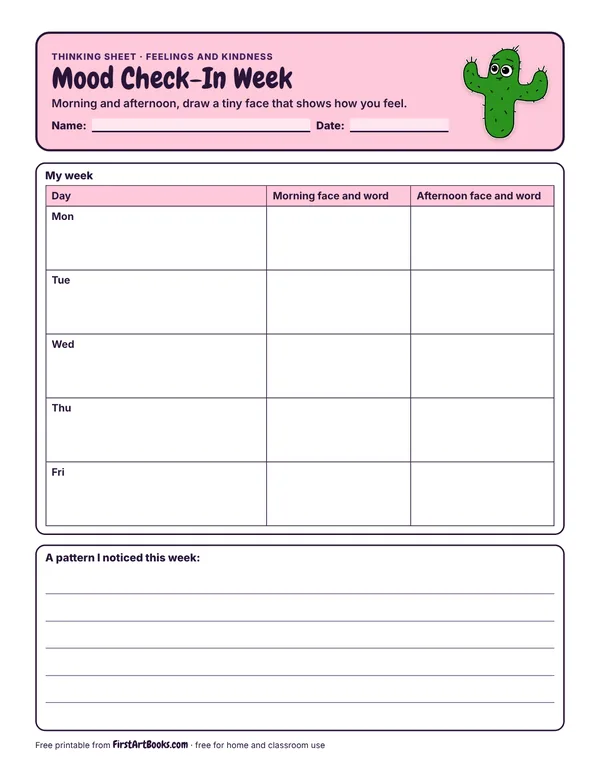
Check in twice a day for a week with a tiny face drawing and a word.
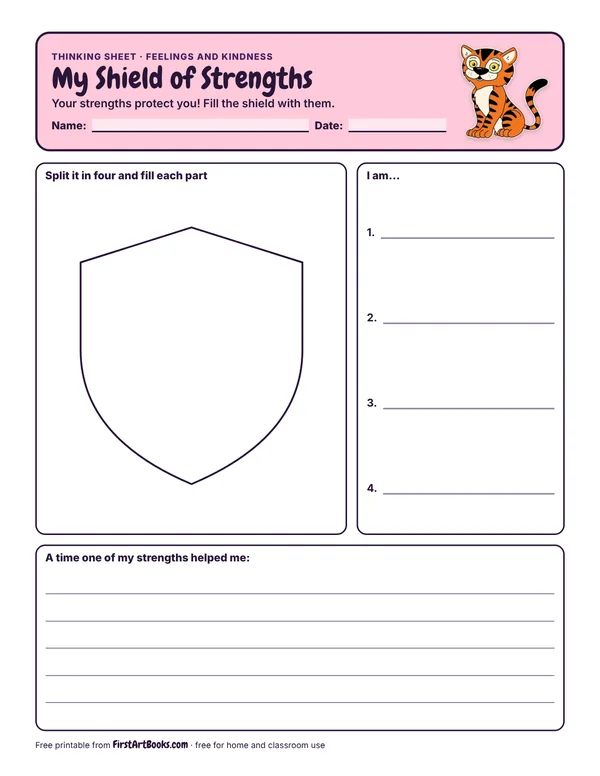
Split the shield into four parts and fill each with something you’re good at or proud of.
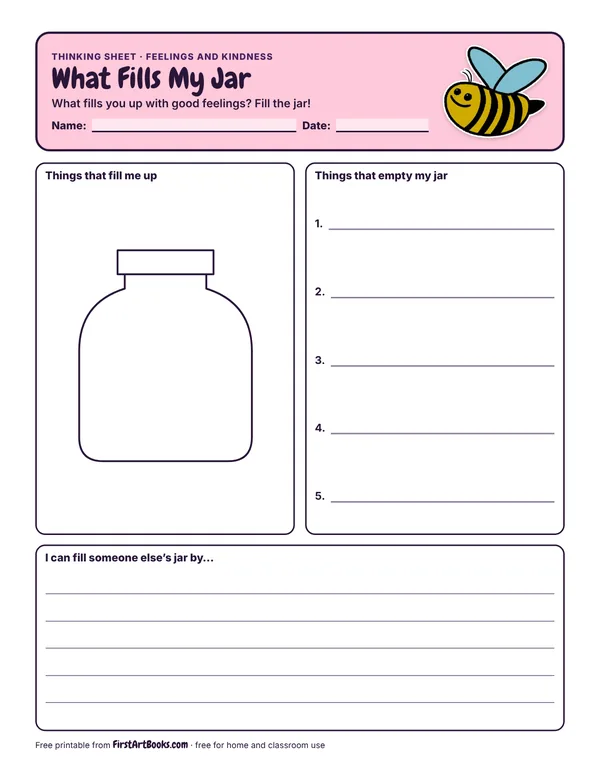
Fill the jar with the things that make you feel full of happy energy, and list what empties it.
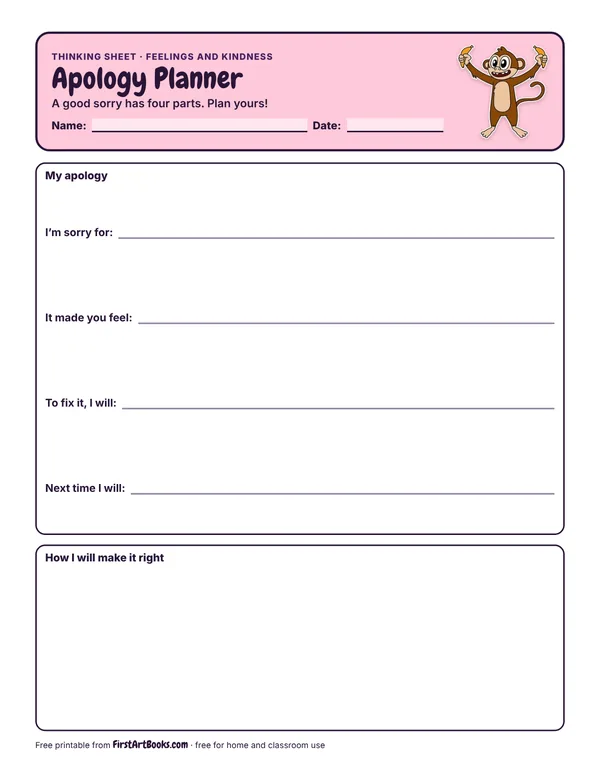
Plan a real apology in four steps: what I did, how they felt, how I’ll fix it, what I’ll do next time.
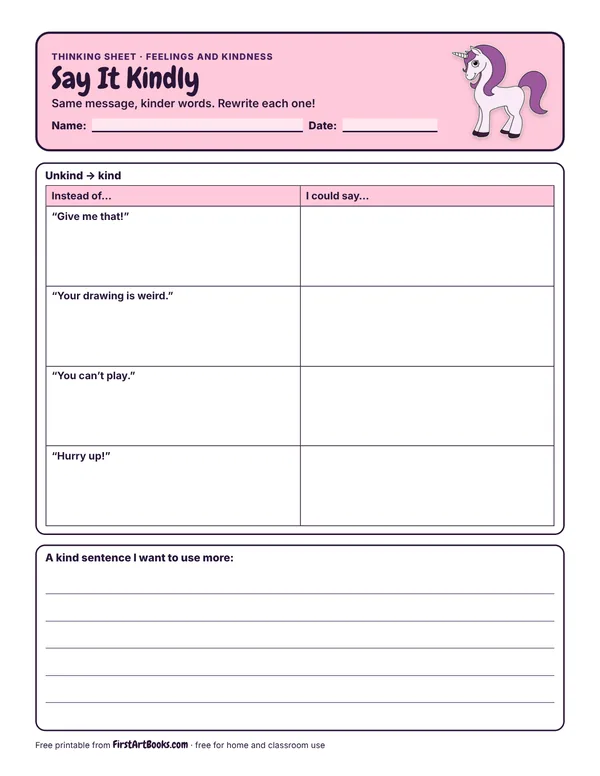
Turn bossy or unkind sentences into kind ones that still say what you mean.
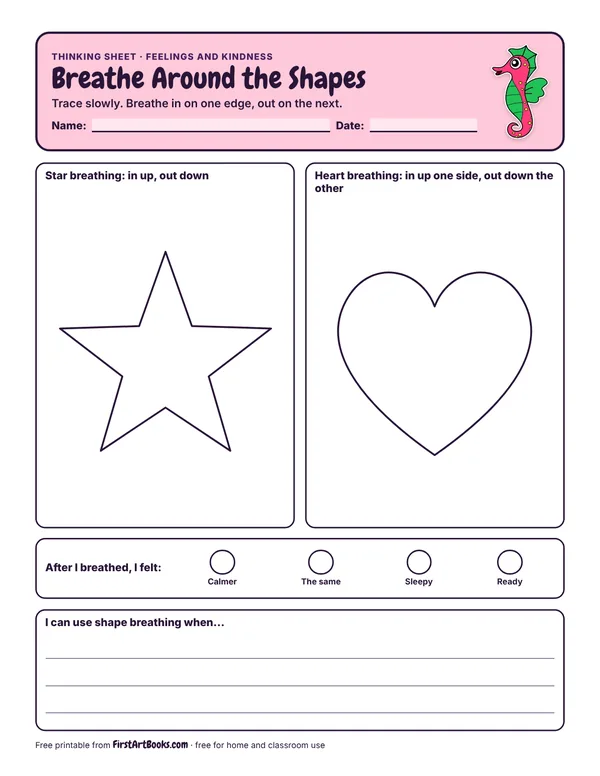
Trace a star and a heart slowly with your finger, breathing in and out along each edge.
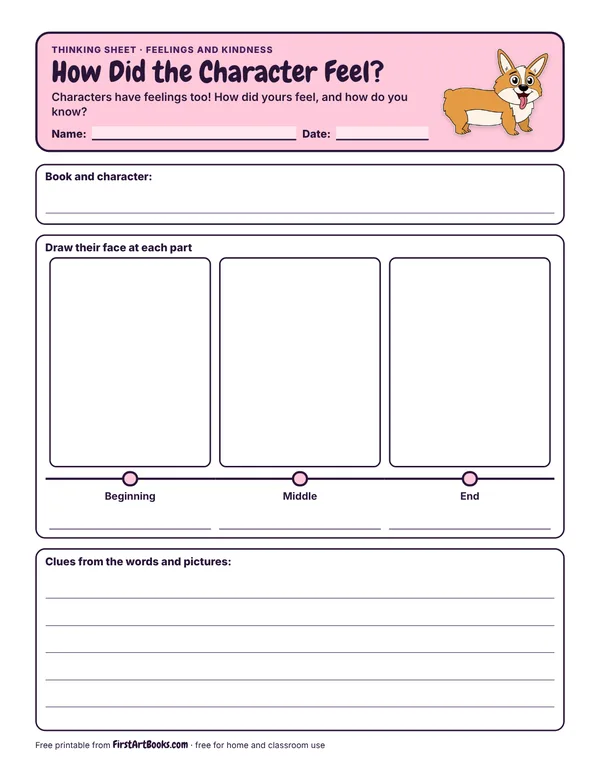
Track a book character’s feelings at the start, middle and end, with the clues that showed them.
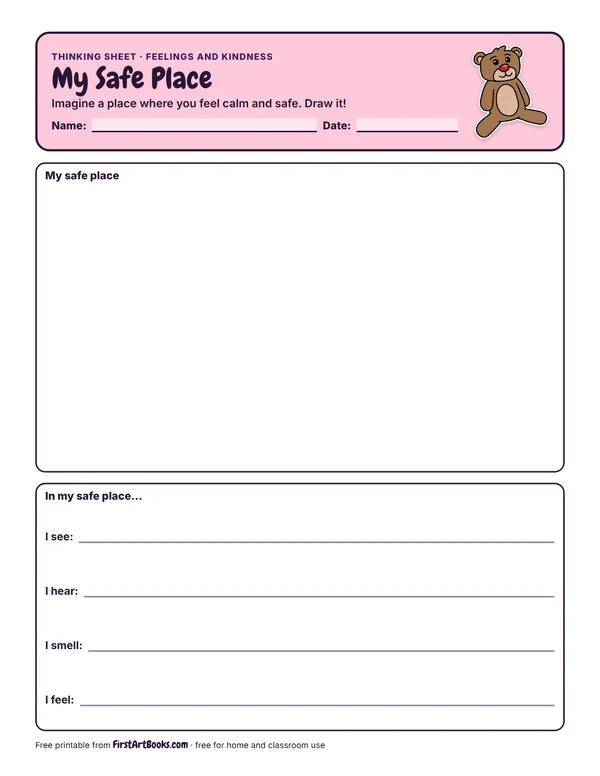
Draw a calm place, real or imagined, and describe what you see, hear and smell there.
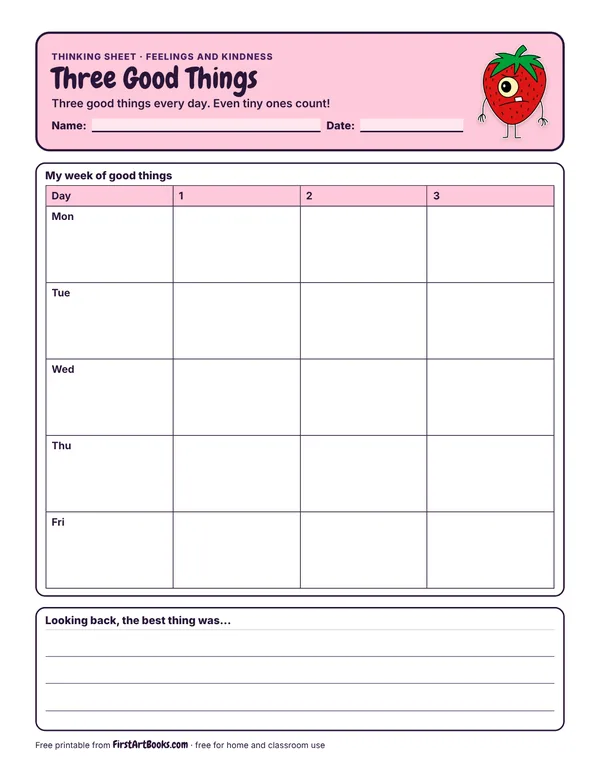
Every day for a week, write three good things that happened. Big or tiny, they all count.
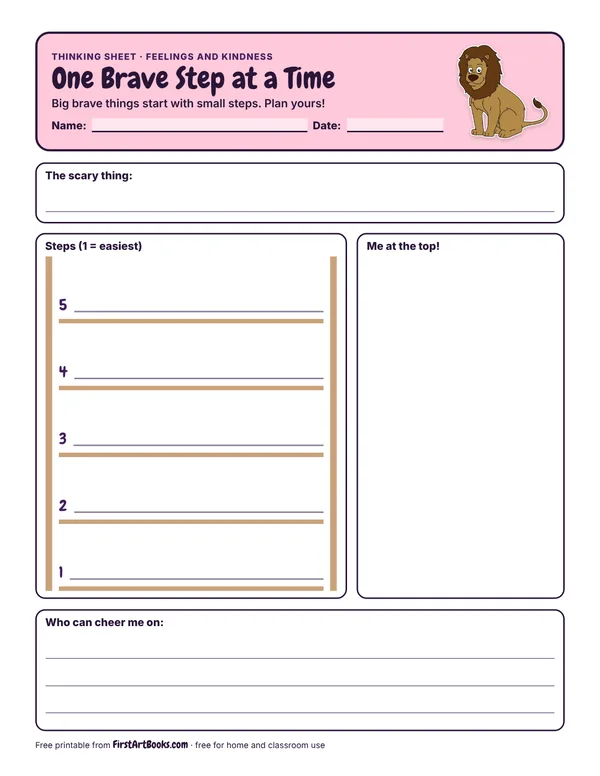
Break something scary into small steps, from easiest at the bottom to bravest at the top.
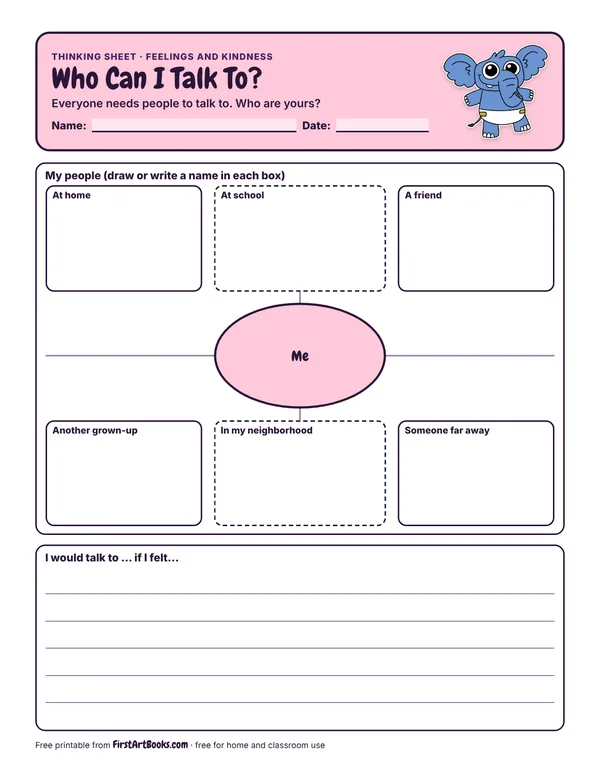
Map the trusted grown-ups and friends you can talk to at home, at school and in the neighborhood.
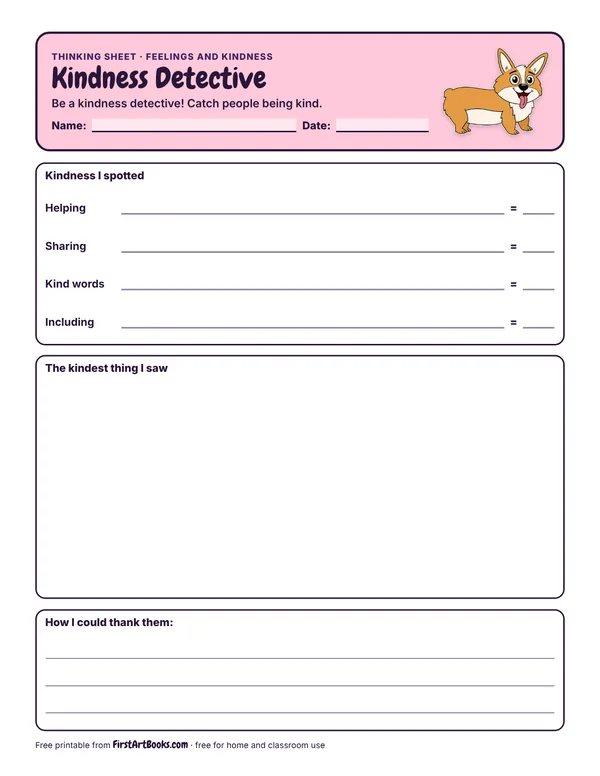
Spend a day spotting kindness: tally what you see and draw the best one.
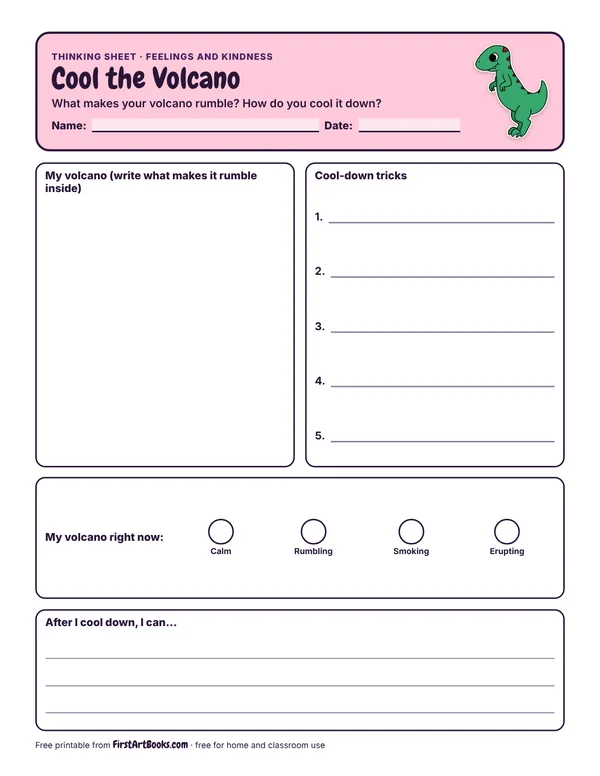
Anger can build like a volcano. Draw what makes yours rumble and the cool-down tricks that stop it.
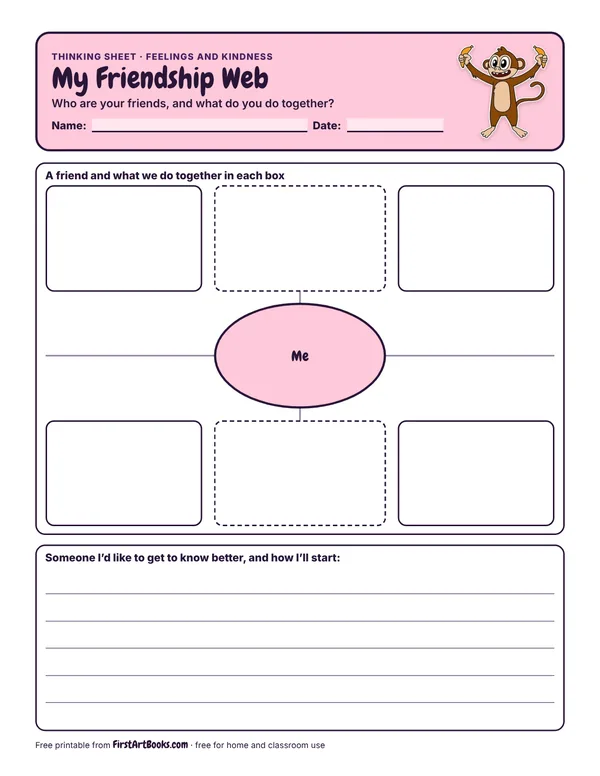
Map your friends and what you love doing with each one. Then find a new friend to add.
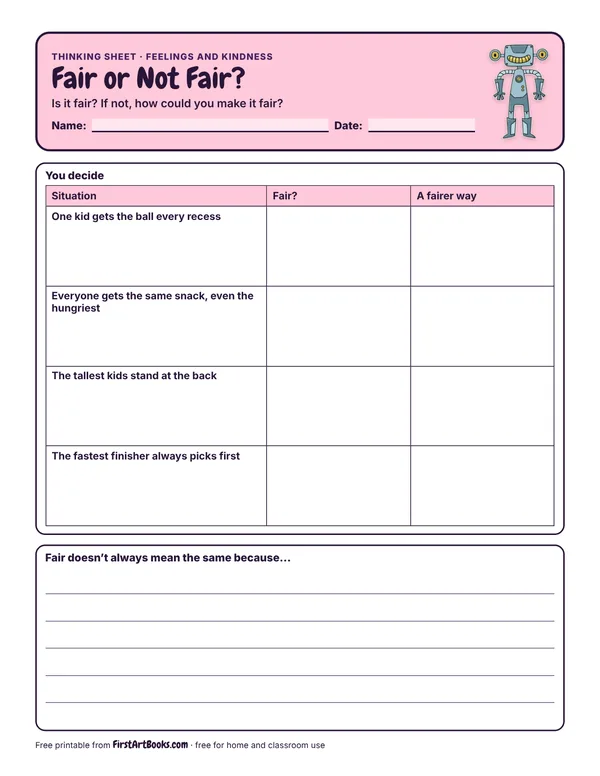
Read four situations, decide if each is fair and suggest a fairer way.
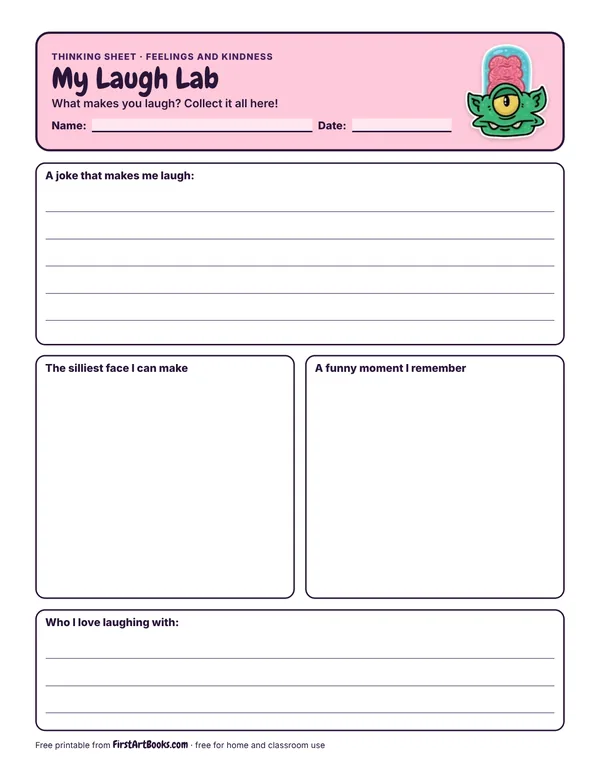
Collect the jokes, faces and moments that make you laugh. Laughing is good for you!
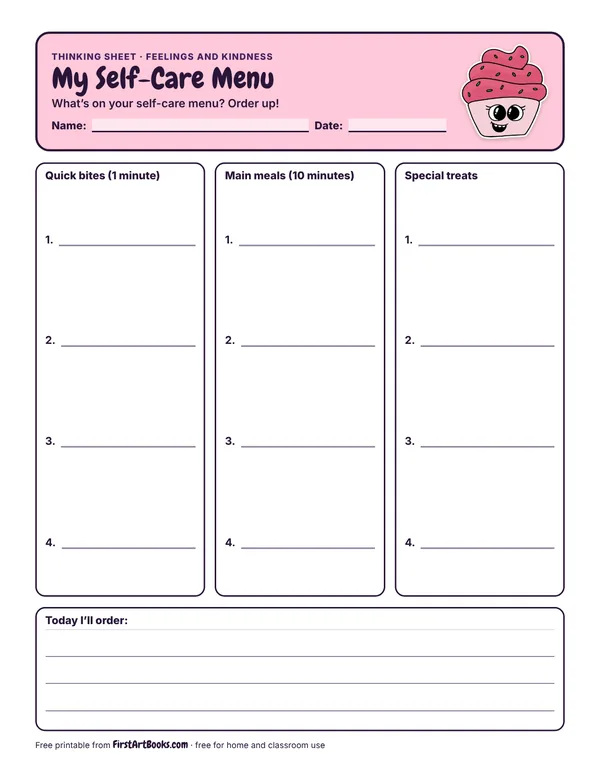
Make a menu of things that help you feel better: quick snacks, big meals and treats.
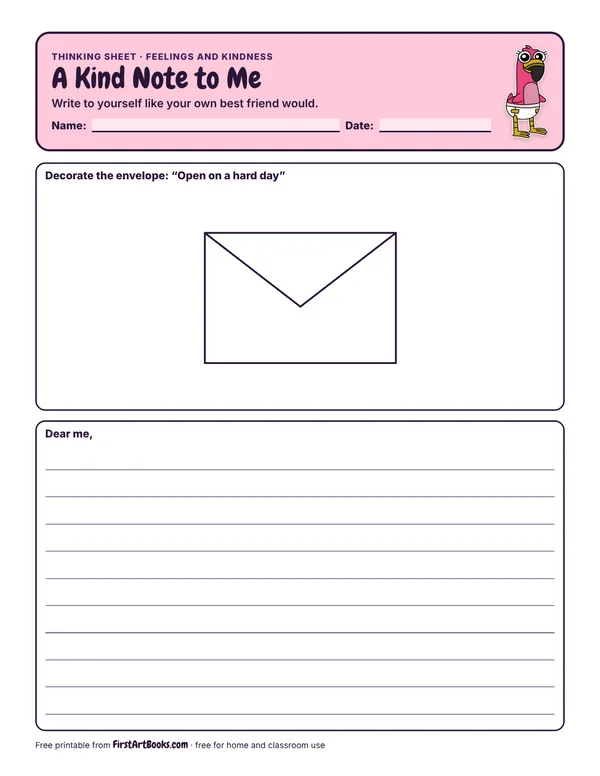
Write a kind note to yourself to open on a hard day. What would a good friend say?
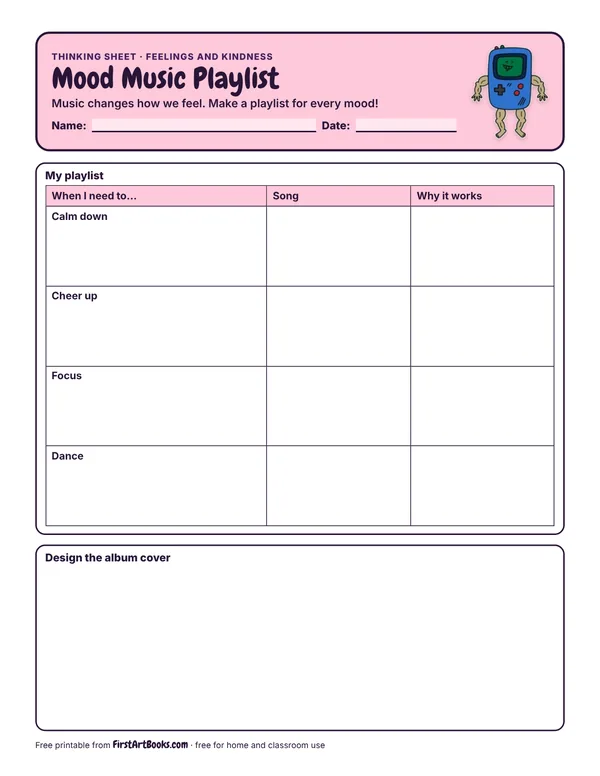
Pick a song for each mood: one to calm down, one to cheer up, one to focus and one to dance.
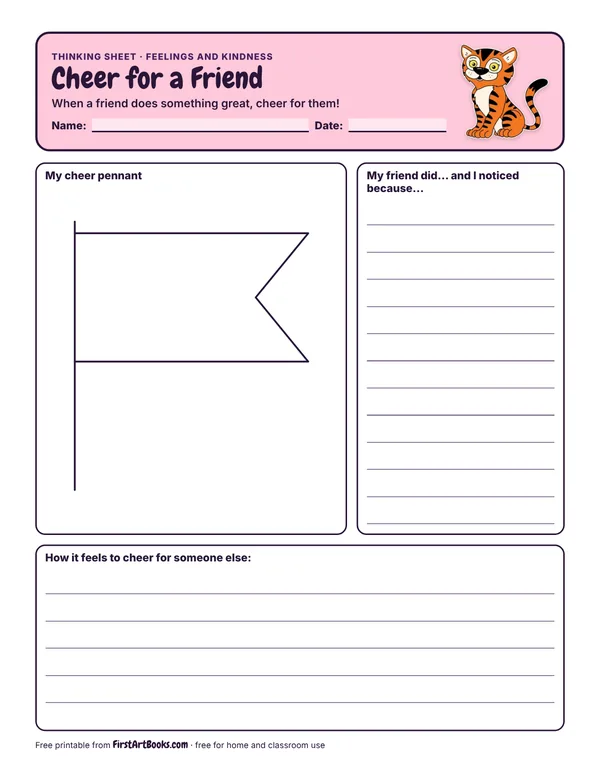
Make a pennant to celebrate something a friend did well, and plan how to give it to them.
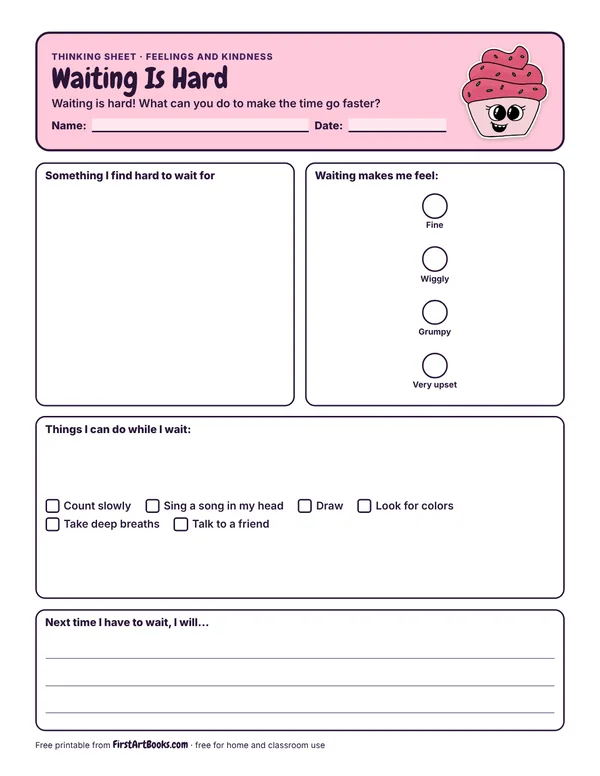
Waiting for a turn, a treat or a birthday can feel forever. Make a plan for what to do while you wait.
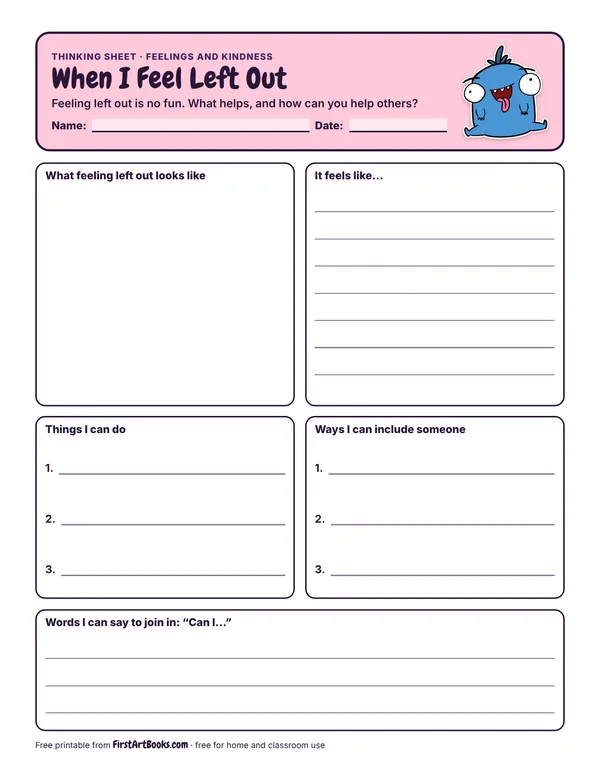
Everyone feels left out sometimes. Draw the feeling, then plan what you can do and how to include someone else.
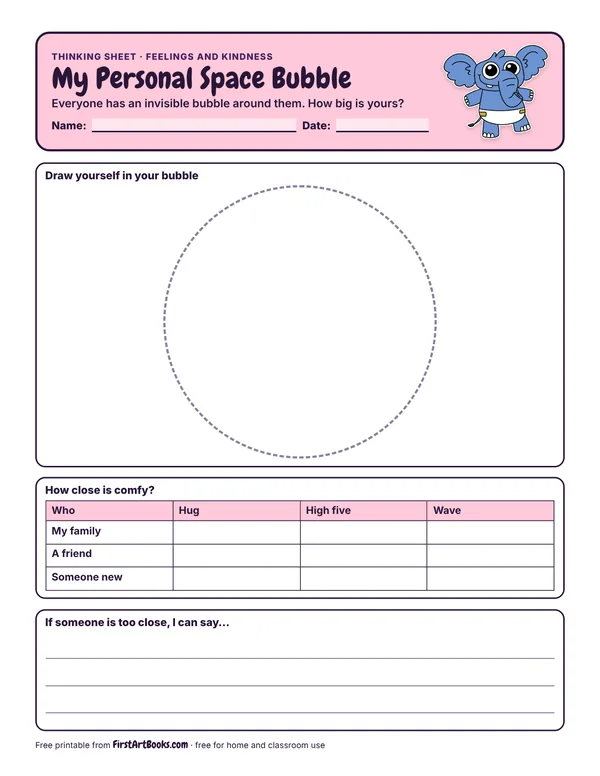
Draw yourself inside your own space bubble and think about how close is comfy for friends, family and strangers.
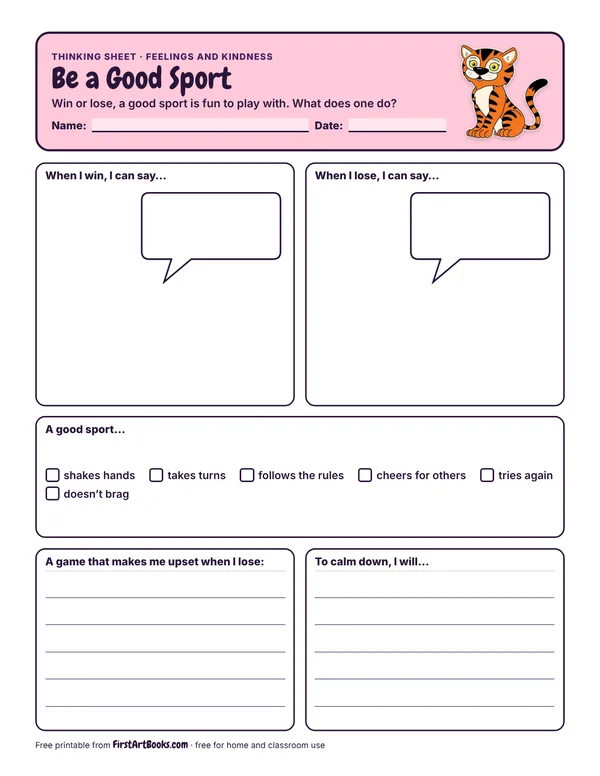
Winning feels great and losing stings. Plan what a good sport says and does either way.
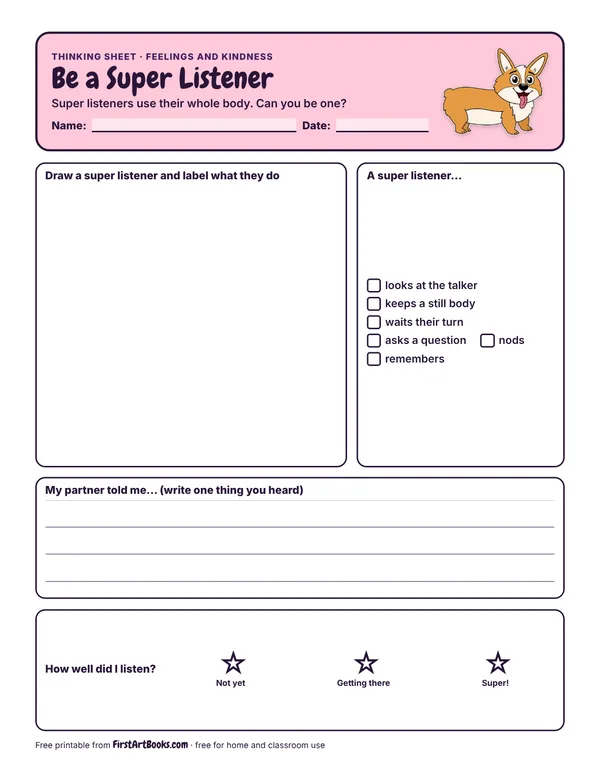
Good listening uses more than ears. Draw a super listener and check off what they do with their eyes, body and mouth.
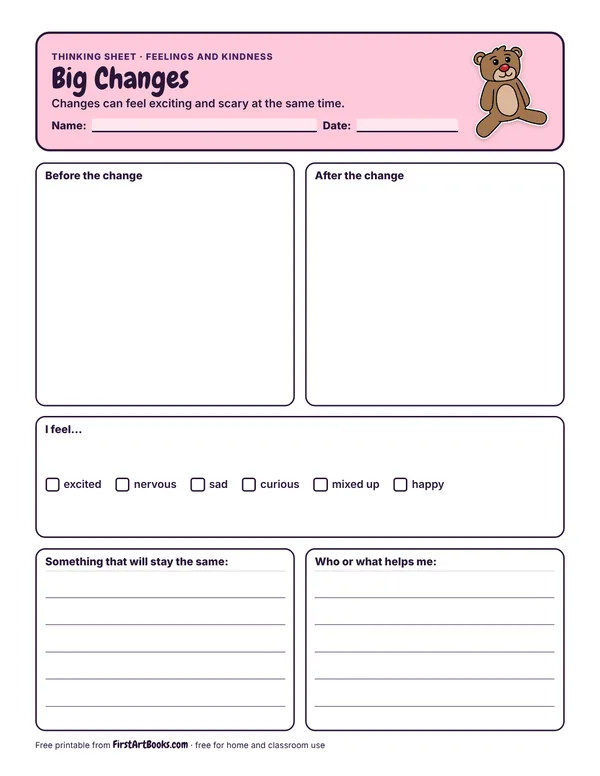
A new home, a new school or a new baby: big changes bring big feelings. Draw before and after and plan what helps.
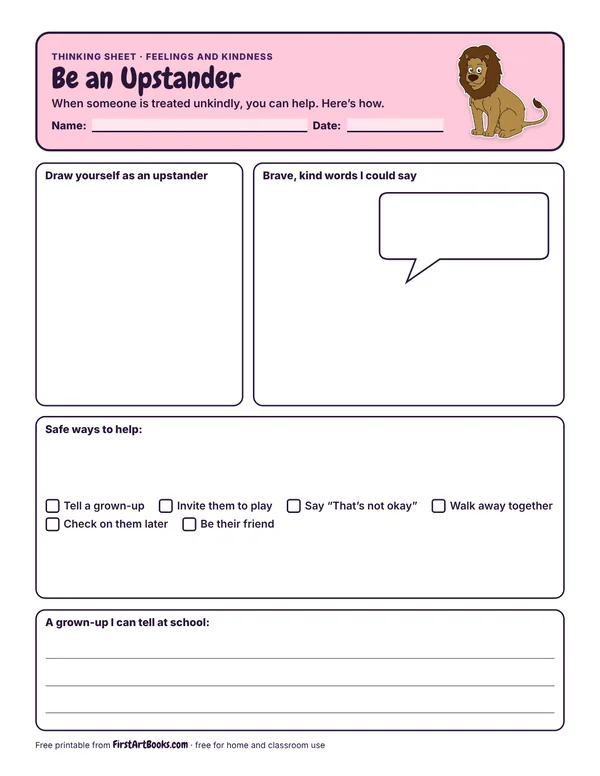
An upstander helps when someone is being treated unkindly. Plan safe, brave things you could say and do.
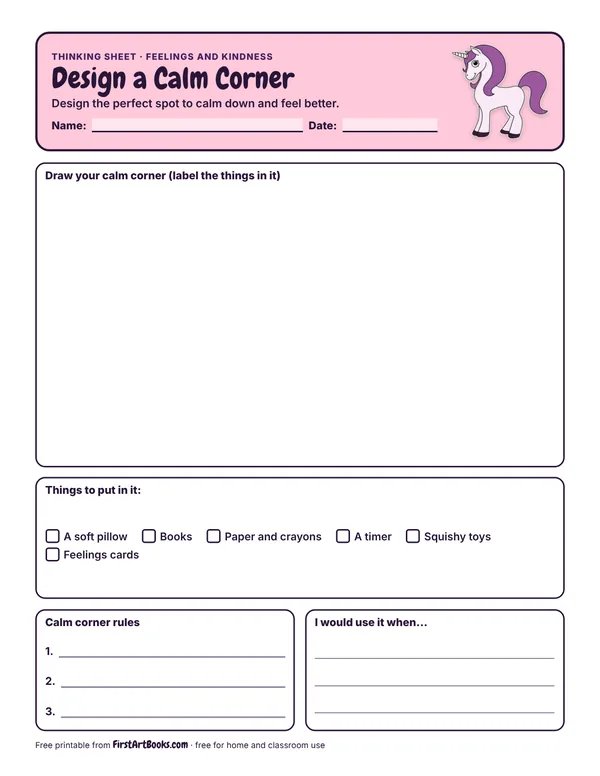
Plan a cozy calm-down spot for your classroom or home: what goes in it, what it looks like and its rules.
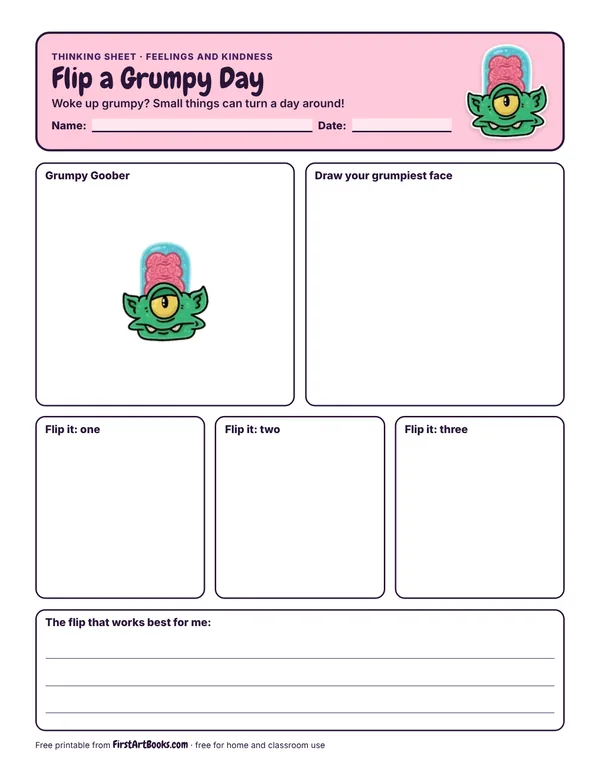
Some days start grumpy. Draw a grumpy morning, then three small things that could flip it around.

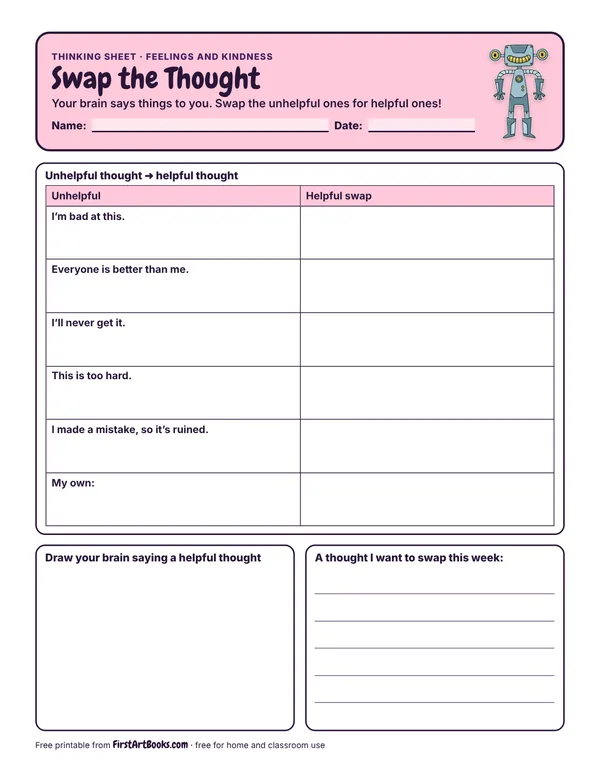
Catch an unhelpful thought, like “I’m bad at this”, and swap it for a helpful one. Practice with six examples.
Pick two animals, mix them into one new creature, then give it a name, a home and a special skill.
Write the recipe for a food monster: ingredients, amounts and steps. Then draw what comes out of the oven.
Feed a big “what if?” into the machine and draw the world that comes out the other side.
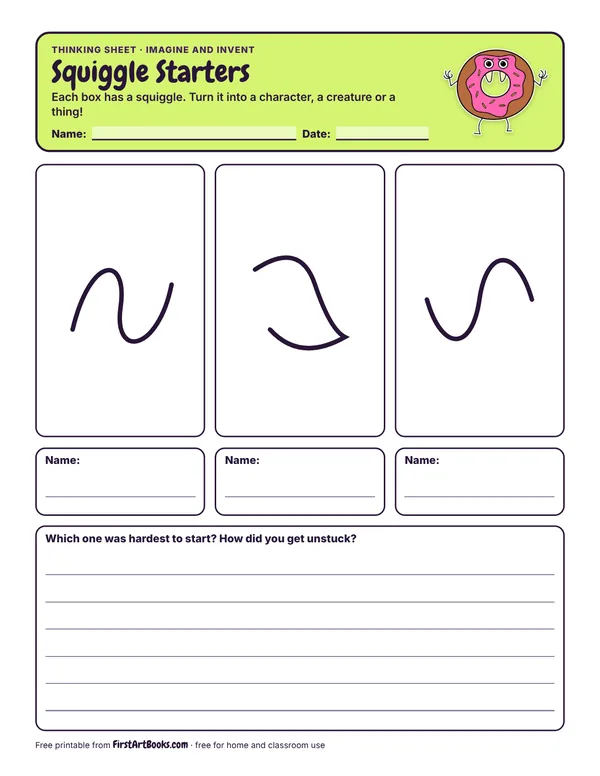
Three squiggles, three new characters. Turn each line into something nobody else would think of.
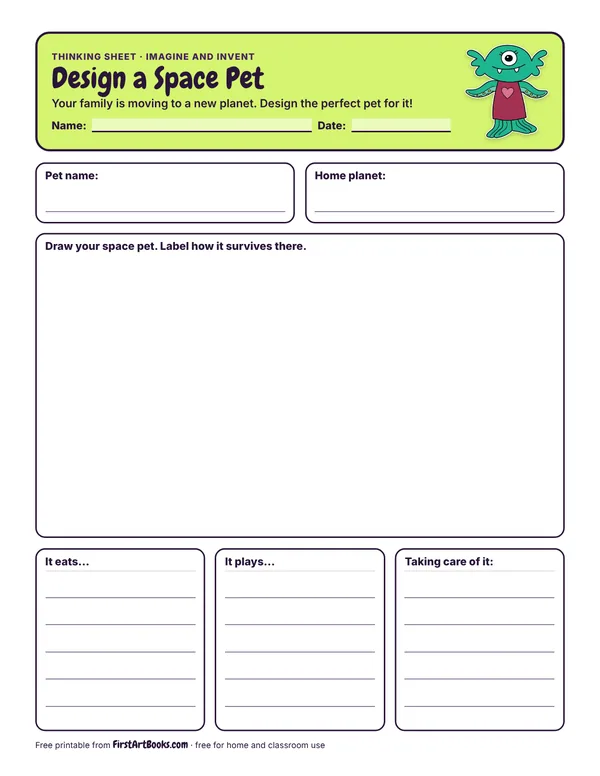
Invent a pet that could live on another planet. What does it eat, breathe and play with?
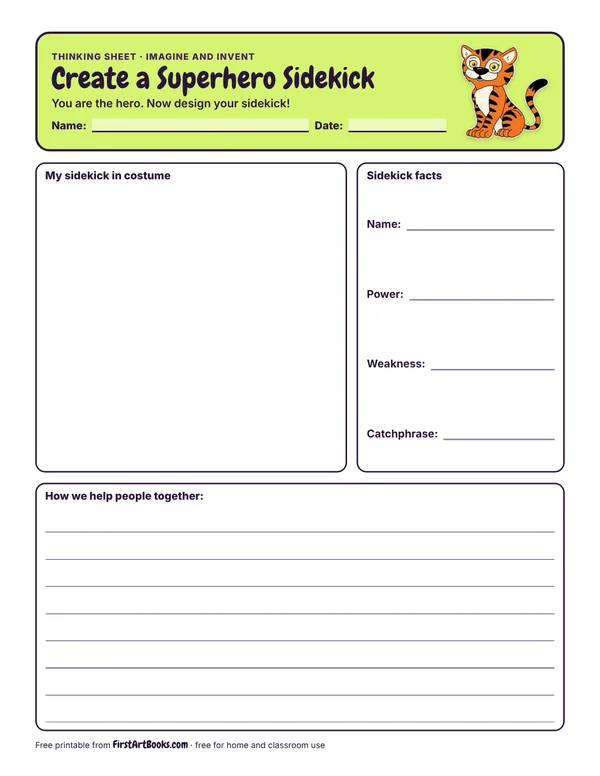
Every hero needs a sidekick. Invent one with a power, a weakness and a costume.
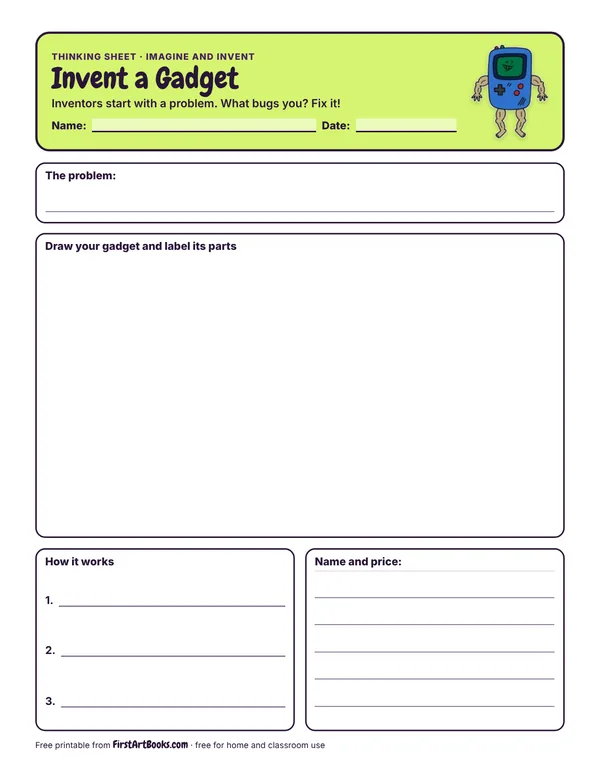
Spot an everyday problem, invent a gadget to fix it and explain how it works step by step.
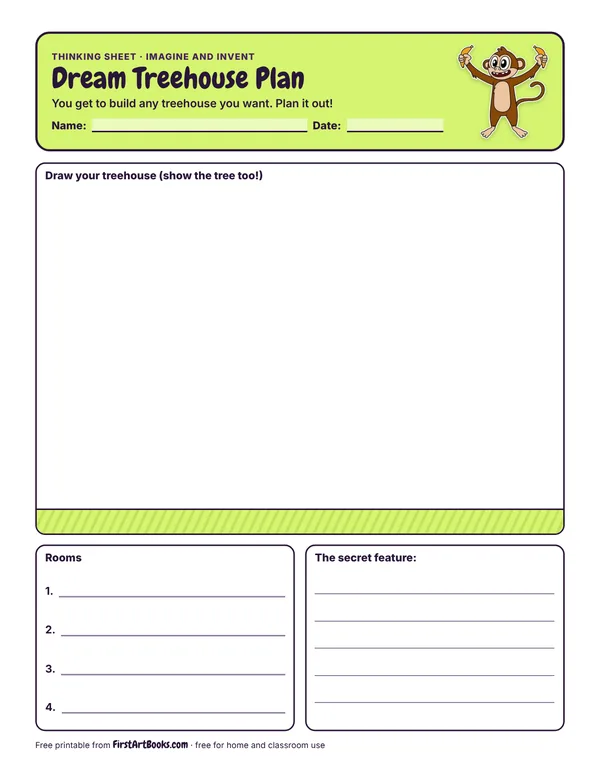
Plan the treehouse of your dreams: the rooms, the way in and the one secret feature.
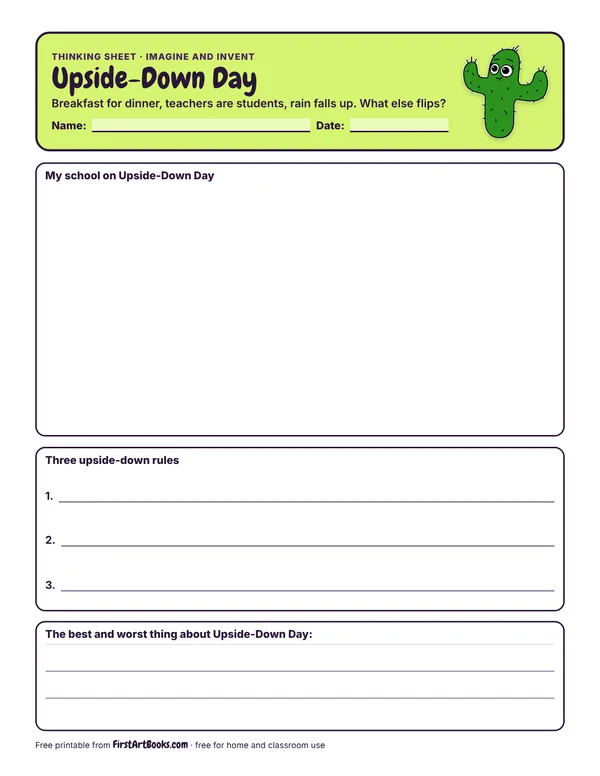
Today everything is the opposite. Draw your school on Upside-Down Day and write its new rules.
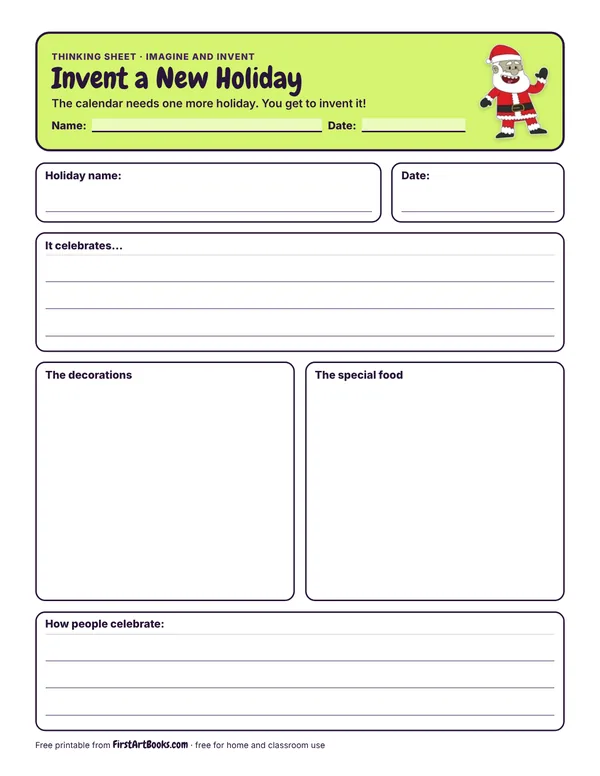
Make up a brand-new holiday: when it is, what it celebrates, the food and the decorations.
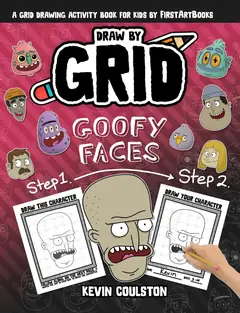
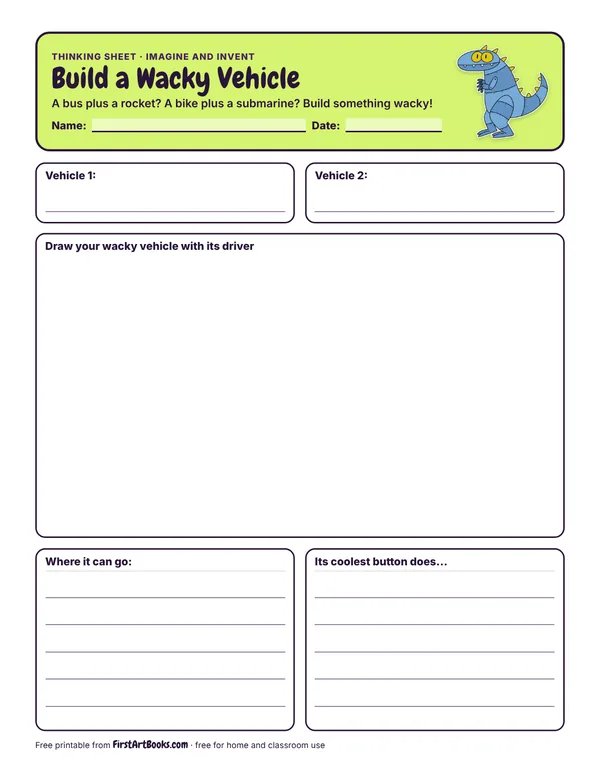
Mash two vehicles together, choose a character to drive it and decide where it goes.
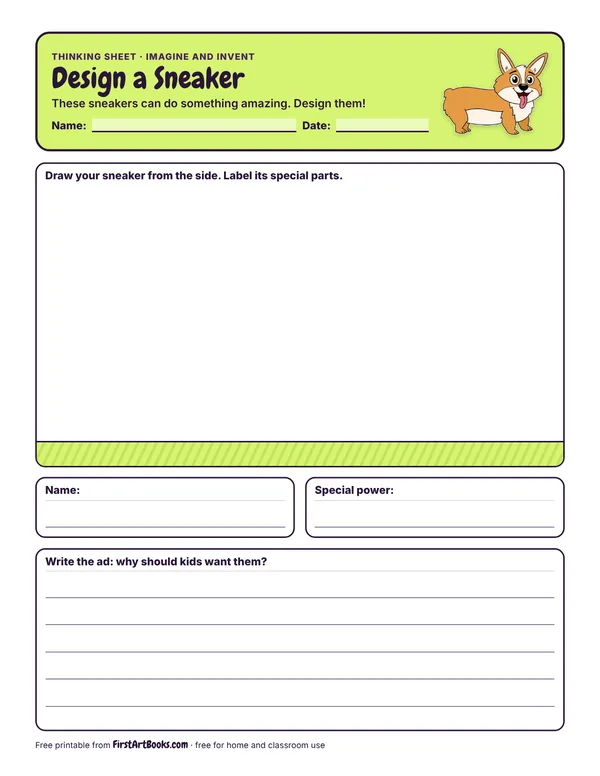
Design a sneaker with a special power. Name it, label it and write the ad.
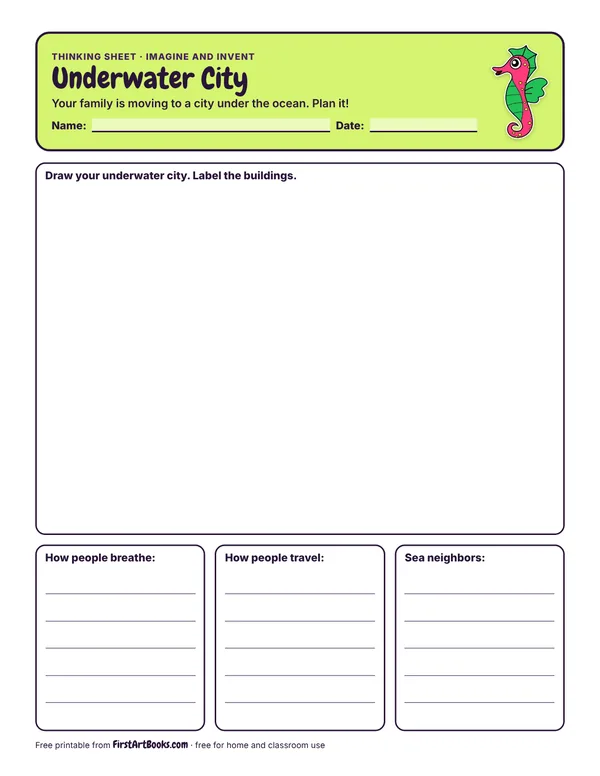
Plan a city at the bottom of the sea: where people live, how they travel and who their neighbors are.
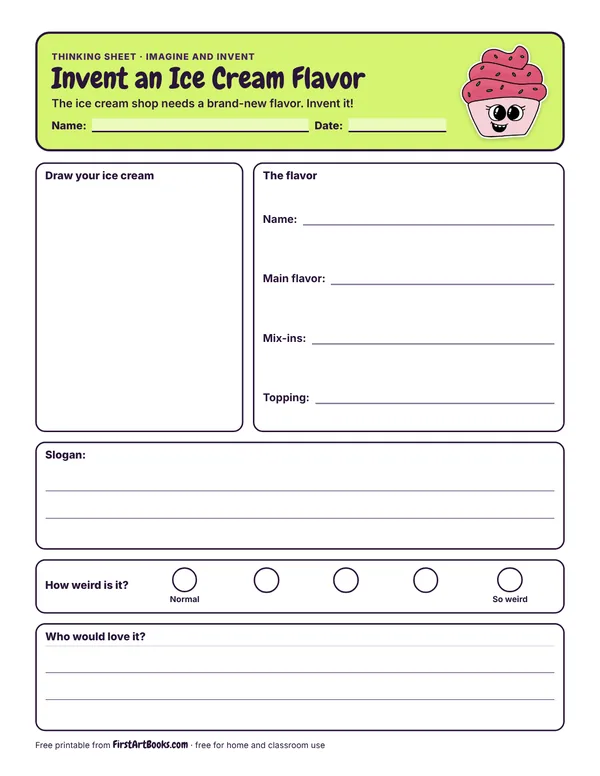
Invent a brand-new ice cream flavor, draw the cone and write a slogan that makes people try it.
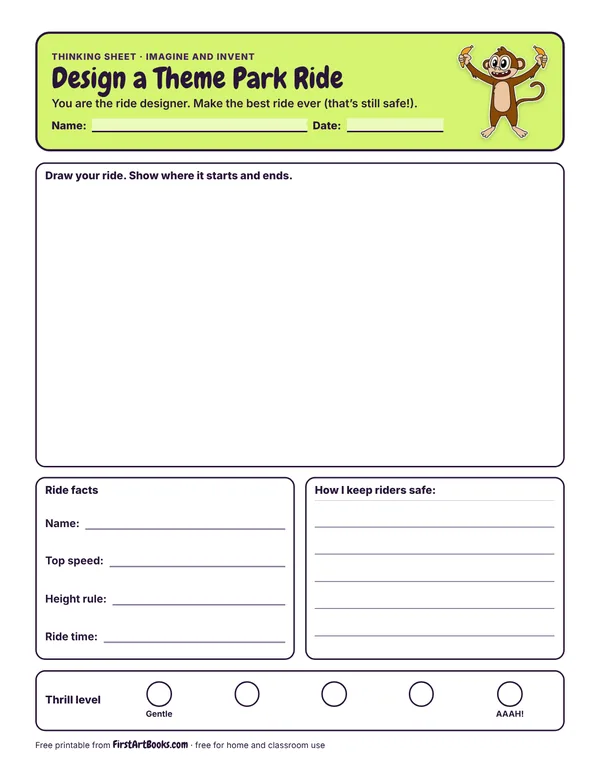
Design the wildest ride in the park: the track, the cars, the height rule and the safety plan.
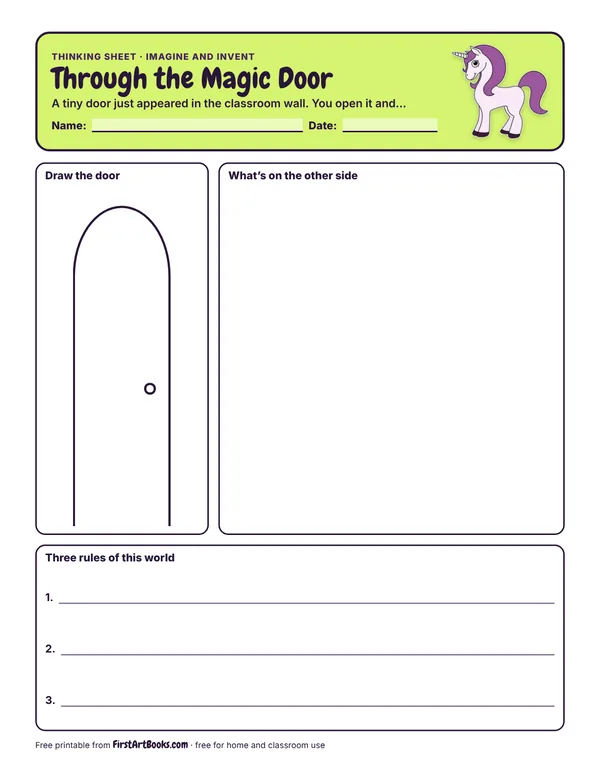
A door appears in your classroom. Draw what’s on the other side and write the rules of that world.
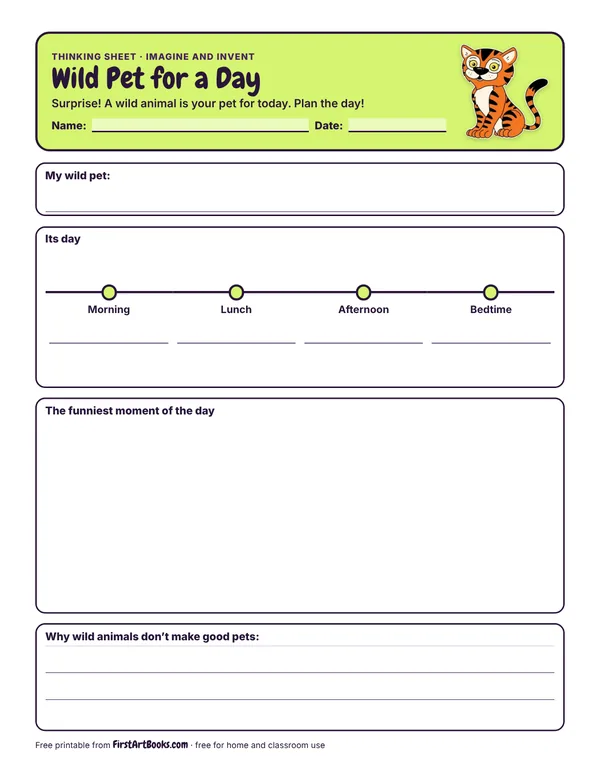
A wild animal is your pet for one day. Plan its schedule from breakfast to bedtime.
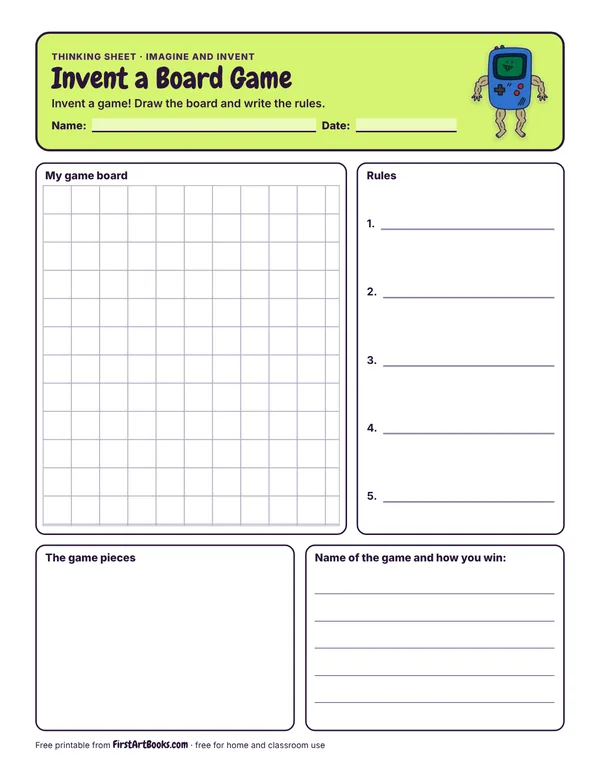
Design a board game: the board, the pieces and the rules. Then play it with a friend.
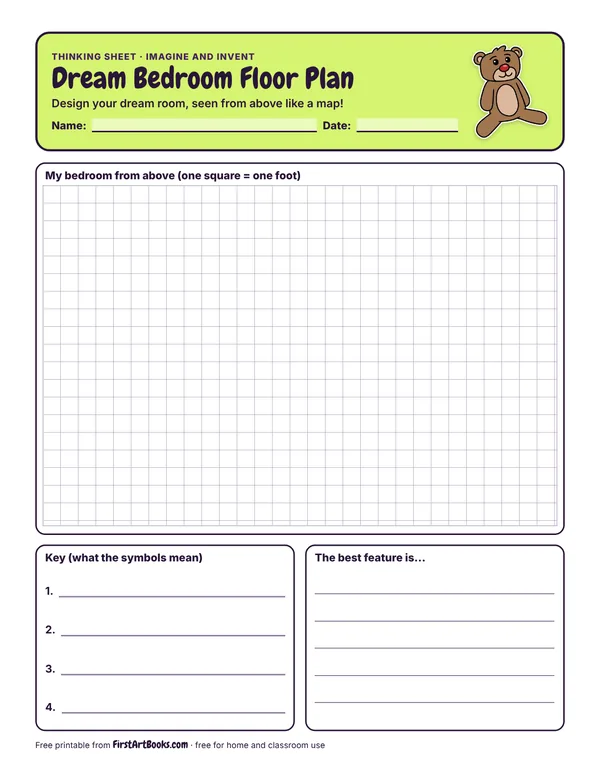
Draw a floor plan of your dream bedroom from above. A slide? A reading nook? A secret door?
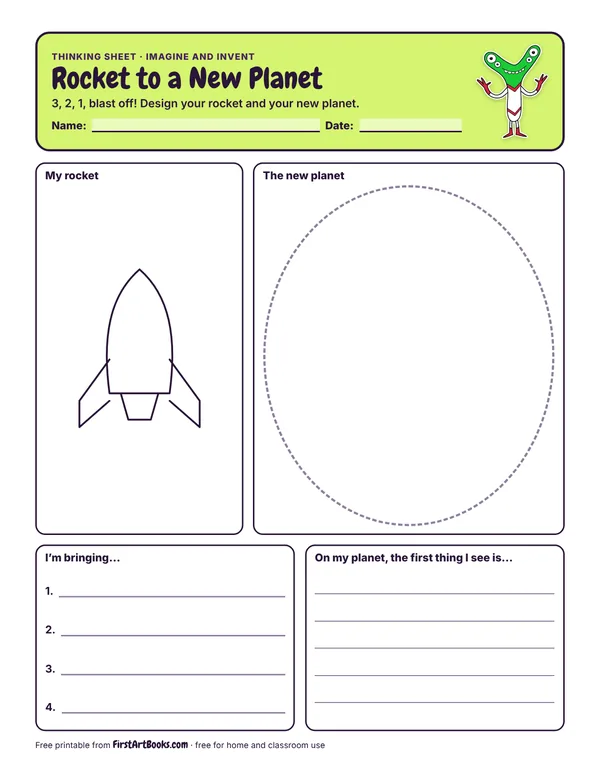
Decorate your rocket, name your planet and decide who (and what) comes along on the trip.
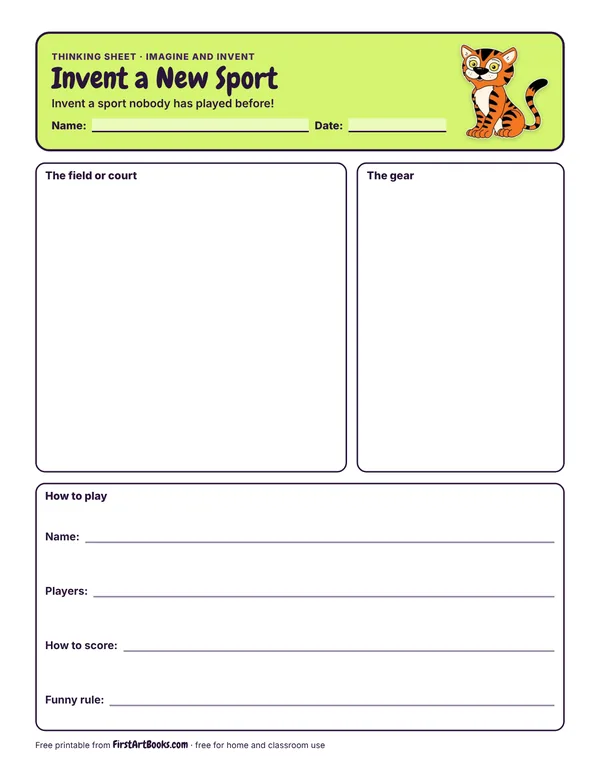
Mix two sports, or make up a new one. Draw the field, the gear and how to score.
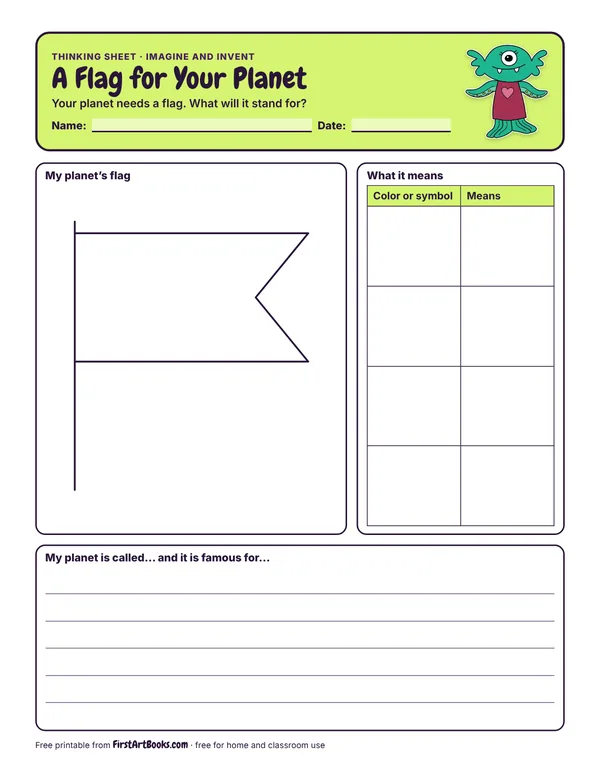
You discovered a planet! Design its flag. Every color and symbol needs a meaning.
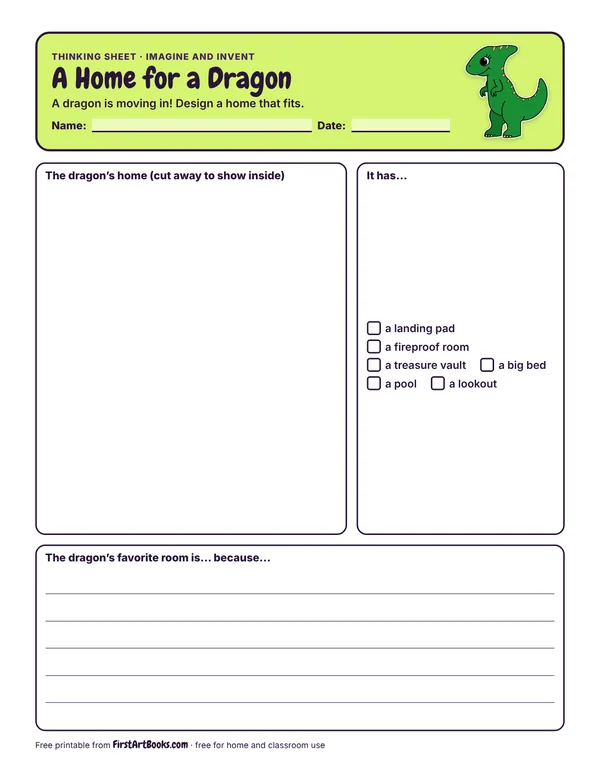
Dragons need special homes: room for wings, a fireproof kitchen, a treasure vault. Design one.
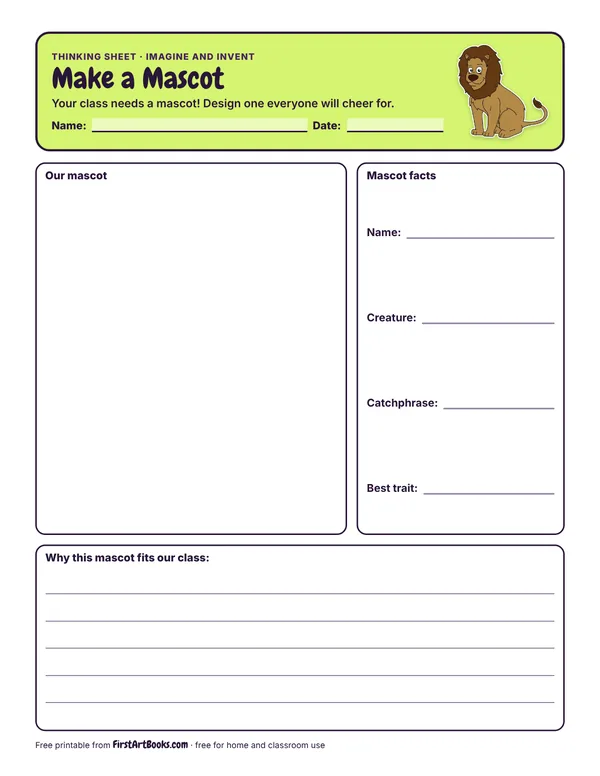
Design a mascot for your class, team or library: what creature is it, and what is its catchphrase?
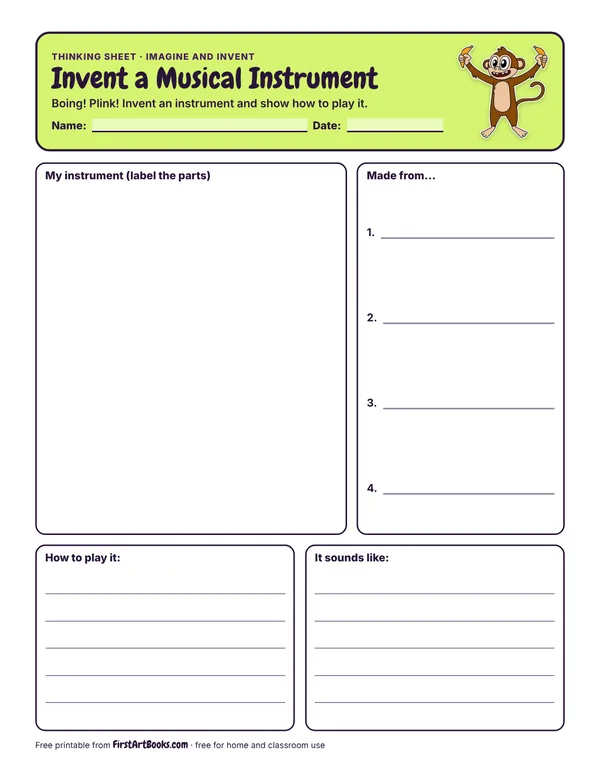
Invent an instrument from things around the house. How do you play it, and what does it sound like?
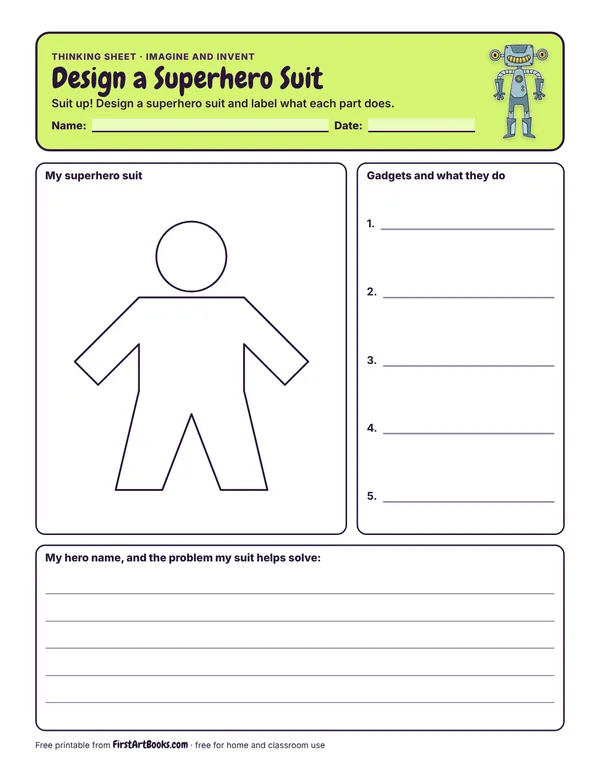
Every part of a superhero suit does something. Design yours and label the gadgets.
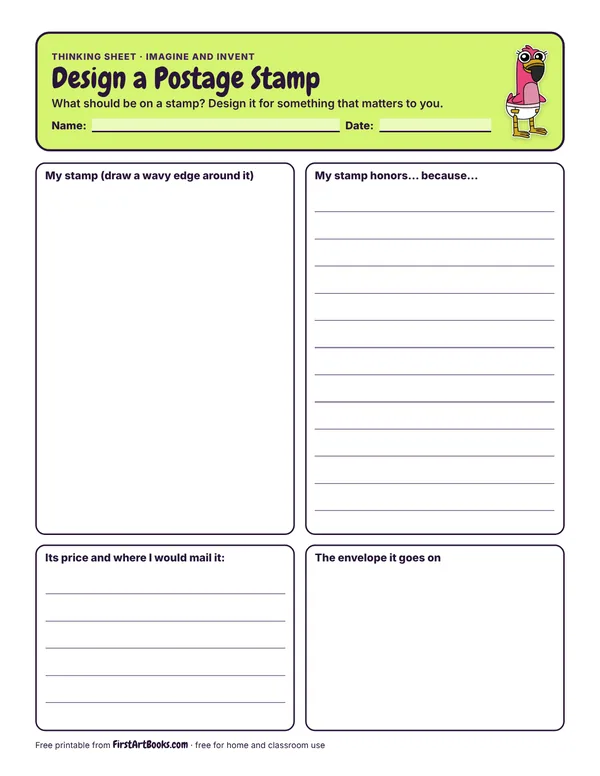
Stamps honor people, places and animals. Design one for something you think deserves it.
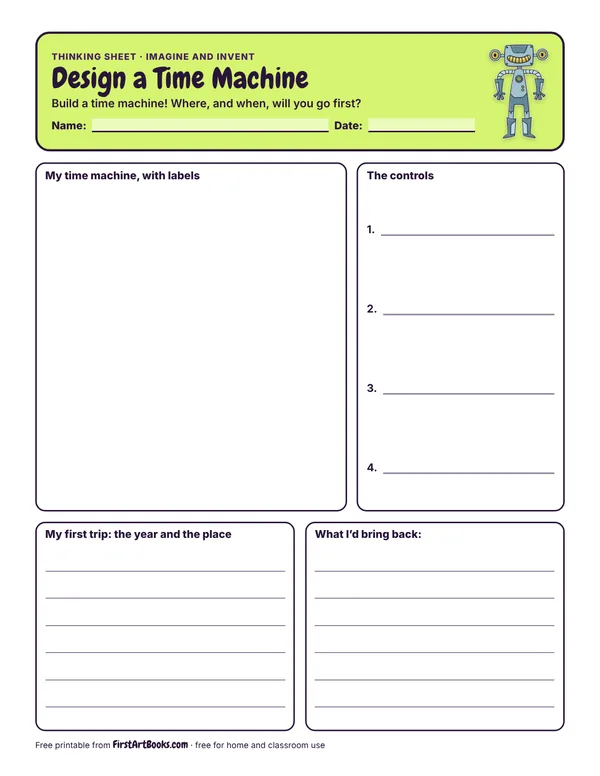
Invent a time machine, label its controls and plan your first trip.
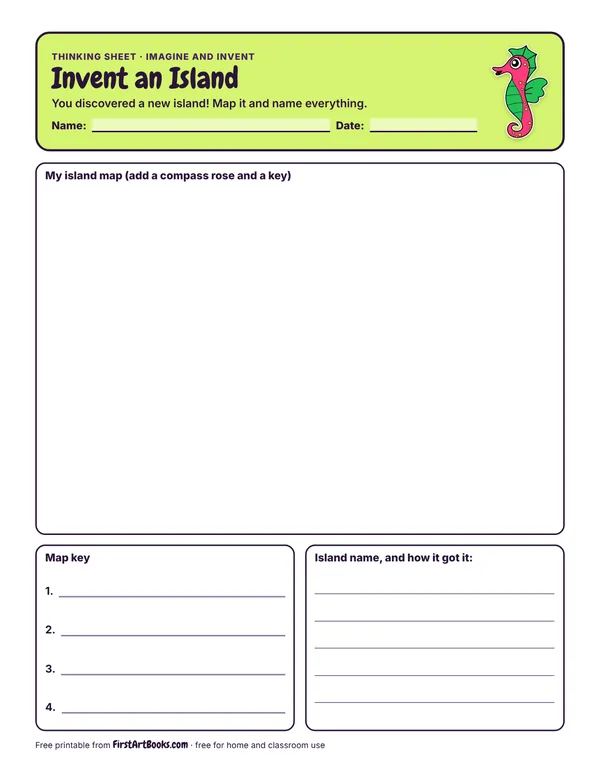
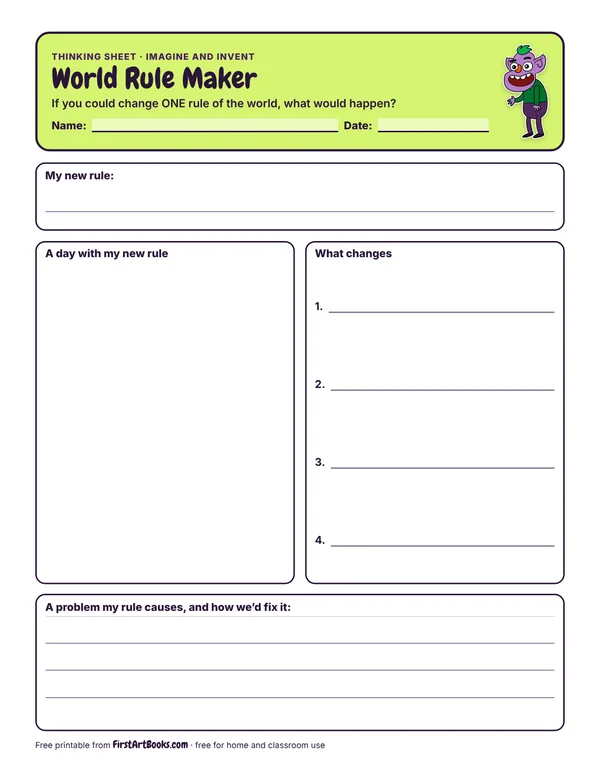
Change one rule of the world, like gravity or bedtime, and imagine what happens.
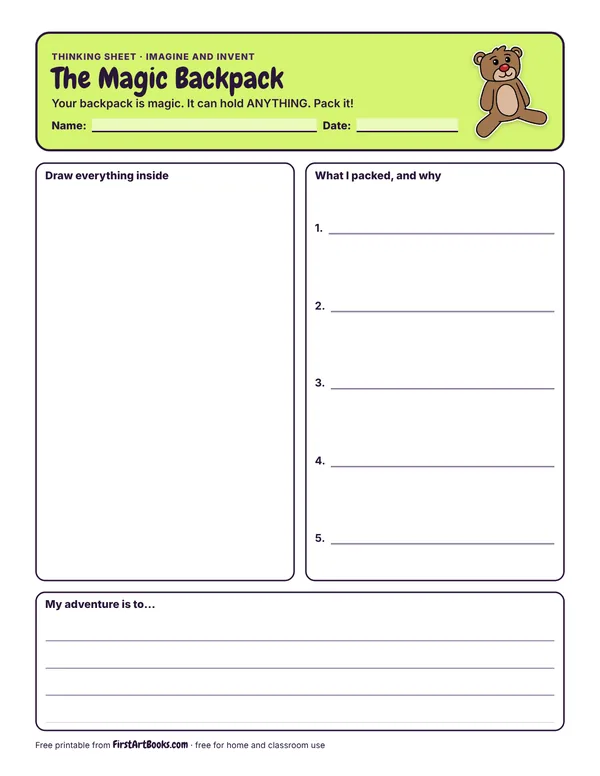
Your backpack can hold anything. Pack it for an adventure and explain each item.
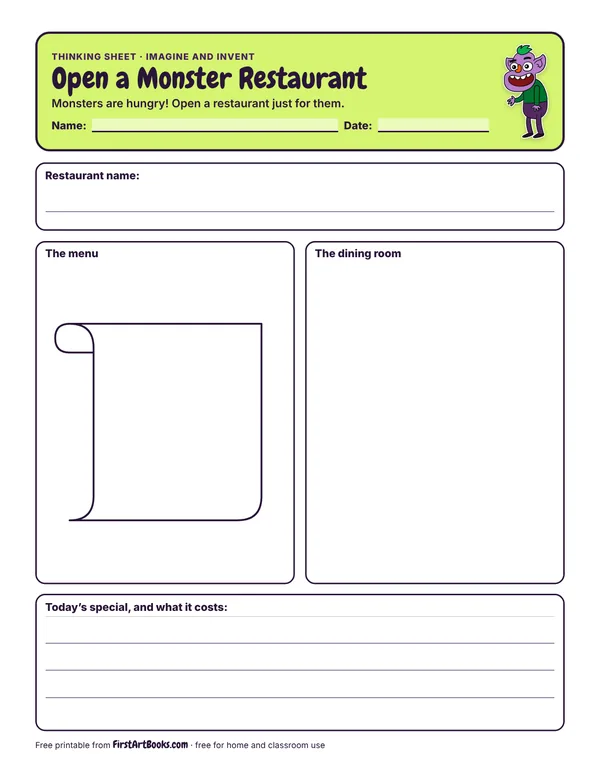
Write the menu, draw the dining room and invent the specials for monster customers.
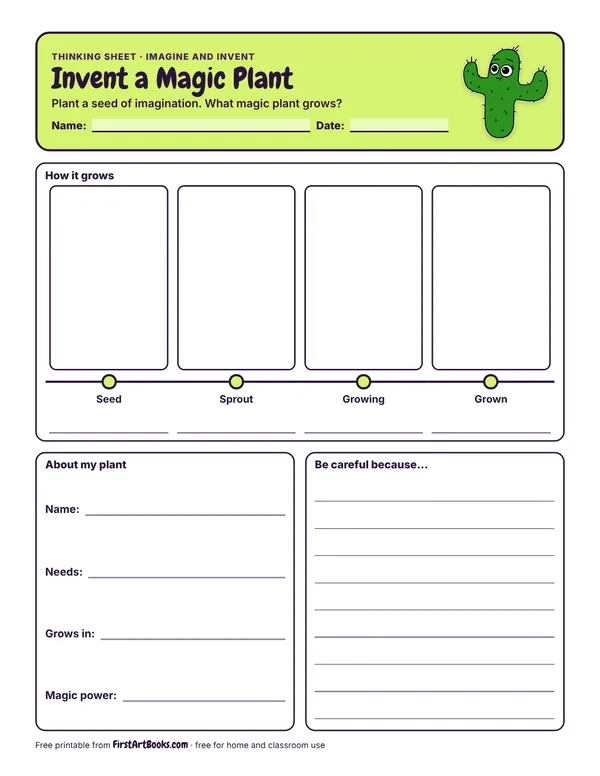
Grow an imaginary plant: draw its life cycle and explain its magic power.
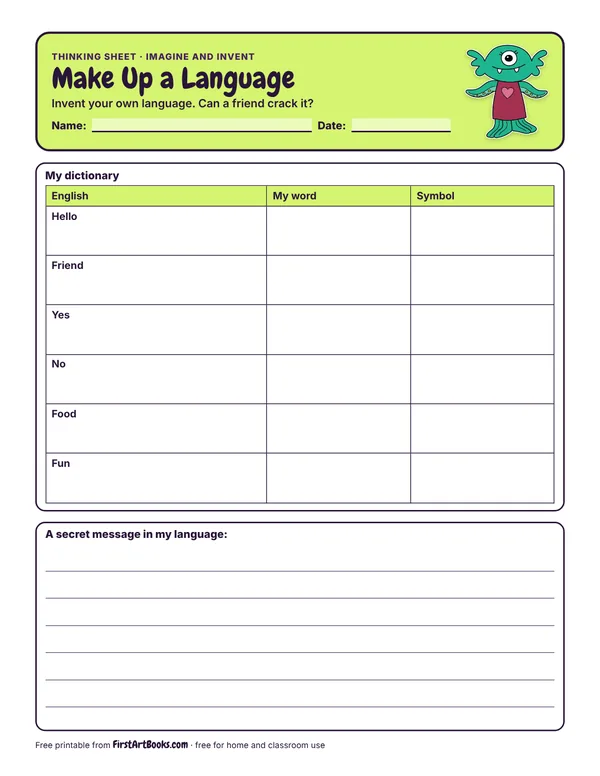
Invent words and symbols for a secret language, then write a message in it.
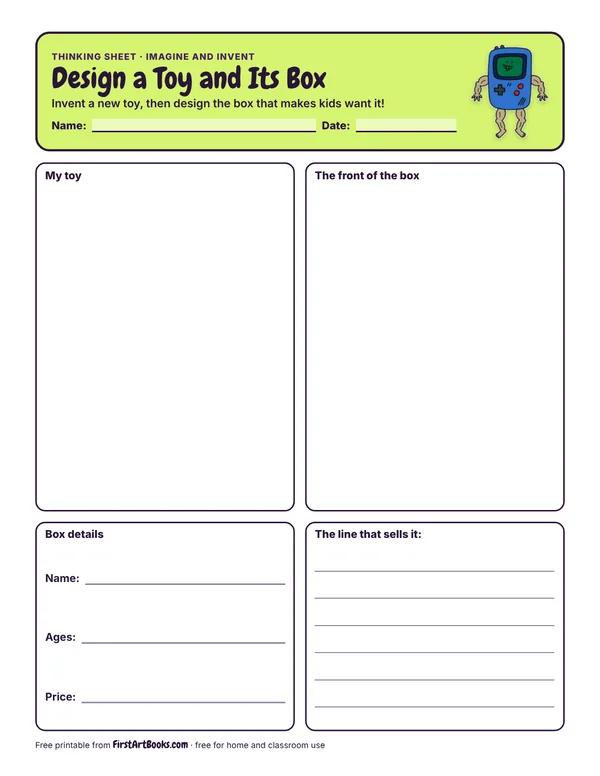
Invent a toy, then design the box it comes in, with a name, a picture and a selling line.
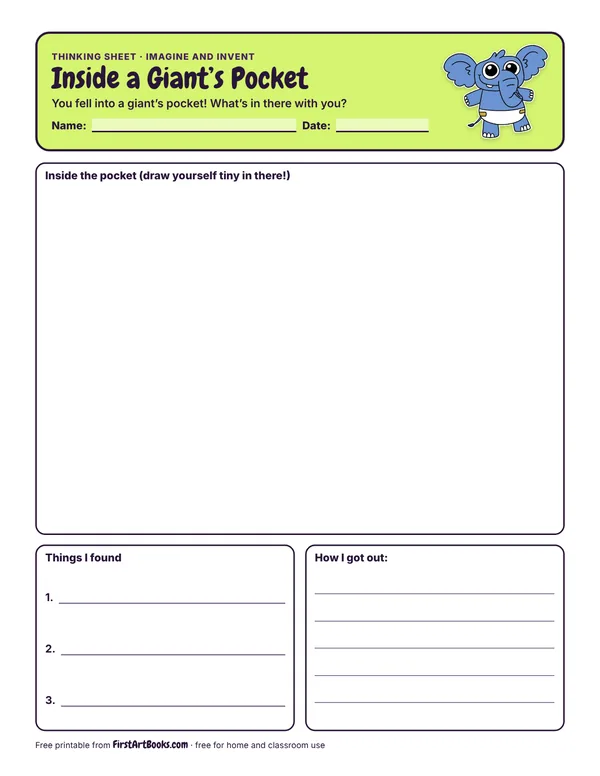
Draw what a giant keeps in their pocket, and how big it would be next to you.
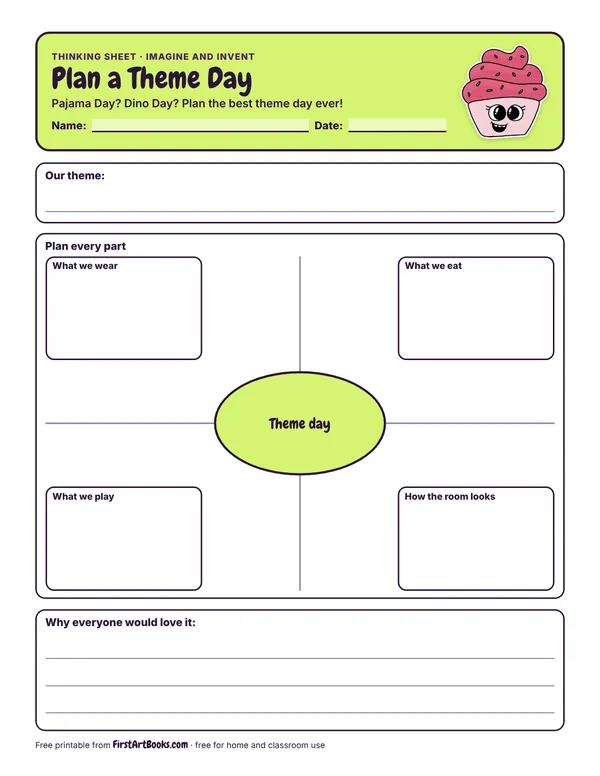
Plan a whole theme day for your class: the theme, outfits, food, games and decorations.
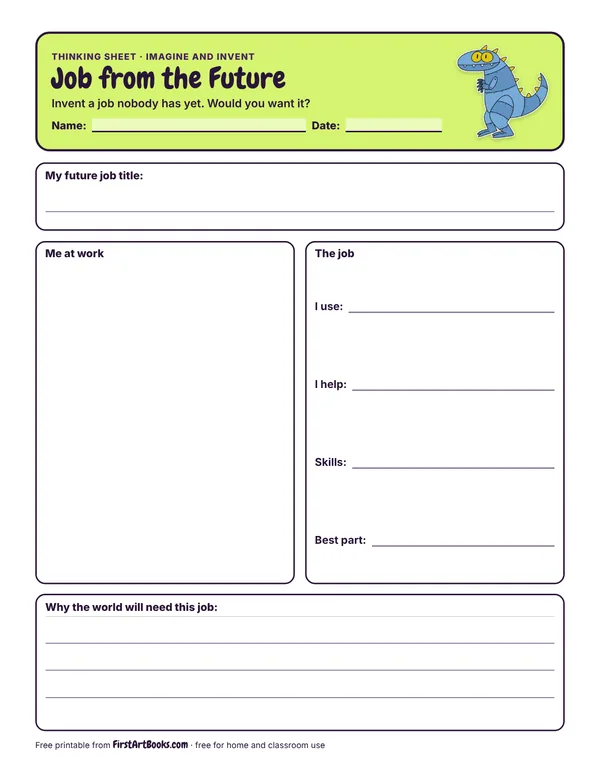
Invent a job that doesn’t exist yet, like robot dog walker, and describe a day at work.
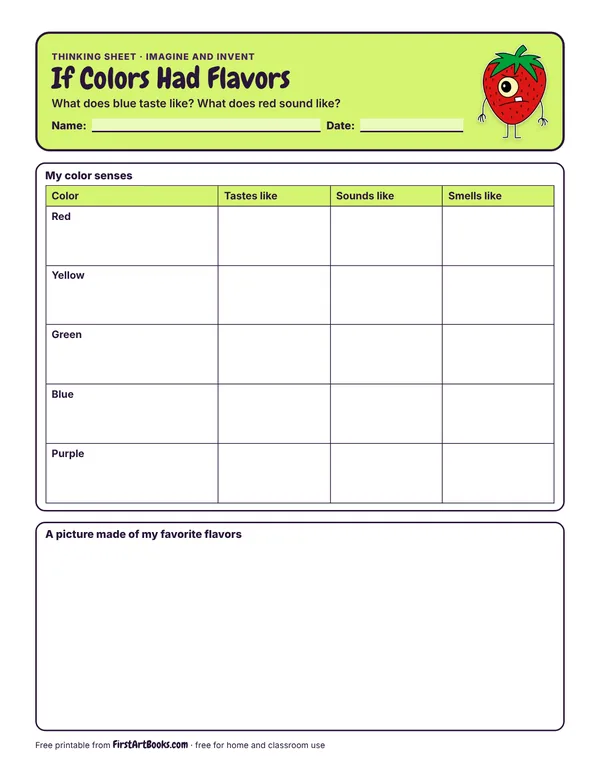
Give every color a taste, a sound and a smell, and paint a delicious picture.
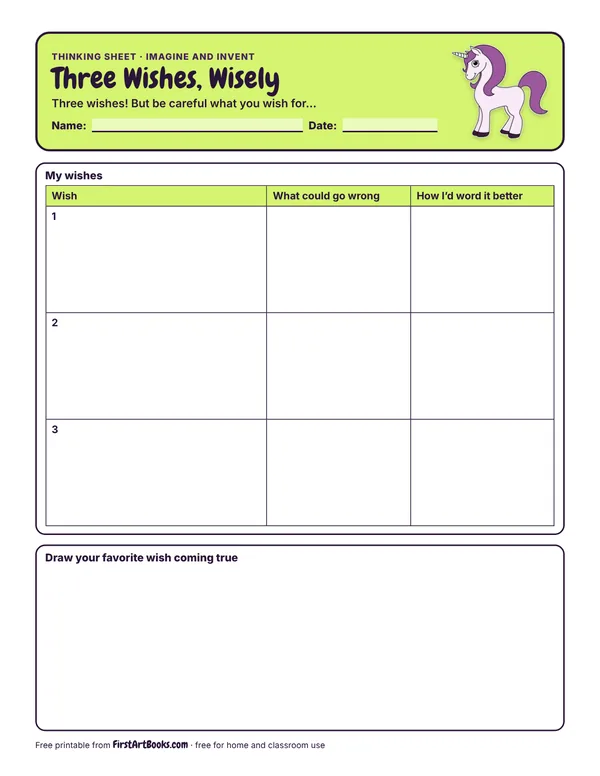
You get three wishes, but each one has a catch. Plan them carefully.
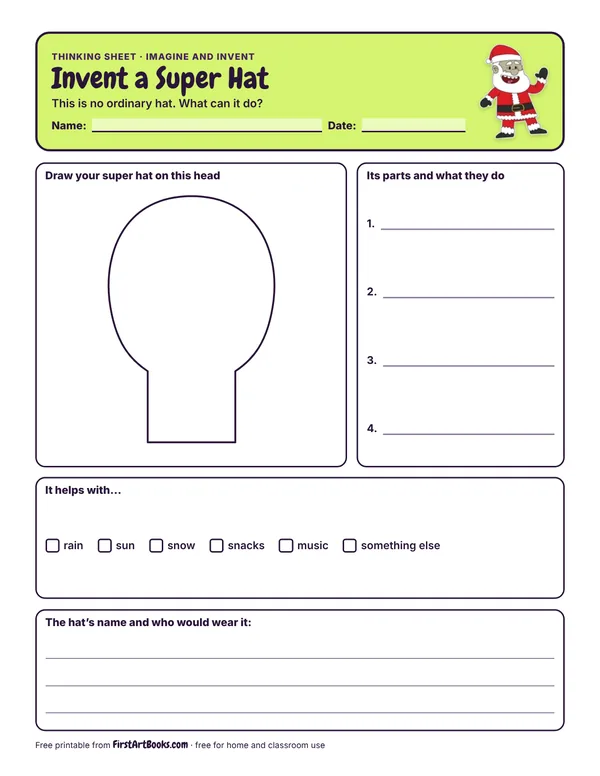
Design a hat that does something amazing: keeps rain off, makes snacks or plays music. Label every part.
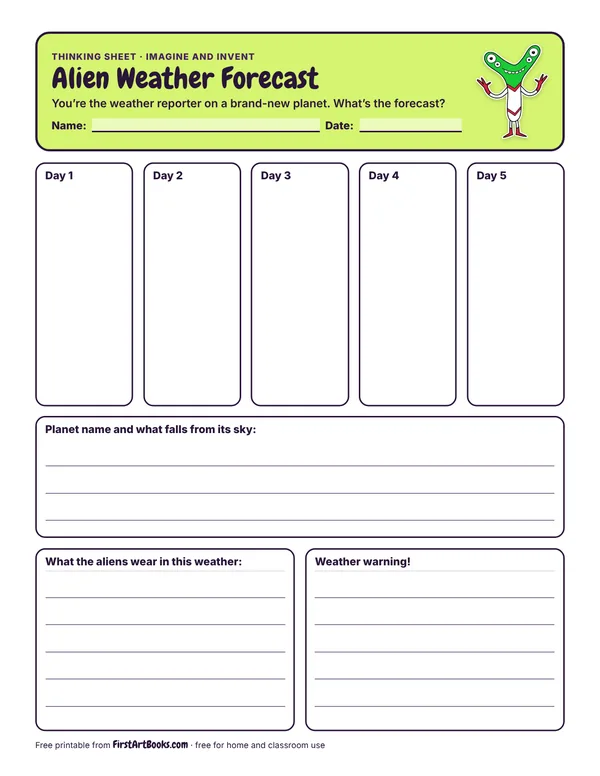
On another planet it might rain jelly or snow glitter. Make a five-day forecast for a planet you invent.
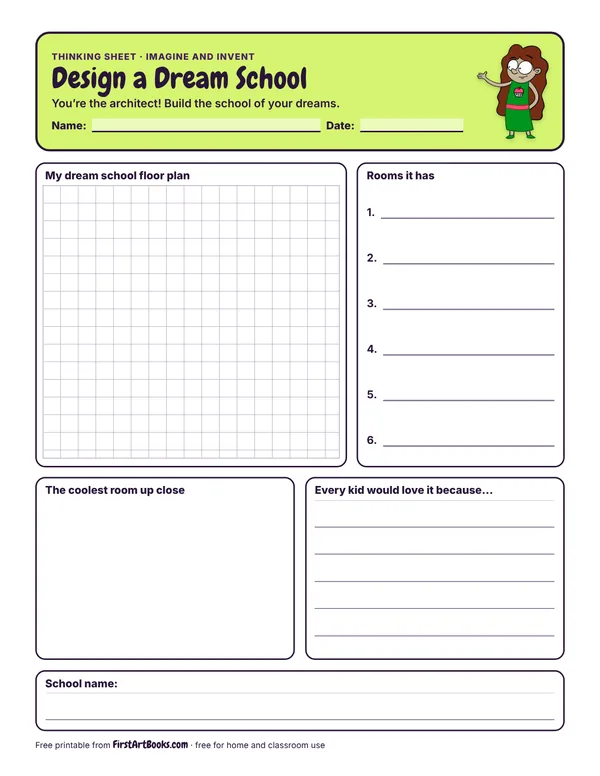
If you could build any school, what would it have? Draw the floor plan, the schedule and the best room.
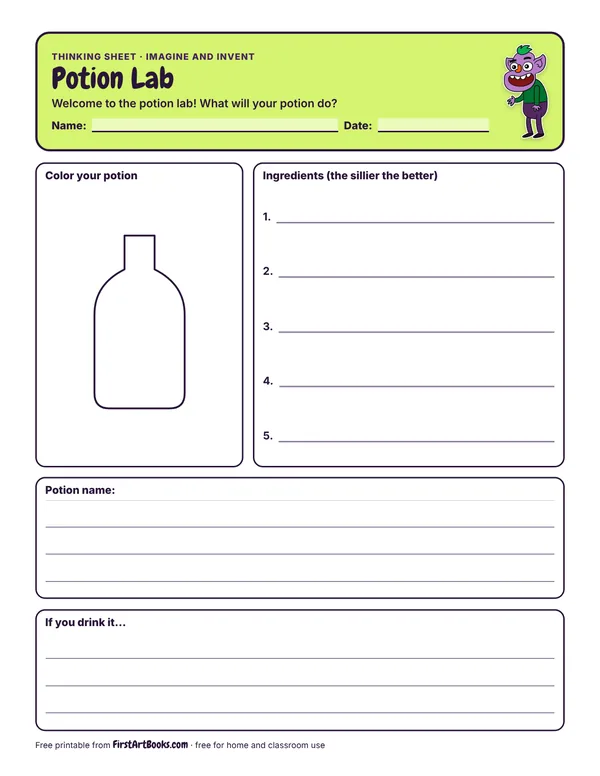
Mix up a magical potion. Draw the bottle, list the silly ingredients and explain what happens to anyone who drinks it.
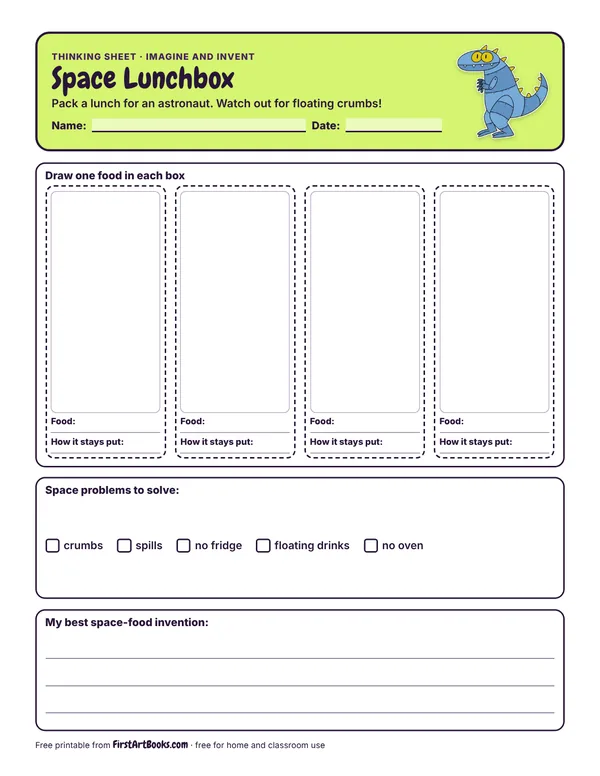
Food floats in space! Pack a lunch an astronaut could eat without crumbs flying everywhere.
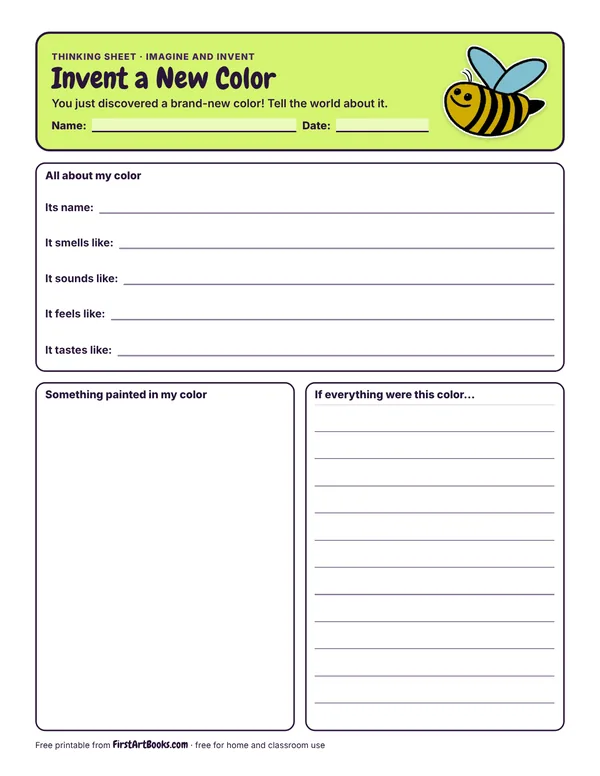
Imagine a color nobody has ever seen. Give it a name, a smell, a sound and a feeling, and draw what it would paint.
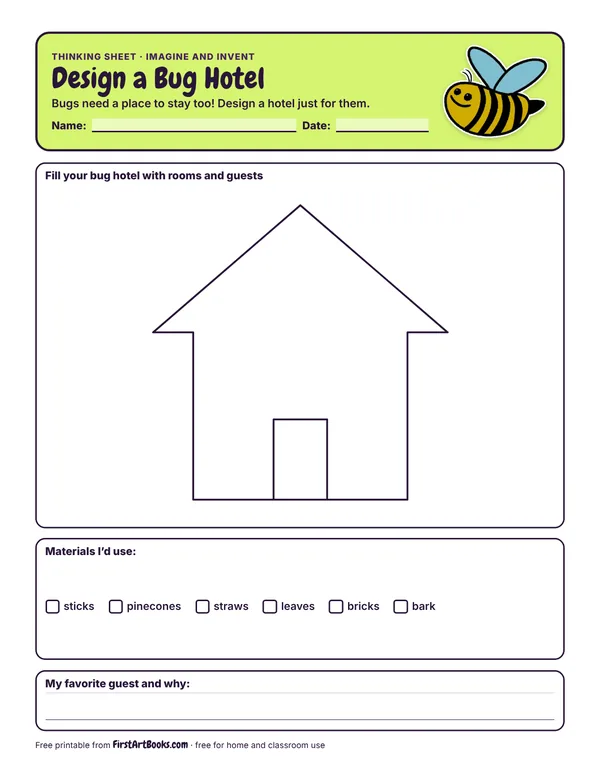
Plan a hotel for bees, beetles and ladybugs. Draw the rooms, the guests and what each room is made of.
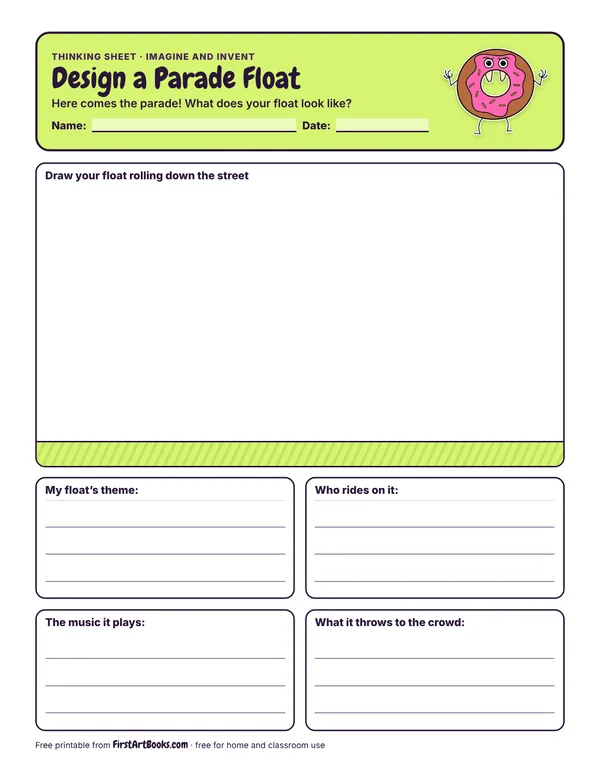
Your float is in the big parade. Pick a theme, design the float and decide who rides on it.
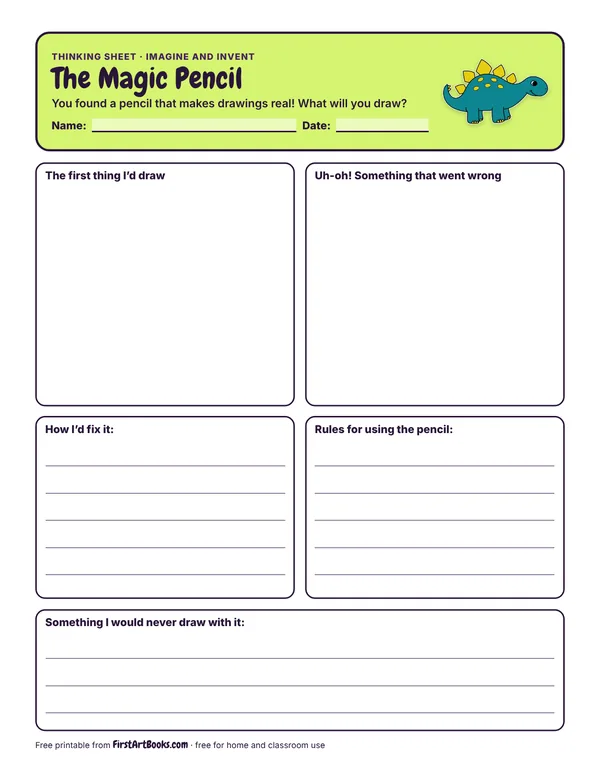
Everything this pencil draws comes to life. What would you draw first, and what could go wrong?
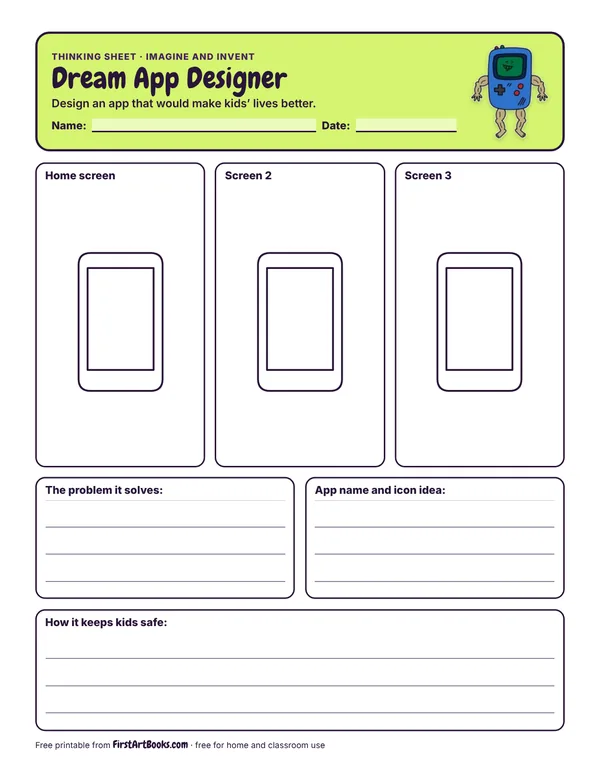
Design an app that solves a real kid problem. Sketch its screens, buttons and name.
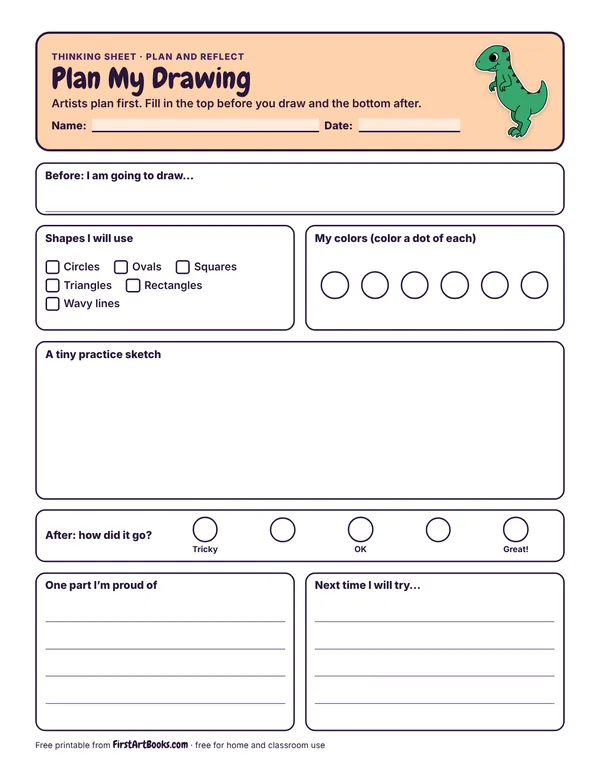
Before you draw: choose your idea, shapes and colors. After you draw: look back and set a goal.
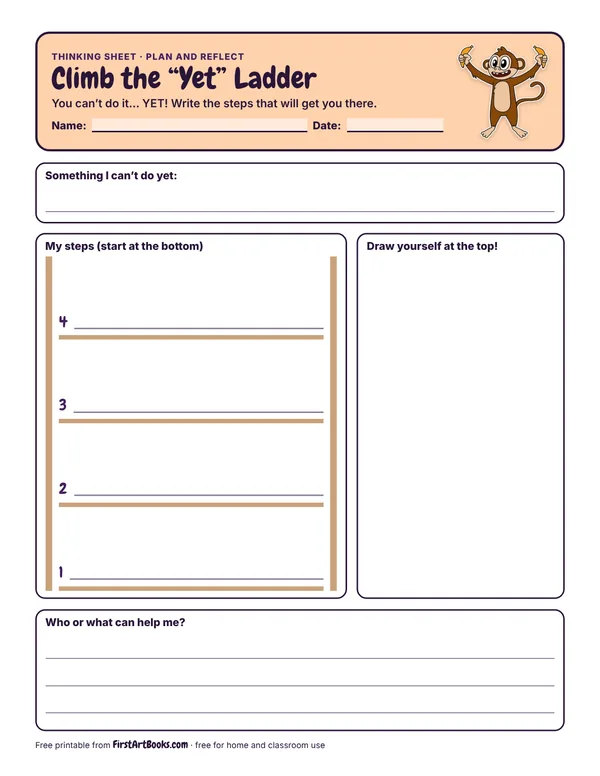
Name something you can’t do yet, then plan the small steps that get you to the top.
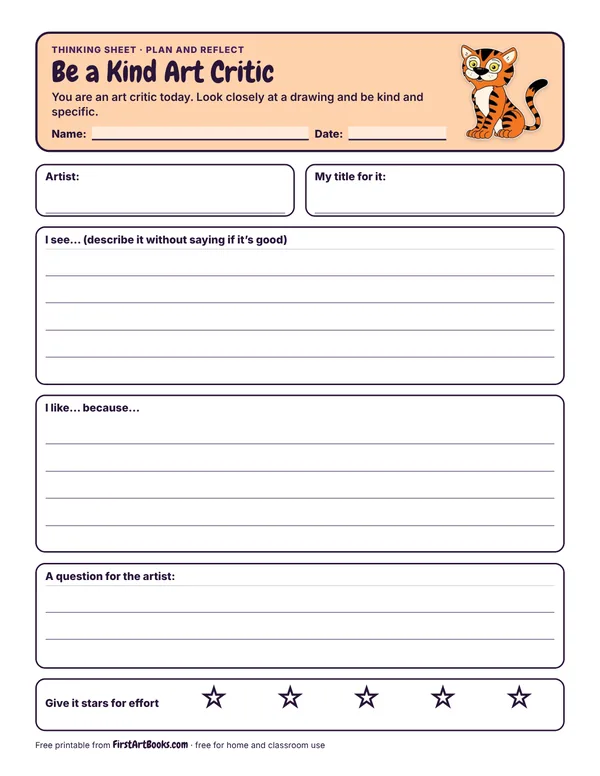
Look at a friend’s drawing like a museum critic: describe it, praise it, ask a question and give it a title.
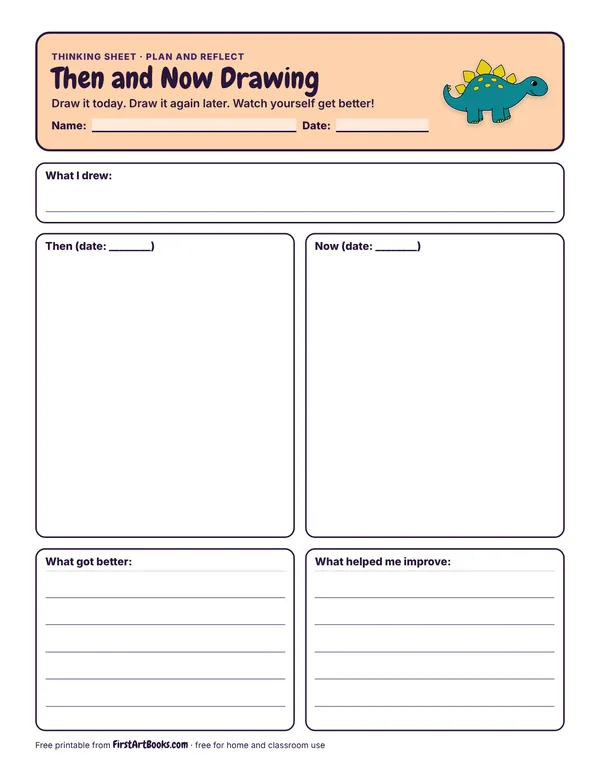
Draw the same thing today and again in a few weeks. Compare them and spot what improved.

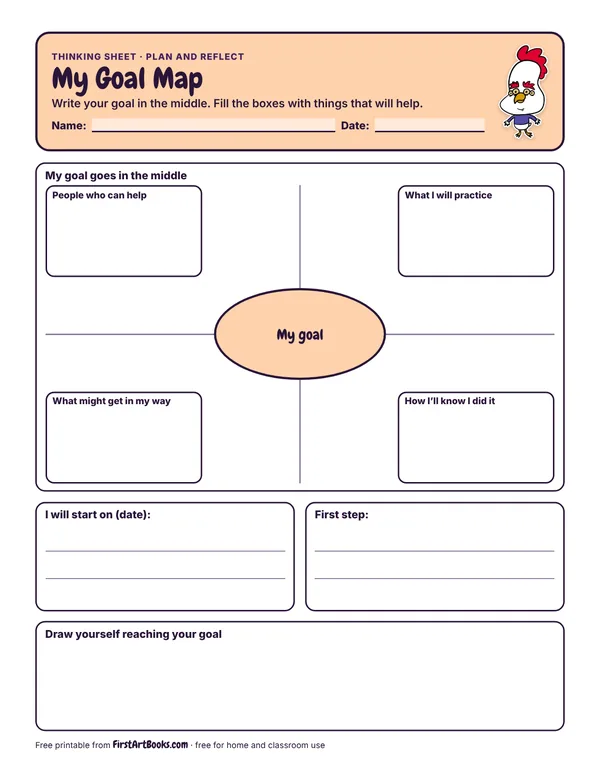
Put a goal in the middle and map out everything that will help you reach it.
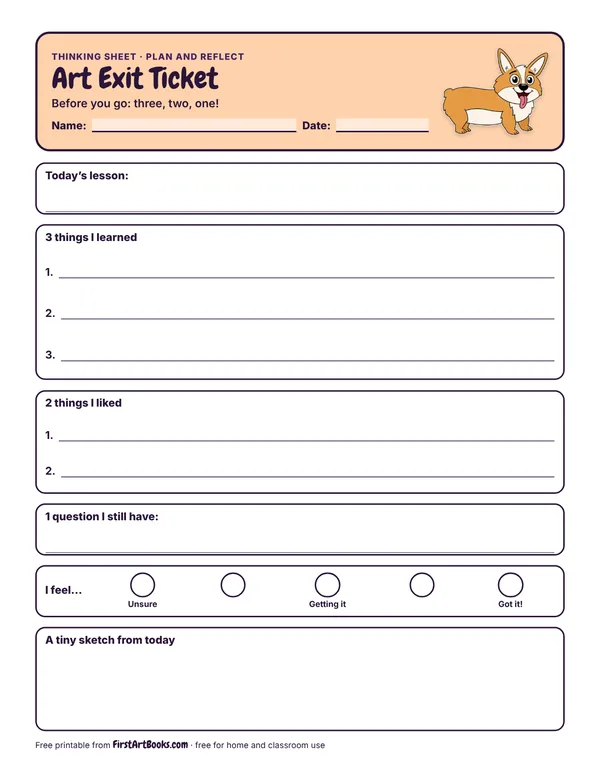
A quick 3-2-1 after any art lesson: three things learned, two liked, one question.
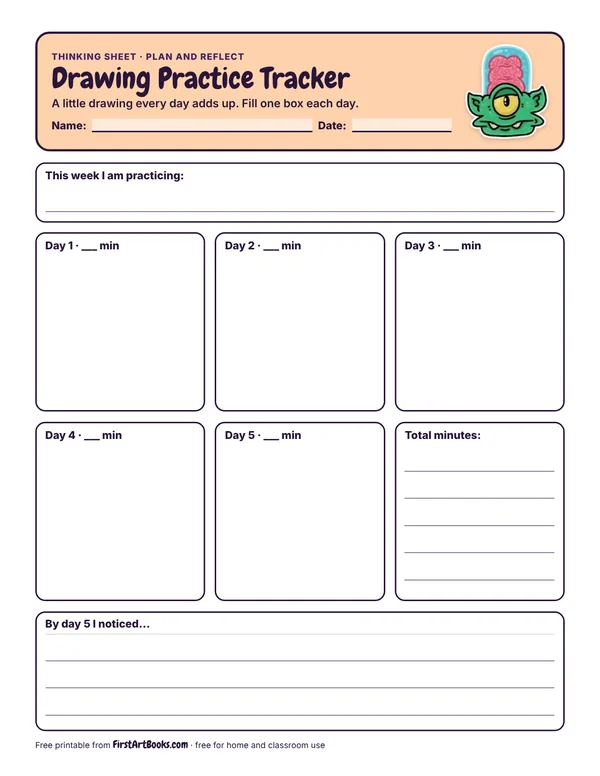
One small sketch a day for five days. Track the minutes and see what changes by Friday.
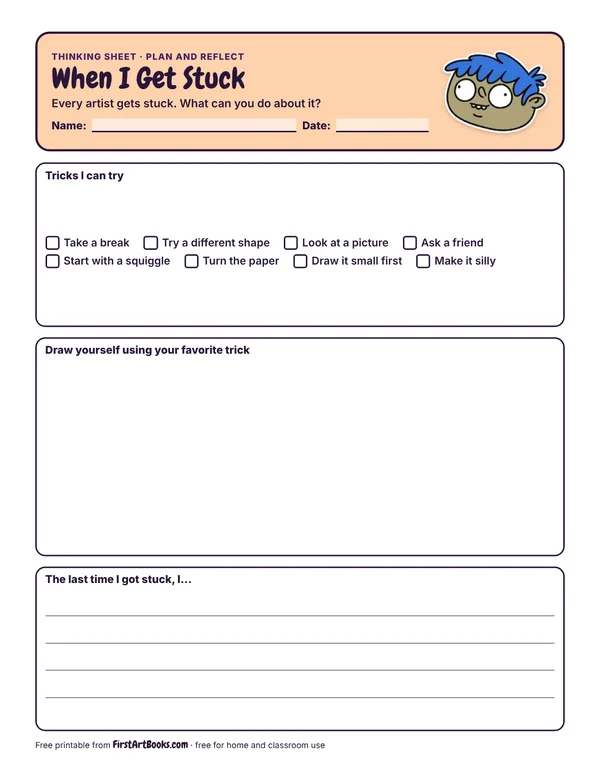
Collect your best tricks for getting unstuck, then draw yourself using one.
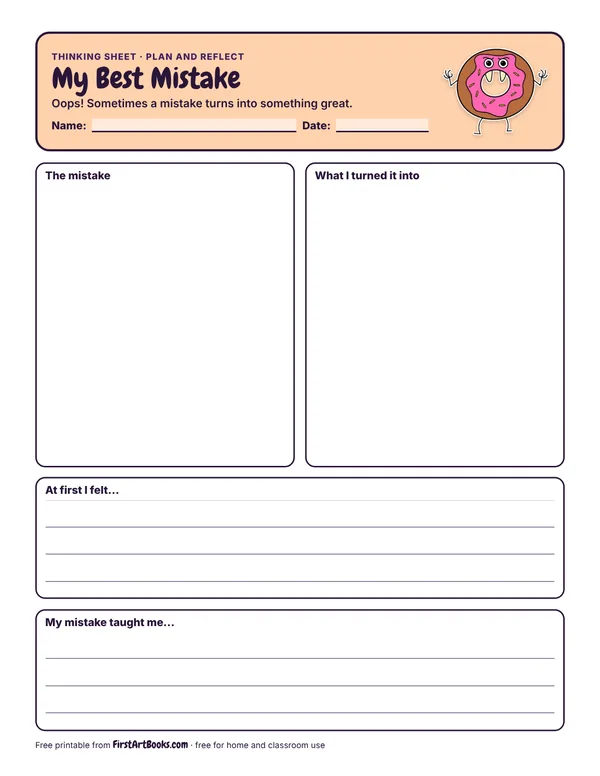
Some mistakes turn into the best ideas. Draw one before and after, and what it taught you.
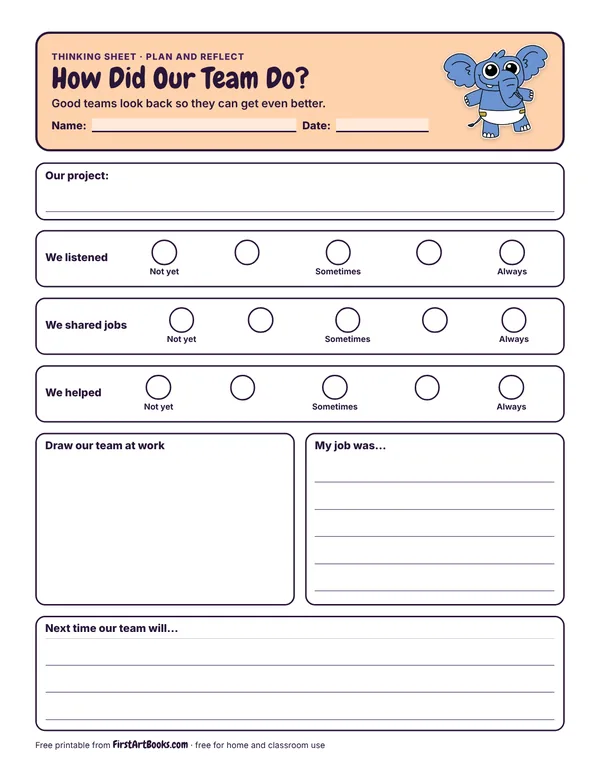
After a group project: rate how the team listened, shared and helped, and plan one thing to do better.
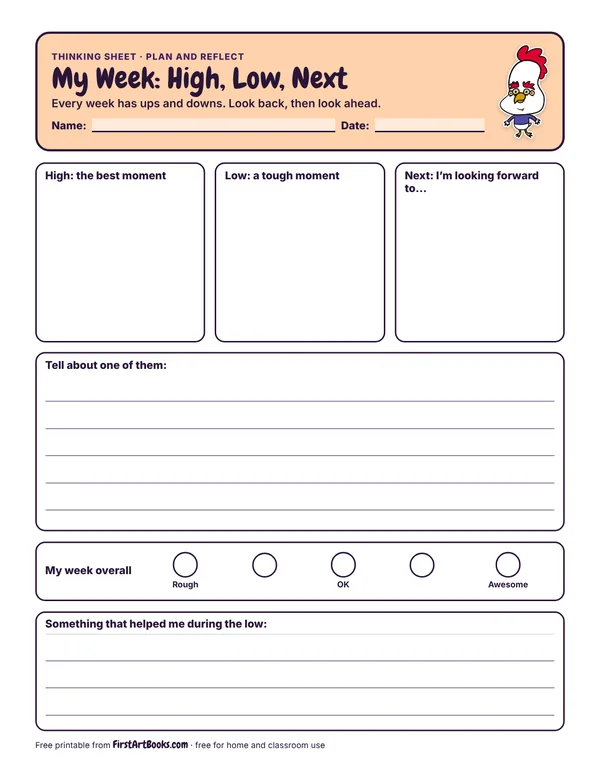
Look back on the week: the best moment, the tough moment and something to look forward to.
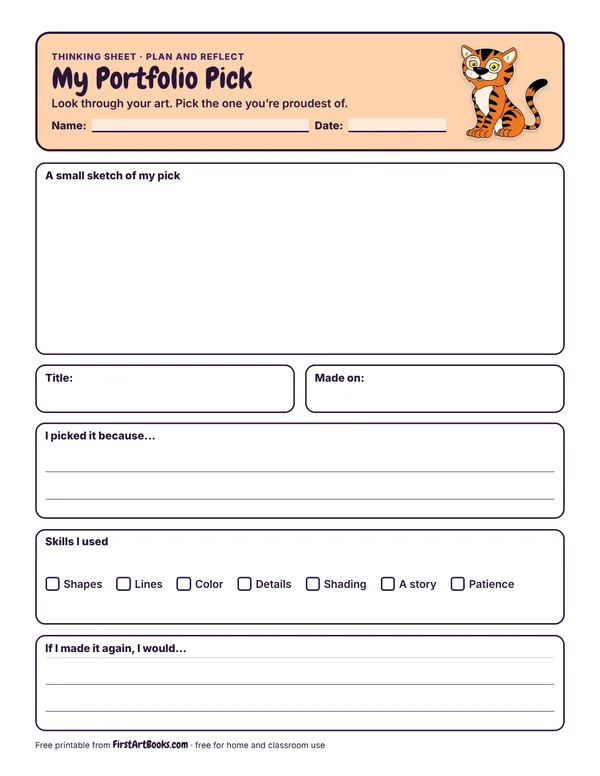
Choose your best piece of art from the term and explain what makes it your best.
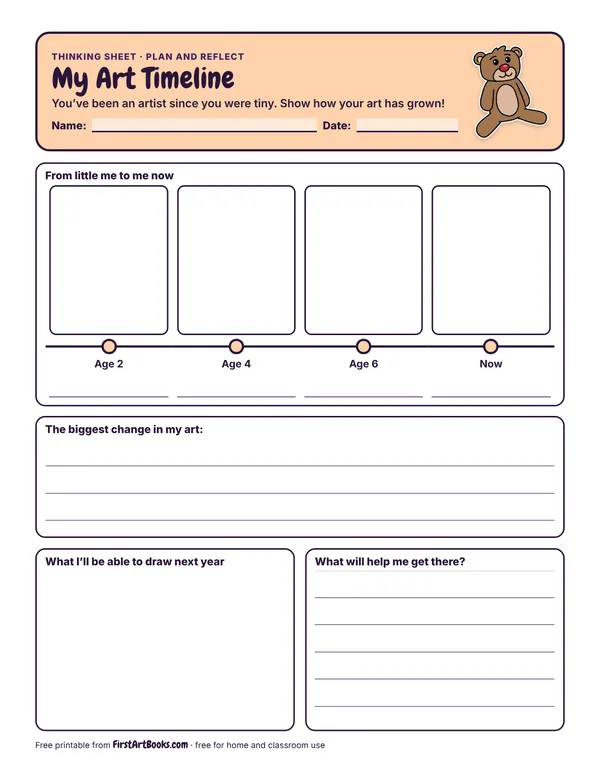
Draw how your drawings changed: a scribble from when you were little, up to the art you make now.
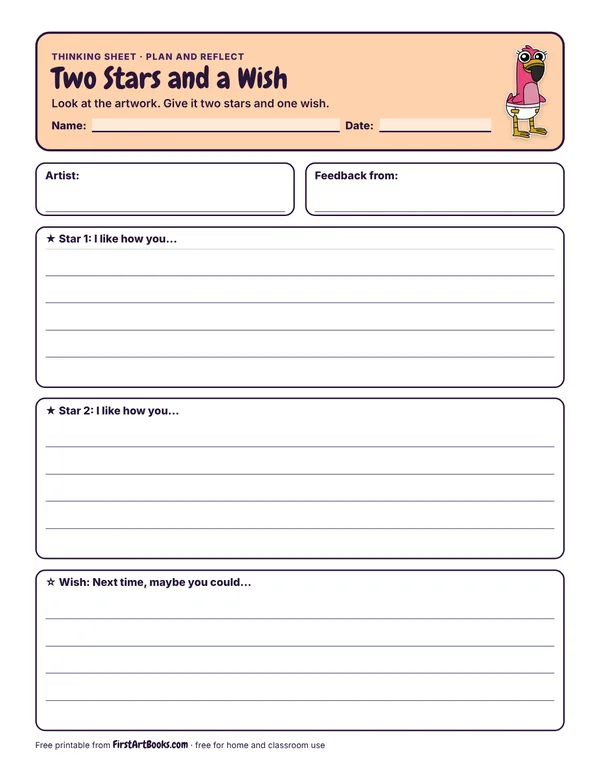
Kind, useful feedback in three parts: two things that worked and one wish for next time.
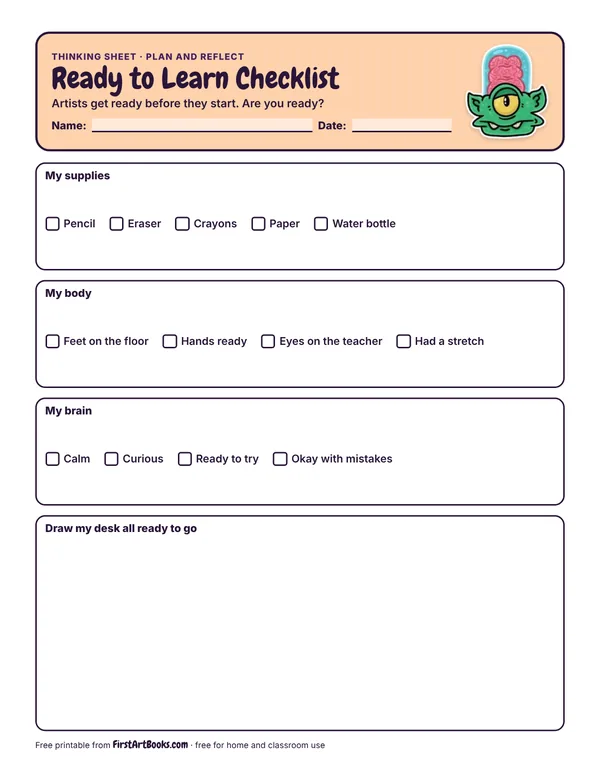
Check that your supplies, body and brain are ready before a lesson, and draw your ready-to-go desk.
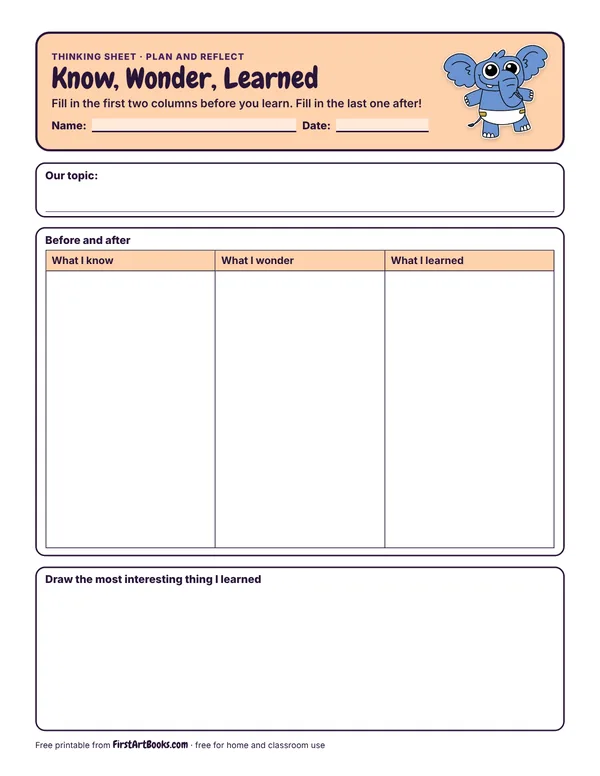
Before a topic, write what you know and wonder. After, write and draw what you learned.
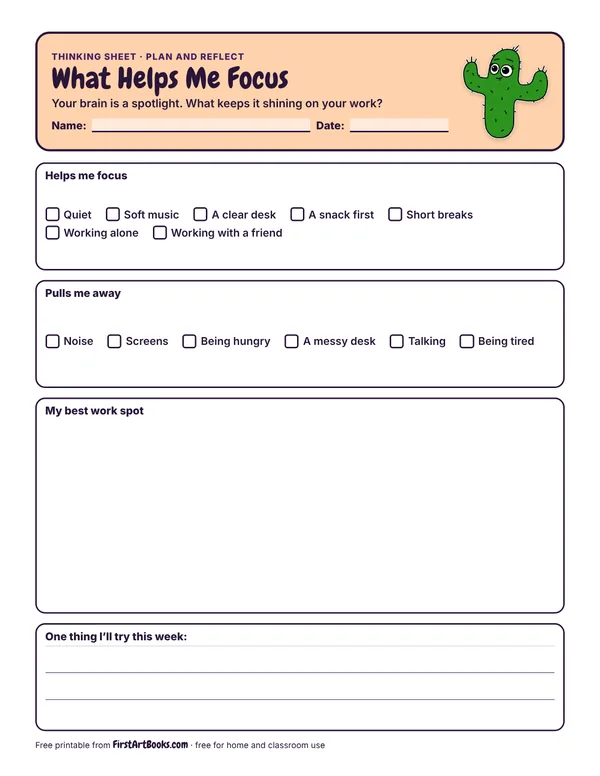
Find what helps you concentrate and what pulls you away, then draw your best work spot.
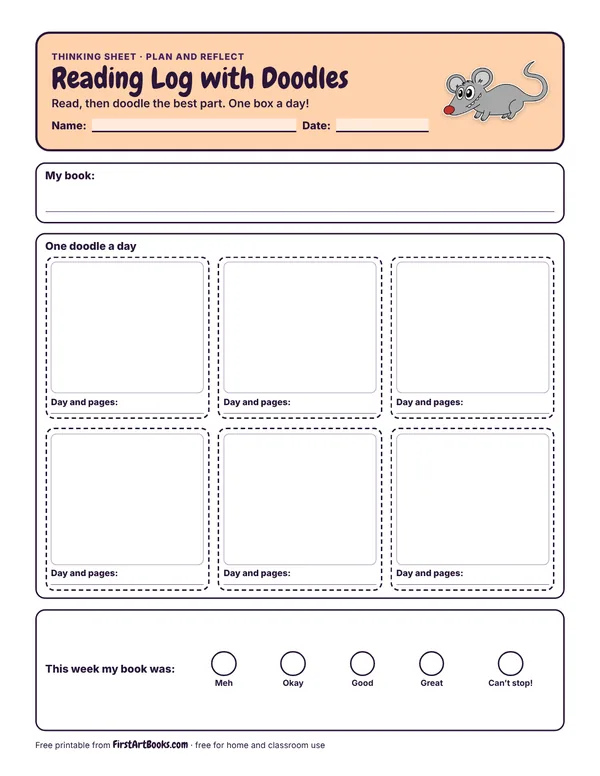
Log a week of reading with a quick doodle for each day’s favorite moment.
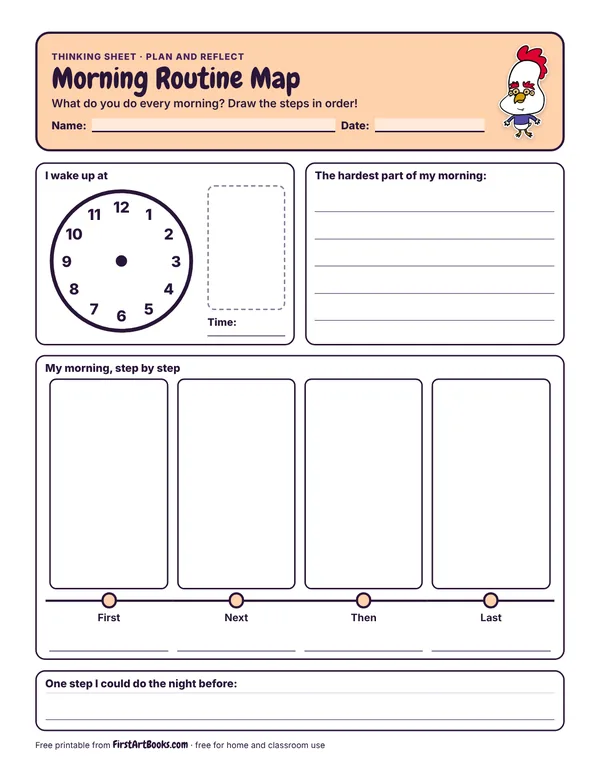
Map your morning from waking up to the school door, with a clock for when it starts.
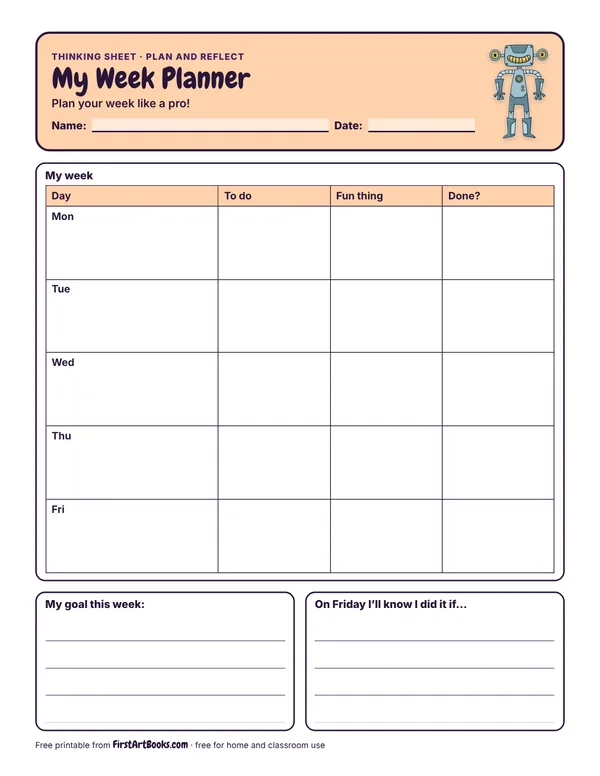
Plan the school week: what’s due, what’s fun and one goal for each day.
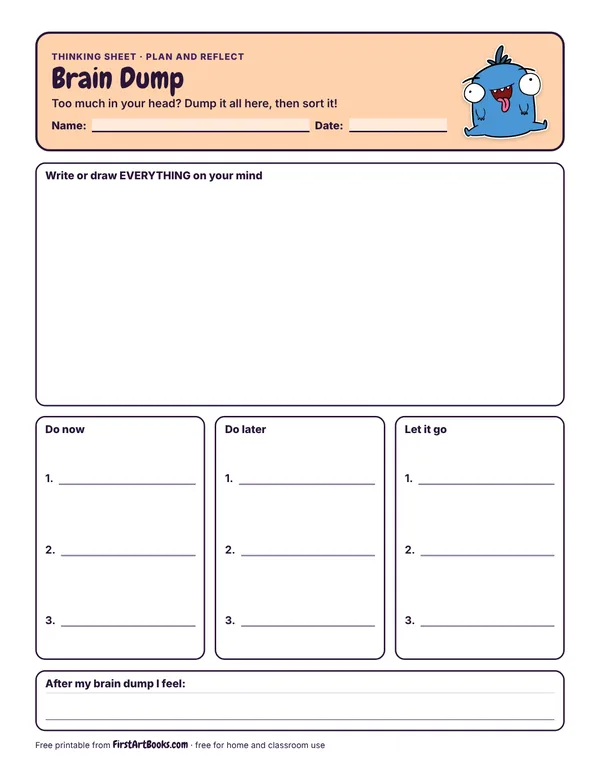
Empty every thought onto the page, then sort them into do now, do later and let go.
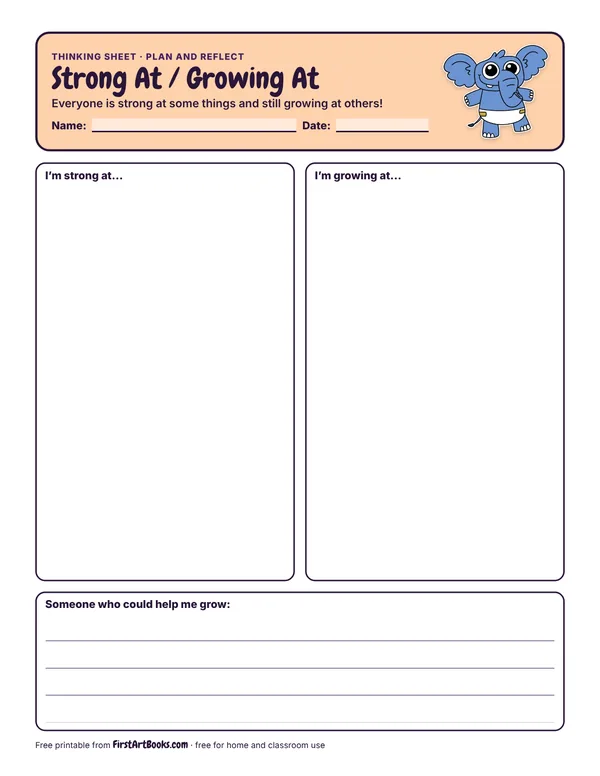
Draw things you’re strong at on one side and things you’re still growing at on the other.
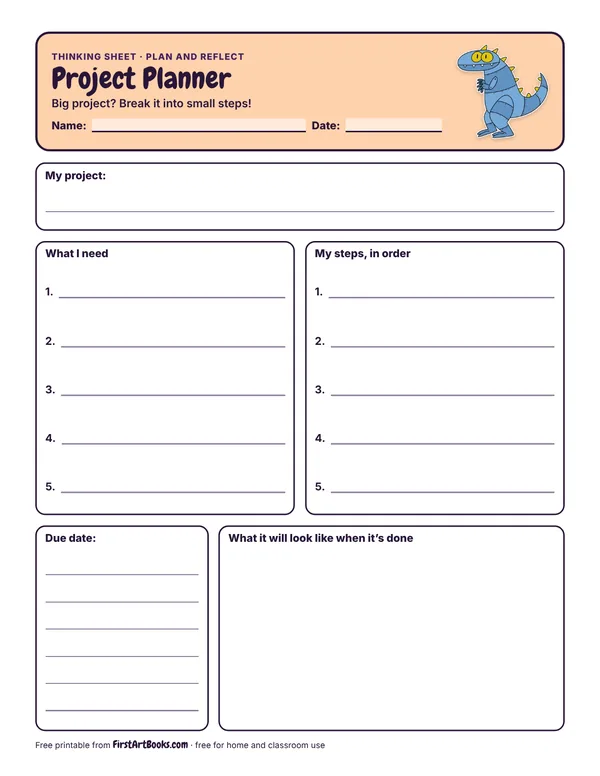
Plan a big project: the goal, the stuff you need, the steps and the deadline.
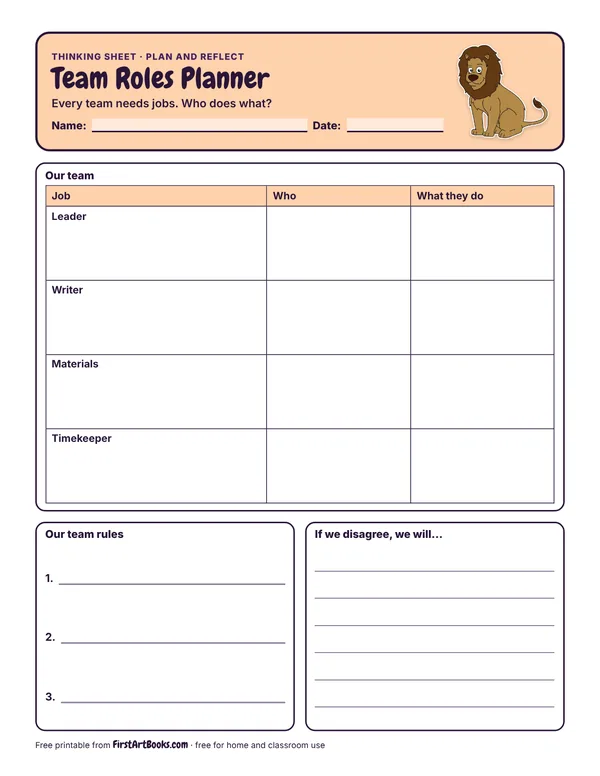
Give everyone on the team a job and agree how you’ll work together.
Put a topic in the middle and branch out with facts, pictures and questions.
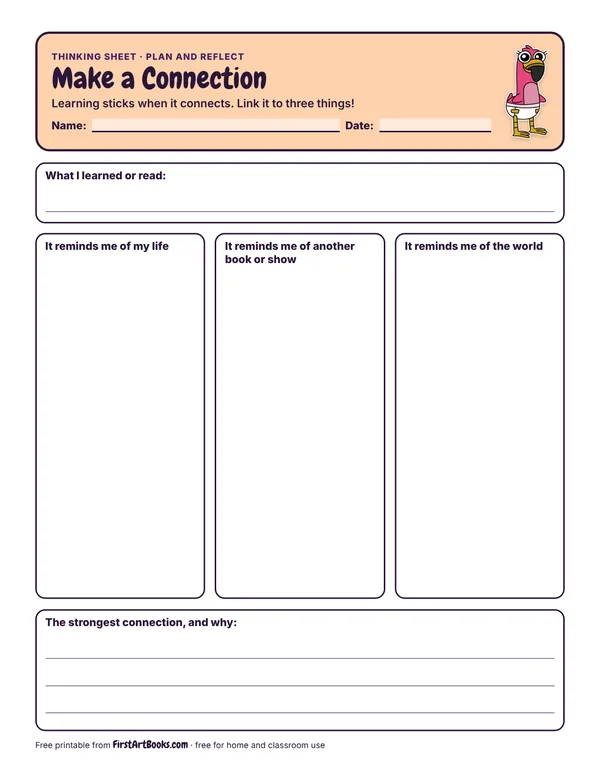
Connect what you learned to your life, another book and the wider world.
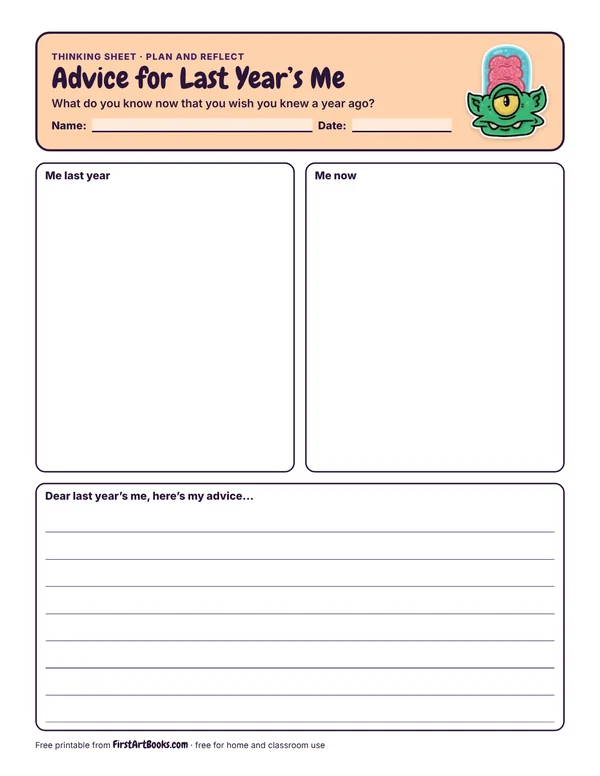
Write advice to yourself one year ago, and draw how much you’ve changed.
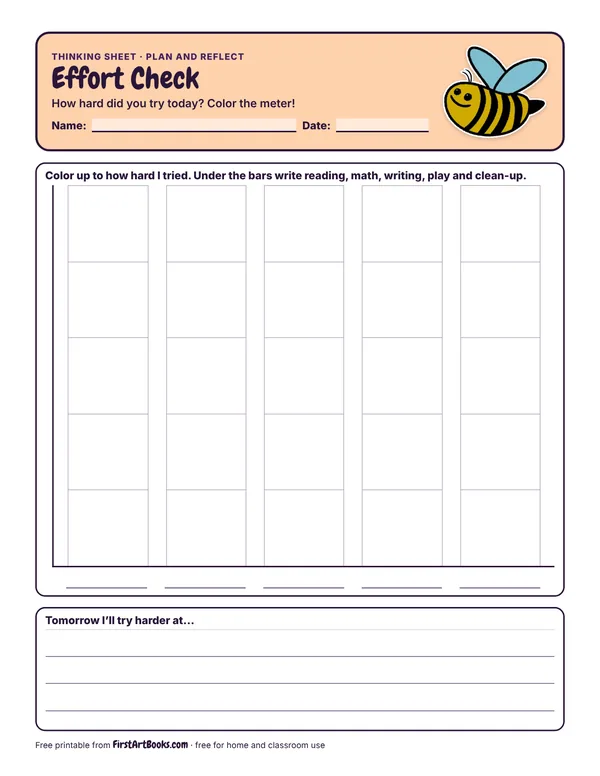
Fill the effort meter for each part of the day and spot where you worked hardest.
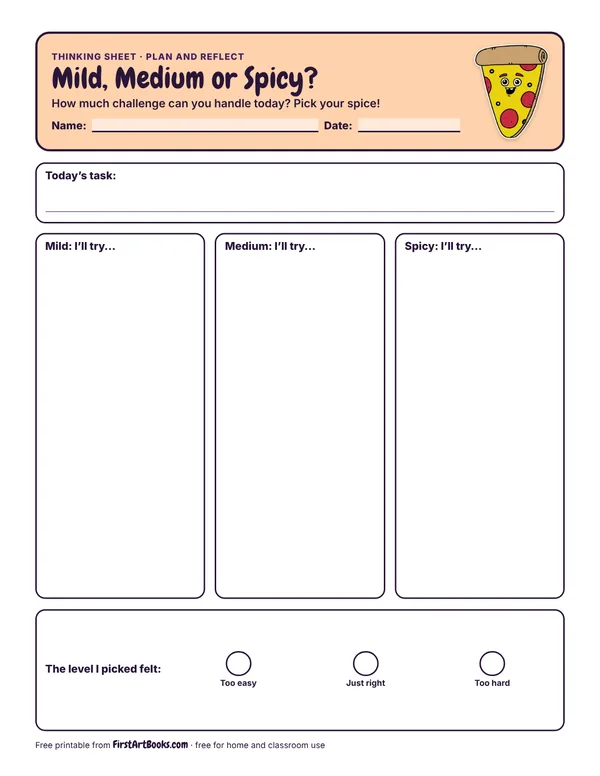
Pick your challenge level: try a mild, medium or spicy version of the same task.
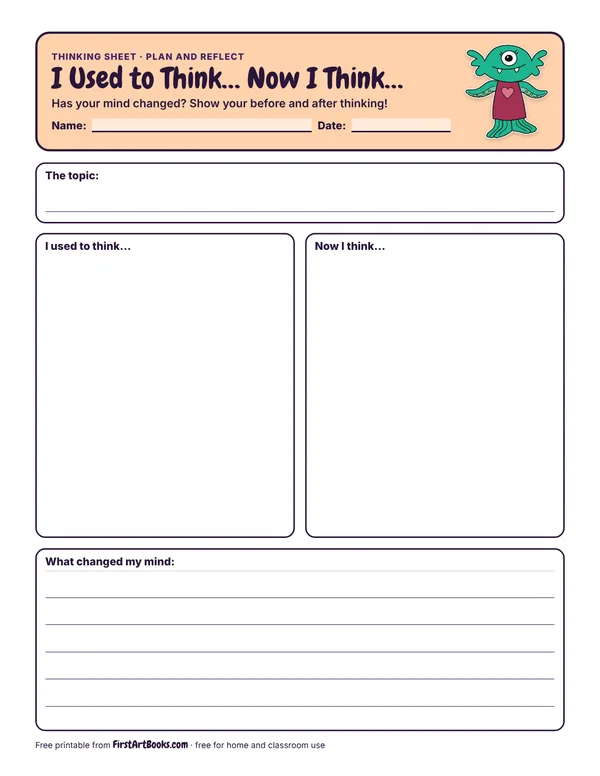
Show how your thinking changed after a lesson, book or experiment.
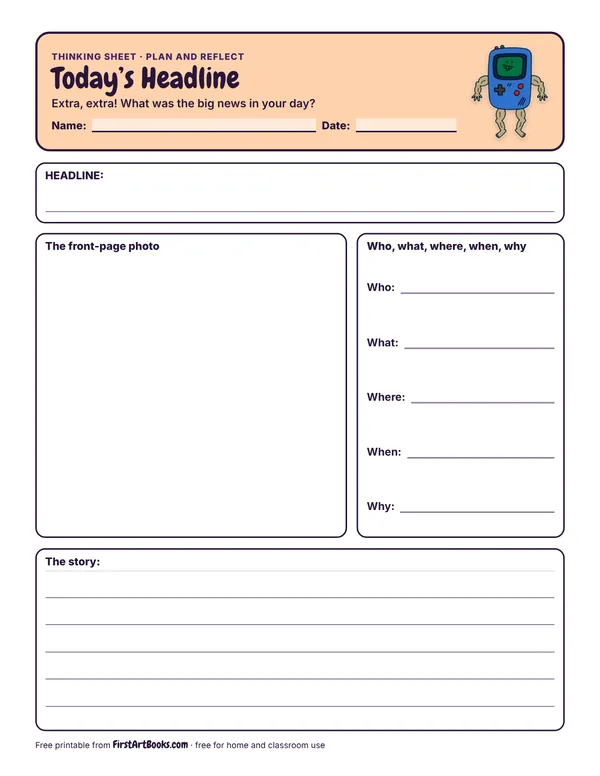
Report on your own day like a newspaper: a headline, a photo and the big story.
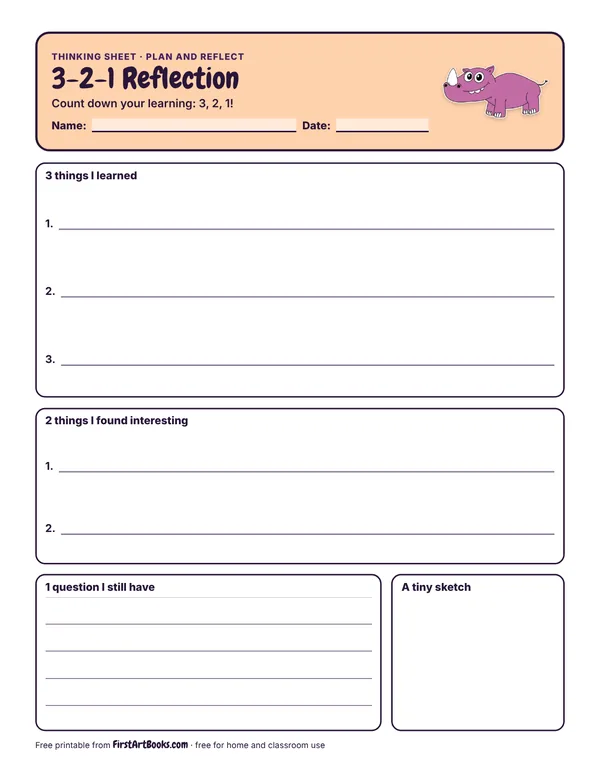
Three things you learned, two you found interesting and one question you still have.
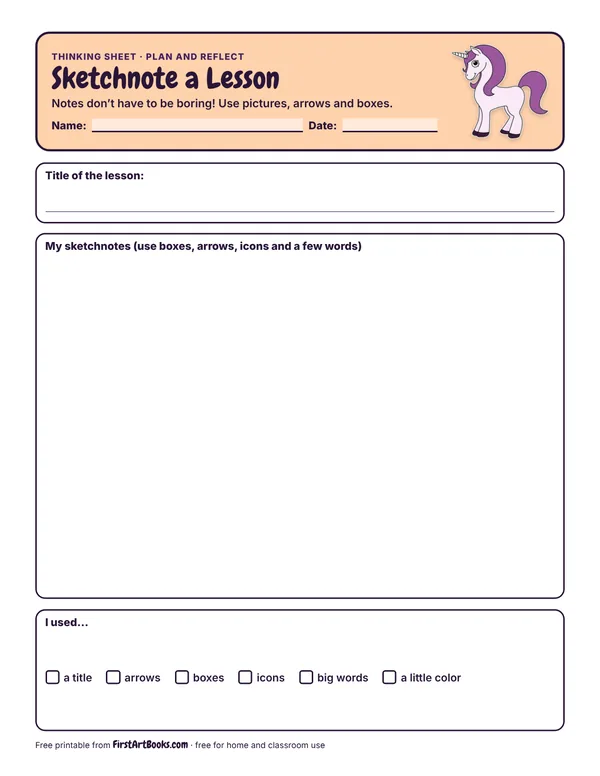
Take notes with pictures, arrows, boxes and a few words, the way sketchnoters do.
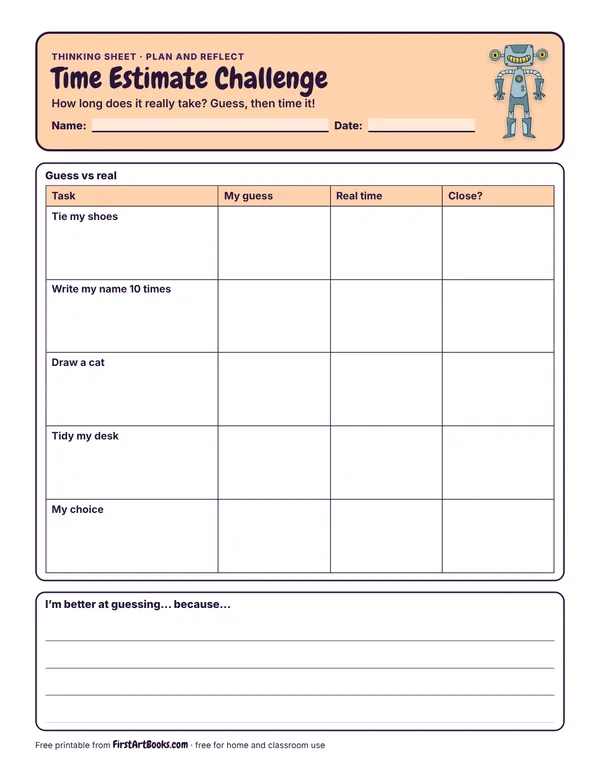
Guess how long tasks will take, time them, then see how good your guesses were.
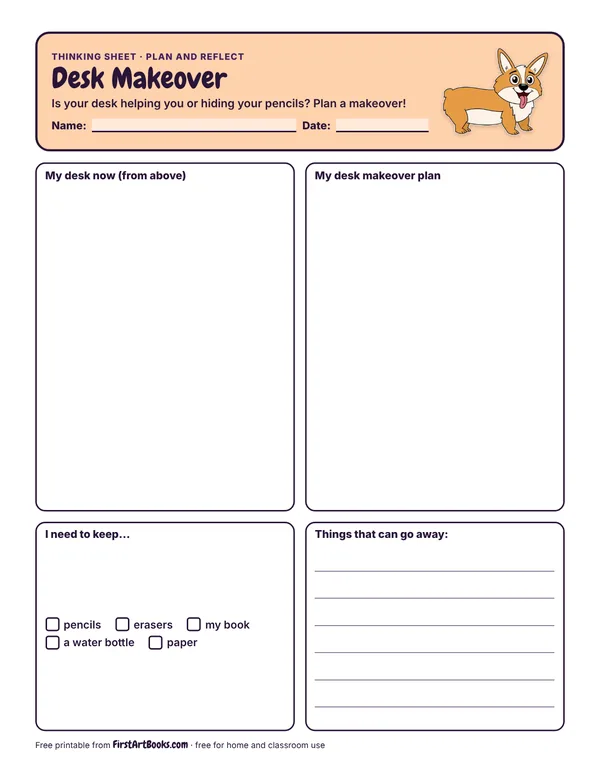
Draw your desk now, plan a better setup and list what will help you work.
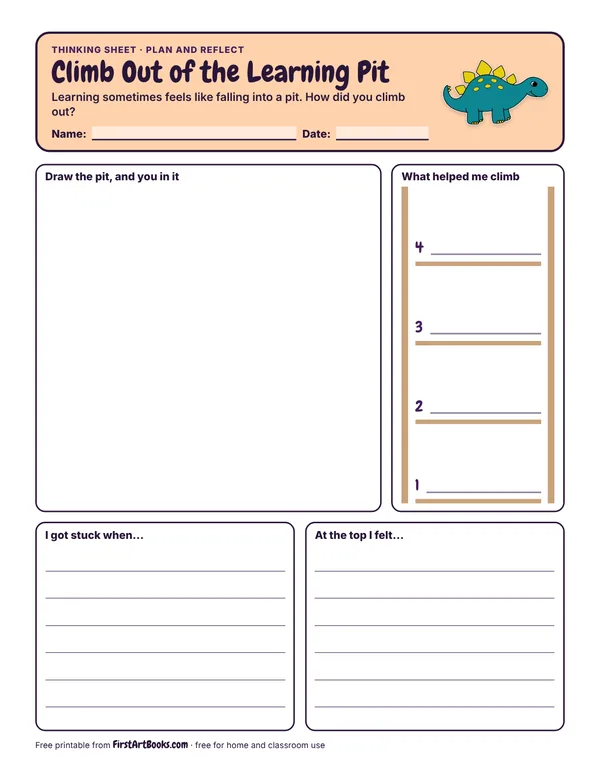
Show where you got stuck, what helped you climb and how it felt at the top.
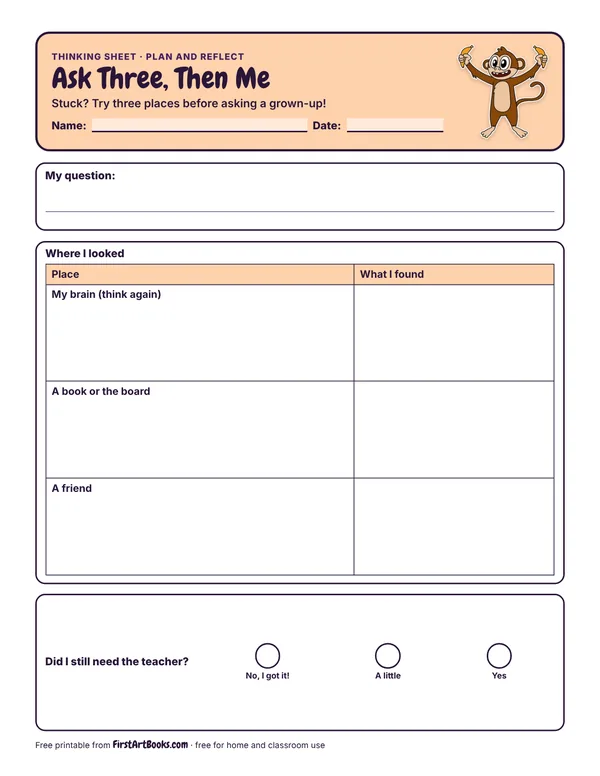
Before asking the teacher, check three other places and record what you found.
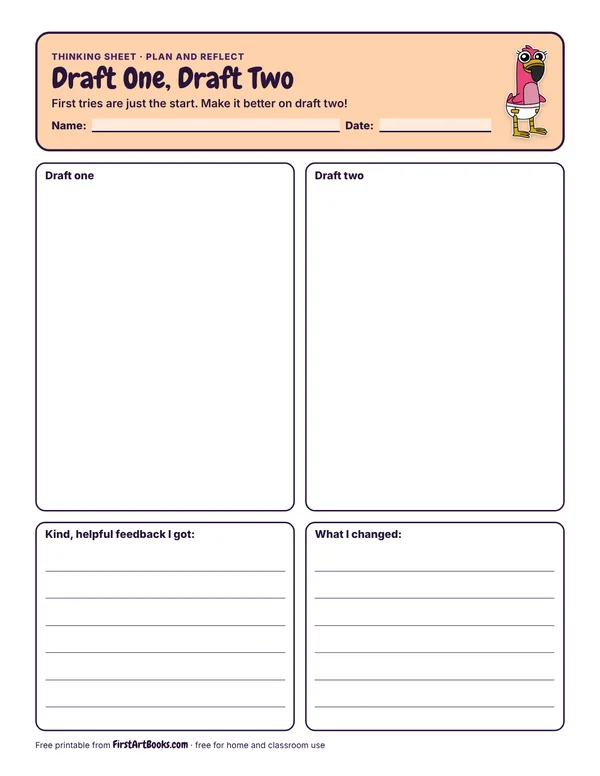
Draw a first try, get feedback, then draw it again and see how much better it got.
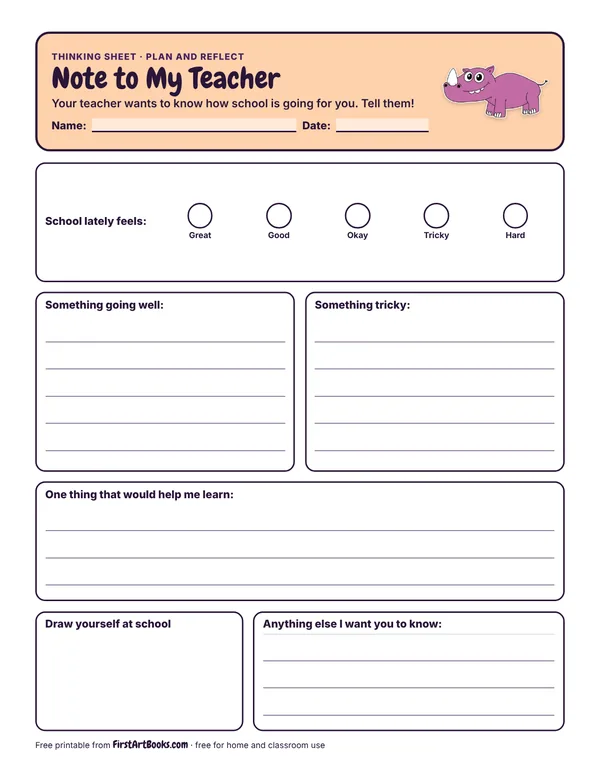
Tell your teacher what’s going well, what’s tricky and one thing that would help you learn, in a short private note.
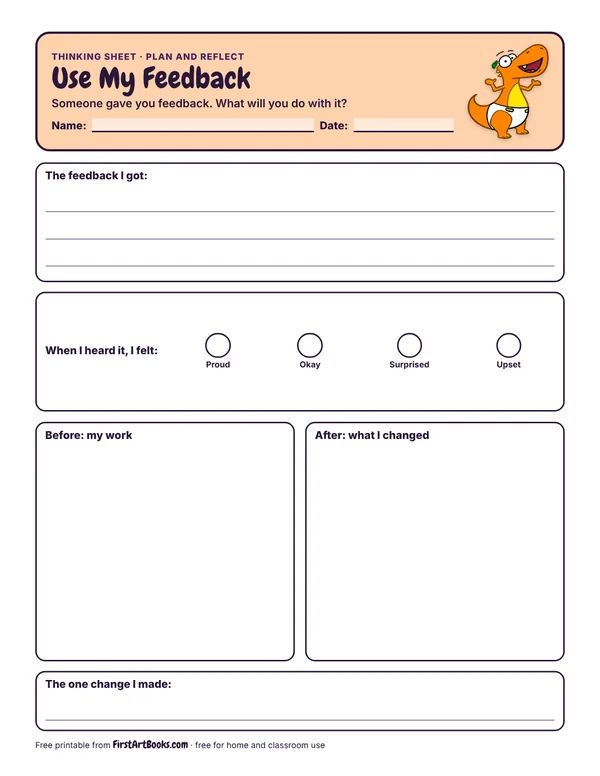
Feedback is a gift. Write what you were told, how it felt and the one change you’ll make next time.
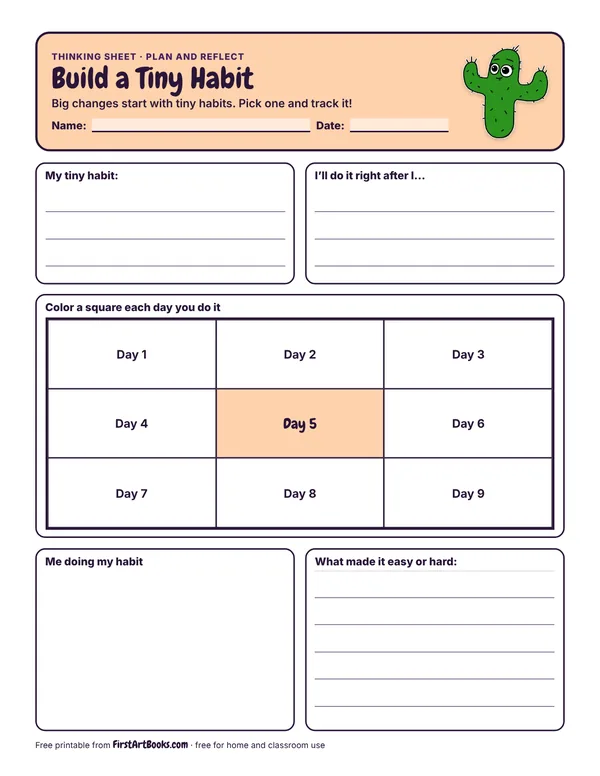
Pick one tiny habit, like drinking water or reading a page, and track it for two weeks.
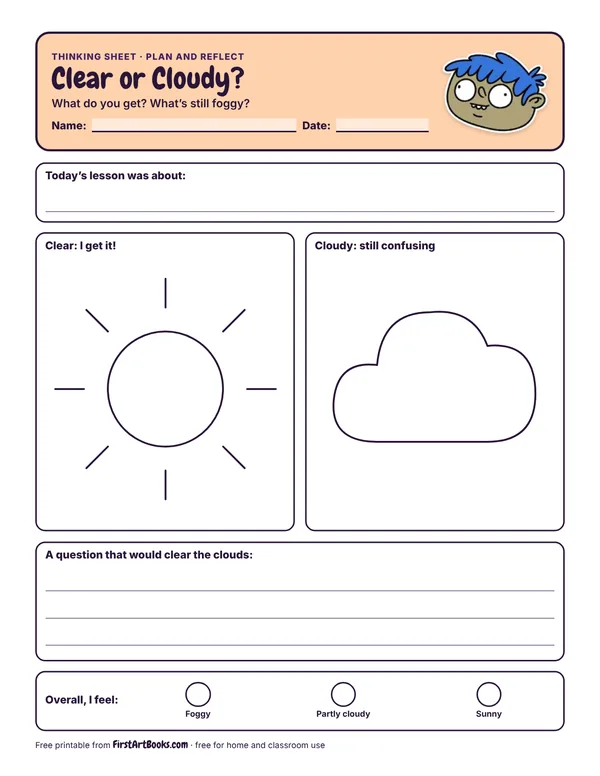
At the end of a lesson, sort what’s clear to you and what’s still cloudy, and write the question that would clear it up.
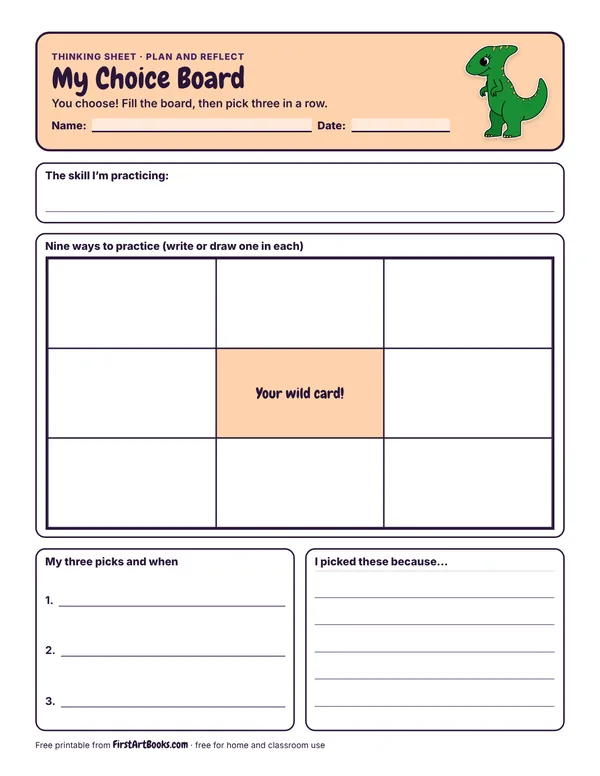
Fill a board with nine ways to practice a skill, pick three in a row and plan when you’ll do them.
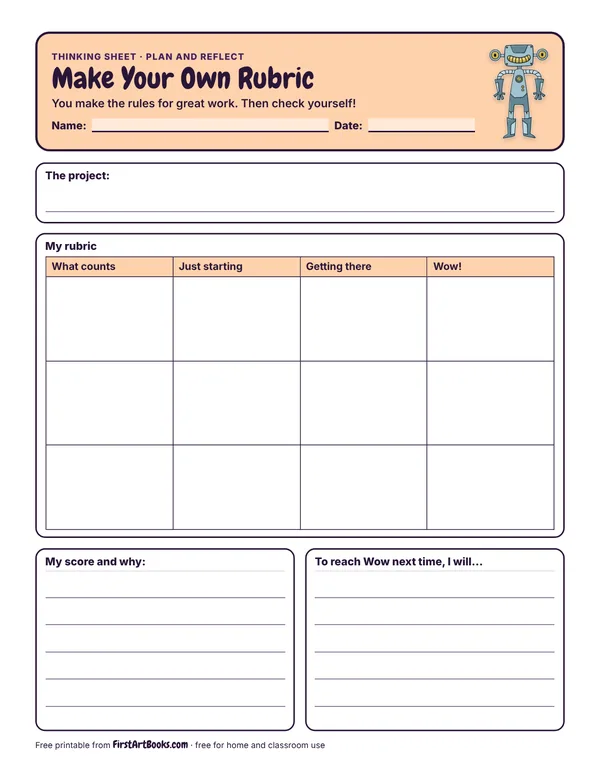
Decide what great work looks like before you start. Write your own rubric, then score your finished work with it.
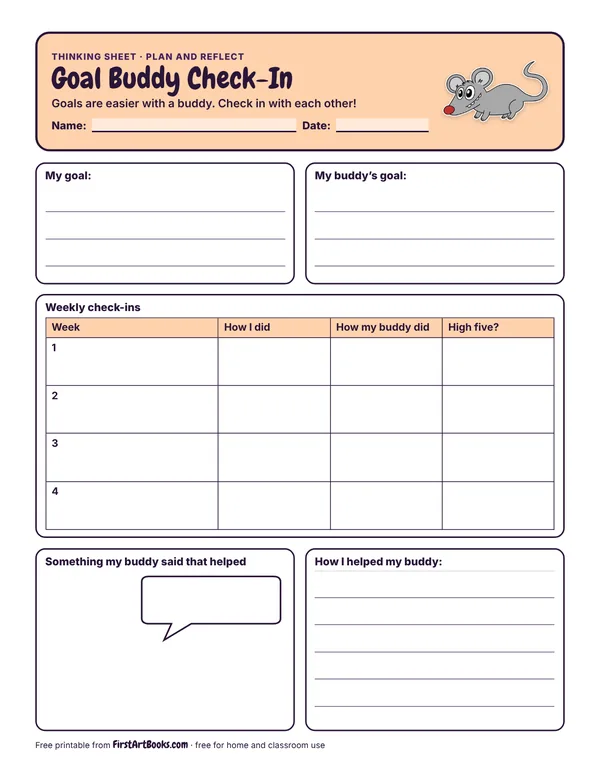
Team up with a goal buddy. Share your goals, check in each week and cheer each other on.
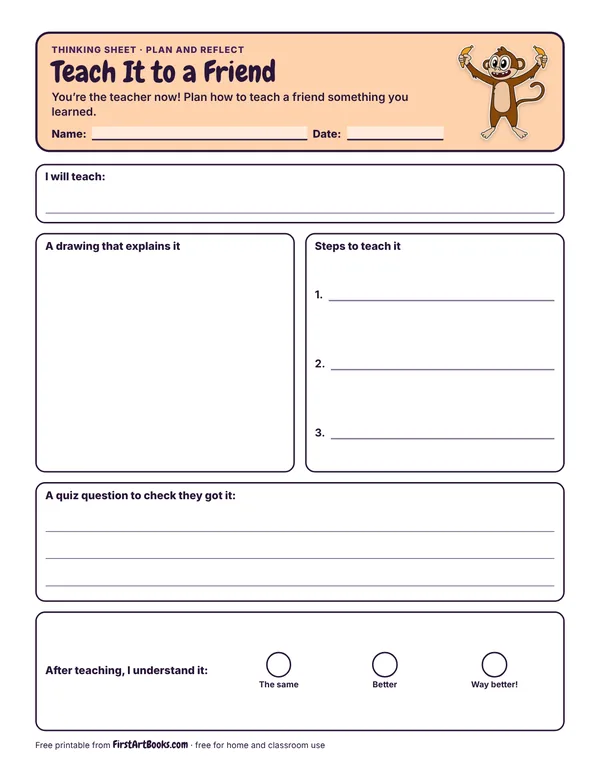
The best way to learn something is to teach it. Plan a mini-lesson with a drawing, three steps and a quick quiz.
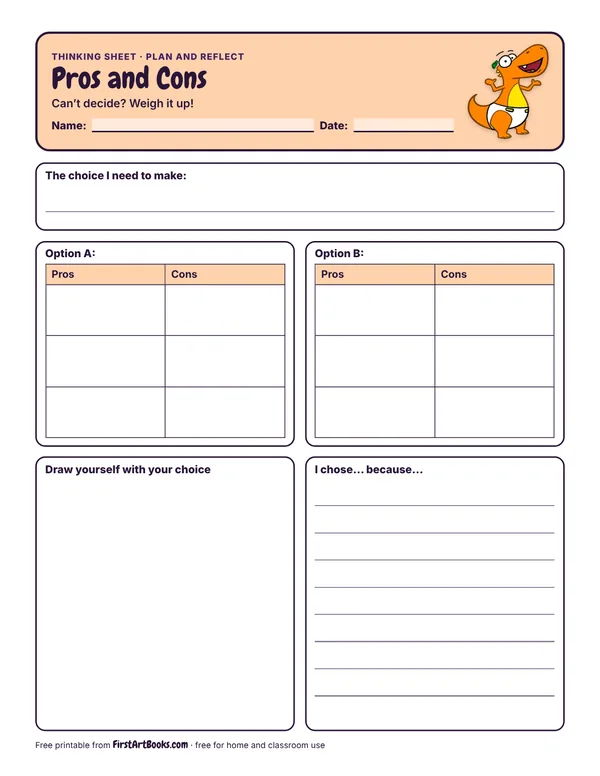
Stuck on a choice? List the good and not-so-good sides of two options and decide which to pick.
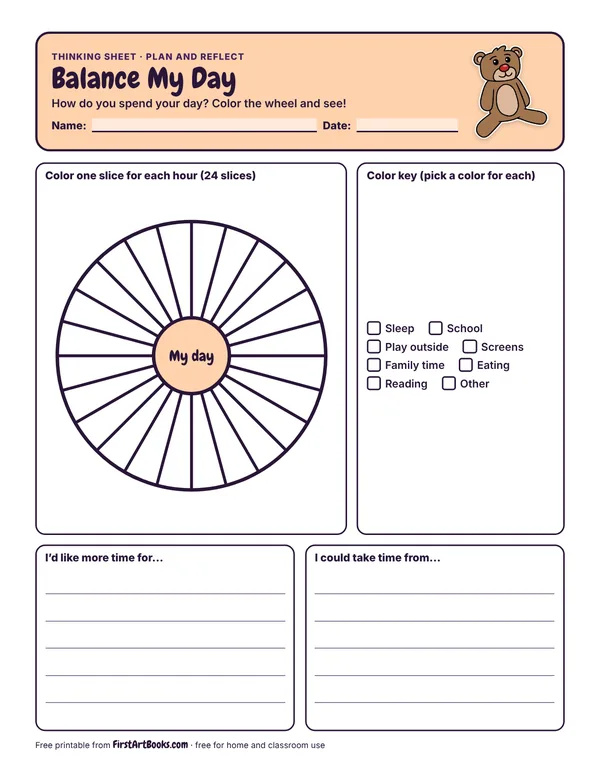
Color a day wheel to show how much time goes to sleep, school, play, screens and family. Is it balanced?
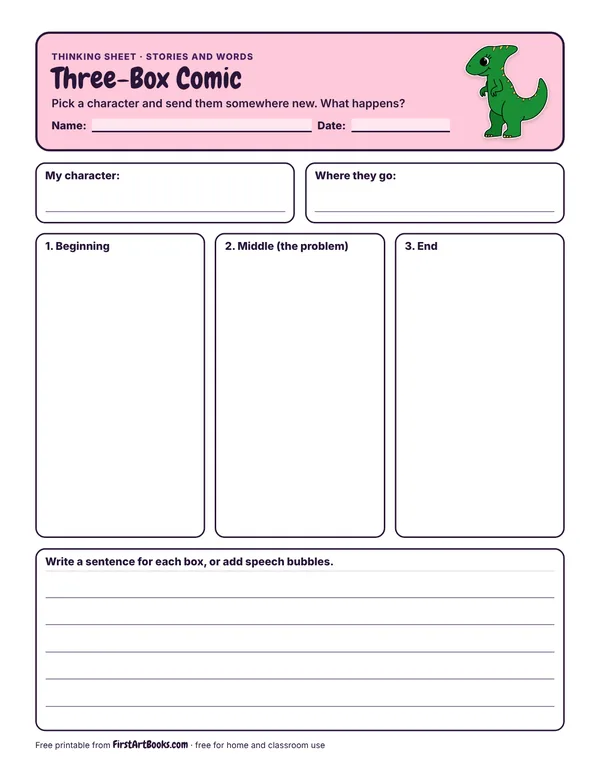
A character goes somewhere new. Tell what happens in a beginning, a middle and an end.
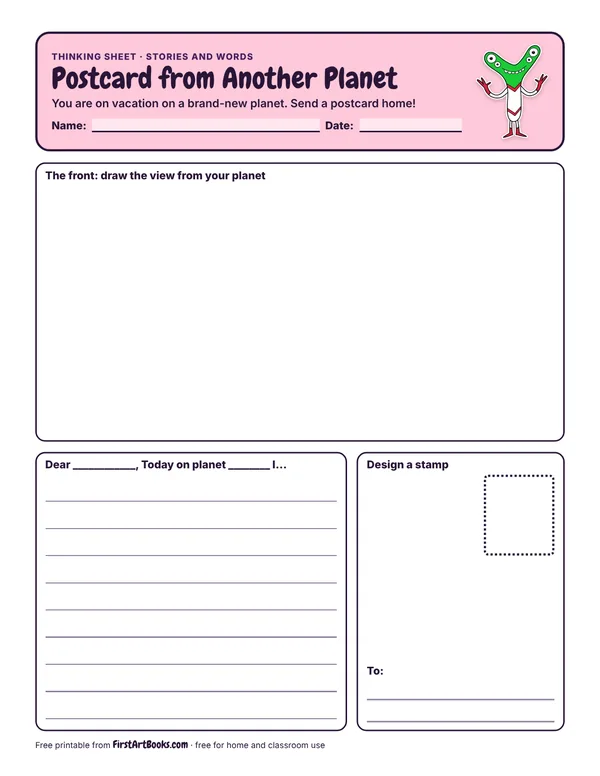
You’re on vacation on a planet nobody has visited. Draw the view and write home about it.
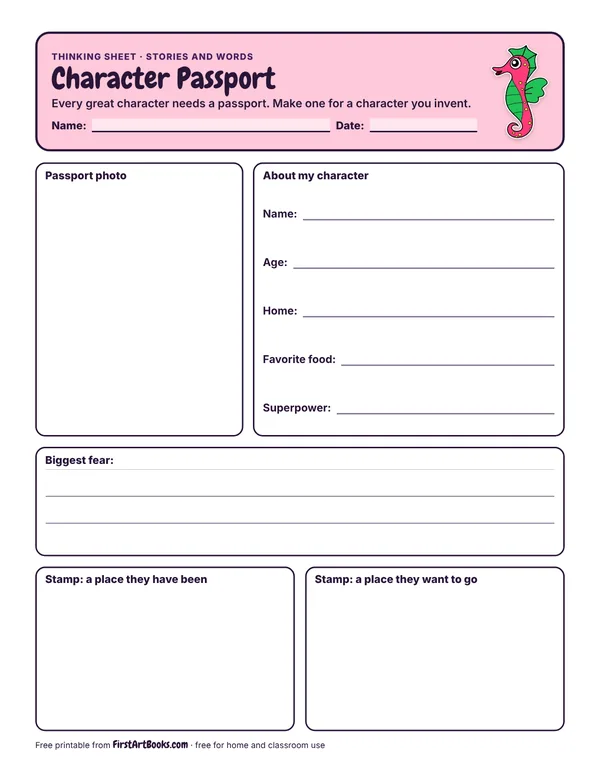
Invent a character and fill in their passport: photo, name, home, favorite food, superpower and biggest fear.
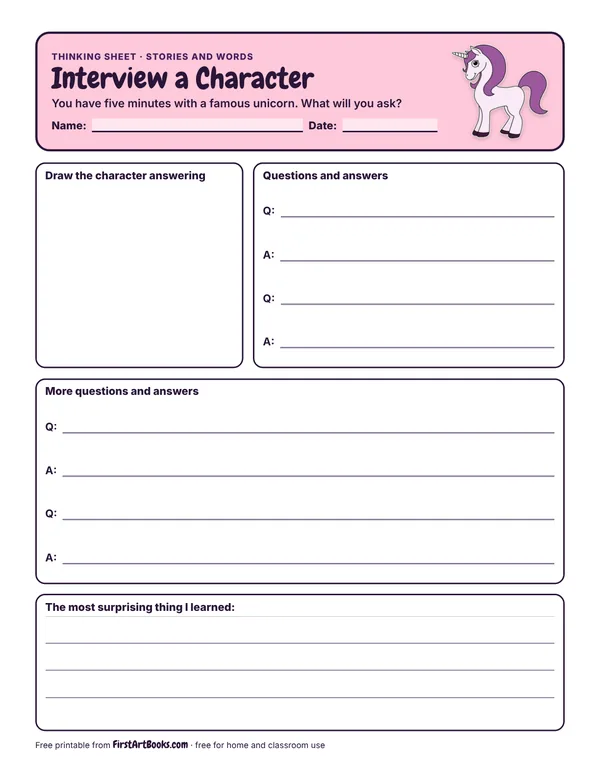
Pretend you’re a reporter. Ask a character four questions and imagine how it answers.
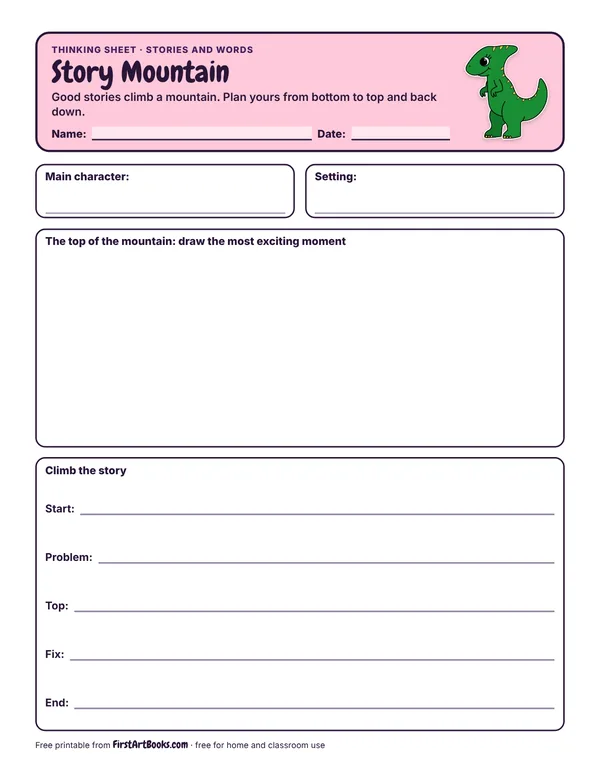
Plan a story that climbs to an exciting top and slides down to a happy (or funny) ending.
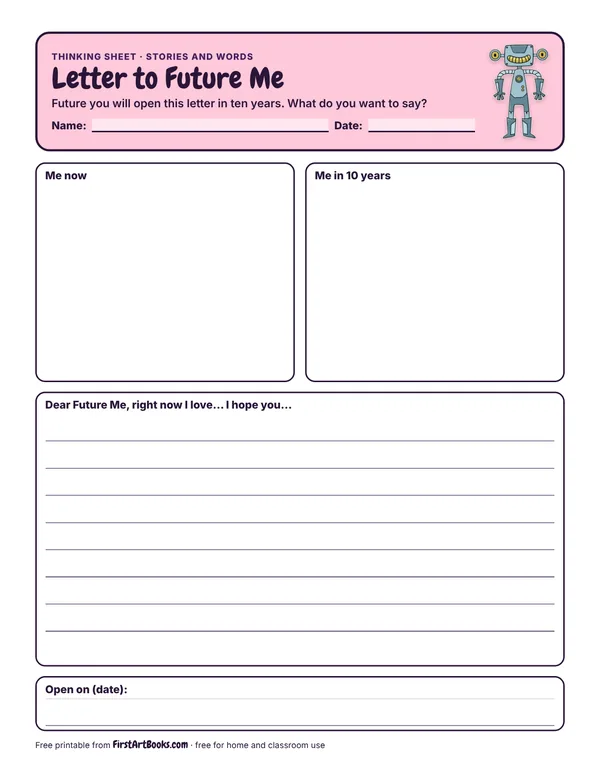
Write to yourself ten years from now and draw what you think you’ll be doing.
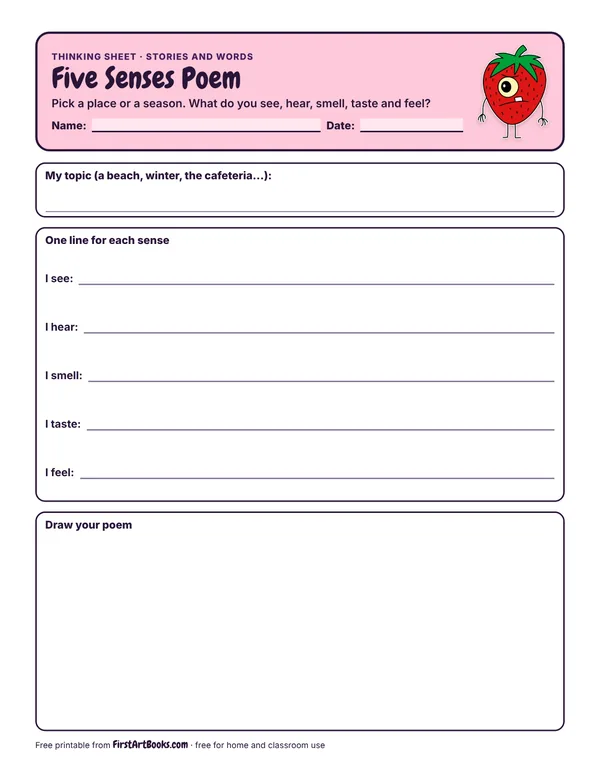
Pick a place or a season and write one line for each sense. Then draw it.
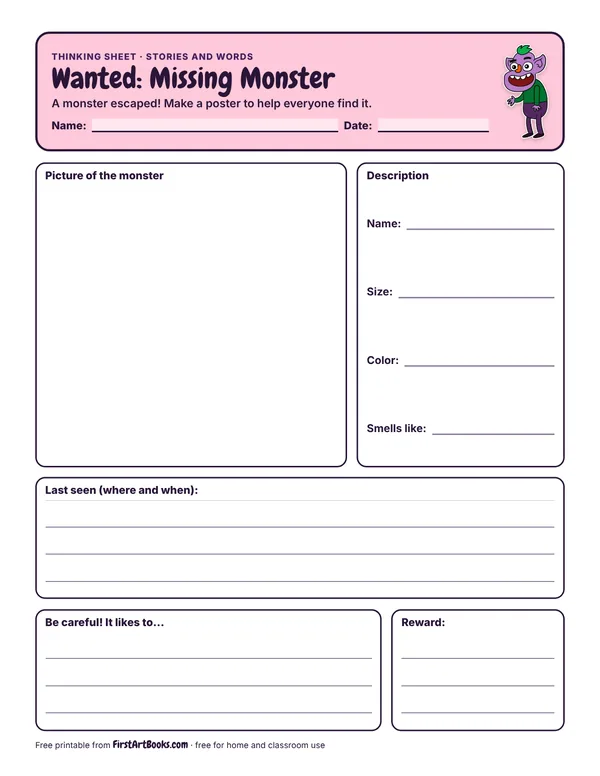
A monster has gone missing! Make a poster so good that anyone could spot it.
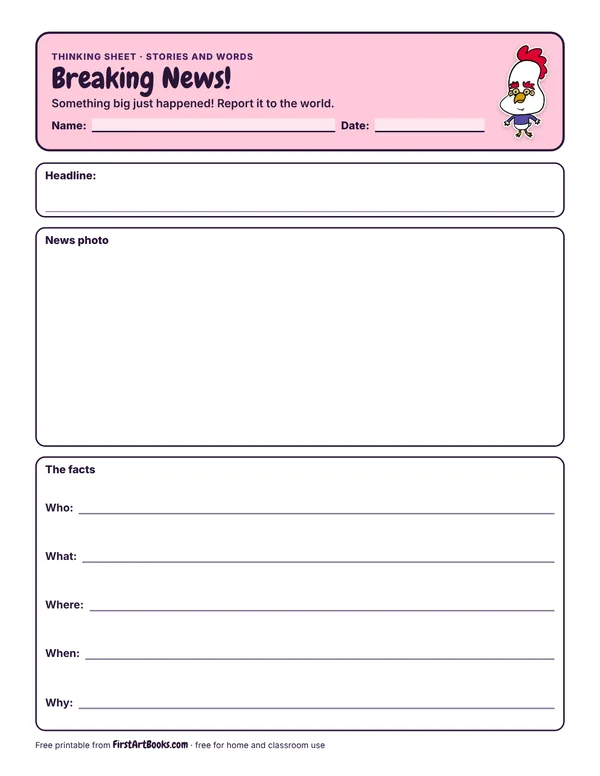
Be a reporter: write a headline, draw the news photo and answer who, what, where, when and why.

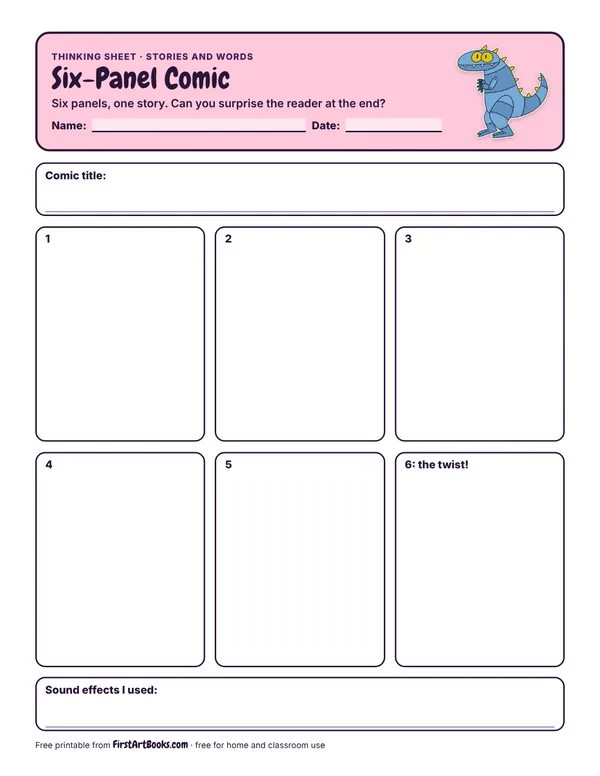
A longer comic with room for a twist: six panels, speech bubbles and a surprise ending.
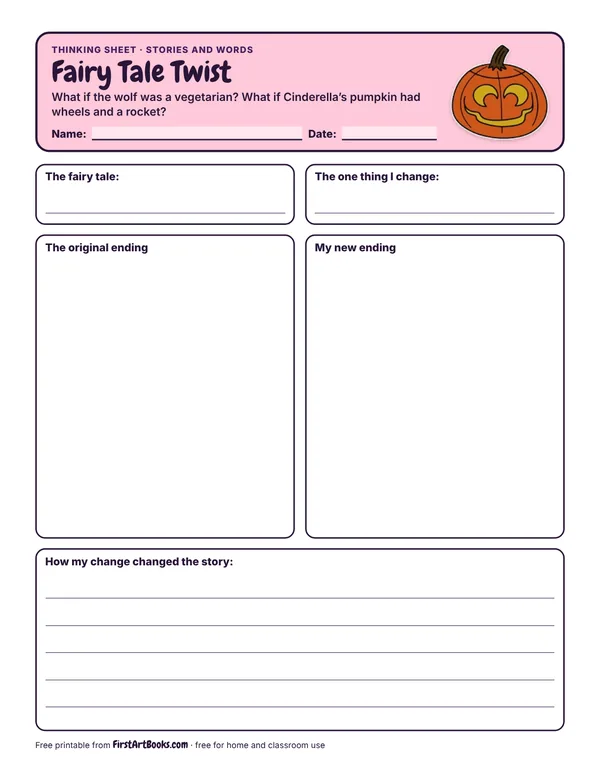
Take a fairy tale you know, change one thing and see how the whole story changes.
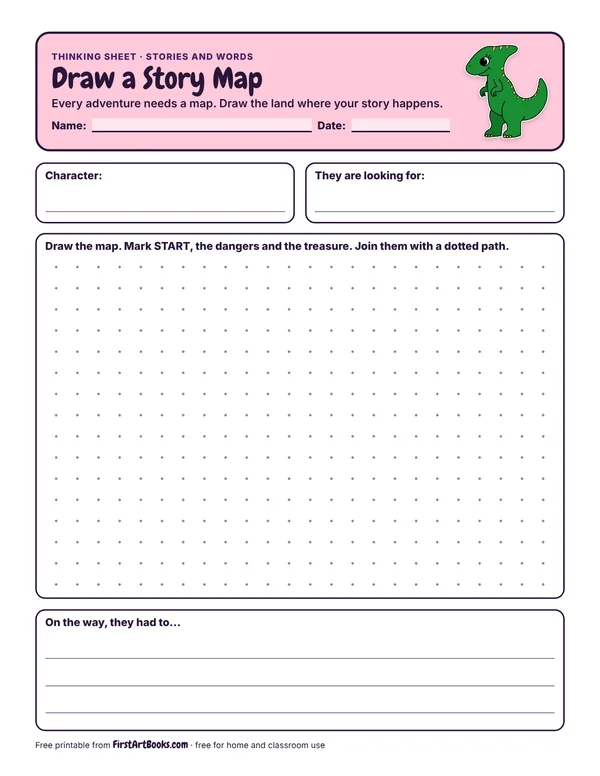
Draw a map of where a story happens, with a dotted path showing the character’s journey.
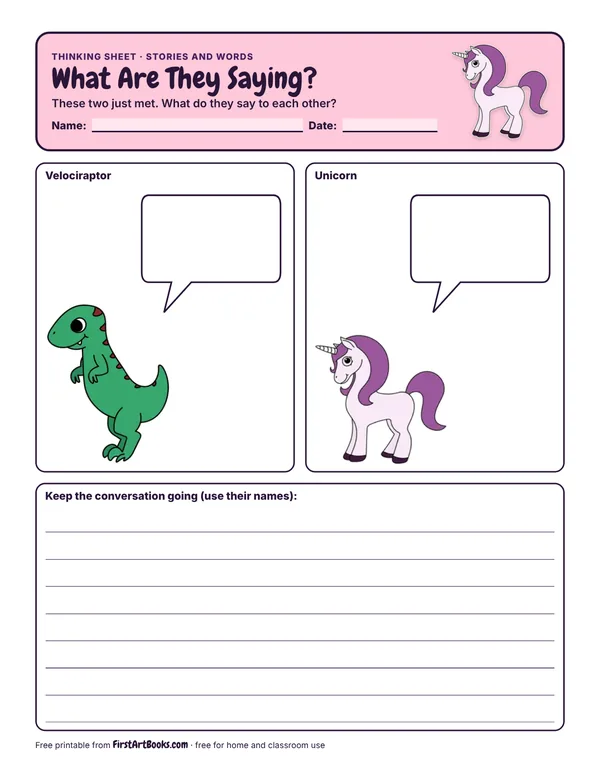
A velociraptor meets a unicorn. Fill the speech bubbles with their conversation.
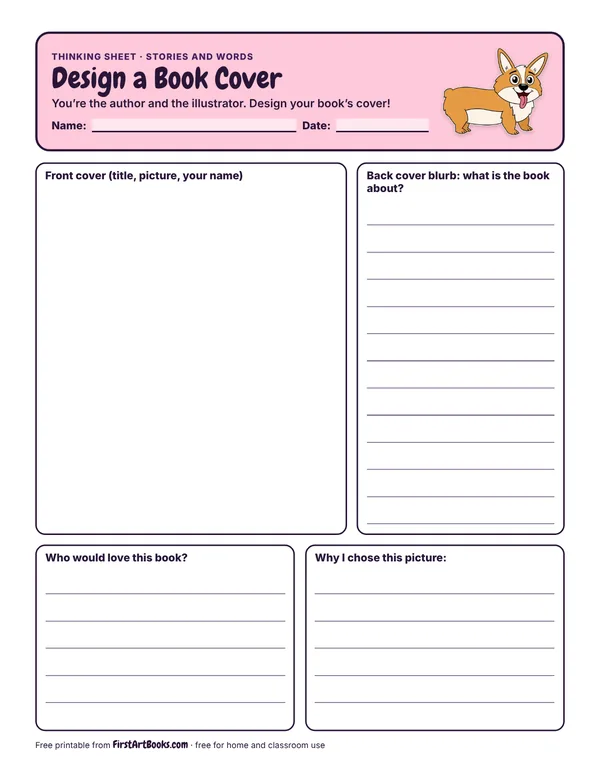
Make the cover for a book you’d love to write: title, picture, author name and the blurb on the back.
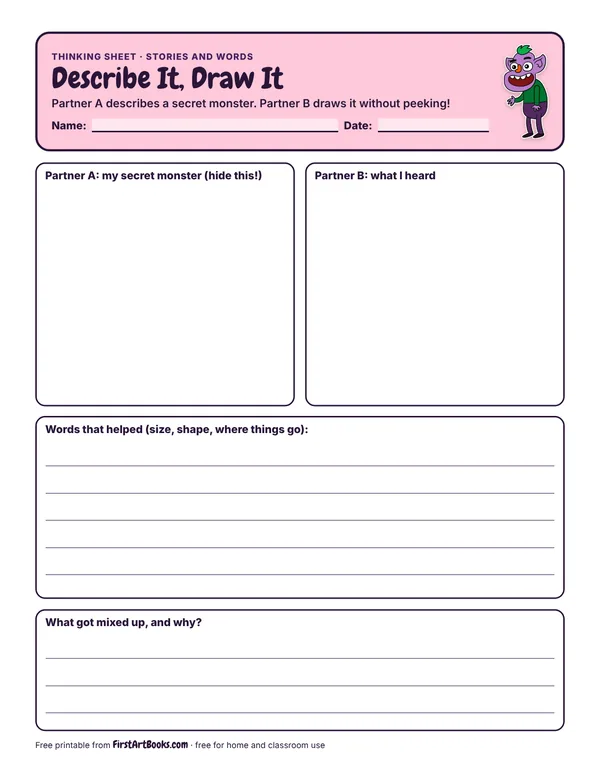
A partner game: one describes a secret monster, the other draws it. Then compare!
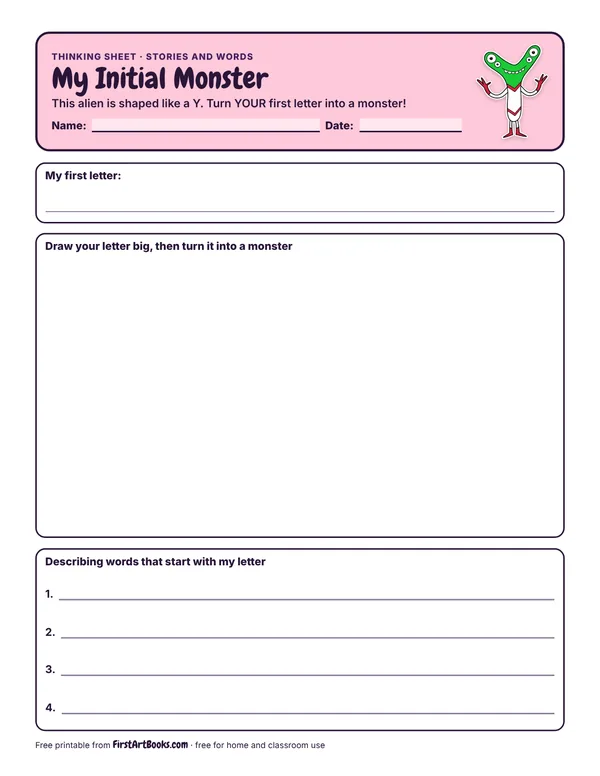
Turn the first letter of your name into a monster, then describe it with words that start with that letter.
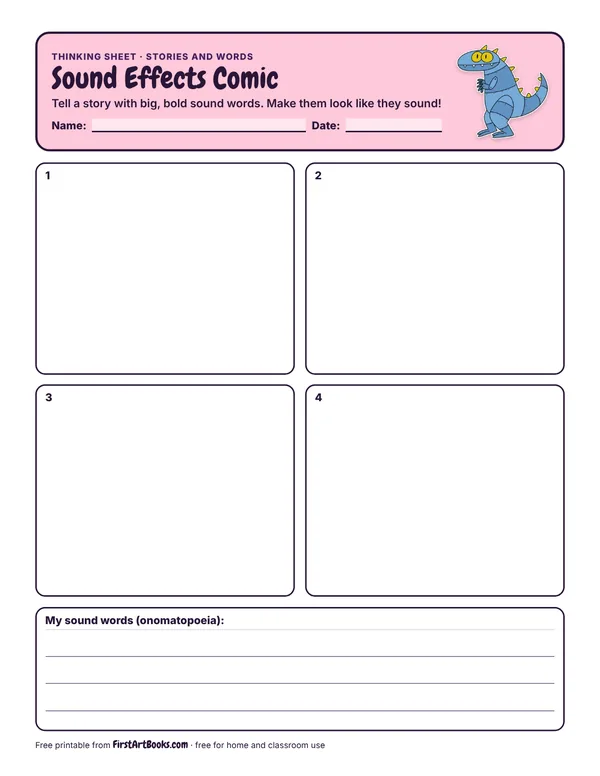
BAM! SPLAT! WHOOSH! Make a four-panel comic where the sound effects tell most of the story.
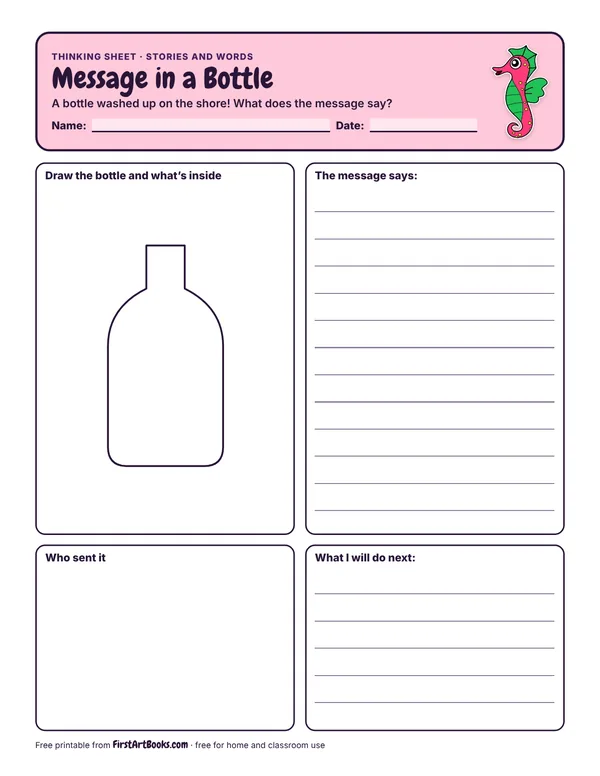
You found a bottle on the beach with a message inside. Write the message, then draw who sent it.
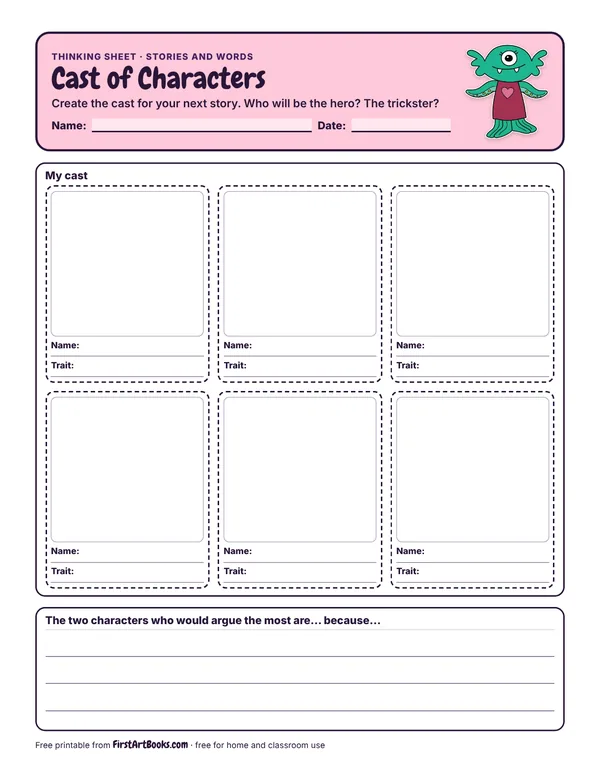
Every story needs a cast. Make six character cards with a name and one big trait each.
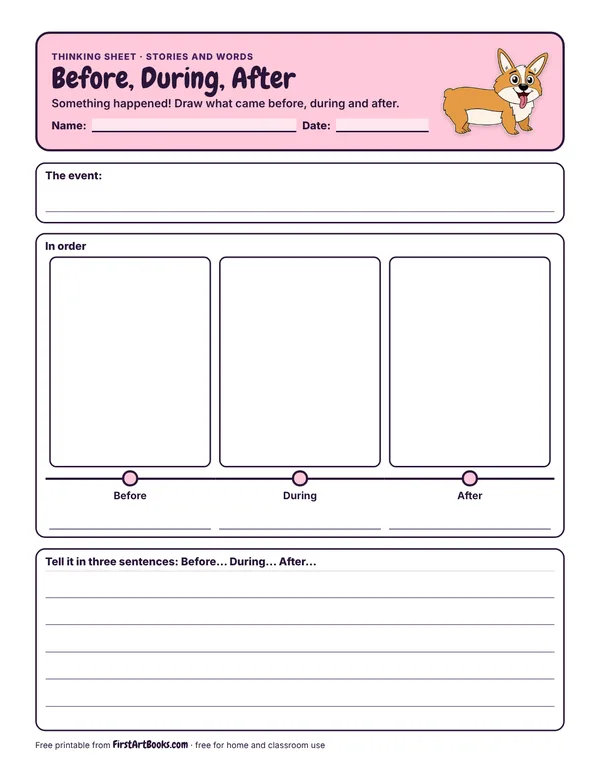
Draw what happened before, during and after an event, like losing a tooth or a big rainstorm.
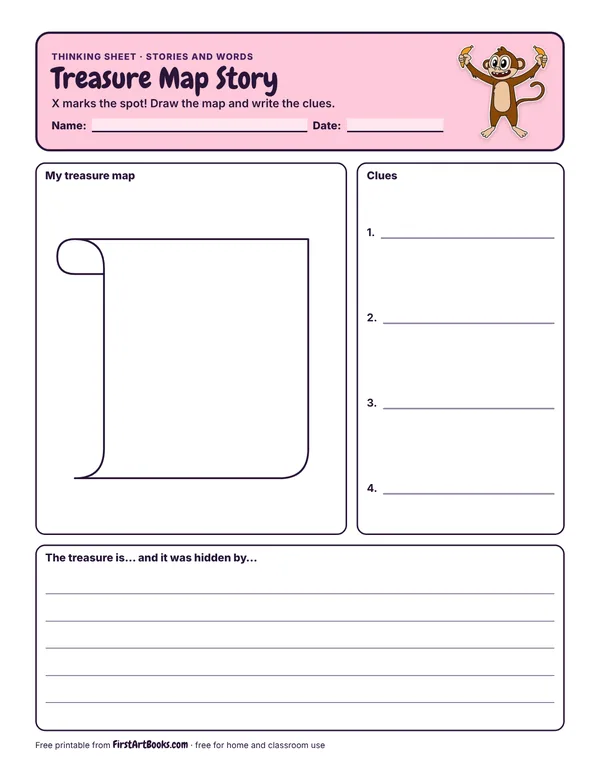
Draw a treasure map on the scroll and write the clues that lead to the X.
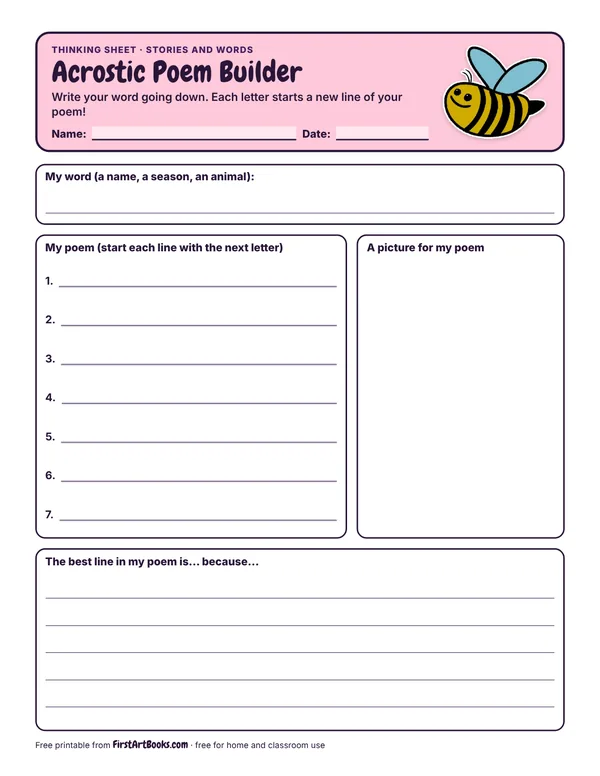
Write a word down the side, then start each line with one of its letters. Add a picture to match.
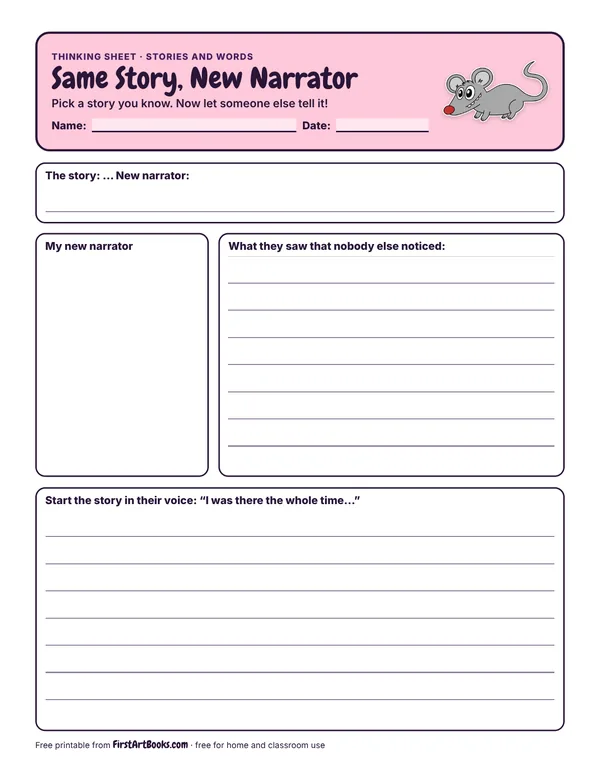
Retell a story you know from the point of view of someone in the background: the pet, the tree, the mouse.
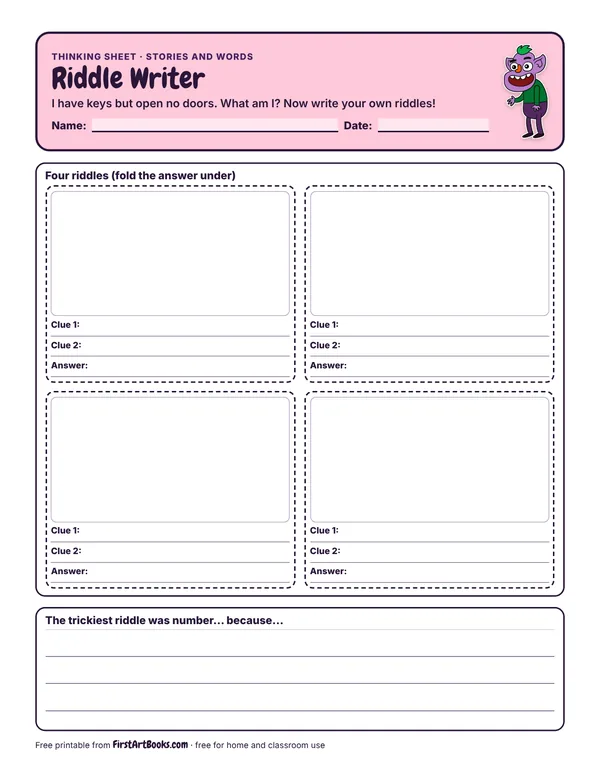
Write four riddles with clues, hide the answers under the flap line and try them on a friend.
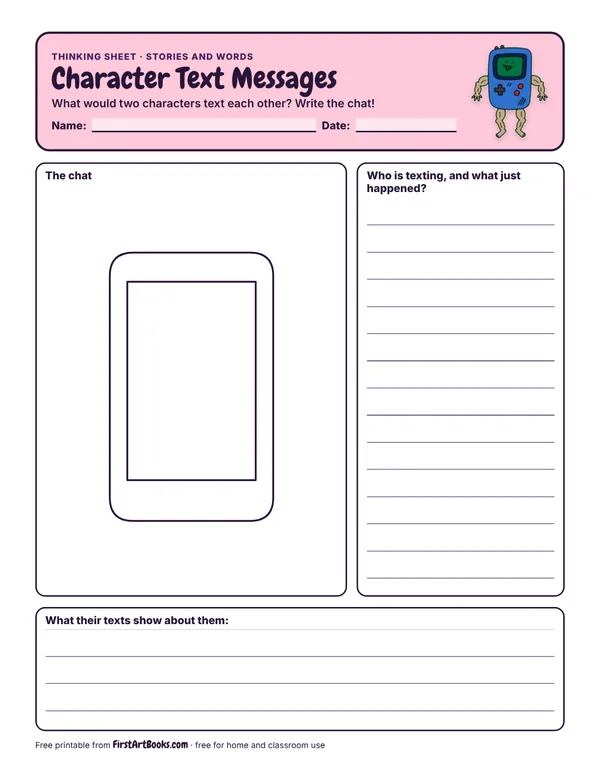
Two characters are texting. Write their conversation on the phone screen. Use emoji if you like!
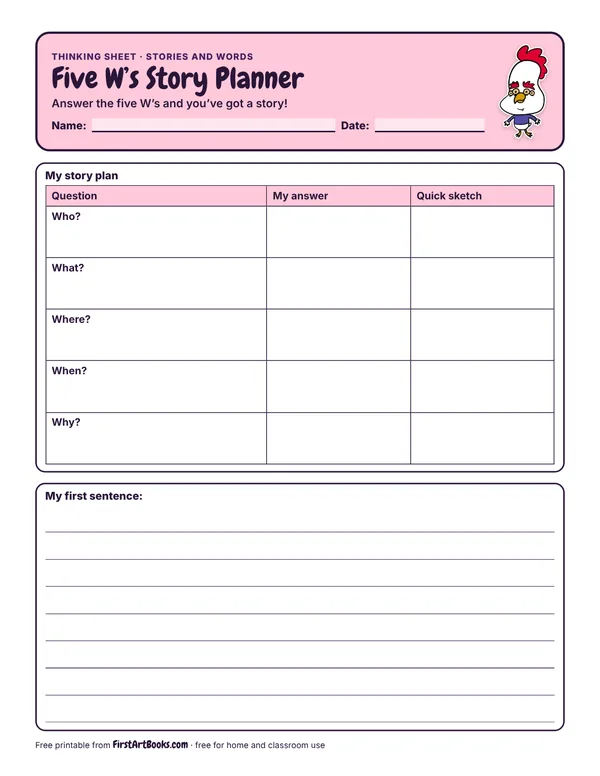
Who, what, where, when and why: answer all five and your story is ready to write.
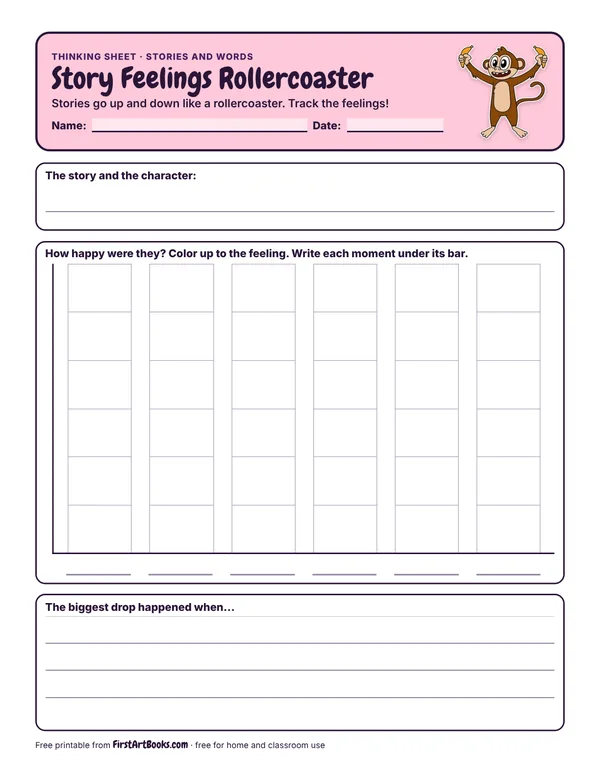
Plot how a character feels through a story, with highs and lows like a rollercoaster.
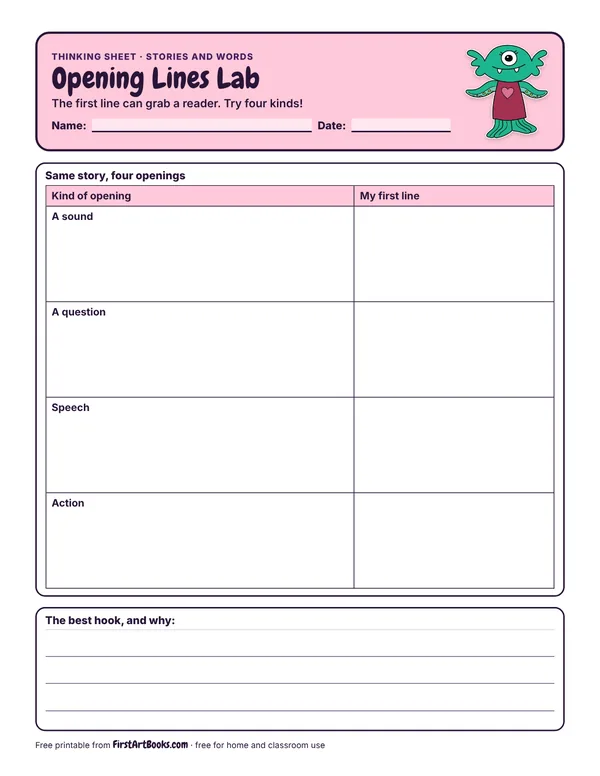
Try four kinds of story openings and pick the one that hooks readers best.
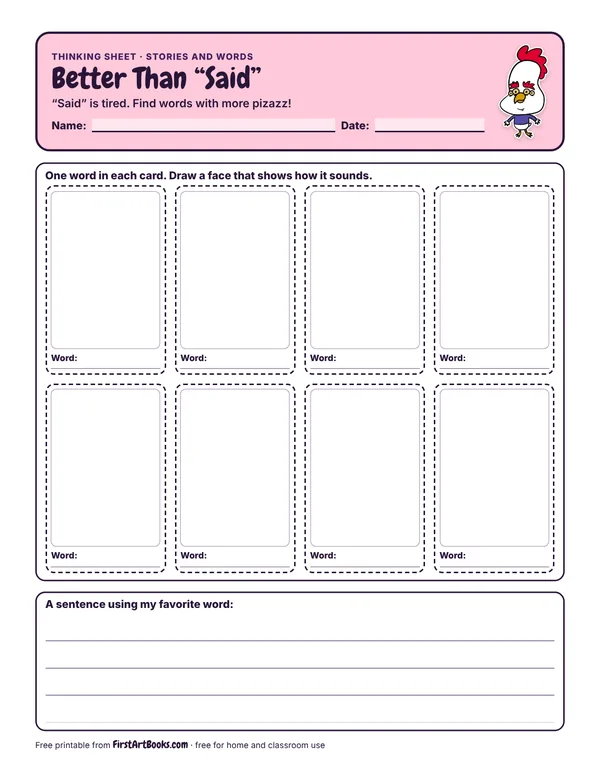
Collect lively words to use instead of “said,” and act out how each one sounds.
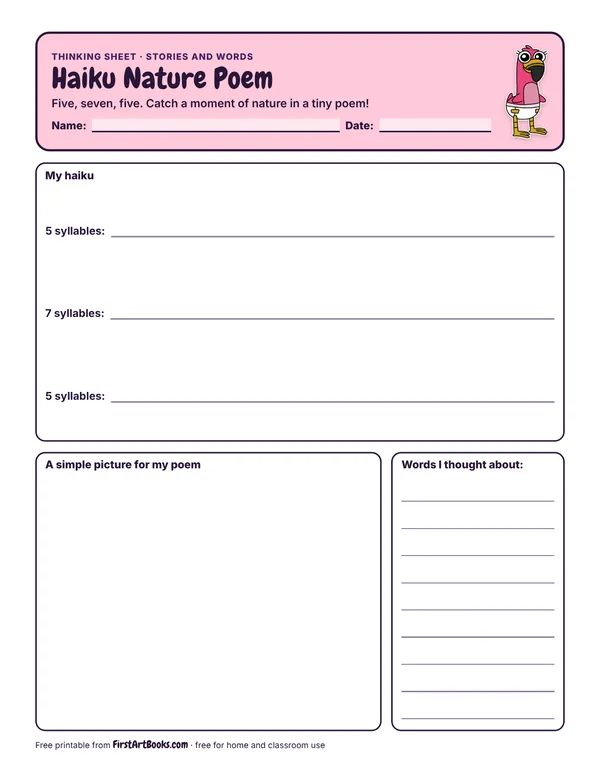
Write a 5-7-5 haiku about something in nature and paint it in a few simple lines.
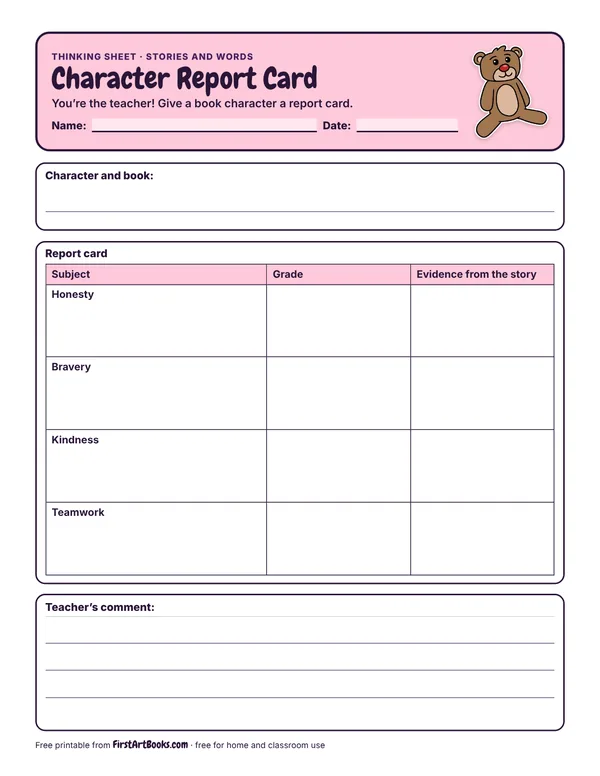
Grade a story character on honesty, bravery and kindness, with evidence from the book.
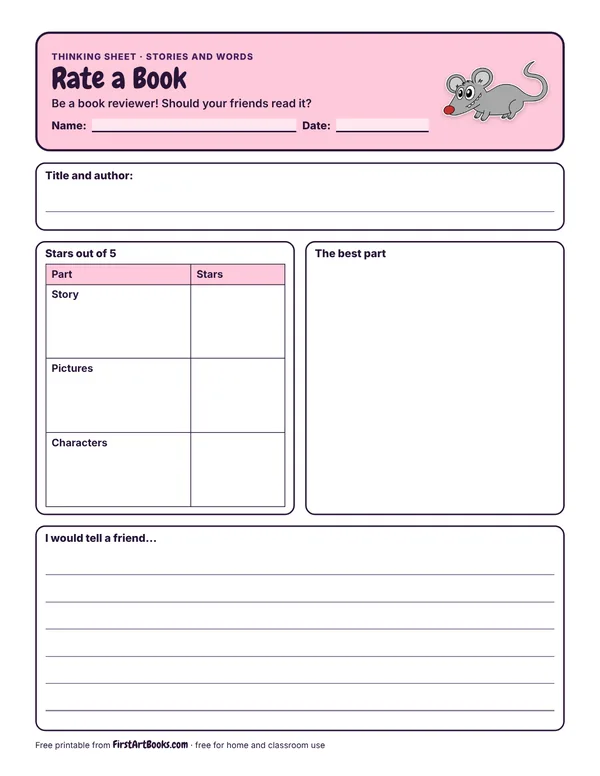
Review a book with stars for story, pictures and characters, and a drawing of the best part.
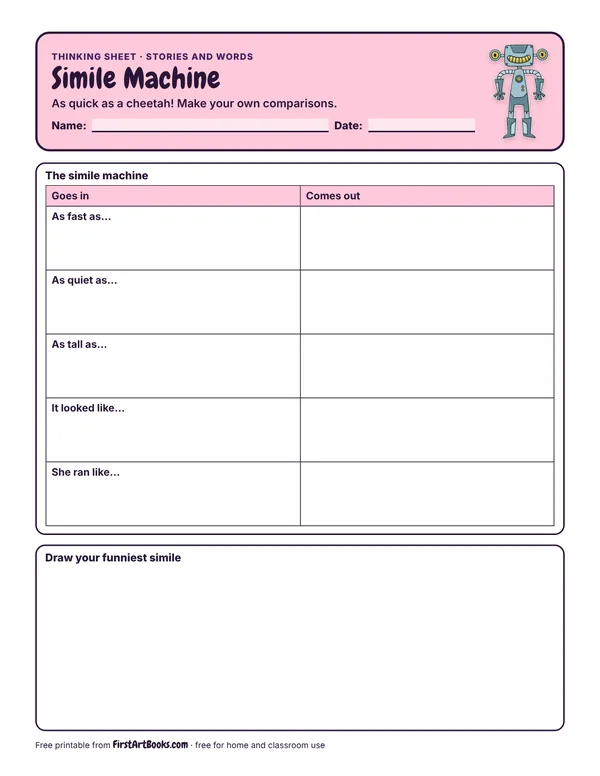
Feed words into the simile machine and get “as fast as…” and “like a…” comparisons out.
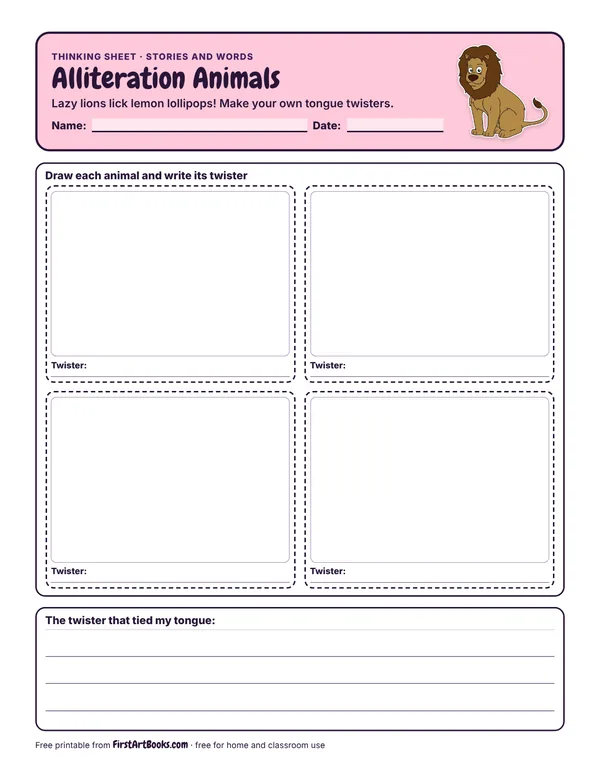
Write tongue twisters about animals where every word starts with the same sound.
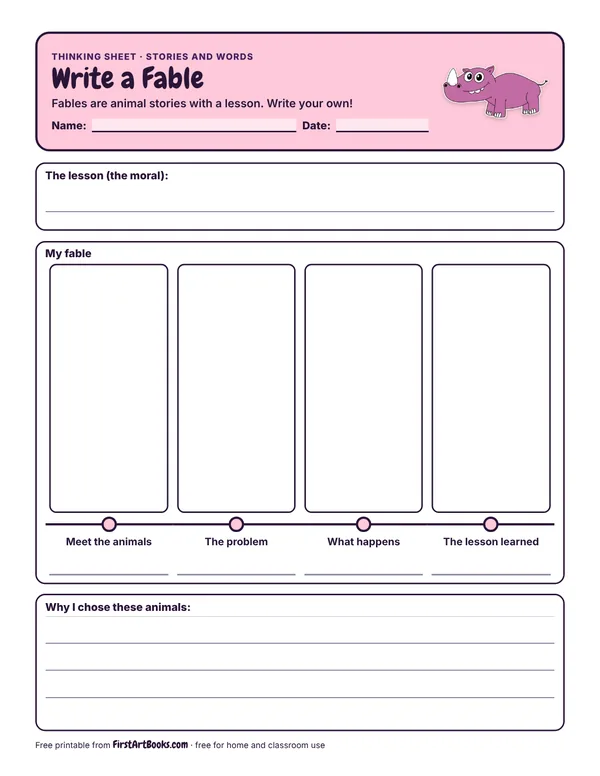
Plan a short animal story that teaches a lesson, like the tortoise and the hare.
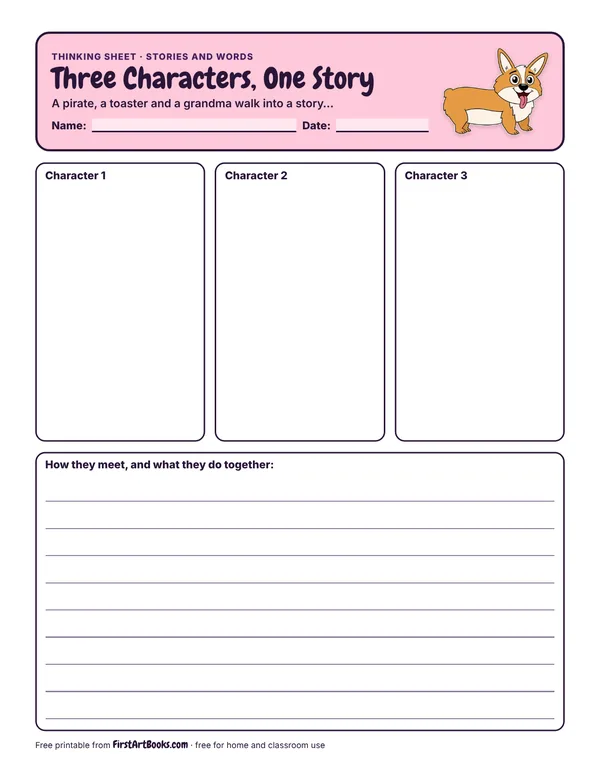
Pick three characters who have nothing in common and write a story that brings them together.
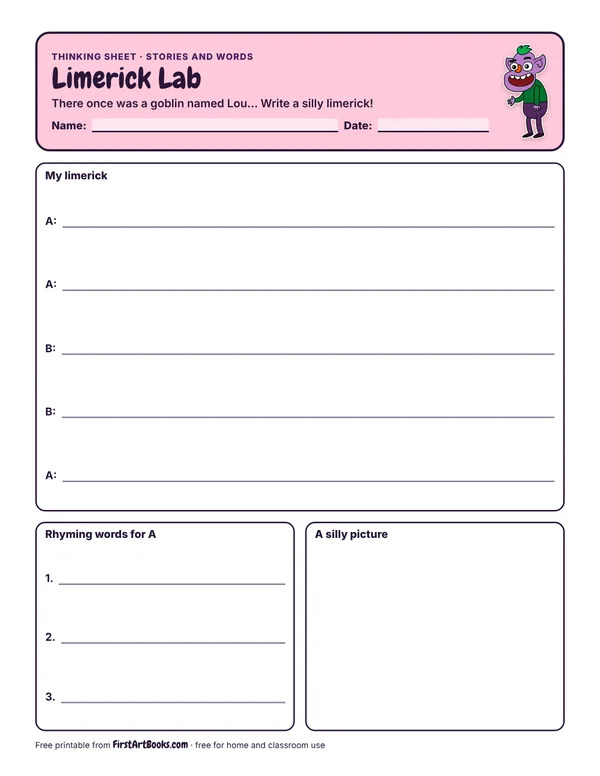
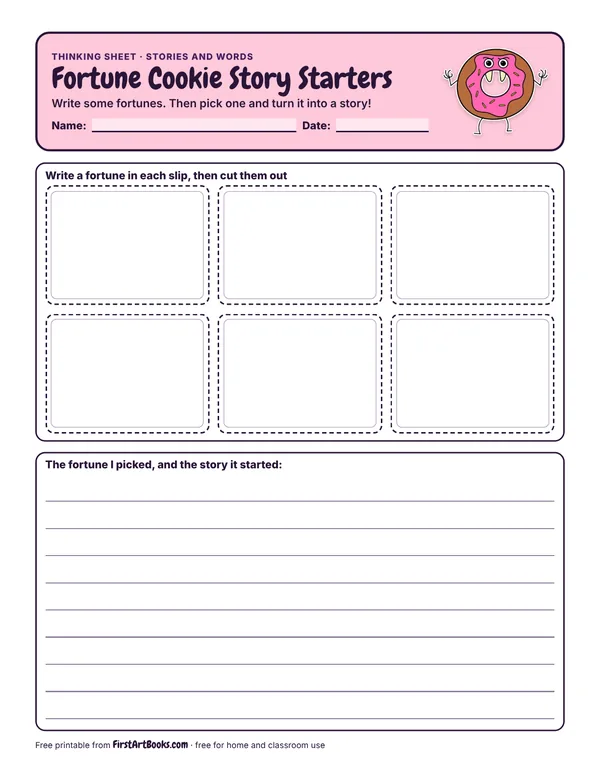
Write six fortunes, cut them out, swap with a friend and write a story from one.
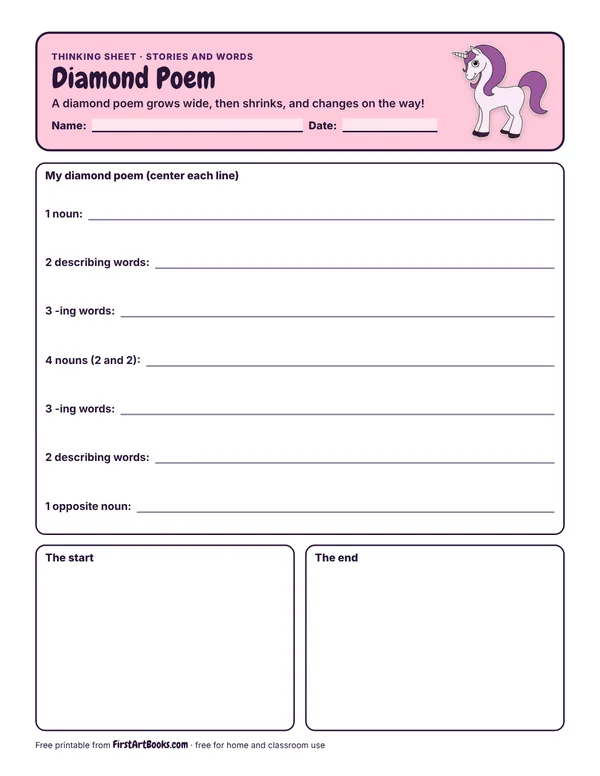
Write a seven-line diamante poem that starts with one thing and slowly turns into its opposite.
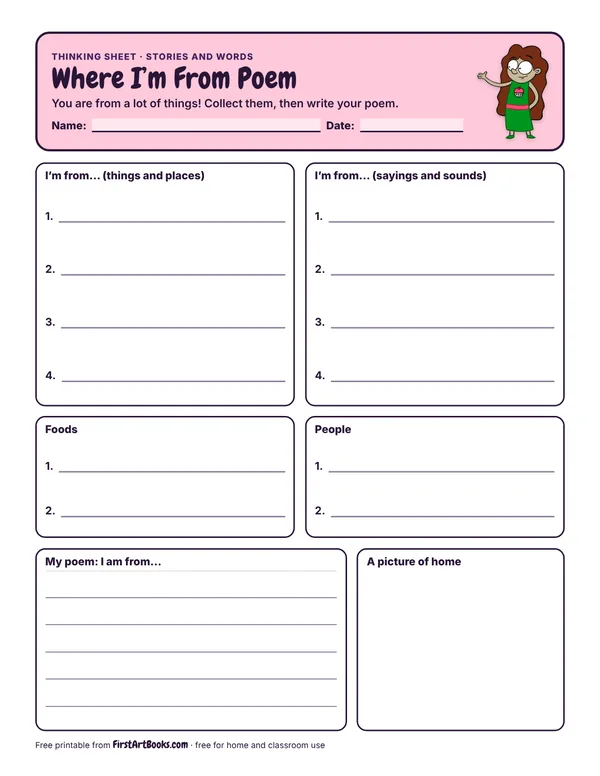
Collect the smells, sayings, foods and places that make you you, then shape them into a “Where I’m from” poem.
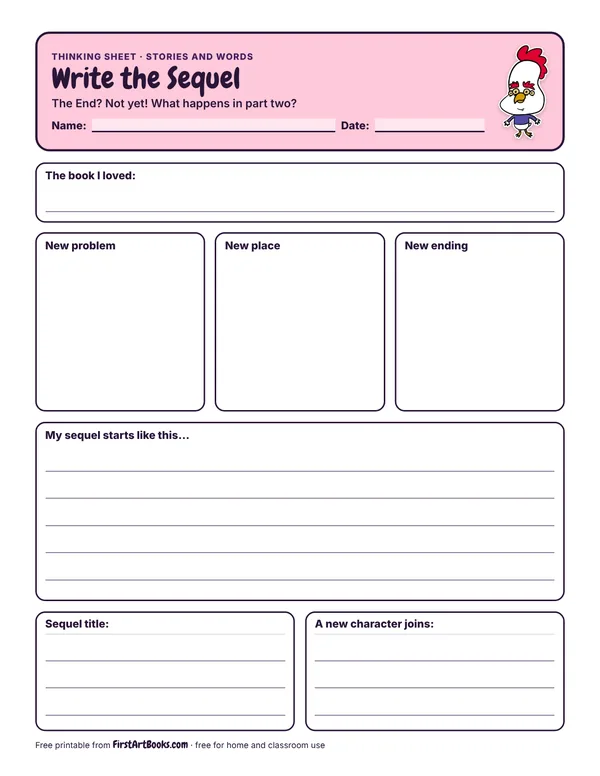
The story ended, but what happens next? Plan a sequel to a book you love: a new problem, a new place and a new ending.
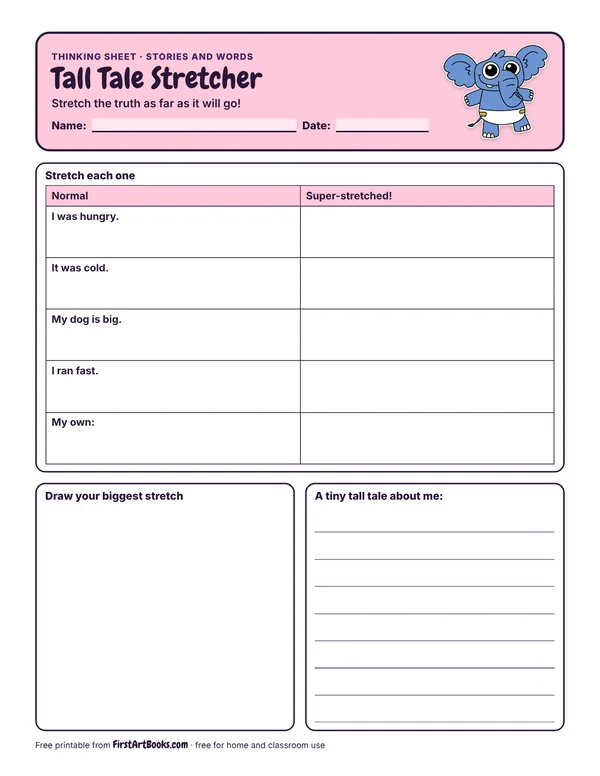
Take a normal sentence and stretch it into a giant exaggeration, like “I was so hungry I ate a mountain.”
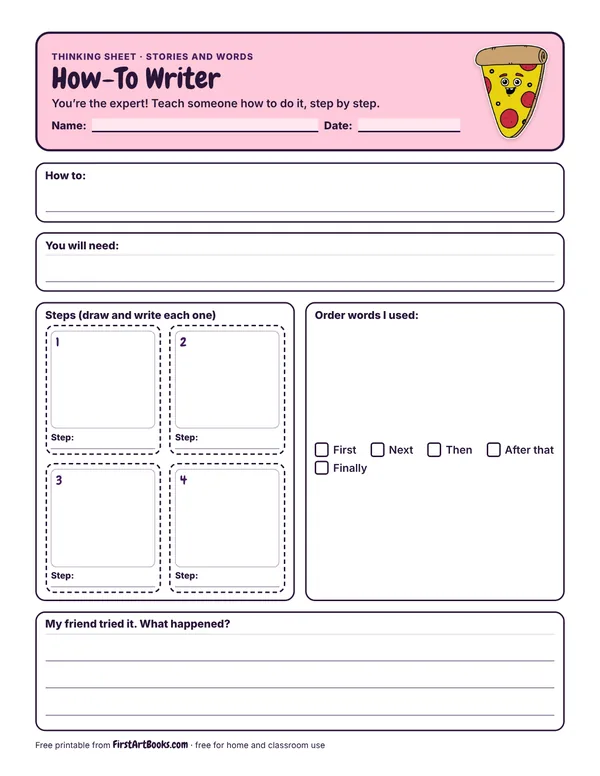
Write clear steps for something you know how to do, like making a sandwich, then see if a friend can follow them.
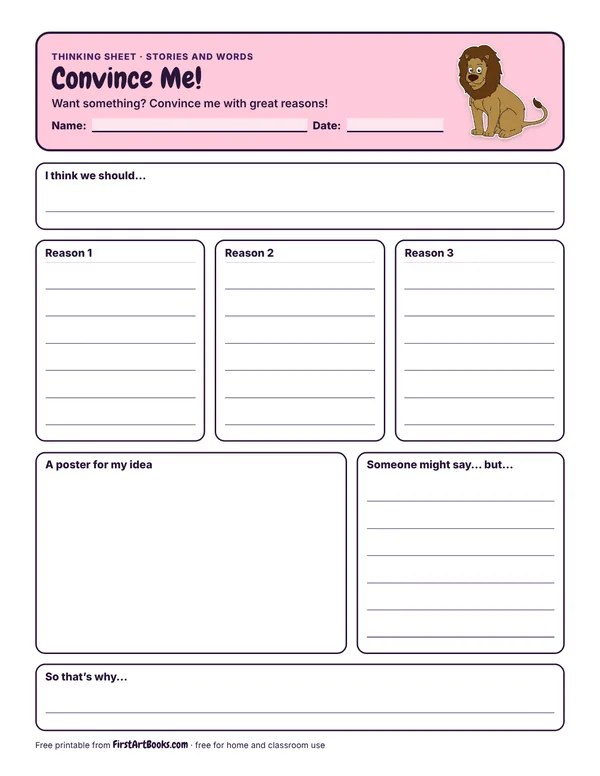
Pick something you want, like a class pet or a longer recess, and write a short, strong argument with three reasons.
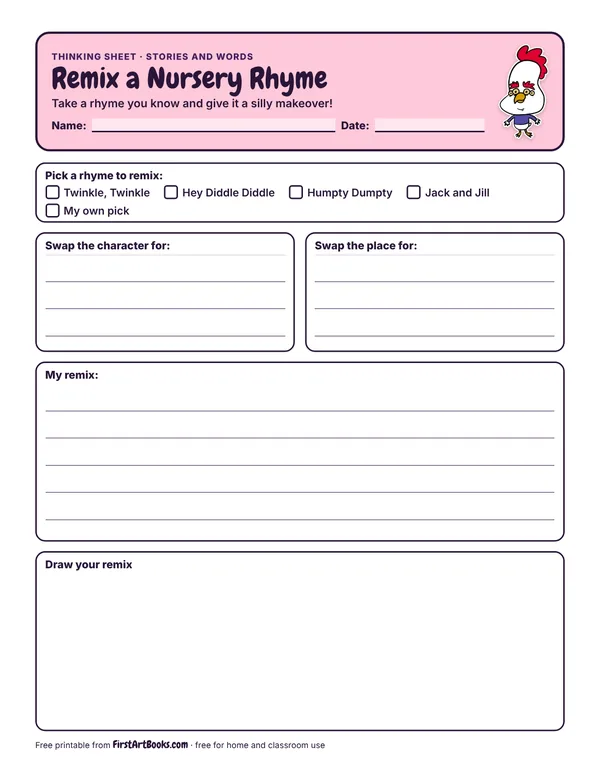
Swap the characters and places in a nursery rhyme you know and make a brand-new silly version.
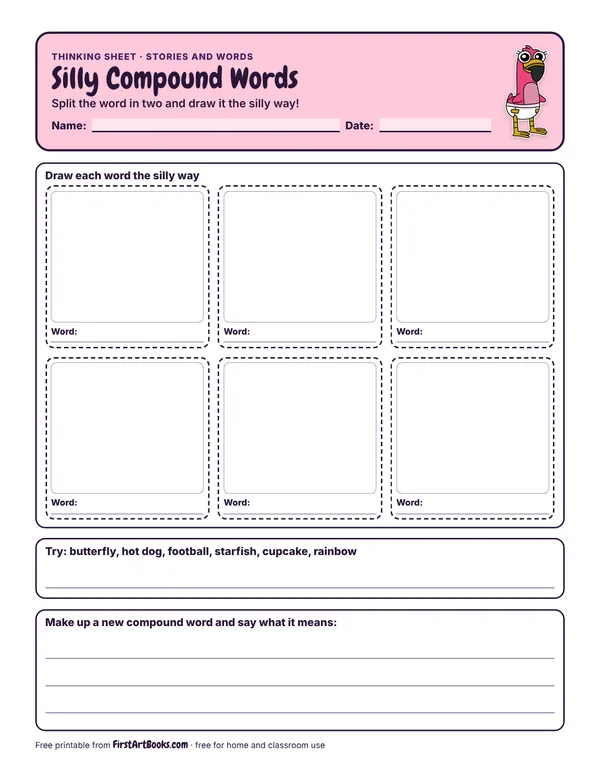
Draw compound words the silly way: a butterfly as butter that flies, a hot dog as a sweaty puppy.
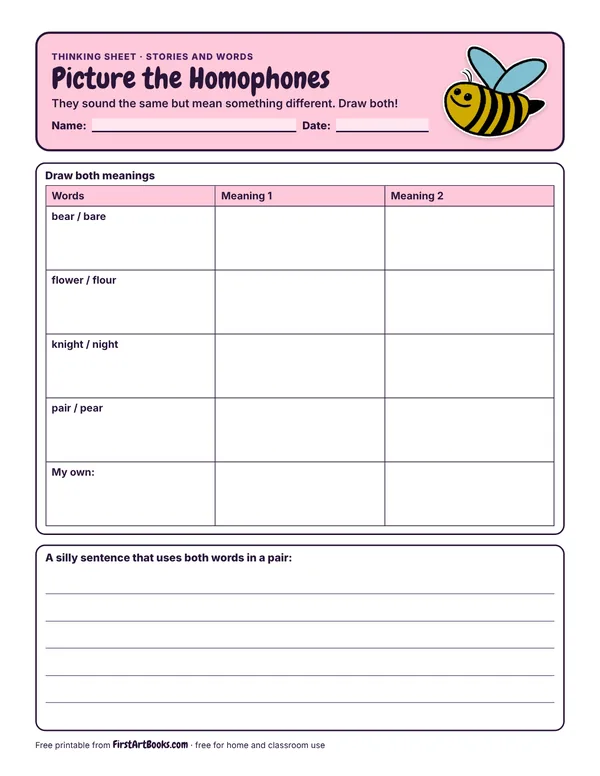
Words that sound alike but mean different things, like bear and bare. Draw both meanings to remember them.
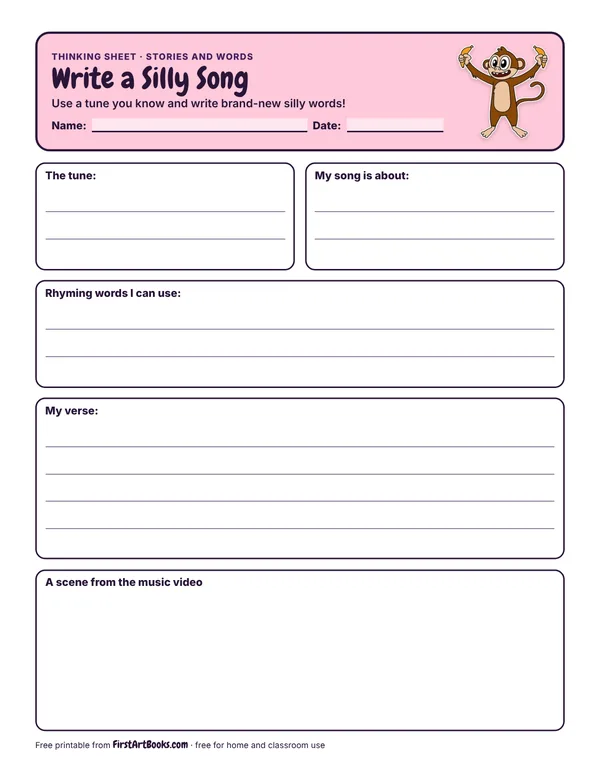
Write new words to a tune everyone knows. Pick a silly topic, find rhymes and draw the music video.
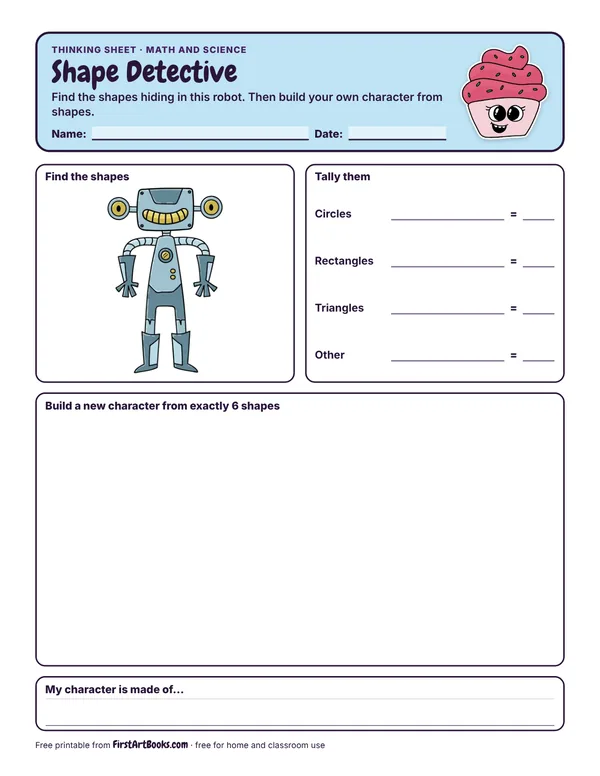
Count the circles, triangles and rectangles hiding in a robot, then build your own character from shapes.
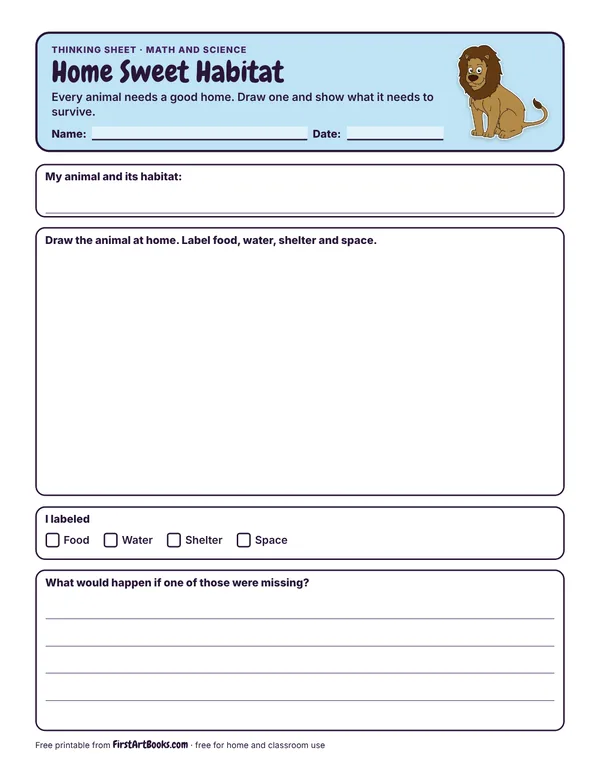
Draw an animal in its habitat and label the four things it needs: food, water, shelter and space.
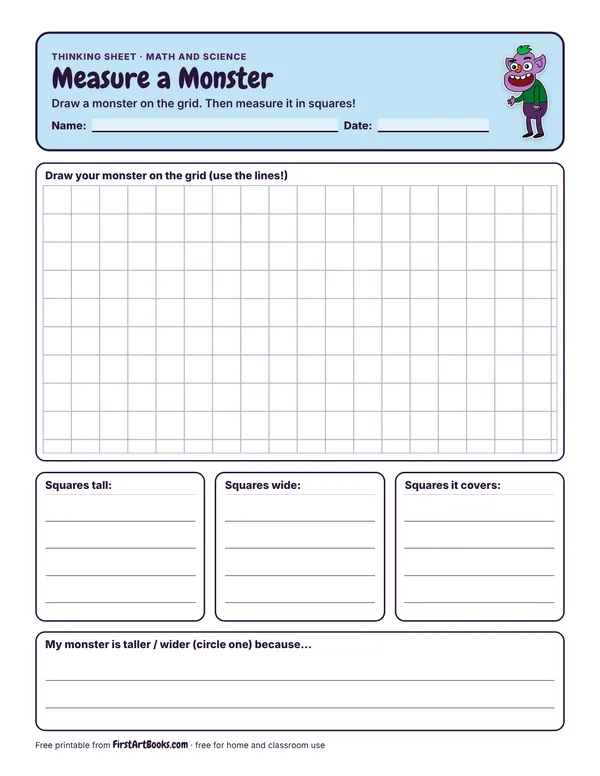
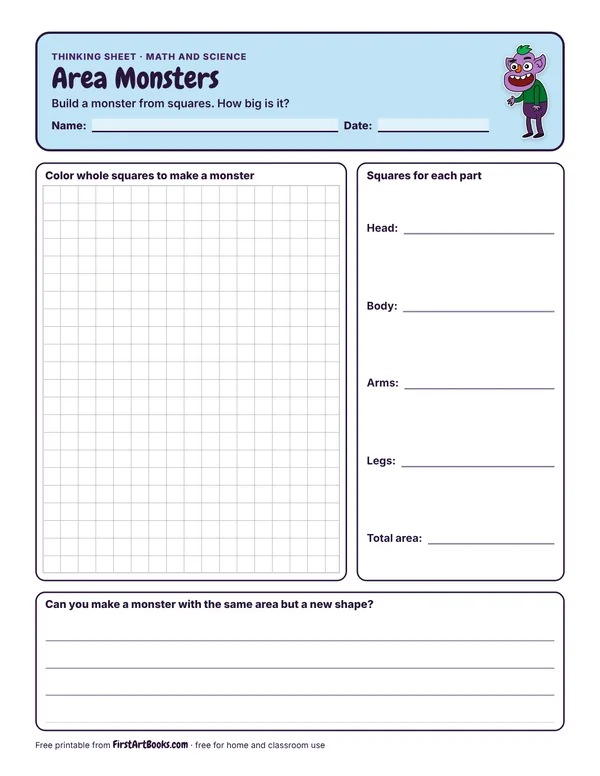
Draw a monster on squared paper, then count how tall and wide it is and how many squares it covers.
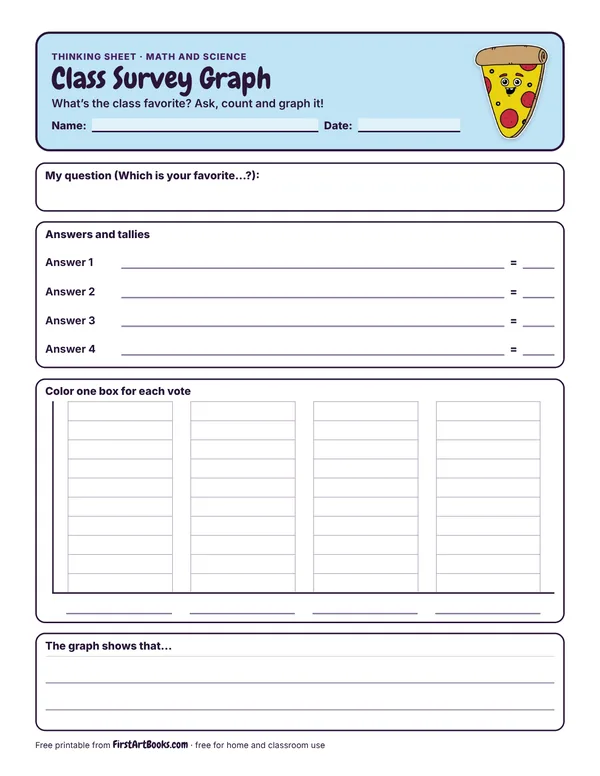
Ask your classmates a question, tally the answers and draw a bar graph of the results.
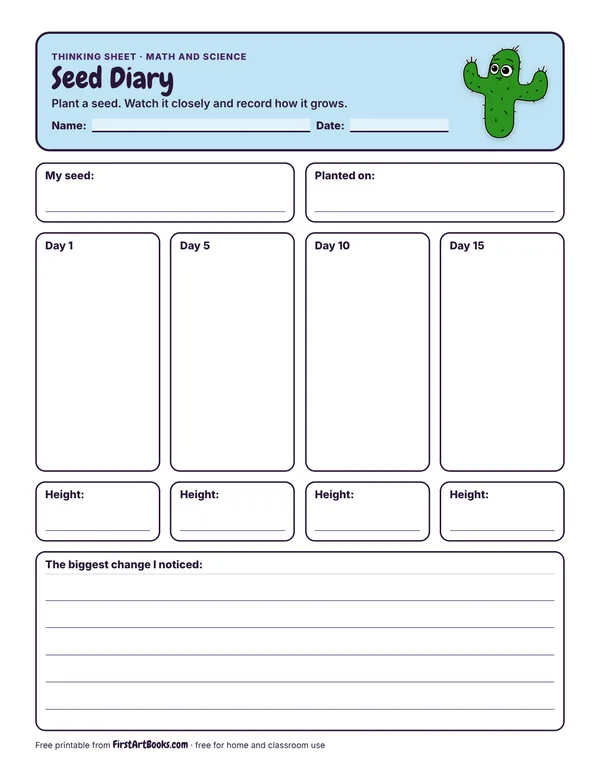
Plant a seed and draw it four times as it grows. Measure it and write what changed.
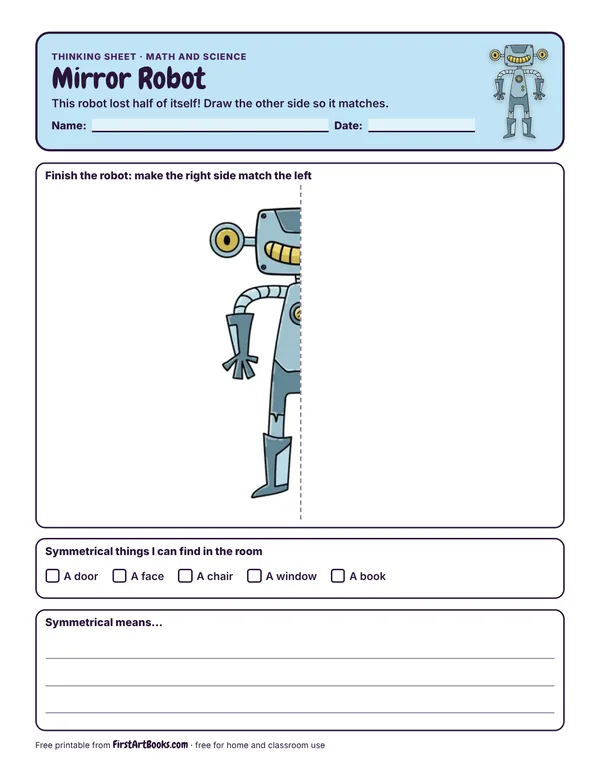
Only half of this robot is here. Draw the missing half so both sides match like a mirror.
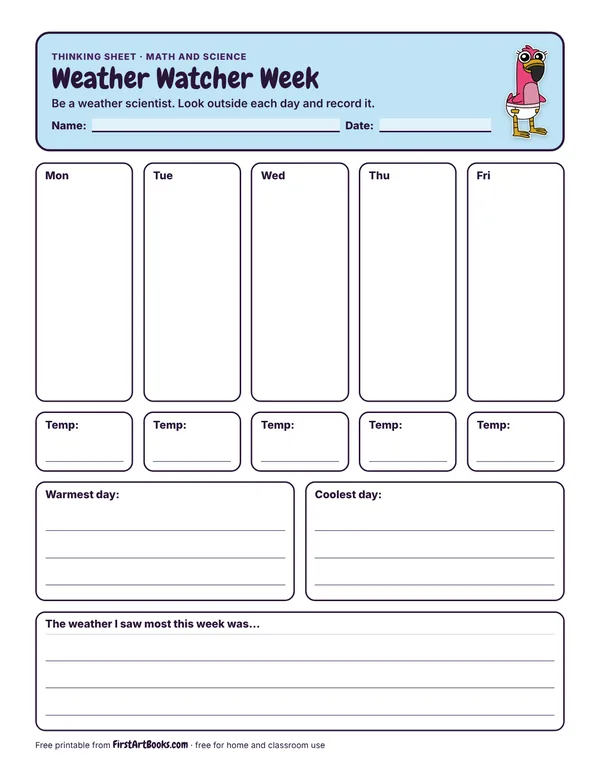
Draw the weather every day for a week, record the temperature and find the pattern.
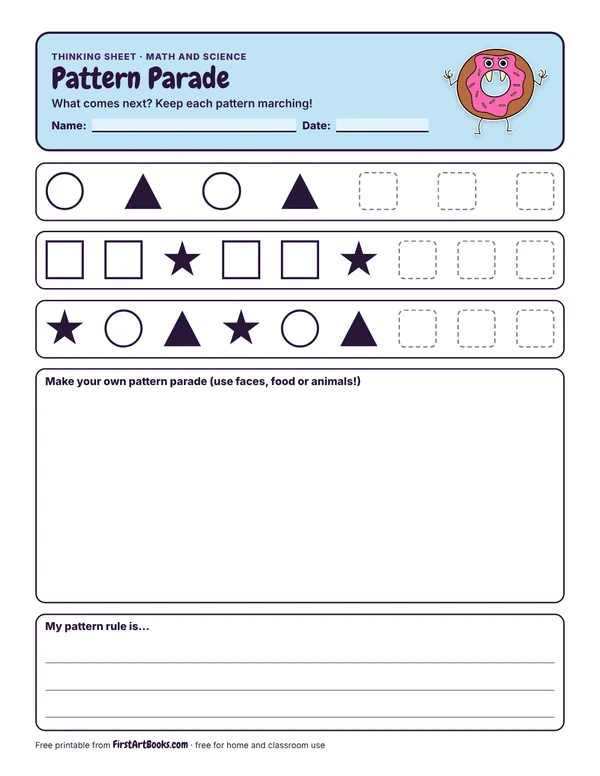
Continue the shape patterns, then invent a pattern parade of your own.
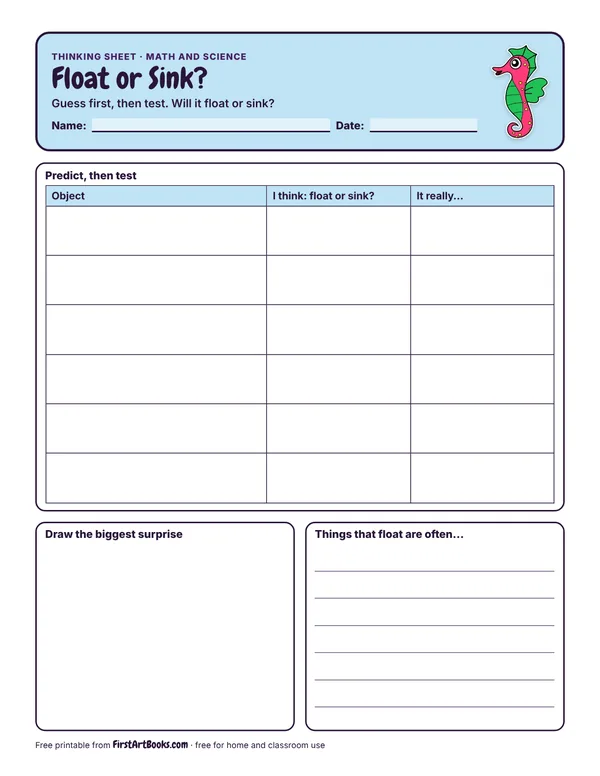
Predict which objects will float, test them in water and draw what surprised you.
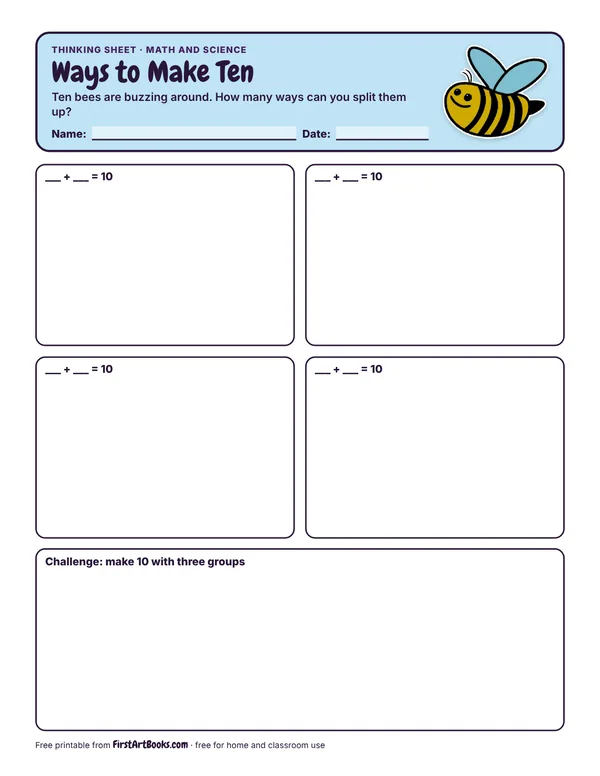
Draw groups of bugs, dots or monsters to show different ways to make 10.
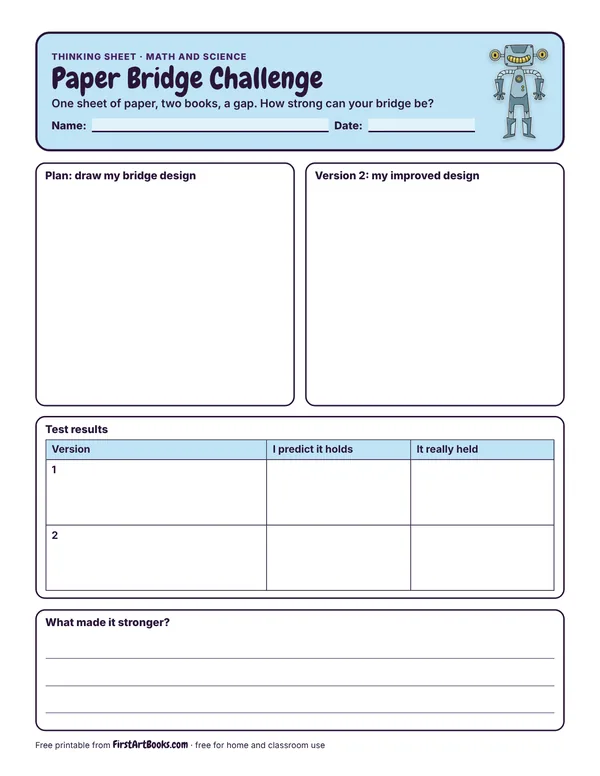
Build a bridge from one sheet of paper. Predict how many coins it will hold, test it and improve it.
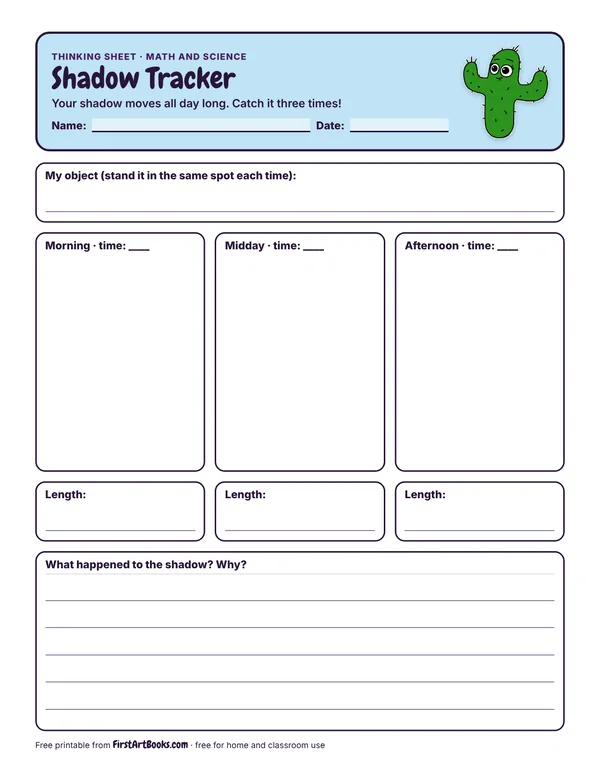
Trace the shadow of the same object three times in one day and find out how and why it moves.
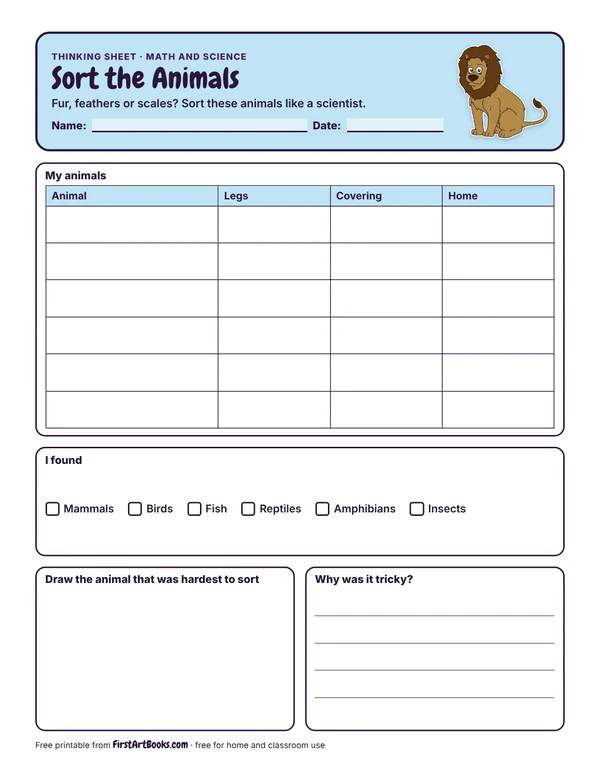
Pick six animals, record their legs, body covering and home, then sort them into groups.
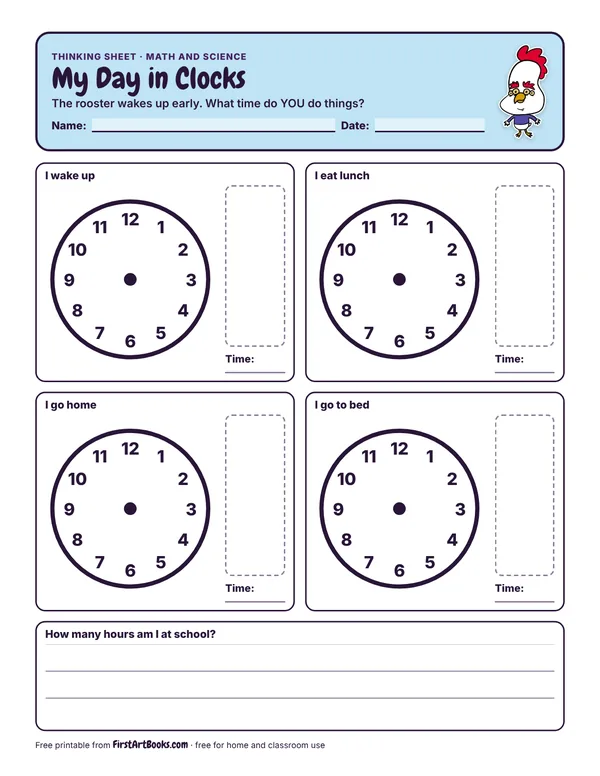
Draw four things you do every day and show each time on a clock face.
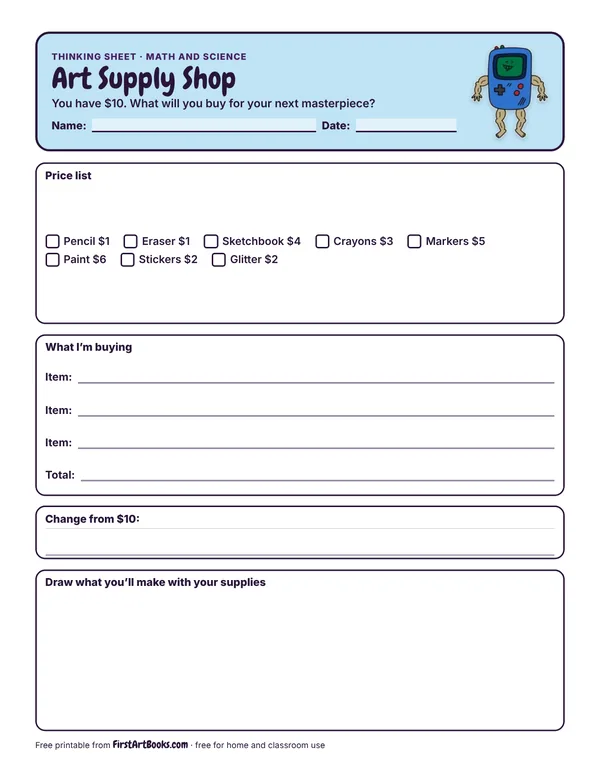
You have $10 to spend at the art supply shop. Choose wisely, add it up and count the change.
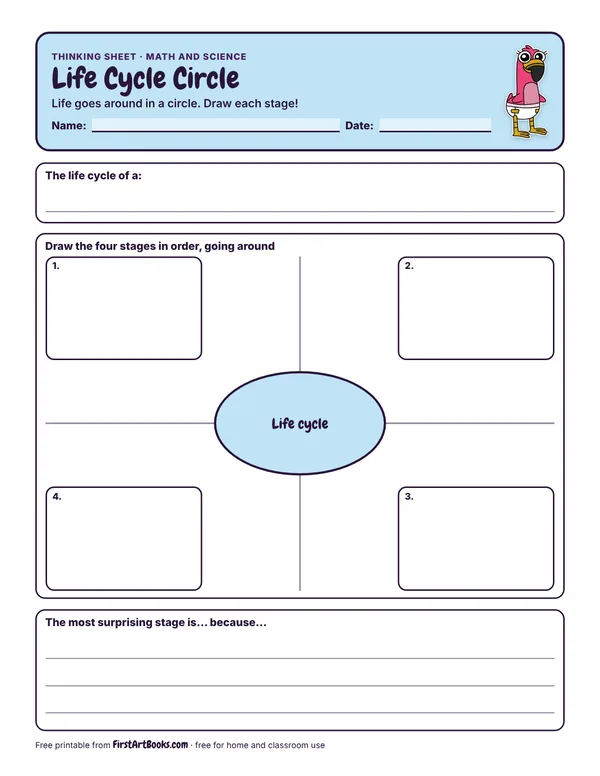
Draw the four stages of an animal’s life cycle around a circle: frog, butterfly or chicken.
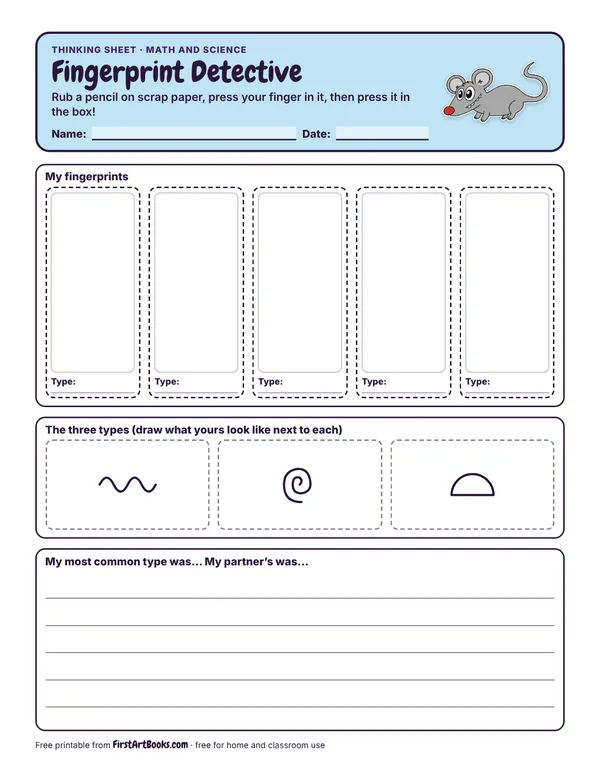
Press your fingerprints into the boxes, find loops, whorls and arches, and compare with a partner.
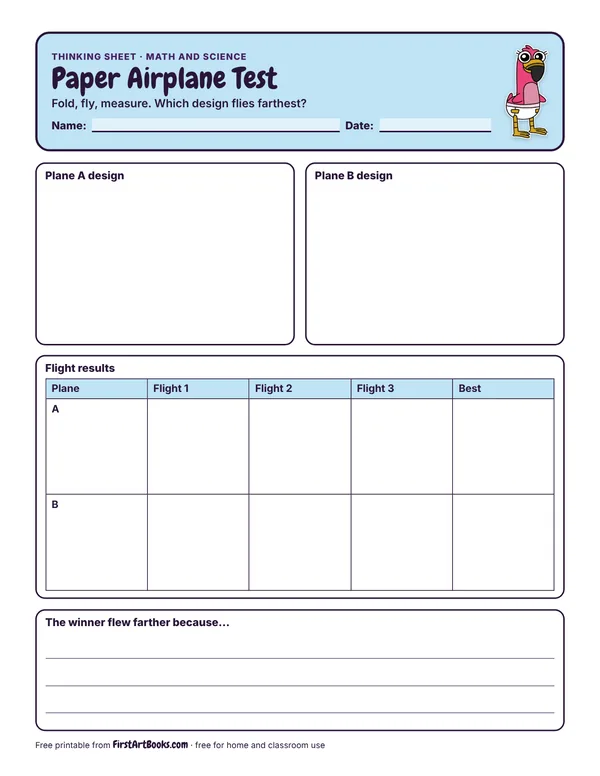
Fold two different planes, fly each three times, measure the distance and find the winner.
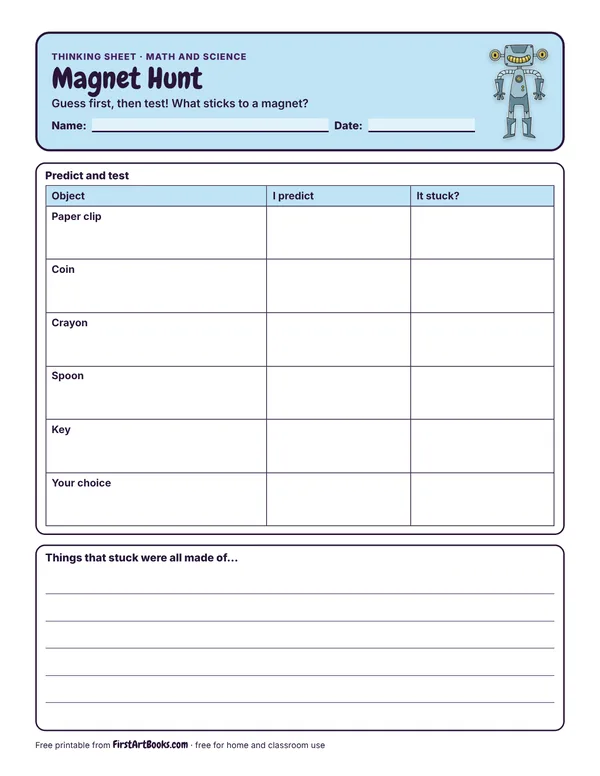
Predict which objects a magnet will pick up, test them and sort the results.
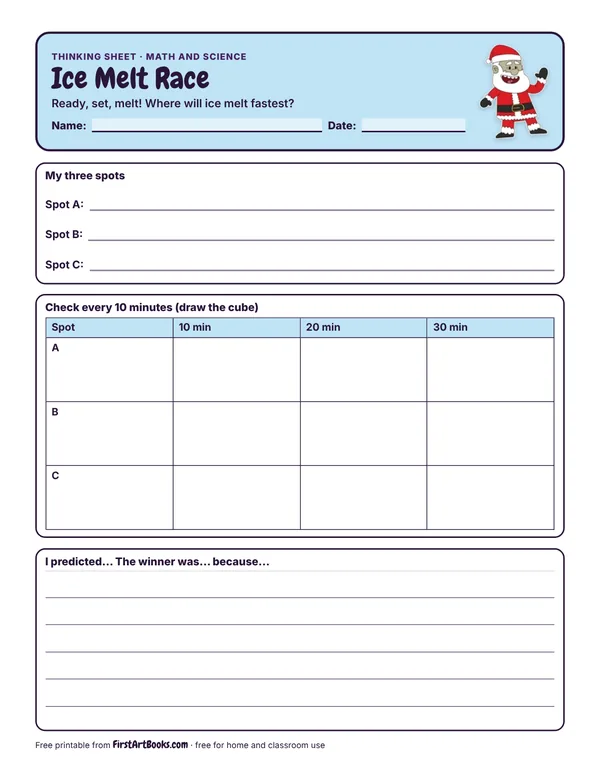
Put ice cubes in three places, predict which melts first and check every ten minutes.
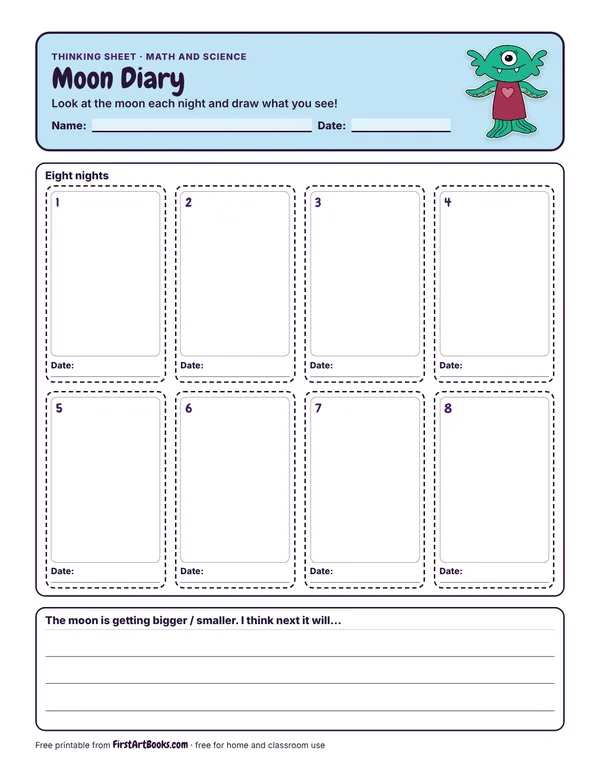
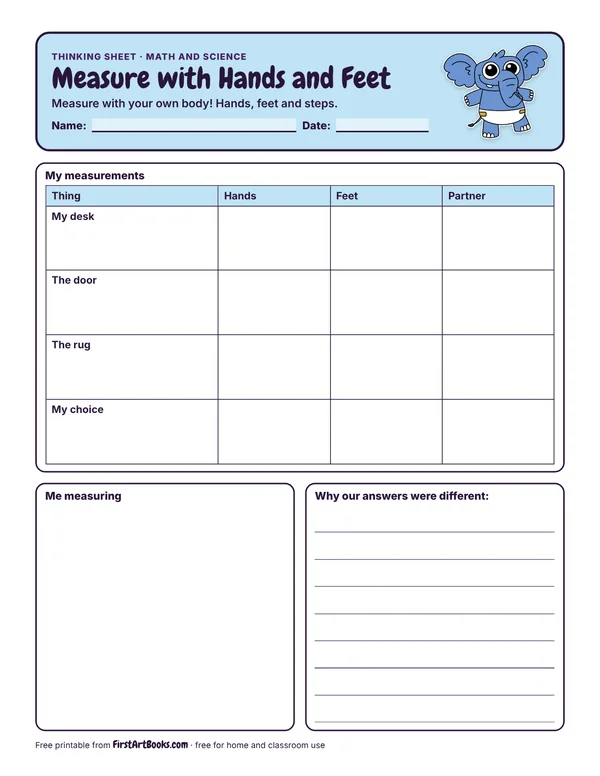
How many hands long is your desk? How many feet long is the rug? Measure, then compare with a friend.
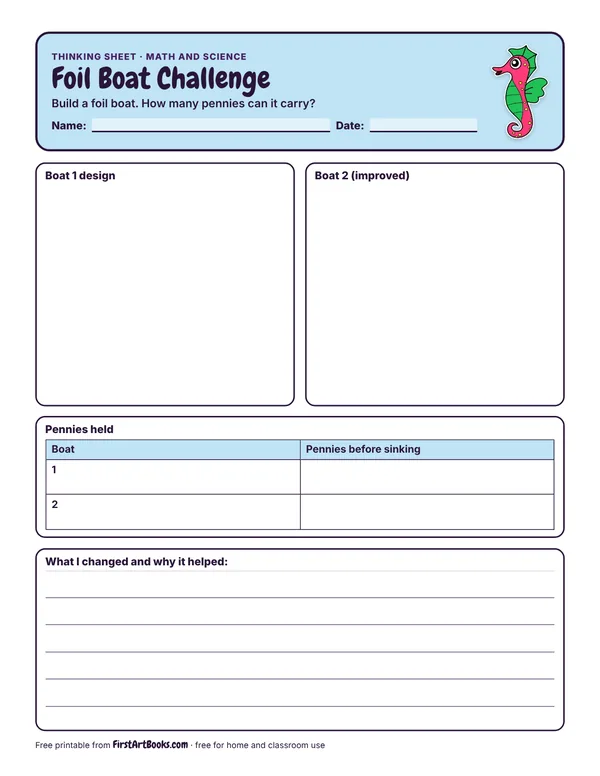
Build a boat from one square of foil and count how many pennies it can hold before it sinks.
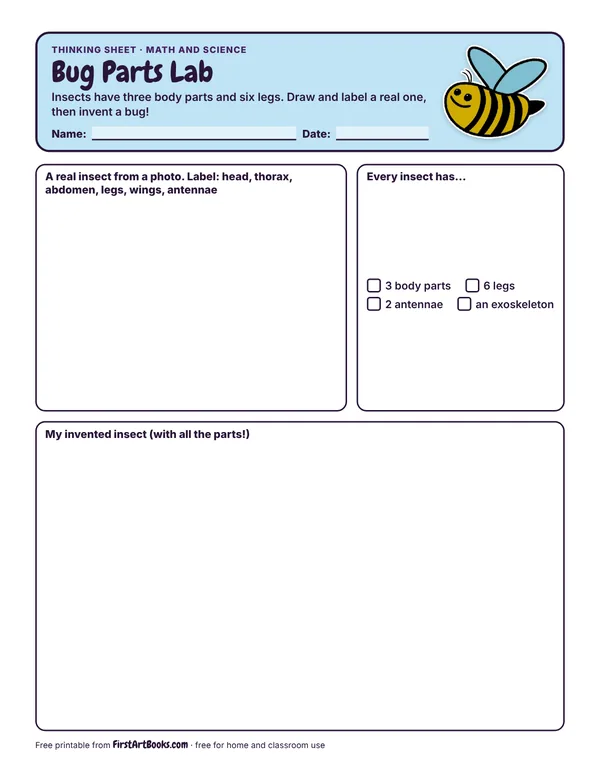
Draw a real insect from a photo and label its parts, then invent your own insect with all the right parts.
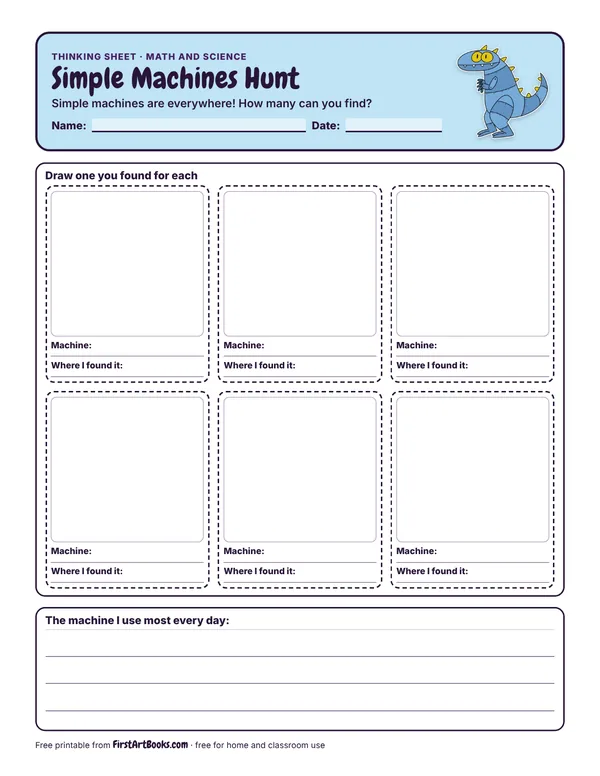
Find levers, wheels, ramps, pulleys, wedges and screws around school and draw where you spotted them.
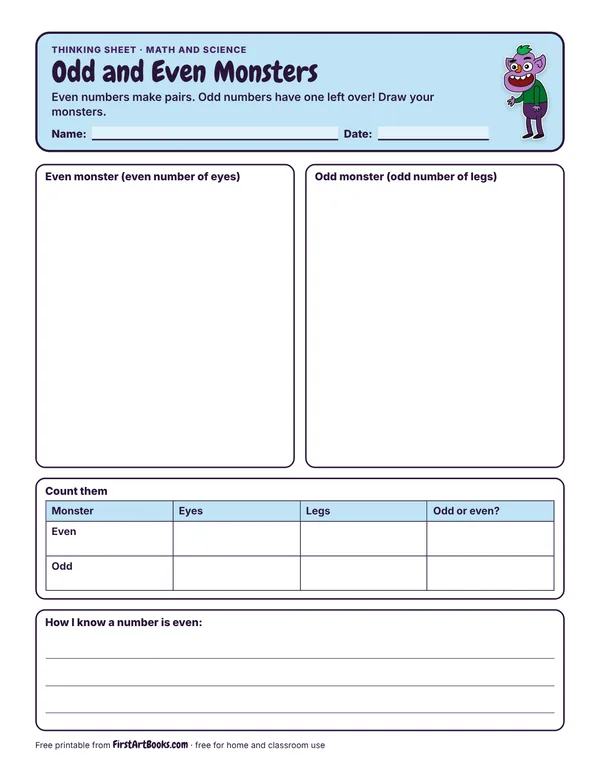
Draw monsters with even numbers of eyes and odd numbers of legs. Can every monster find a partner?
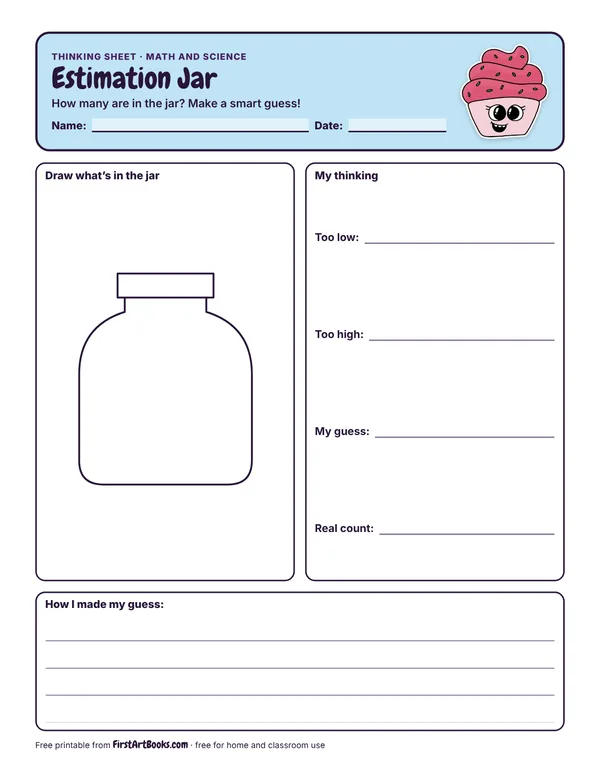
Guess how many things are in the jar, count them and see how close you got.
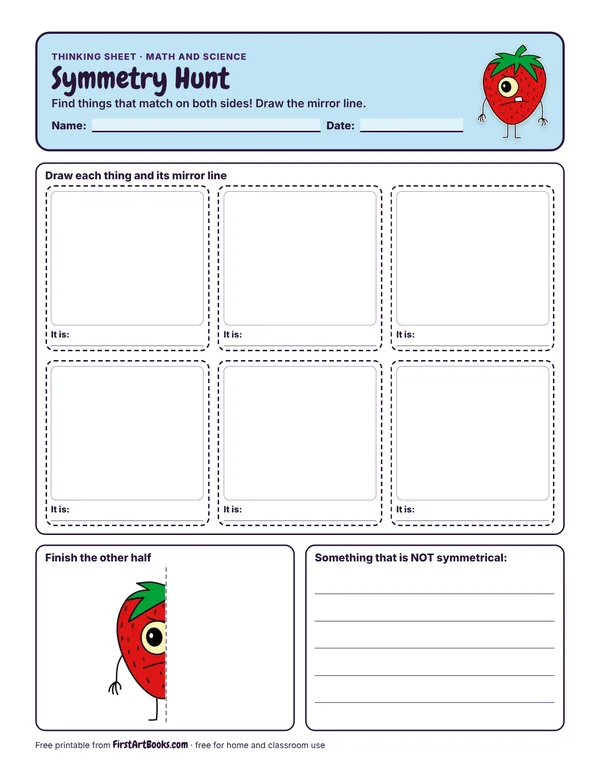
Find things that are the same on both sides, and draw their line of symmetry.
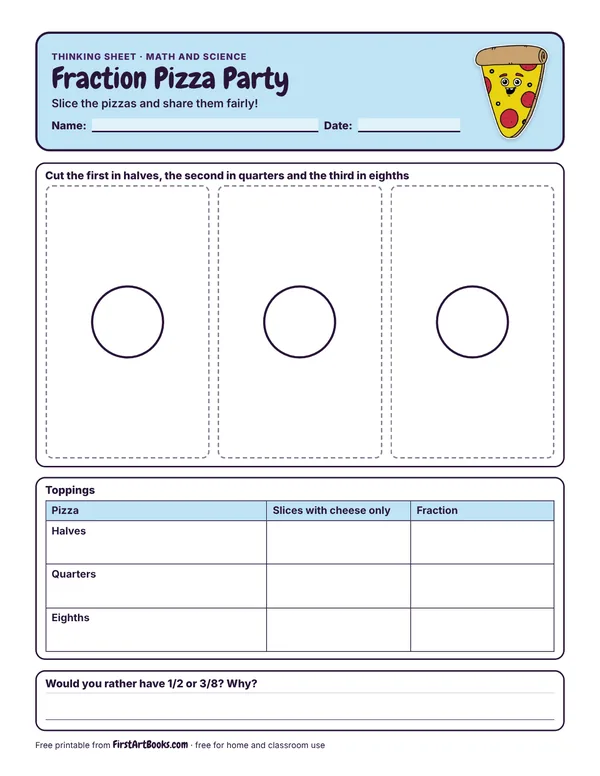
Cut pizzas into halves, quarters and eighths, then add toppings to show fractions.
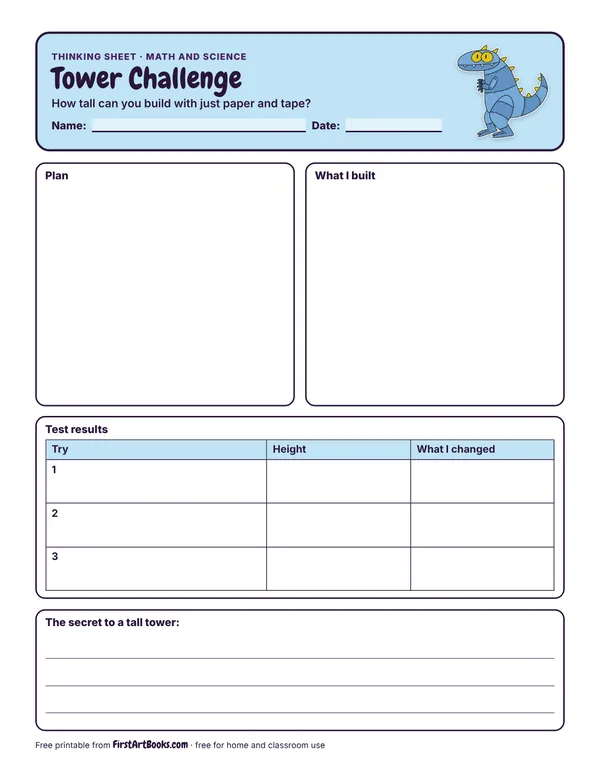
Build the tallest tower you can from paper, test it and improve your design.
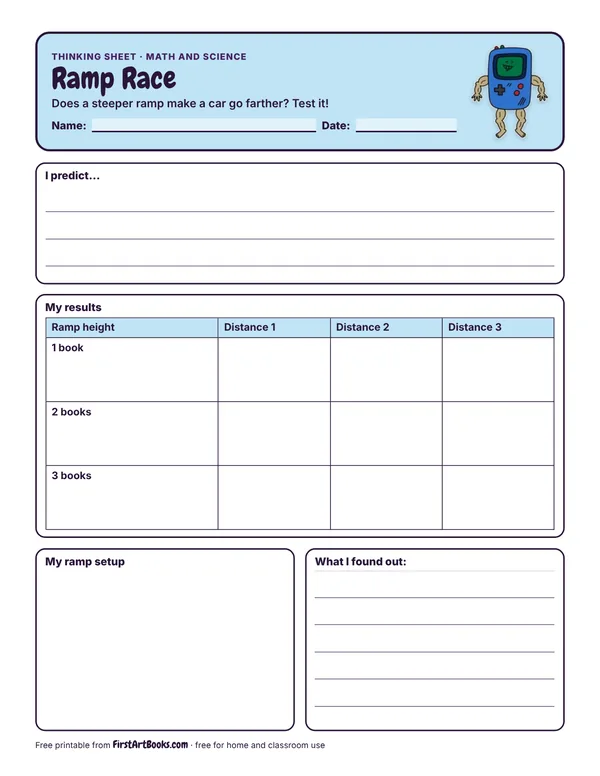
Roll a toy car down a ramp at different heights and measure how far it goes.
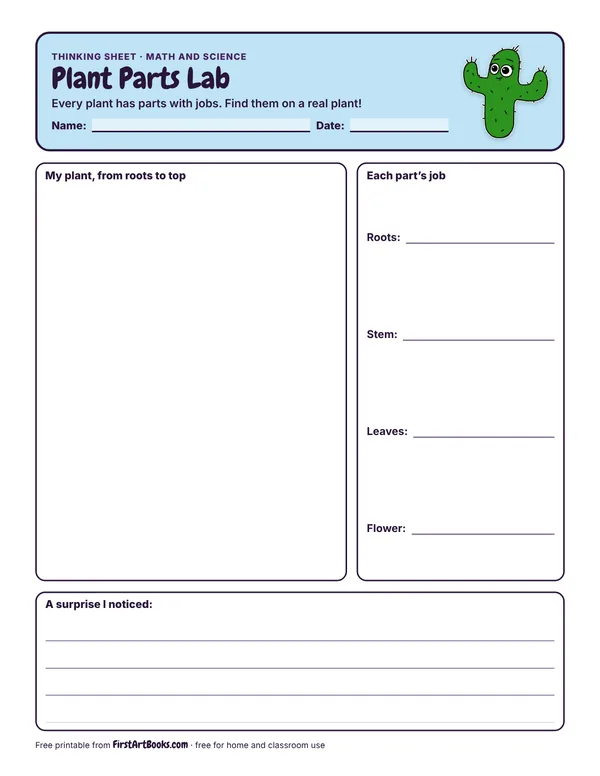
Take a close look at a real plant and draw its roots, stem, leaves and flower.
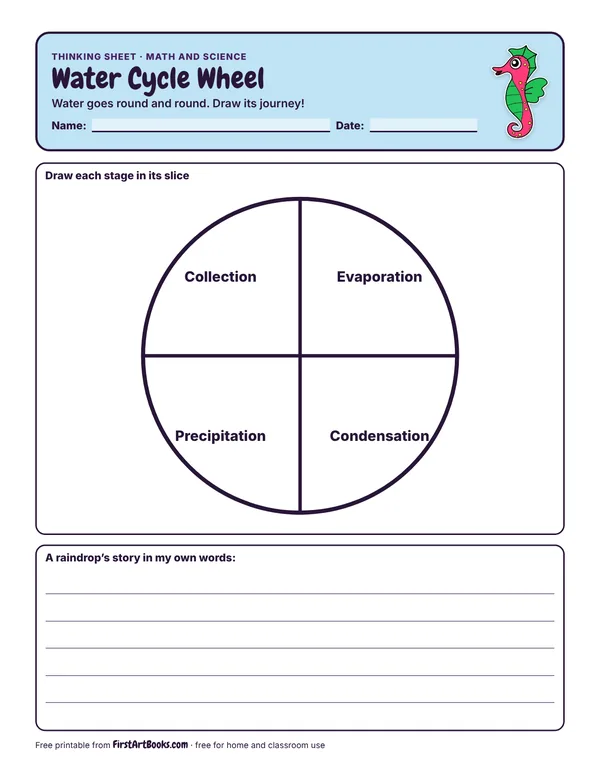
Draw the water cycle around a wheel: evaporation, condensation, precipitation and collection.
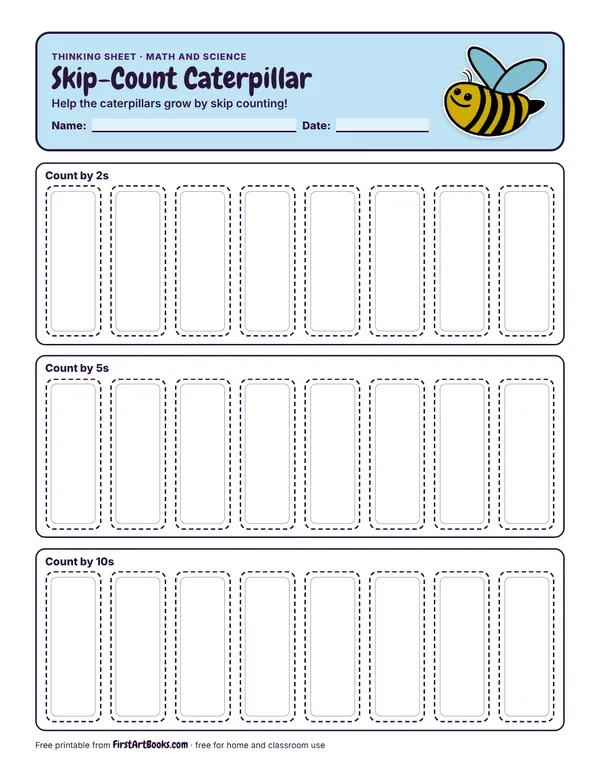
Fill each caterpillar segment by counting in twos, fives and tens.
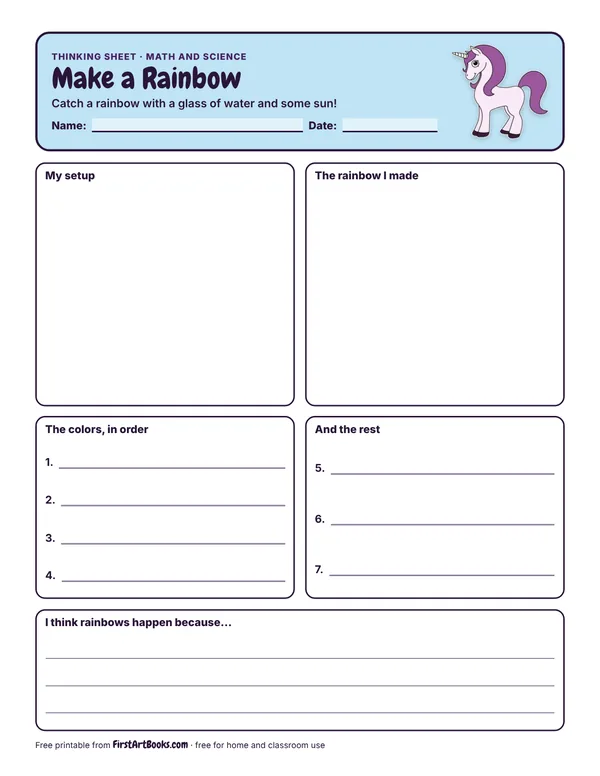
Make a rainbow with water, a glass and sunlight, and record the color order.
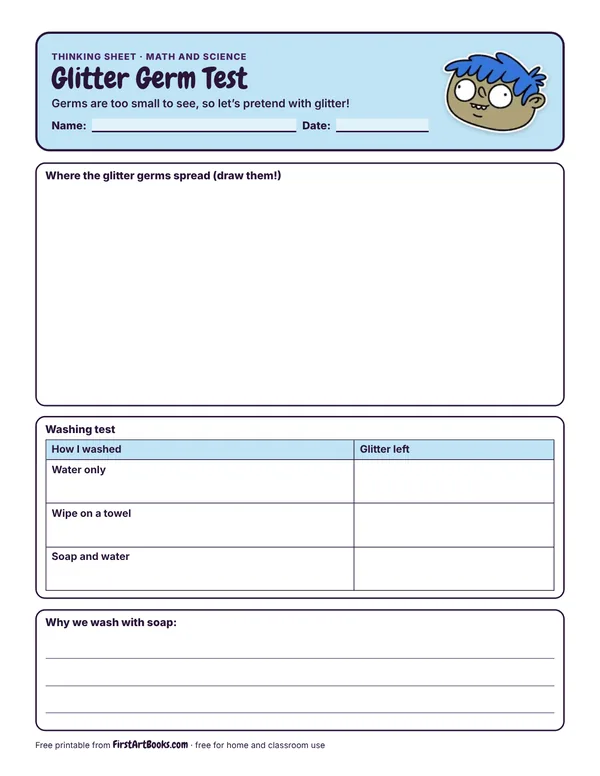
Use glitter as pretend germs to see how far they spread and what washes them off.
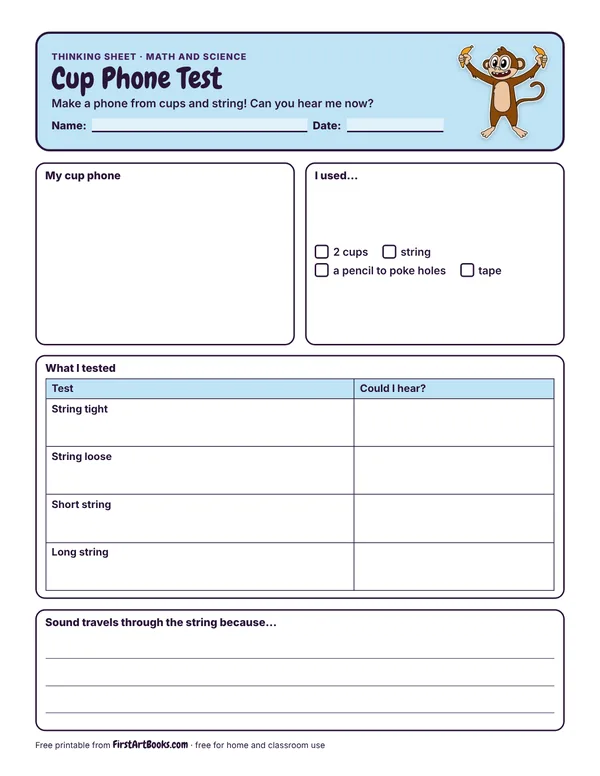
Build a cup and string phone and test how string length and tightness change the sound.
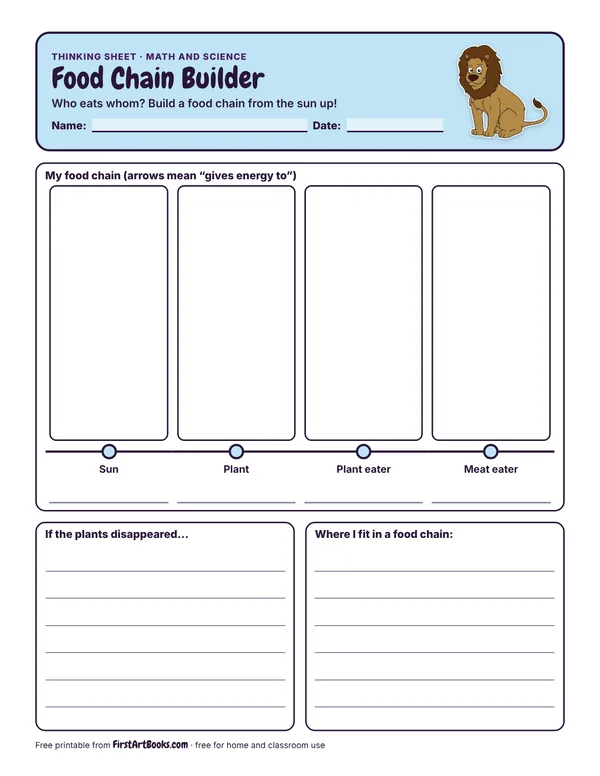
Build a food chain from the sun to a top predator and explain how energy moves.
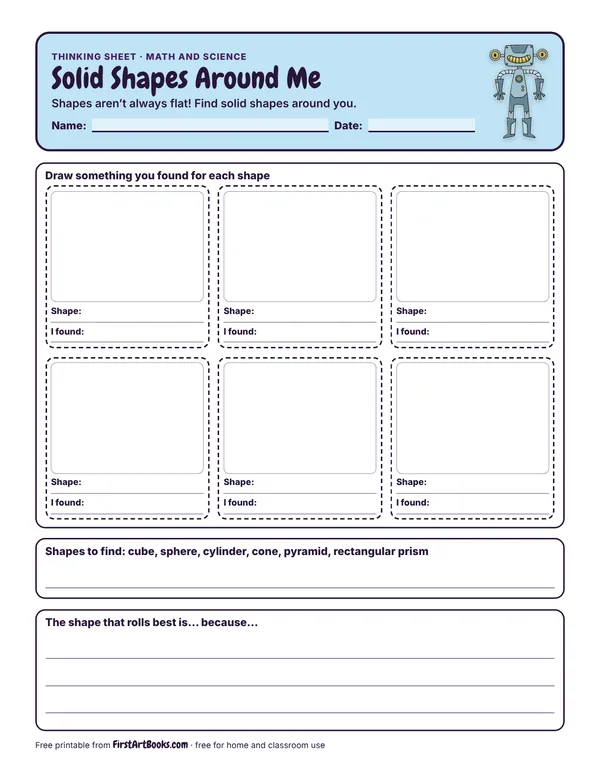
Hunt for cubes, spheres, cylinders and cones in the room. Draw what you find and count the faces.
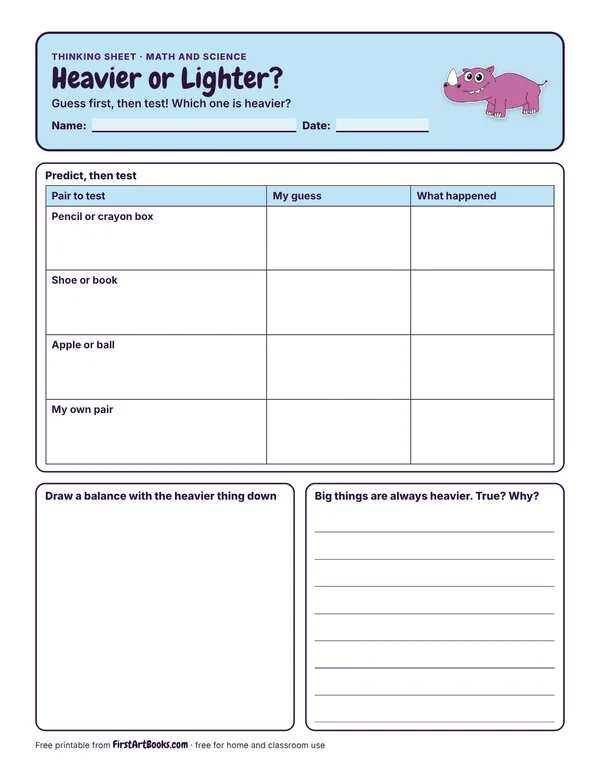
Predict which object is heavier, then test with your hands or a balance scale and record what really happened.
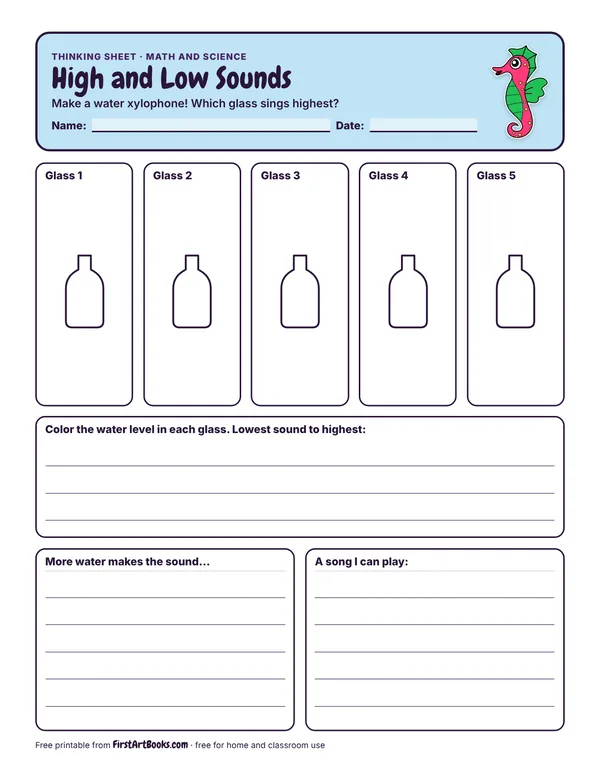
Fill glasses with different amounts of water, tap them and order the sounds from low to high.
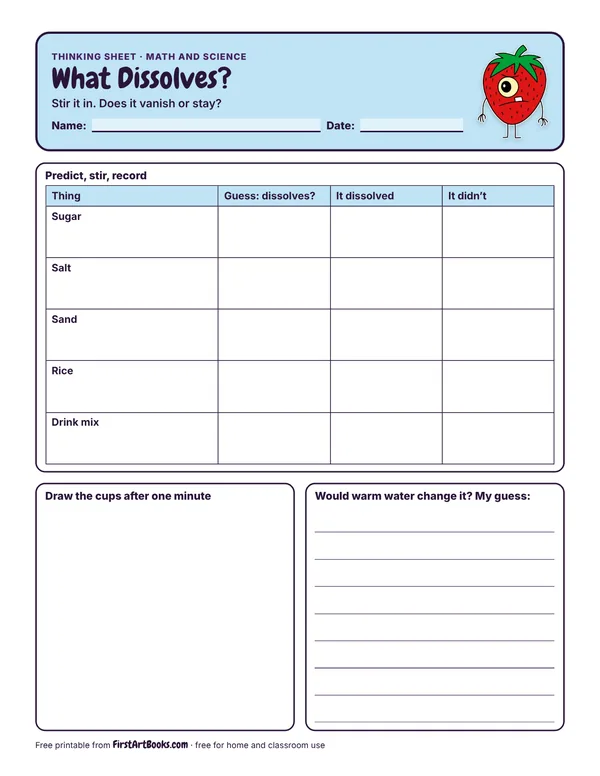
Stir sugar, salt, sand and more into water. Predict, test and record what disappears and what doesn’t.
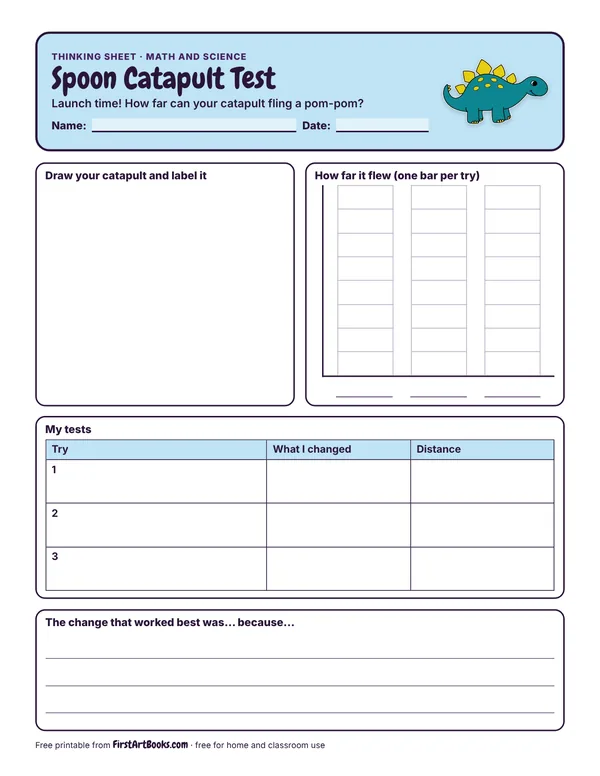
Build a spoon-and-rubber-band catapult, launch a pom-pom three ways and measure how far it flies.
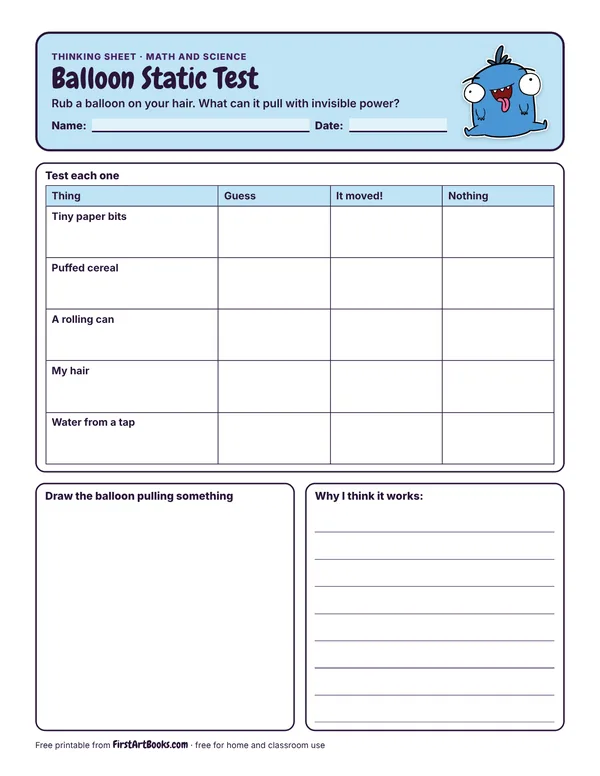
Rub a balloon on your hair and test what it can pick up: paper bits, cereal, a can, your hair.
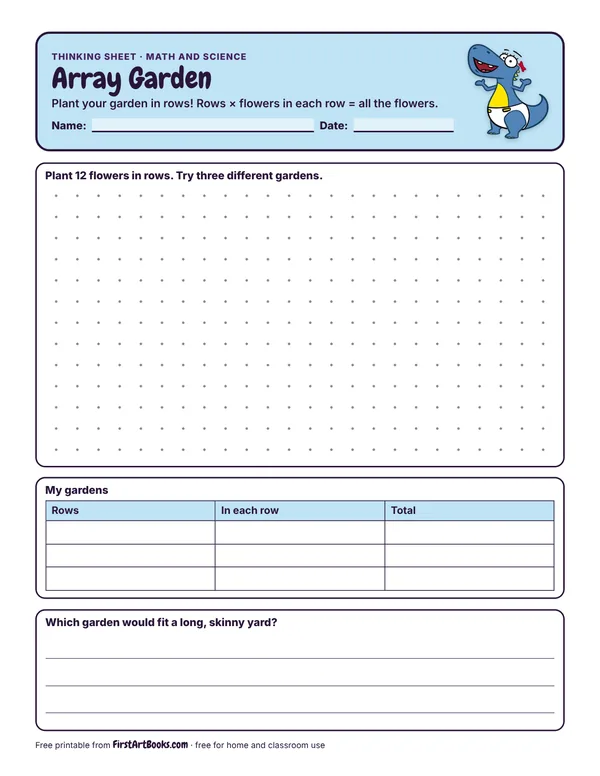
Plant flowers in neat rows and columns to show multiplication. How many ways can you plant 12 flowers?

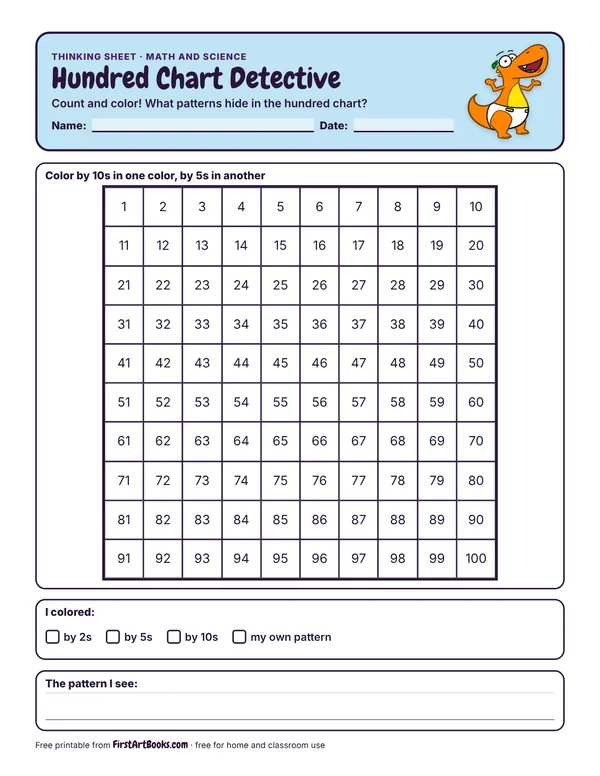
Color patterns on a hundred chart: counting by 2s, 5s and 10s. What shapes do the patterns make?
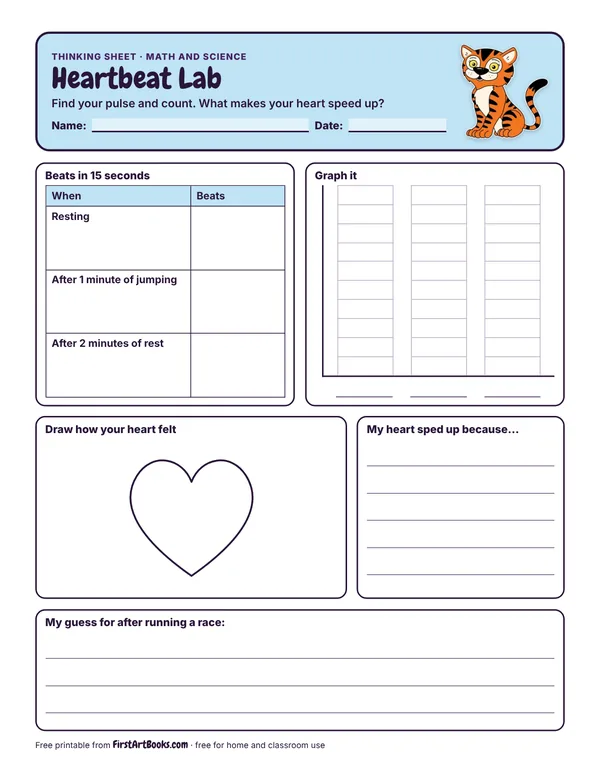
Count your heartbeats resting, after jumping and after cooling down. Graph them and see what changes.
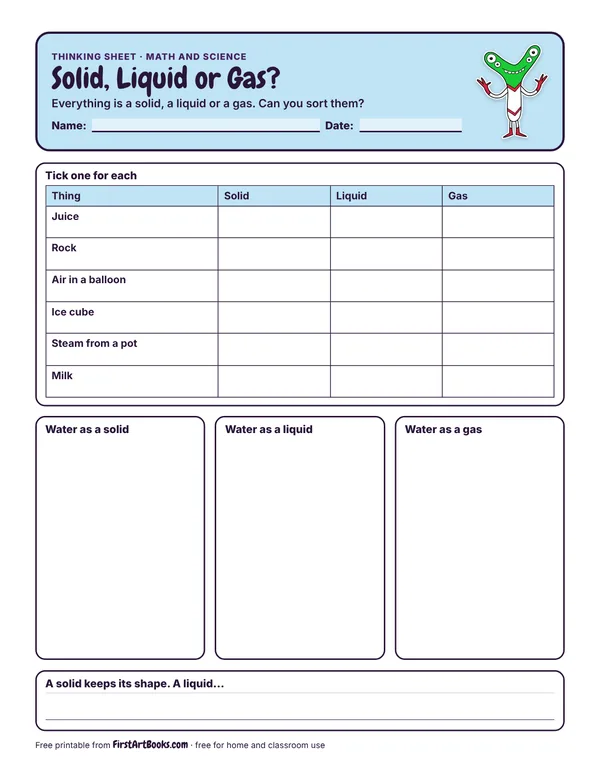
Sort everyday things into solids, liquids and gases, then draw water in all three forms.
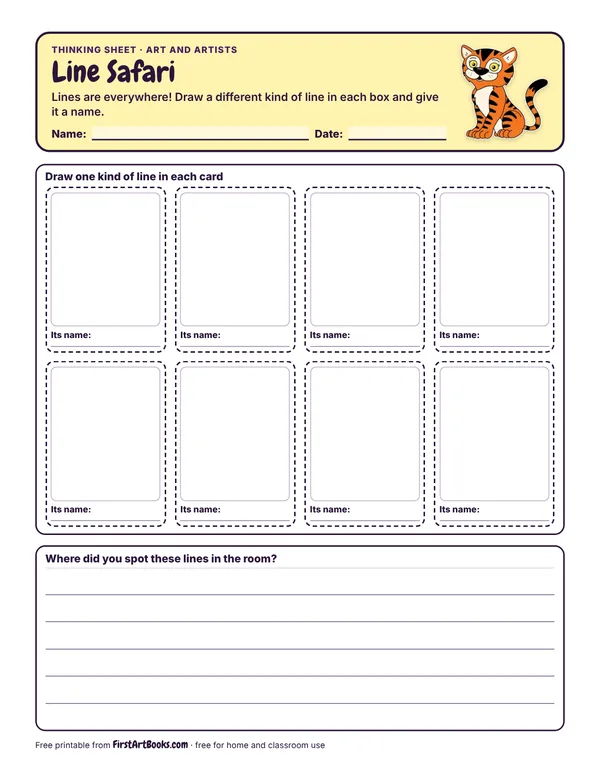
Go hunting for eight kinds of lines and draw one of each: zigzag, wavy, dotted, spiral and more.
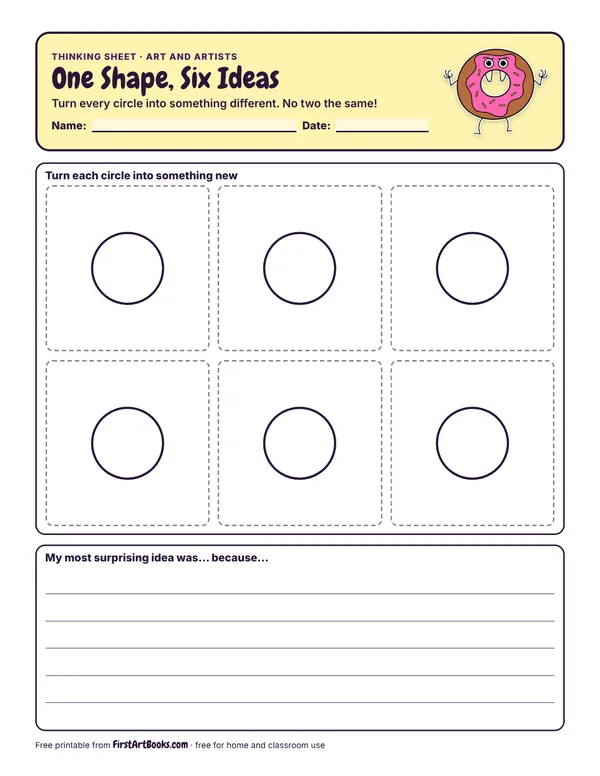
Six circles, six different drawings. Can a circle become a clock, a pizza and a planet?
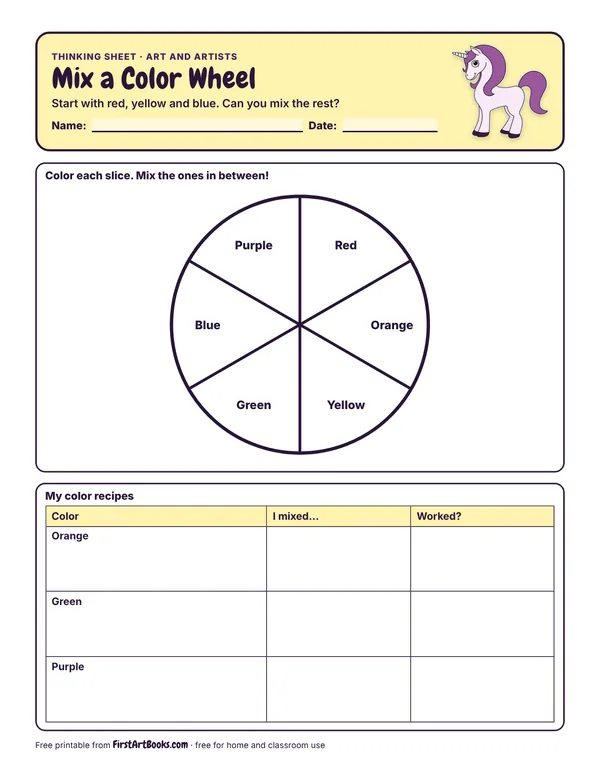
Color the wheel with three primary colors, mix the three in-between colors and record the recipes.
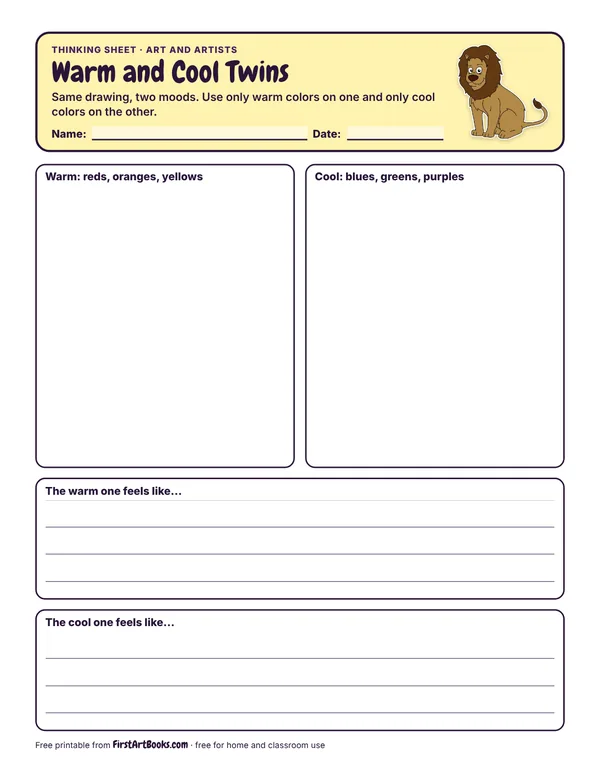
Draw the same picture twice: once in warm colors and once in cool colors. How does each one feel?
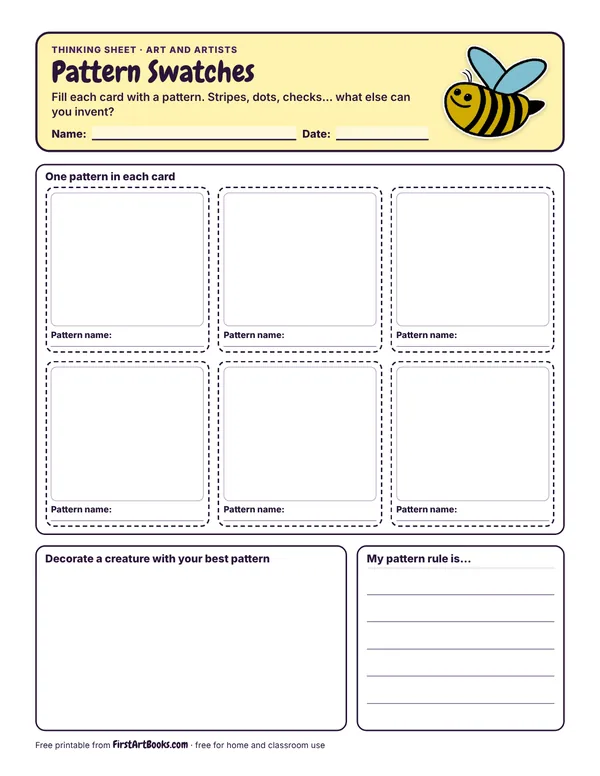
Fill six cards with six different patterns, then use your favorite to decorate a drawing.
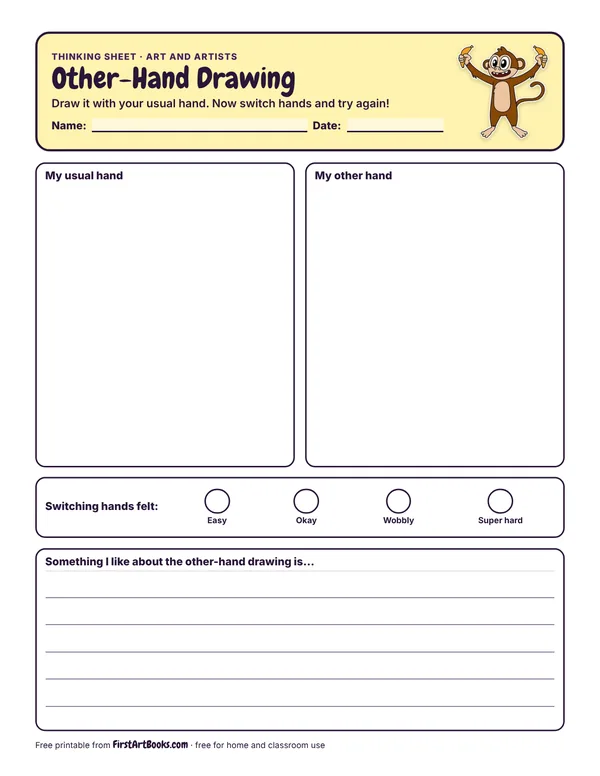
Draw the same thing with your writing hand and then your other hand. Which one has more character?
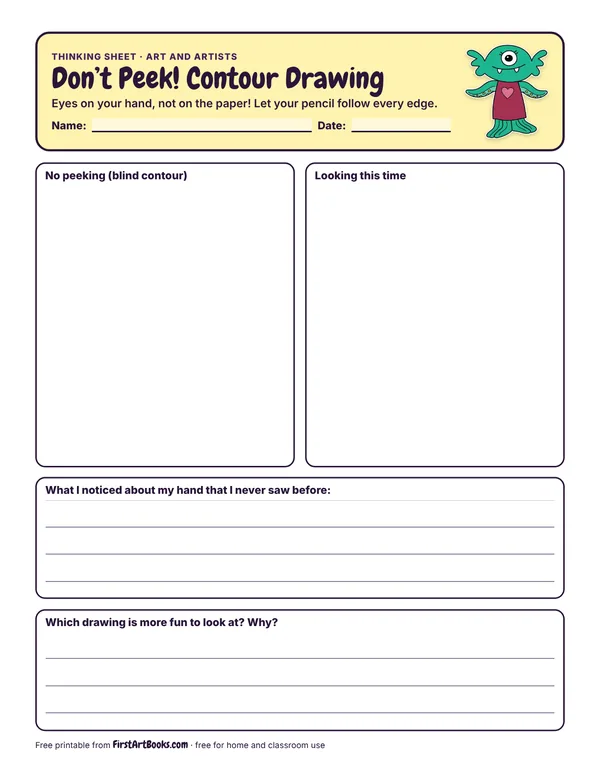
Draw your hand without looking at the paper, then draw it again while looking. Compare the two.
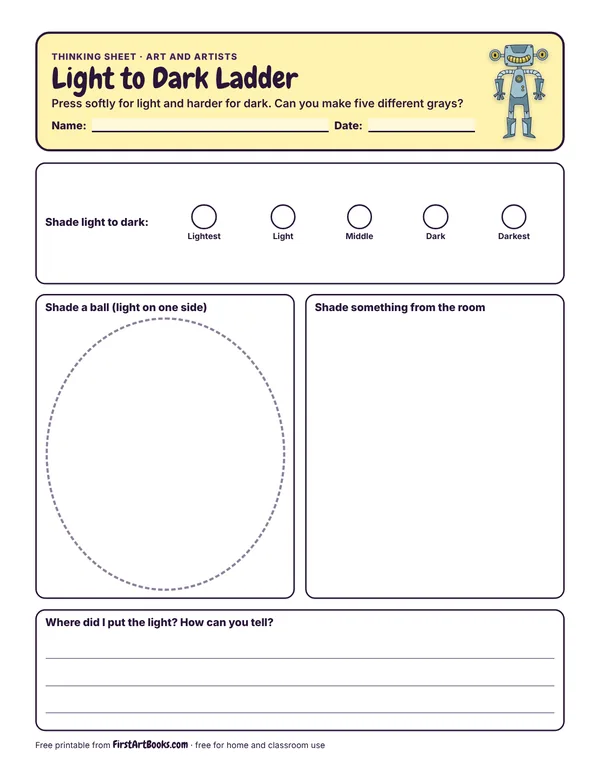
Shade five circles from lightest to darkest, then shade a ball so it looks round.
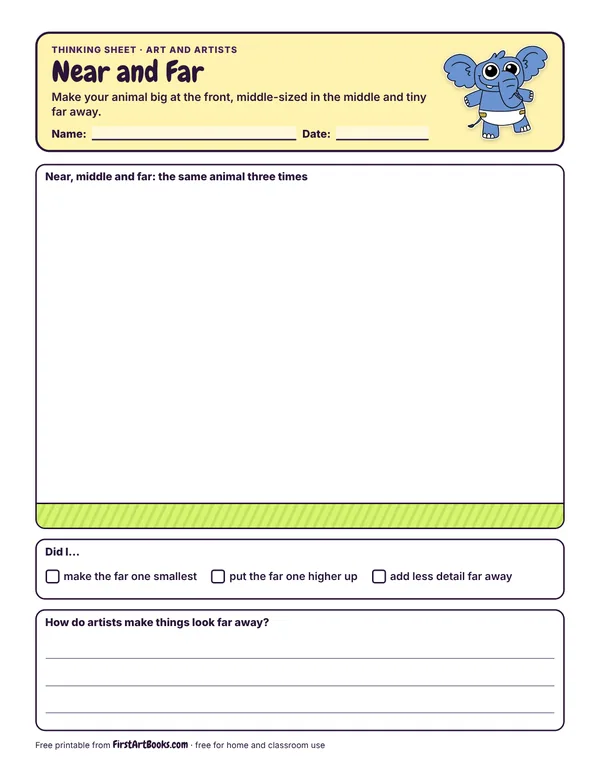
Draw the same animal close, in the middle and far away. Things look smaller and higher up as they get farther.
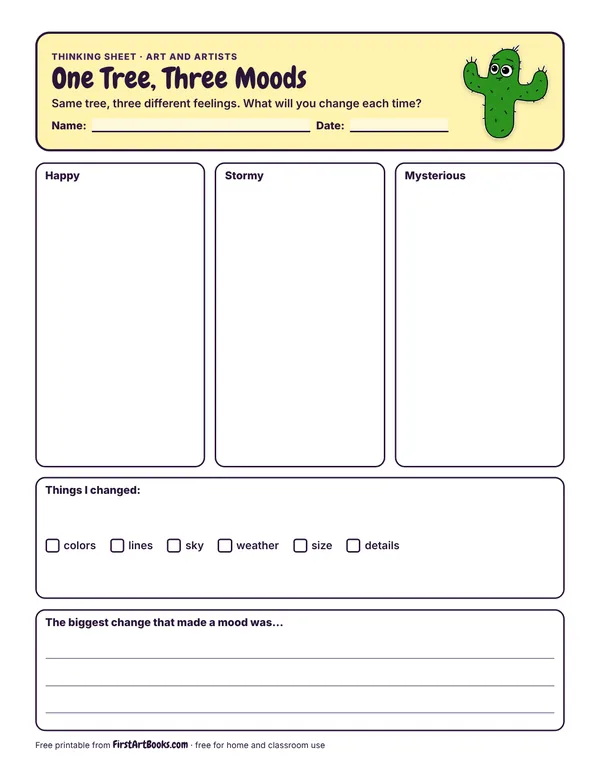
Draw the same tree three ways: happy, stormy and mysterious. Change the lines, colors and sky.
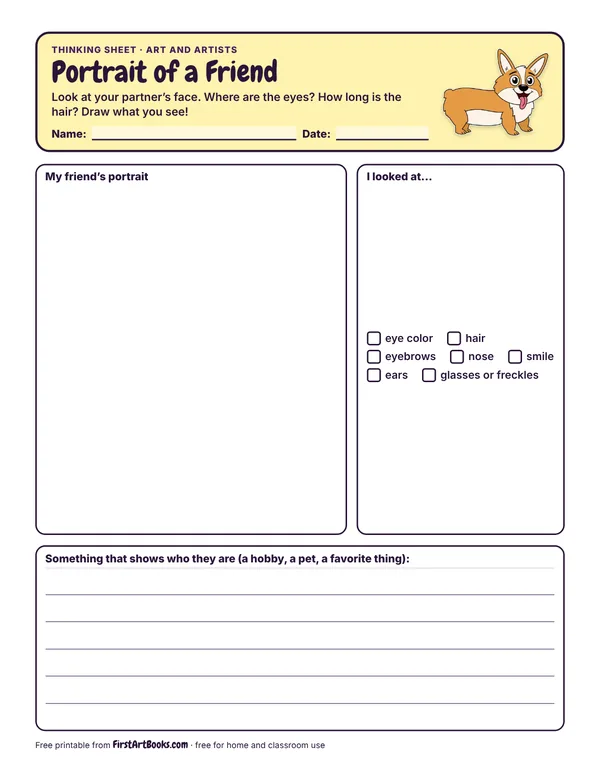
Look carefully at a partner and draw their portrait, then add one thing that shows who they are.
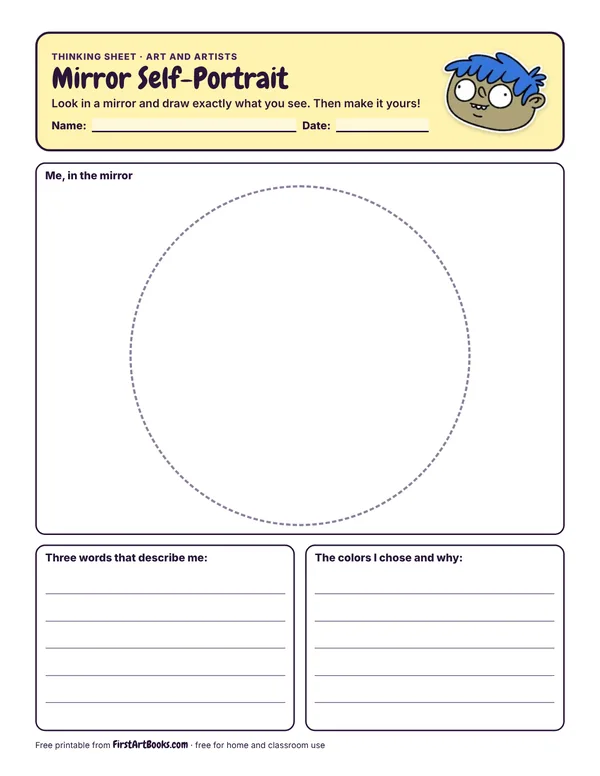
Use a mirror to draw your own face in the round frame, then add colors that show your style.
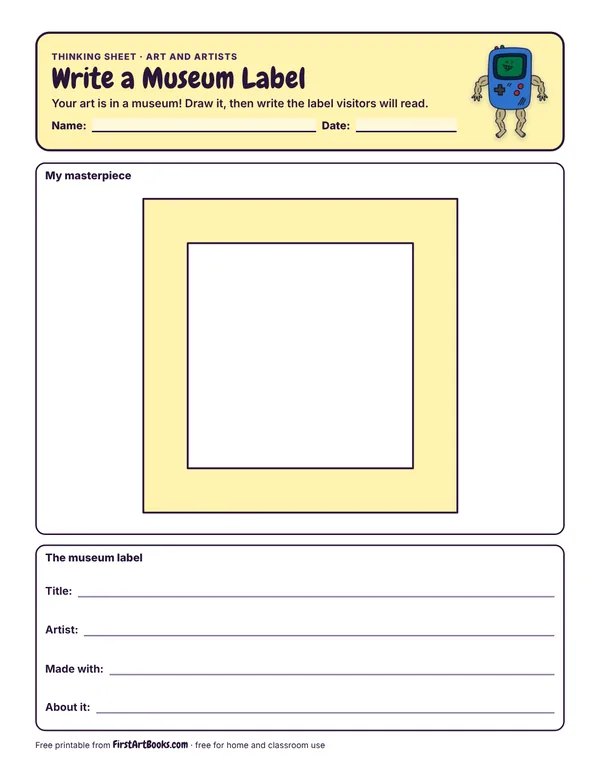
Draw a masterpiece inside the gold frame, then write the label a museum would hang beside it.
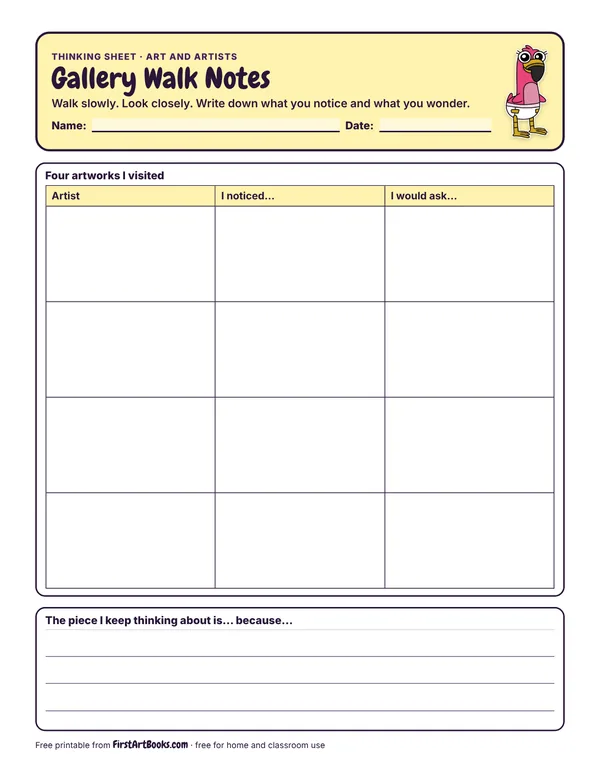
Walk around the class art show and take notes on four pieces: what you notice and what you would ask the artist.
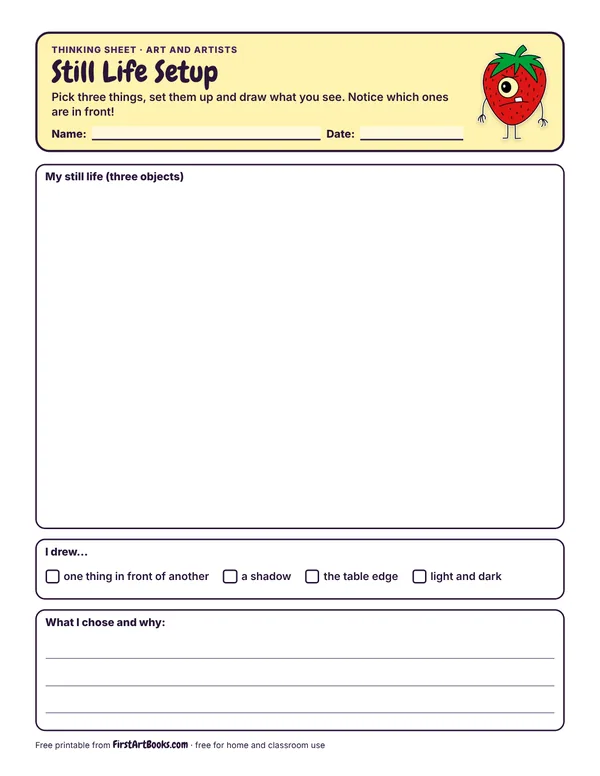
Arrange three objects on a table and draw them just as they are, overlapping and all.
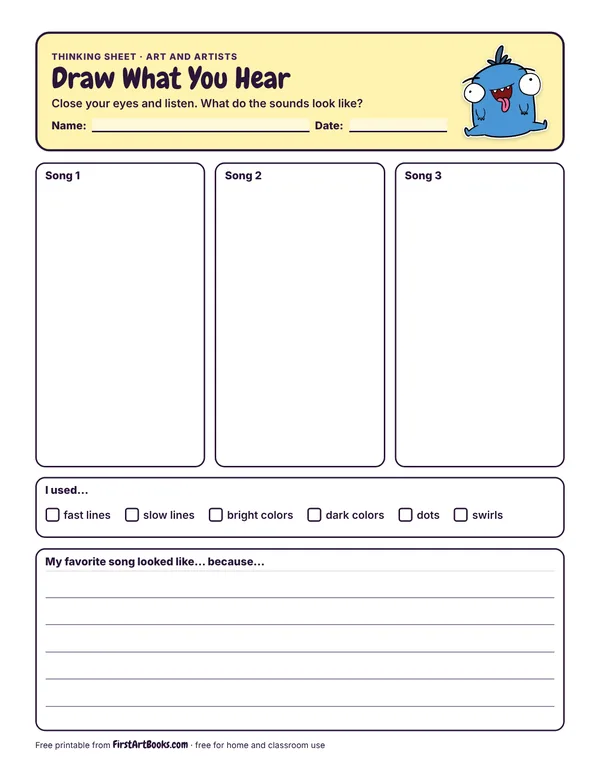
Listen to three pieces of music and draw lines, shapes and colors that match each one.
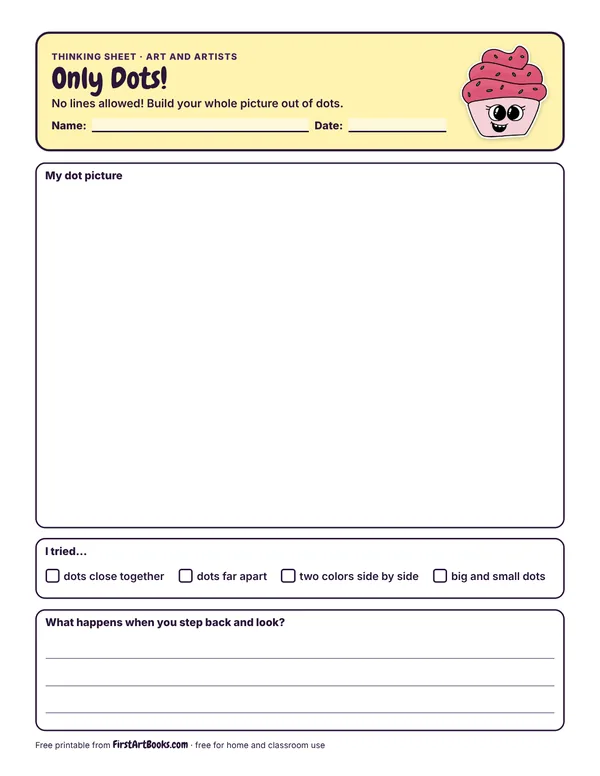
Make a whole picture out of dots. Close dots look dark; far-apart dots look light.
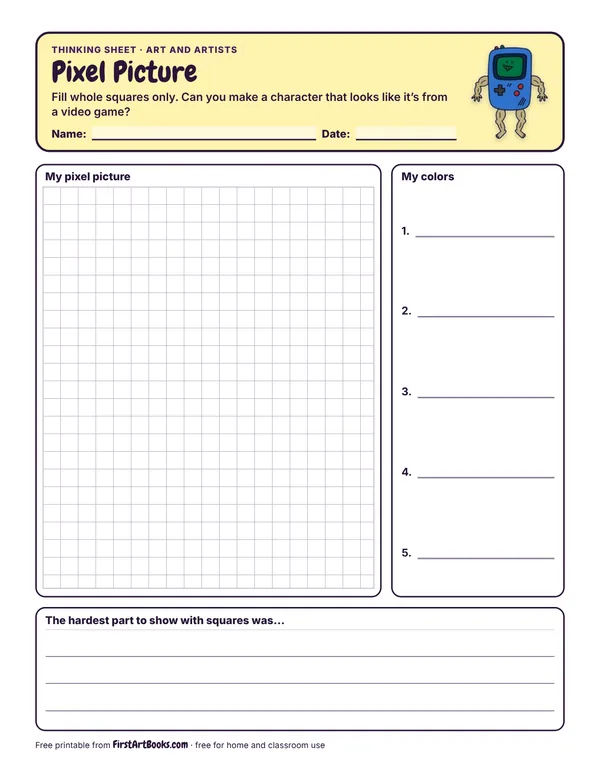
Color whole squares on the grid to make a pixel-art character, like an old video game.
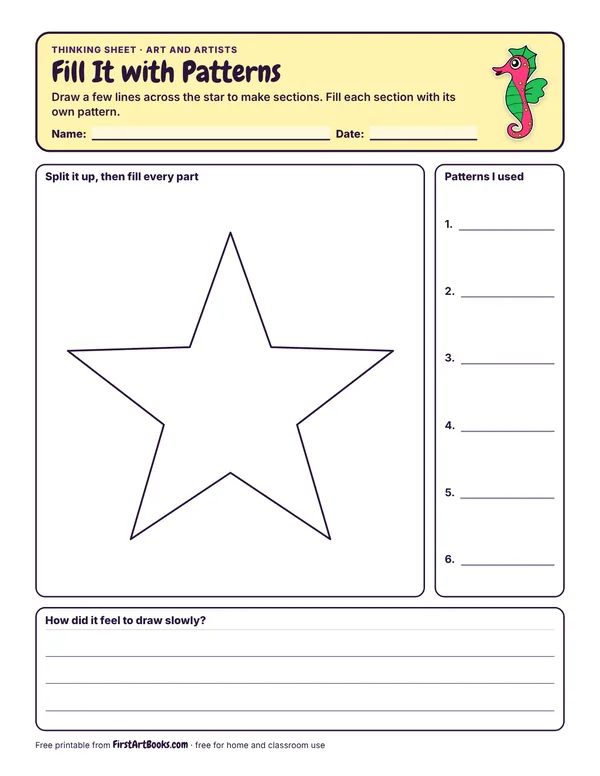
Split a big star into sections and fill each one with a different pattern, slow and careful.
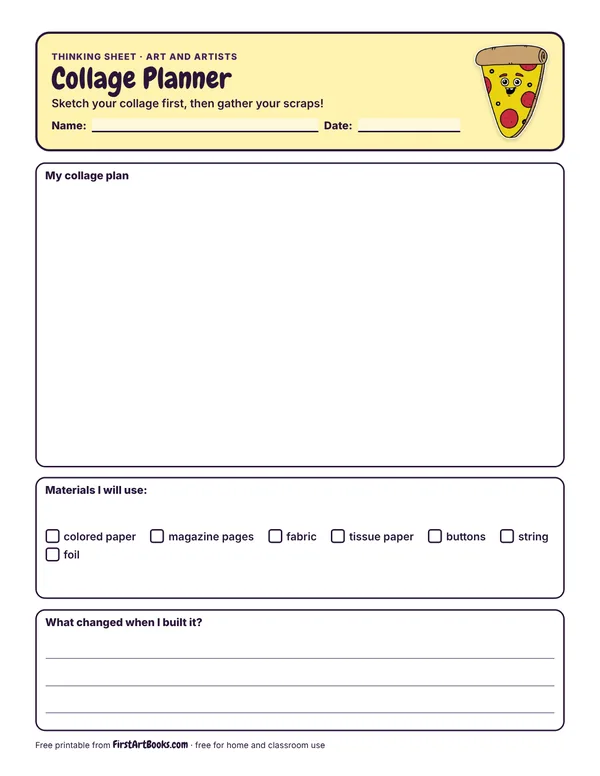
Plan a paper collage: sketch it, list the materials, then build it from scraps.
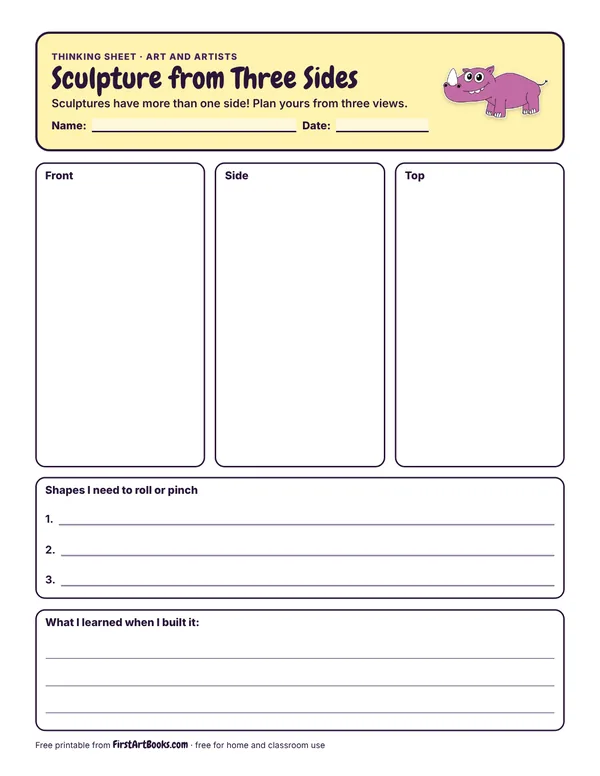
Plan a clay creature by drawing it from the front, the side and the top before you build it.
Make a character run, jump and spin using the motion lines cartoonists use.
Write your name four ways: bubble letters, block letters, spooky letters and your own style.
Design a logo for a club, team or business you invent. Keep it simple enough to draw in five seconds.
Six things, one minute each. Quick sketches train your eye and your hand.
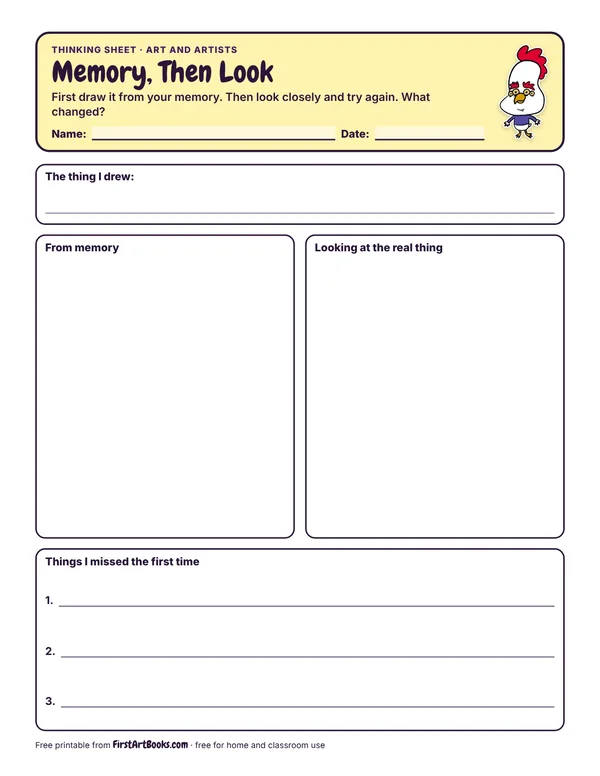
Draw a bicycle from memory, then look at a real one (or a photo) and draw it again.
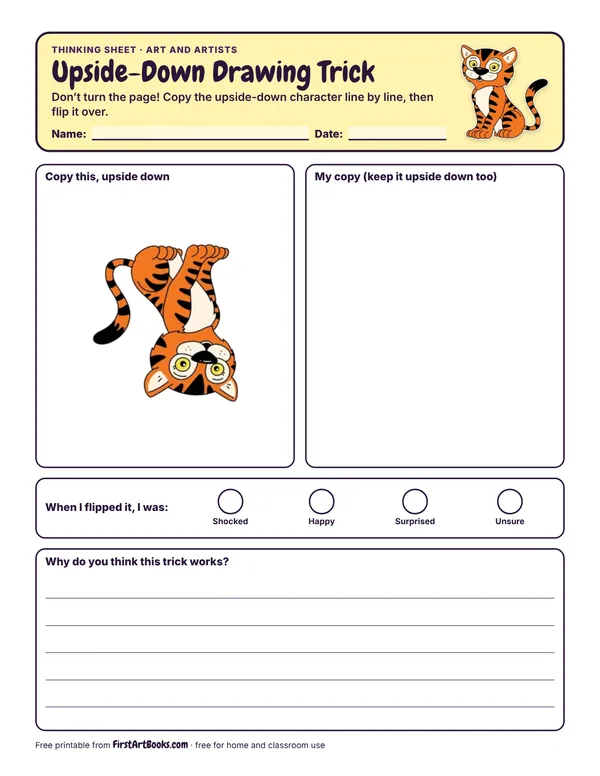
Copy a character that’s upside down. Your brain stops guessing and starts really looking.
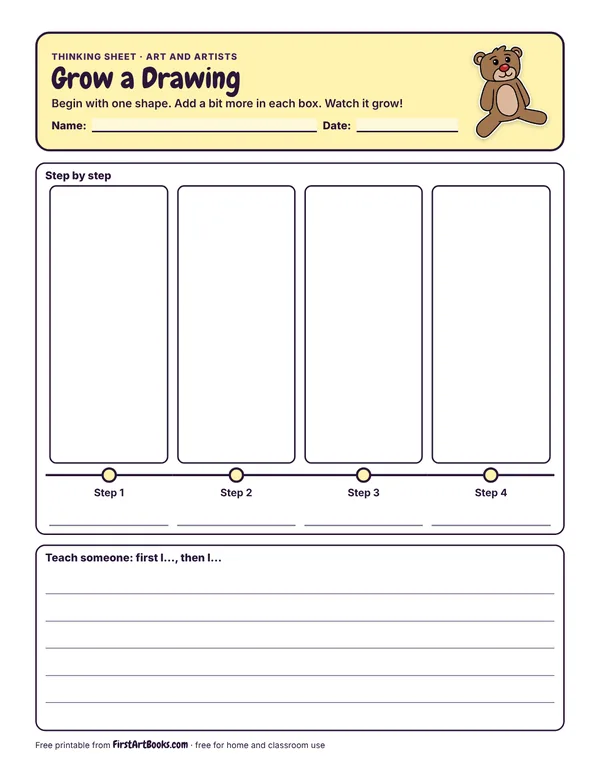
Start with one shape and add a little more in each box until a whole character appears.
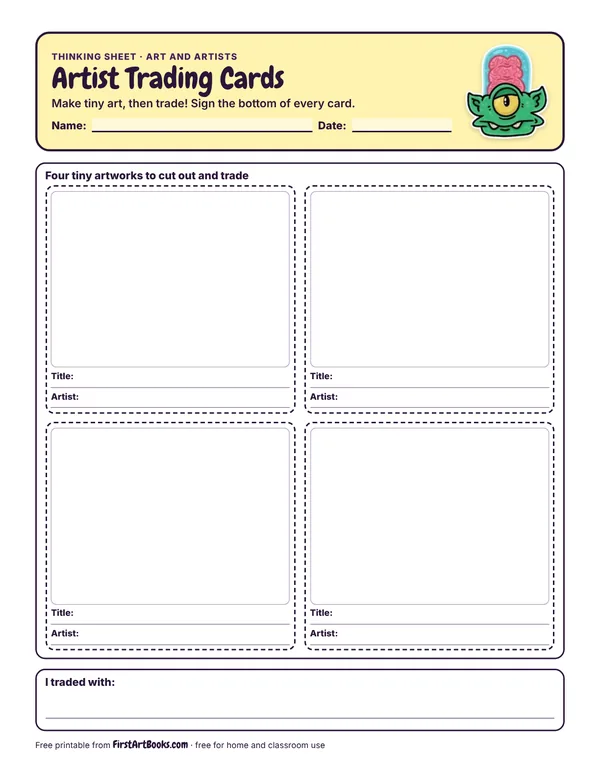
Make four tiny artworks, cut them out and trade them with friends, like real artists do.
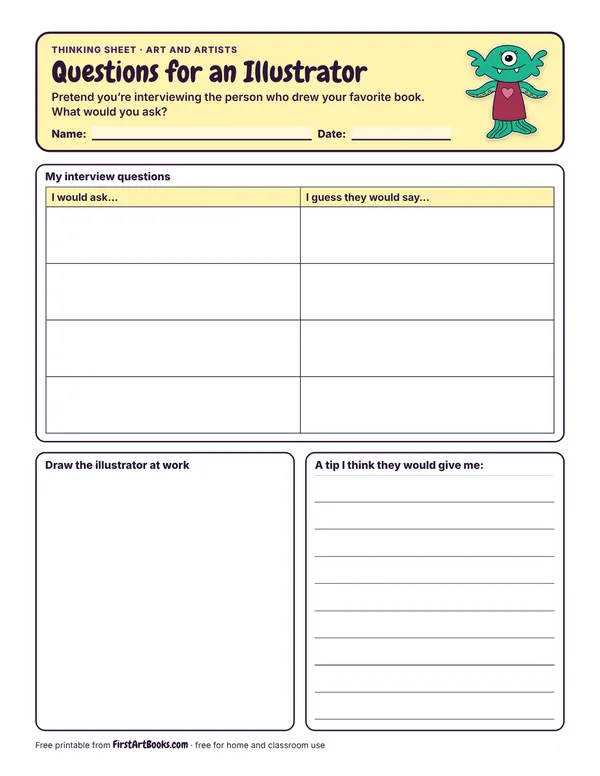
What would you ask the person who draws the pictures in books? Plan your questions and guess the answers.

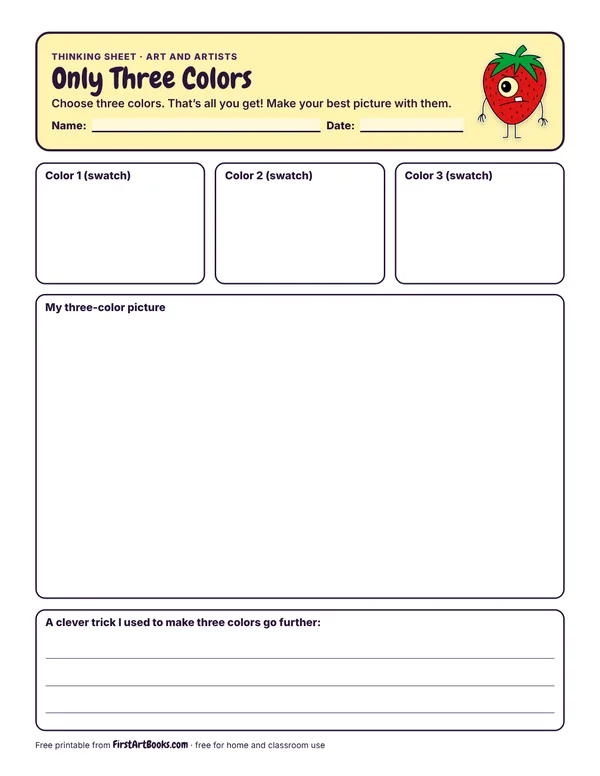
Pick just three colors and make a whole picture. Limits make you creative!
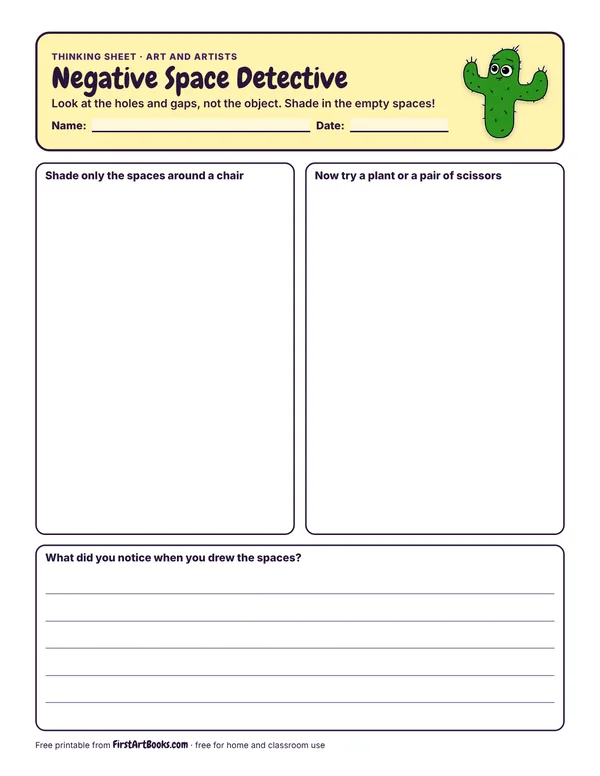
Draw the empty spaces around a chair instead of the chair itself. It’s a trick real artists use.
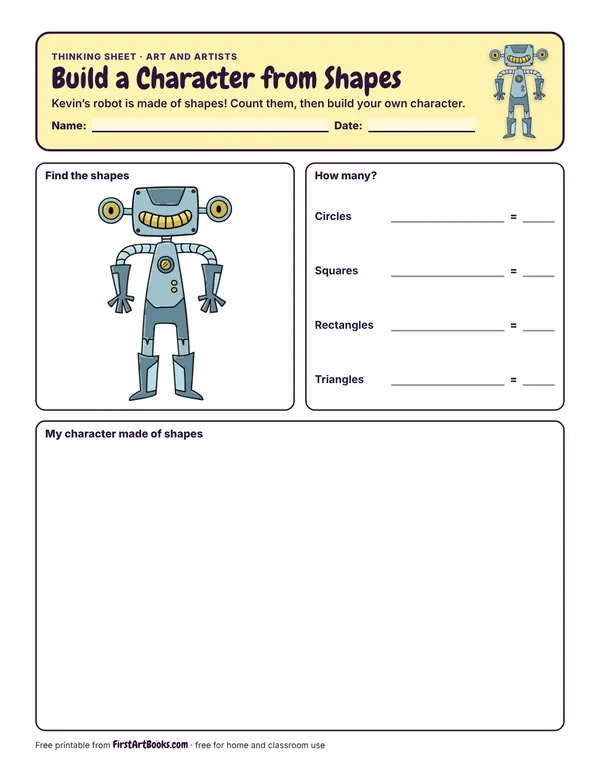
Count the shapes in a character, then build your own from circles, squares and triangles.
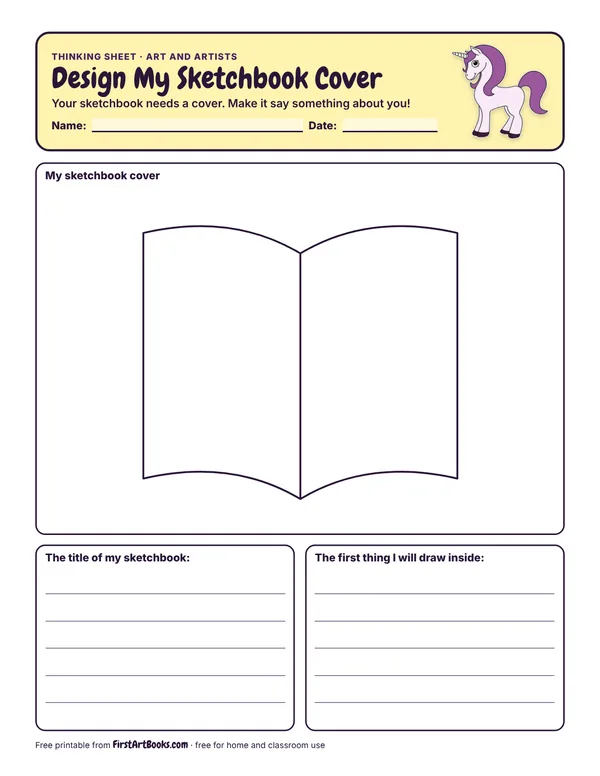
Design the cover of your own sketchbook: a title, your name and a picture that says “this is me.”
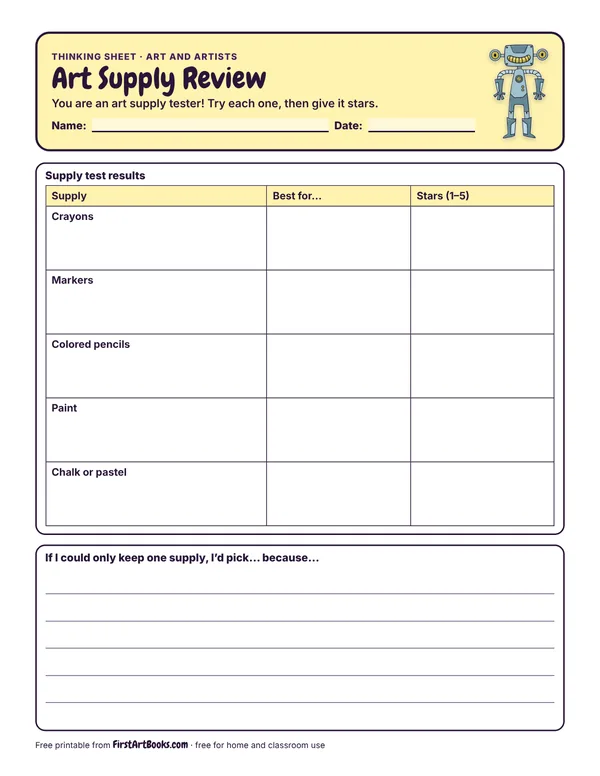
Test five art supplies on the same little drawing and review each one like a product tester.
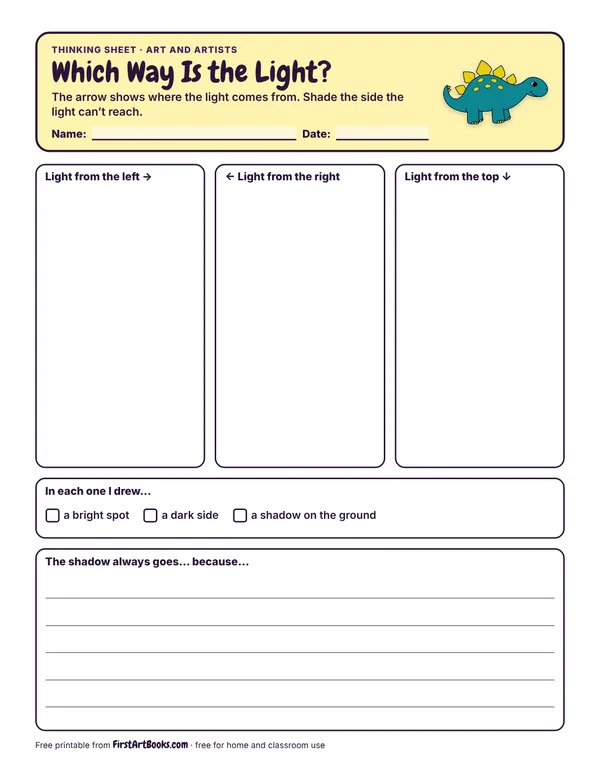
Draw a ball three times with the light coming from the left, the right and the top. Where do the shadows go?
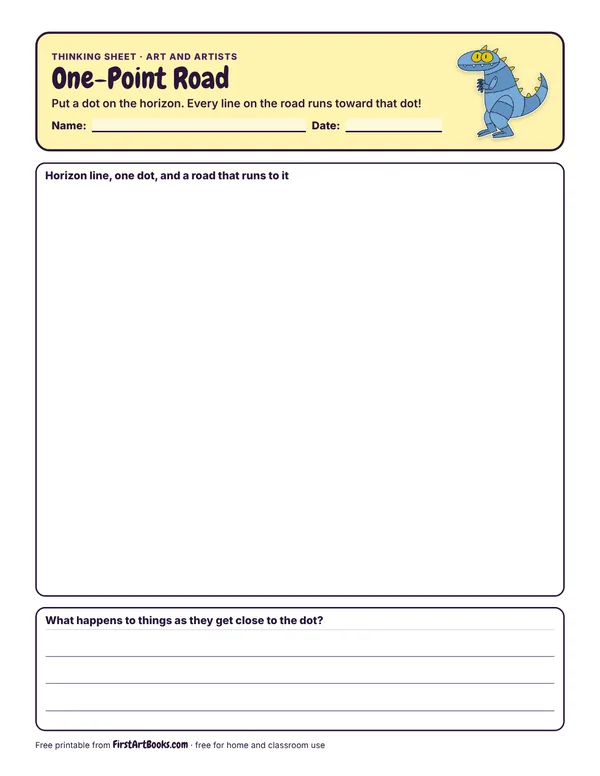
Use a vanishing point to draw a road that disappears into the distance, with posts and trees that shrink.
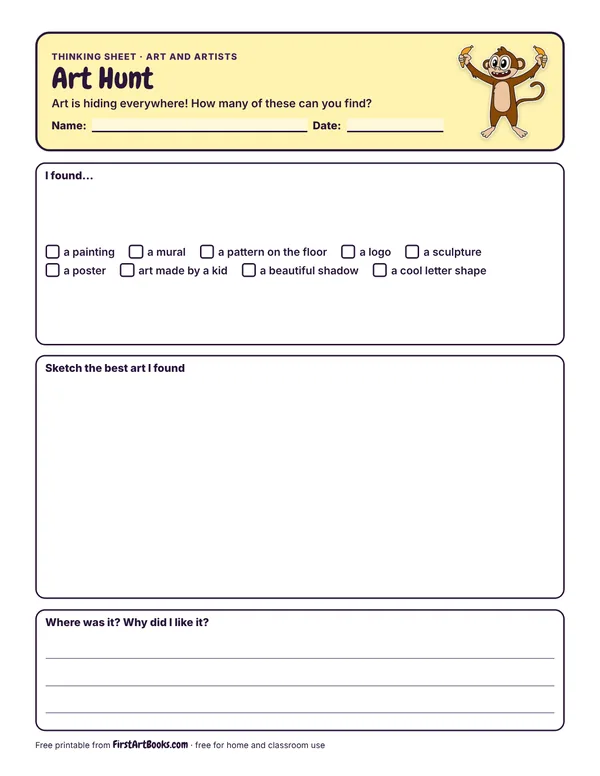
Hunt for art around your school or home: murals, signs, patterns and pictures. Check them off and sketch the best.
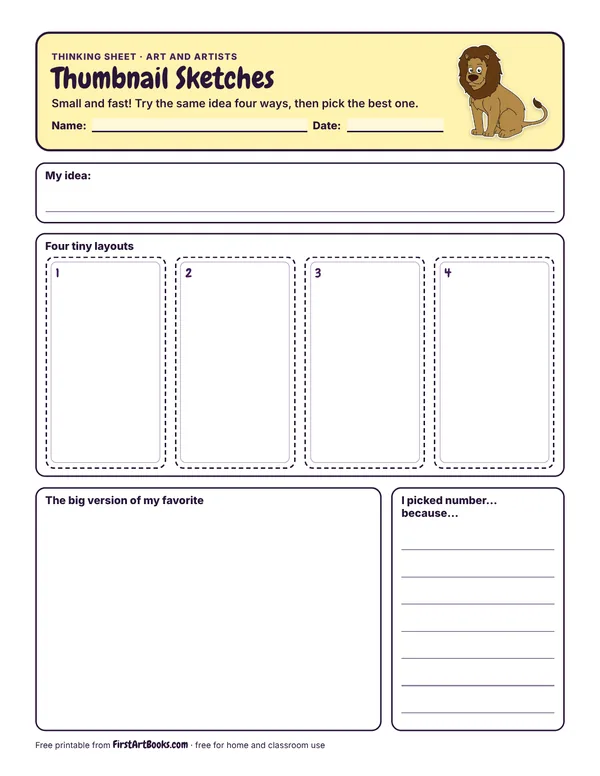
Try four tiny layouts of the same idea before drawing the big one. Artists call these thumbnails.
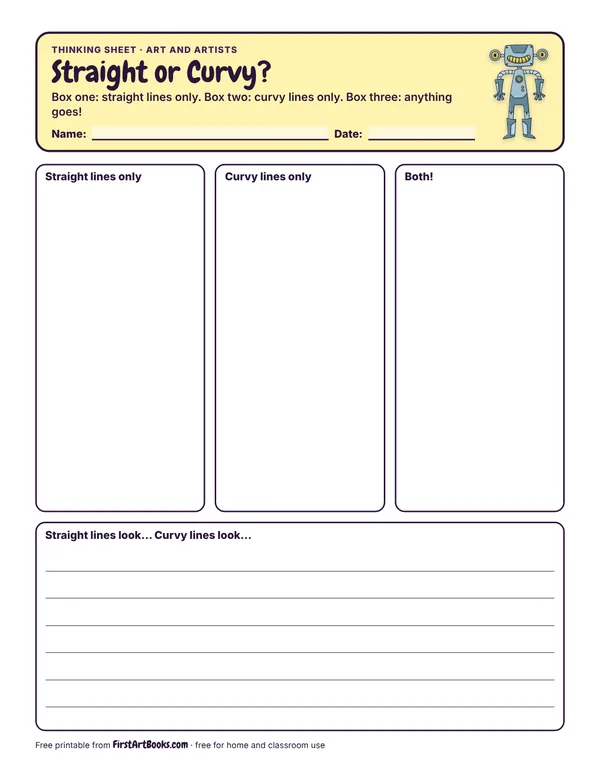
Draw a robot with only straight lines and a creature with only curvy lines. Then mix them.
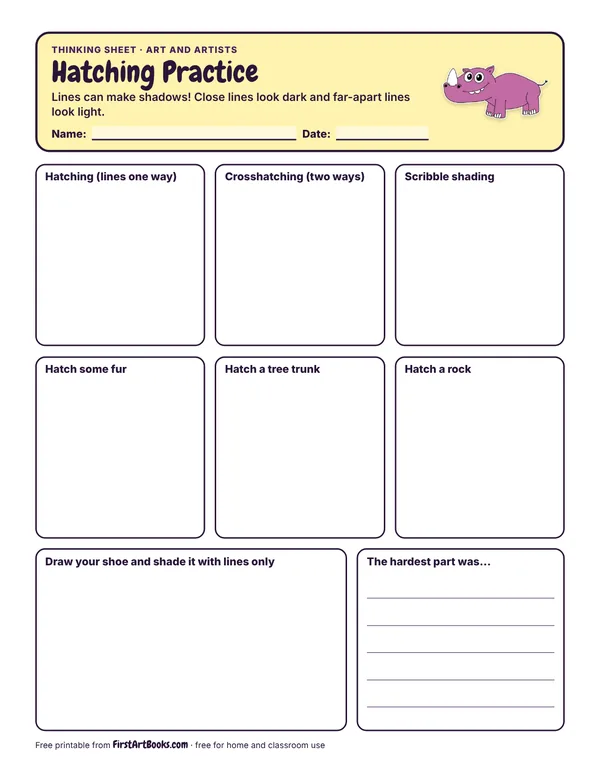
Shade with lines instead of smudges: hatching, crosshatching and scribble shading, from light to dark.

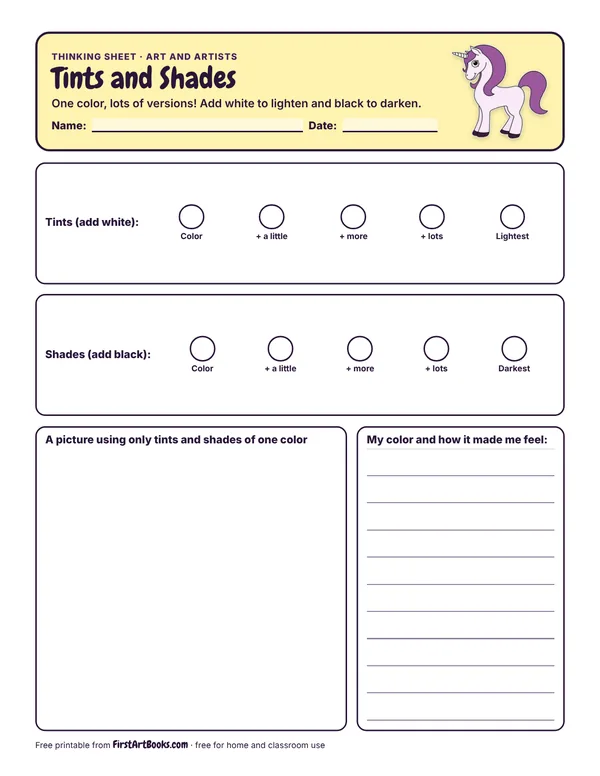
Add white to make a tint and black to make a shade. Make a five-step strip, then paint a picture in one color family.
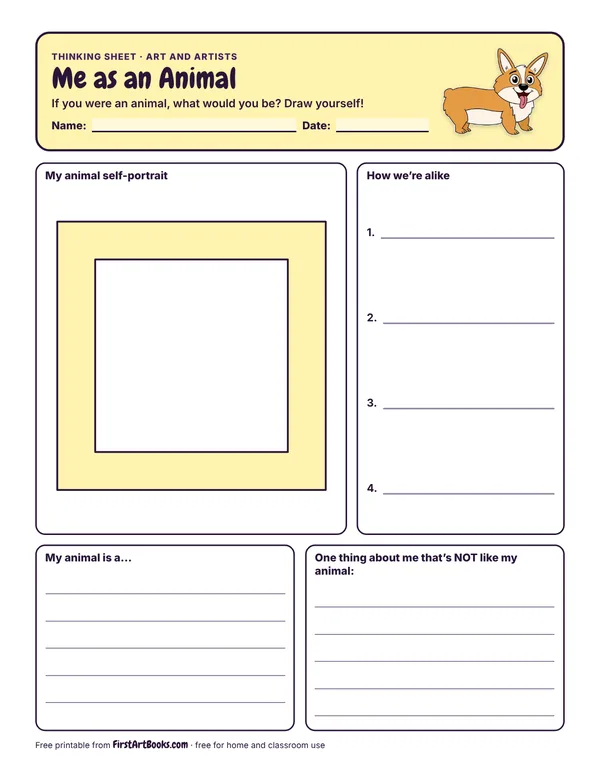
Which animal is most like you? Draw a self-portrait as that animal and explain the match.
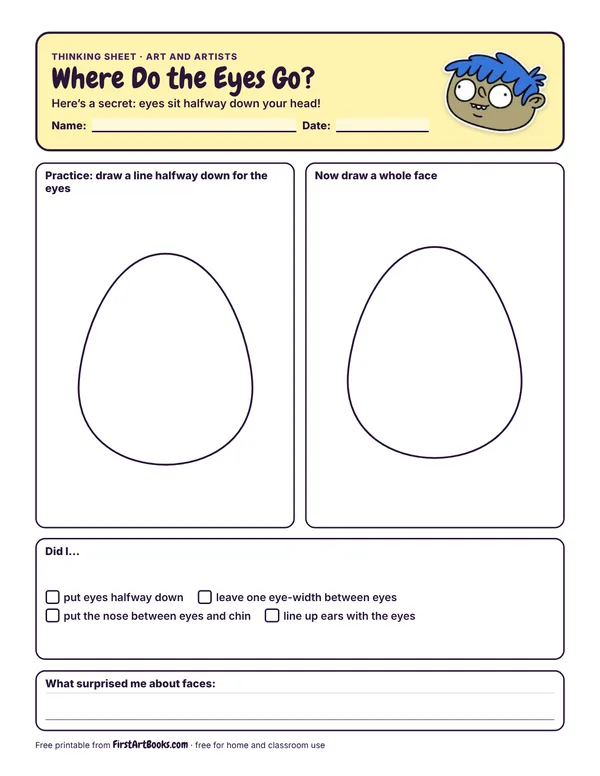
Most people draw eyes too high. Learn the halfway rule and the other face guide lines, then draw a face.
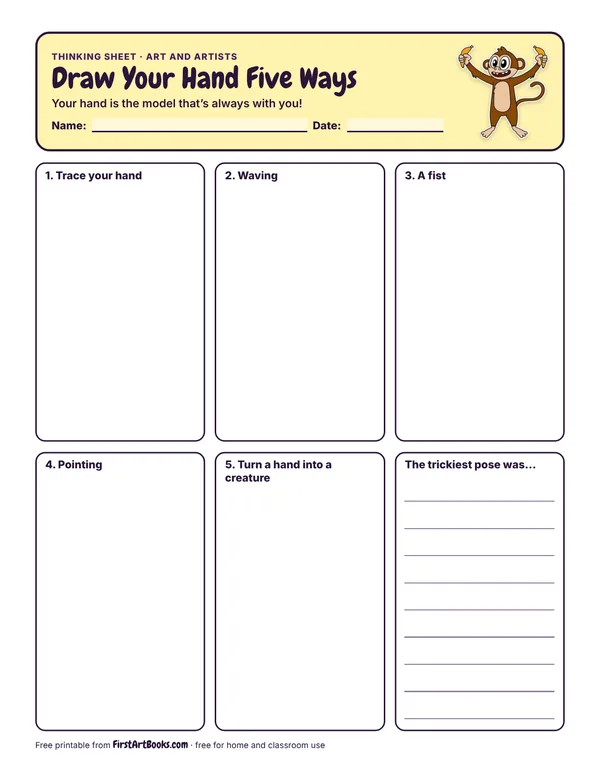
Trace it, wave it, fist it, point it, then turn it into a creature. Five hand drawings, five challenges.
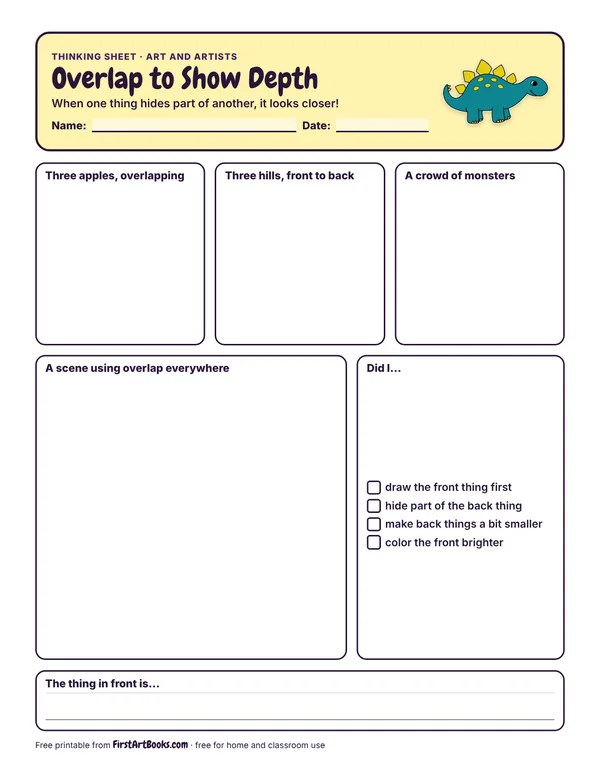
Put one thing in front of another and a flat picture suddenly has depth. Practice with fruit, hills and a crowd.
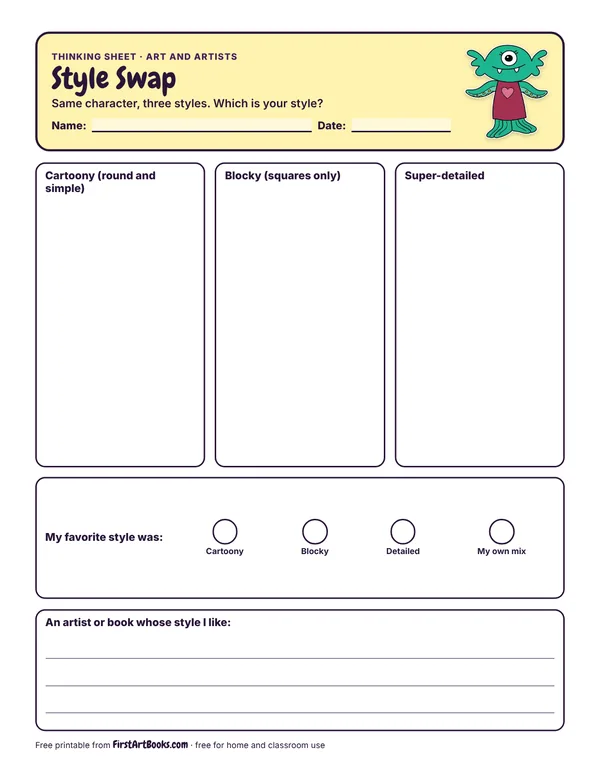
Draw the same character in three styles: cartoony, blocky and super-detailed. Which style feels most like you?
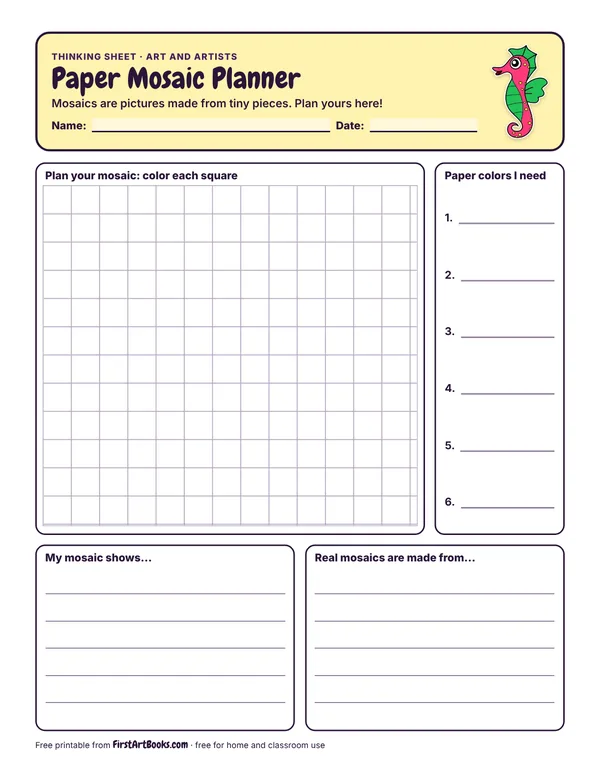
Plan a mosaic on the grid, then fill it with little squares of torn or cut paper, leaving tiny gaps like real tiles.
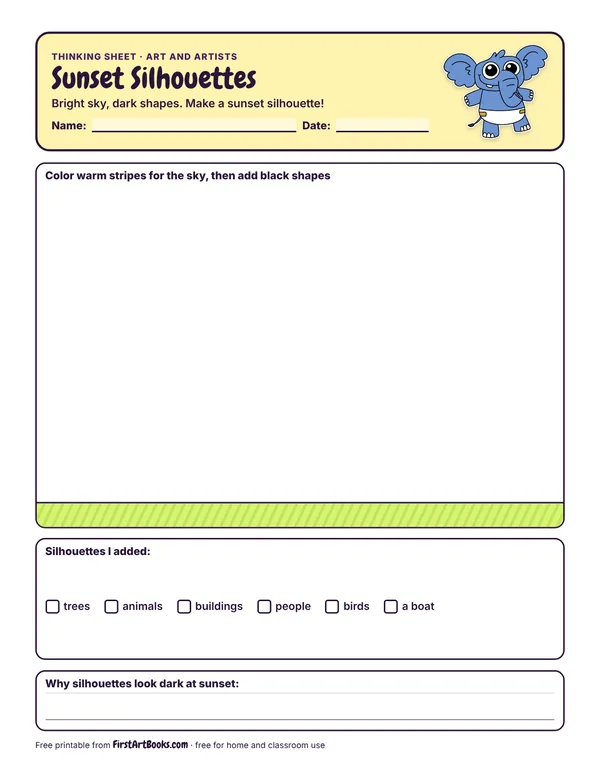
Color a sunset sky in warm stripes, then add black silhouettes of trees, animals or a skyline on top.
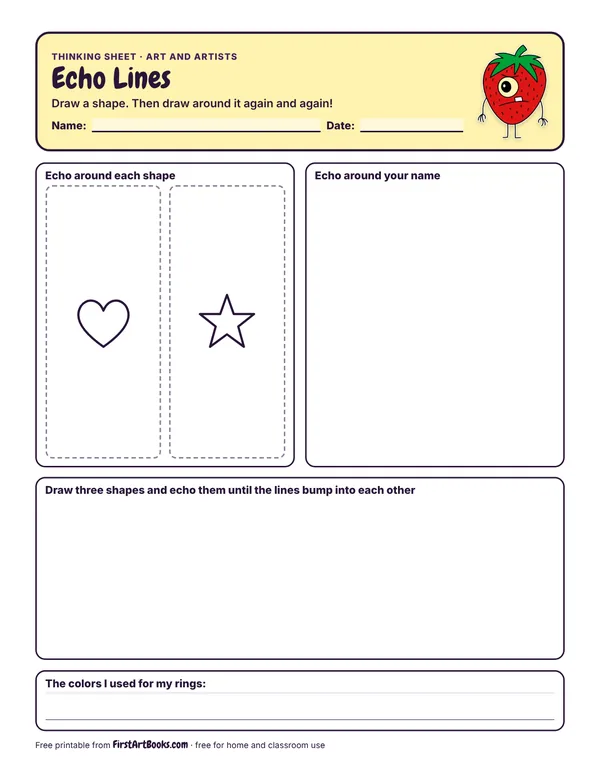
Draw a shape, then echo it with line after line around it, like ripples in a pond. Color the rings.
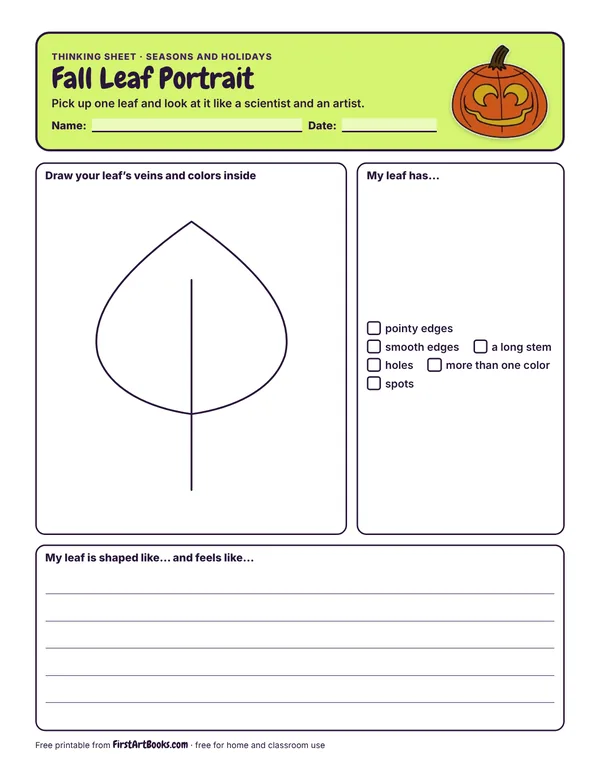
Find a real fall leaf, look closely and draw its portrait: the veins, the edges and every color.
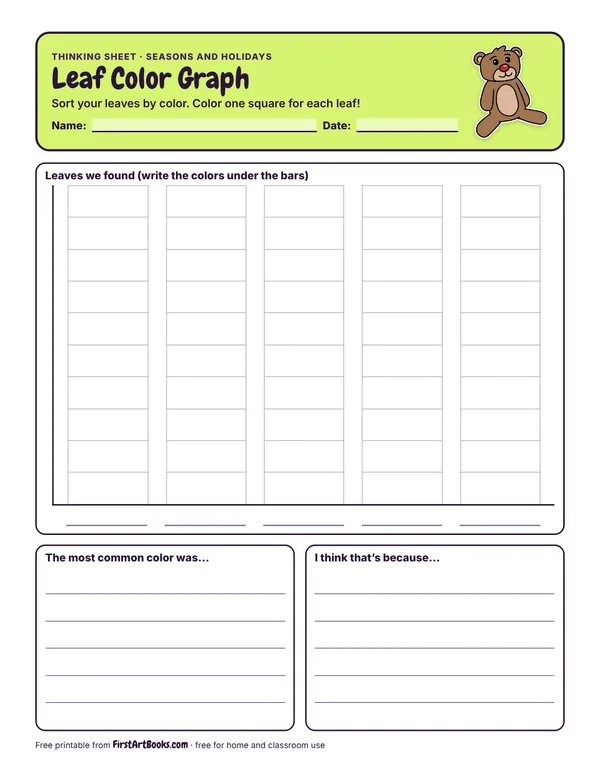
Collect leaves, sort them by color and make a bar graph of what you found.
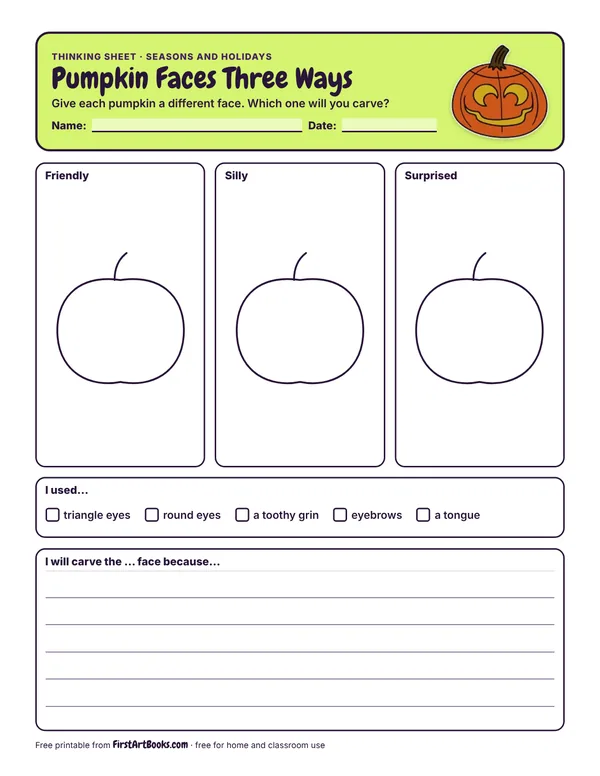
Design three jack-o’-lantern faces: friendly, silly and surprised. Then pick one to carve or paint.
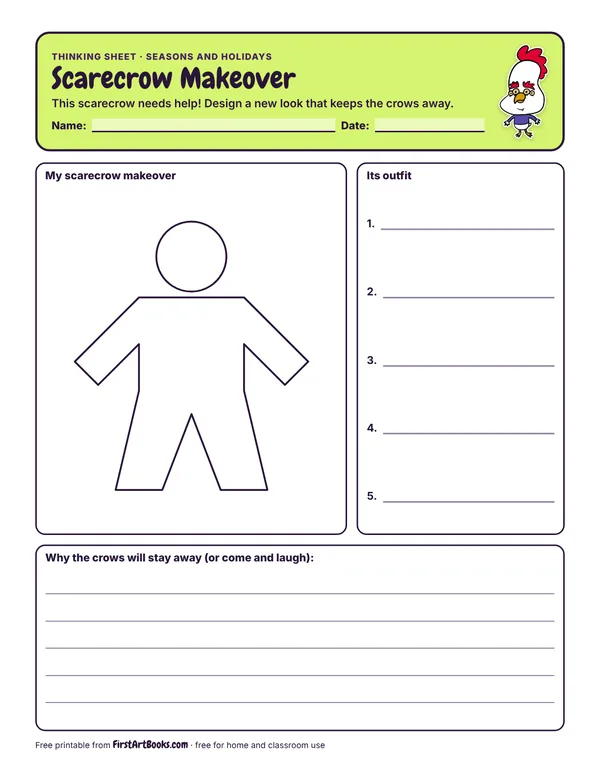
The crows aren’t scared of this scarecrow at all. Give it a makeover that works (or makes them laugh).
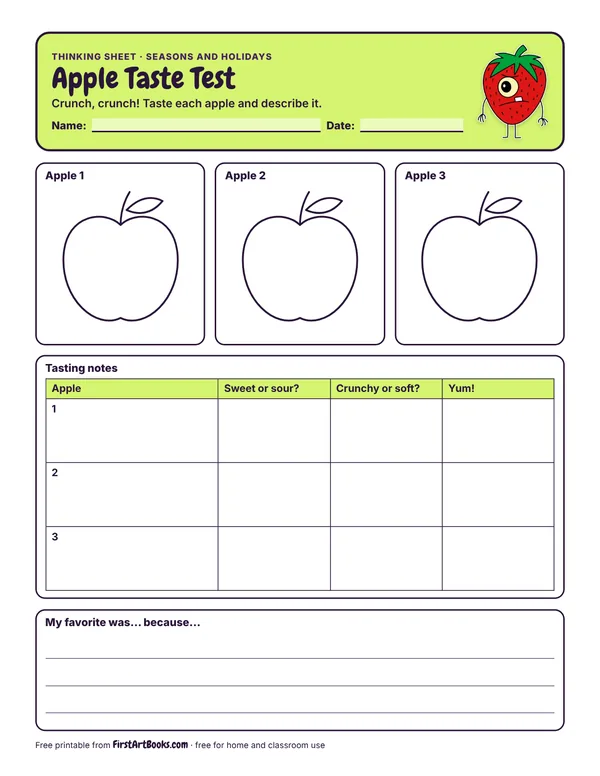
Taste three kinds of apples, describe each one and vote for the class favorite.
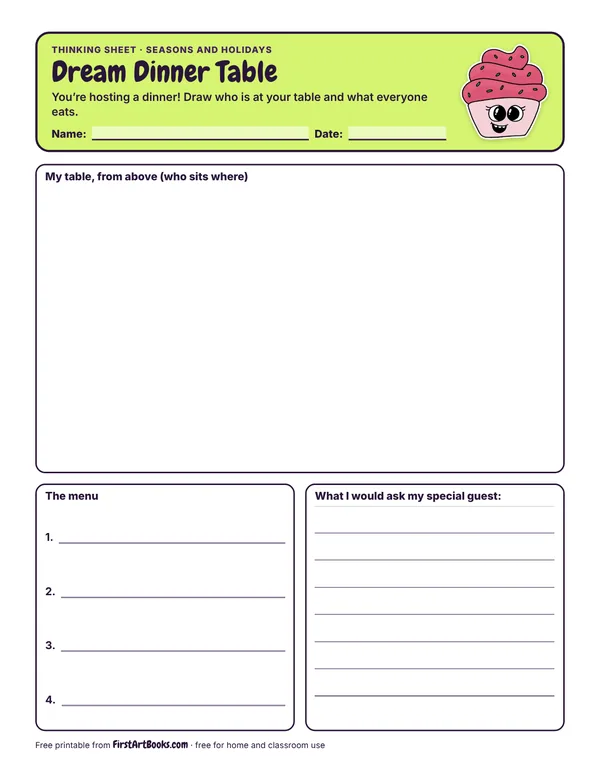
Plan a holiday dinner for anyone you like: family, book characters or heroes. Who sits where, and what’s on the menu?
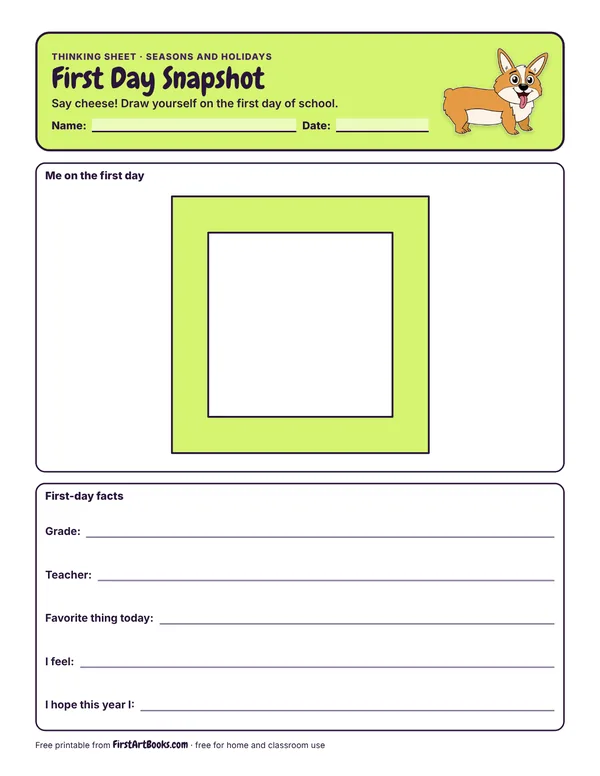
Draw a snapshot of your first day of school and record a few facts to look back on in June.
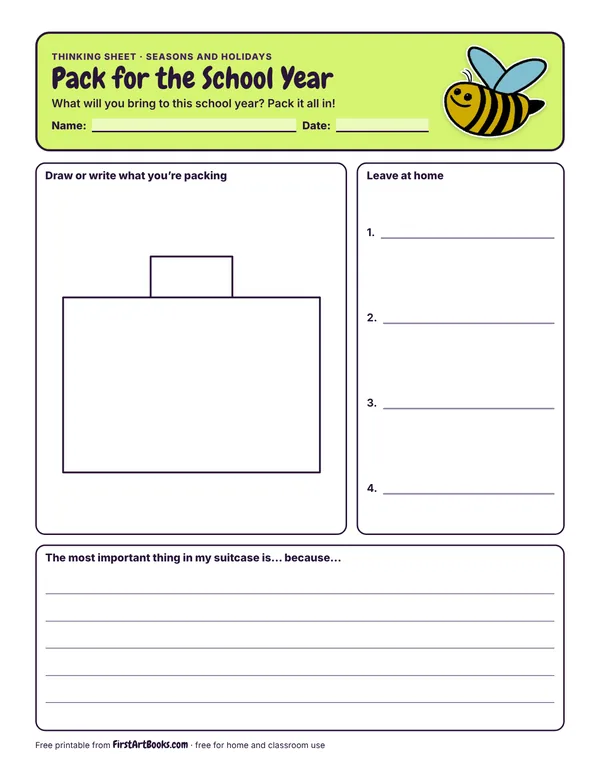
Pack a suitcase with the things you’ll need this year, but not just pencils: hopes, skills and good habits too.
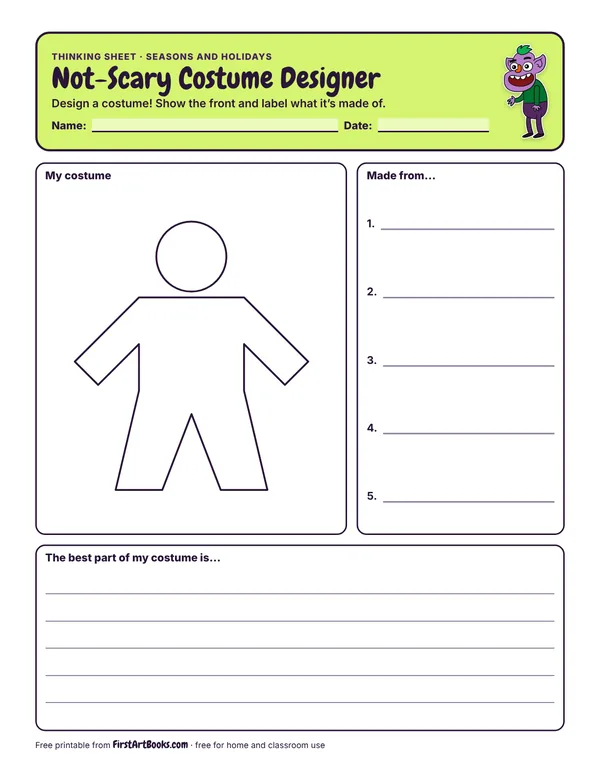
Design a costume for yourself, a pet or a monster. Label the parts and how you would make them.
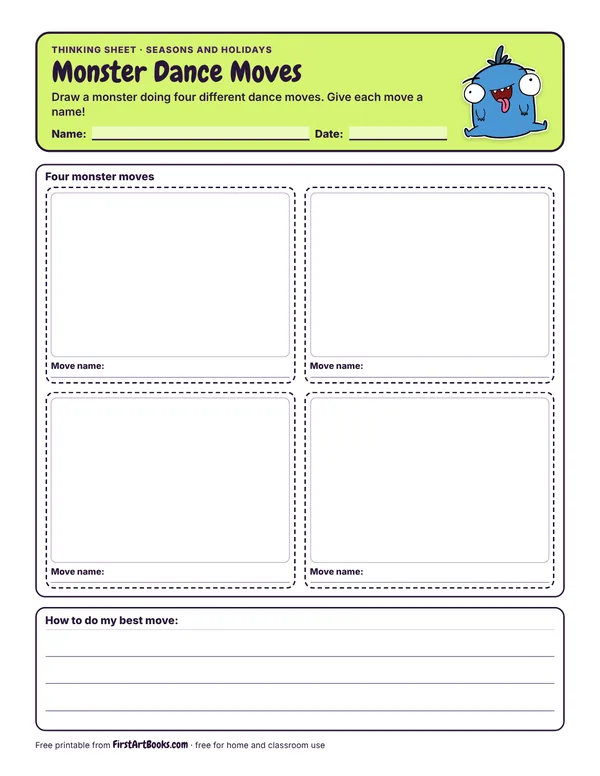
The monster party needs dance moves! Draw four, name them and teach one to the class.
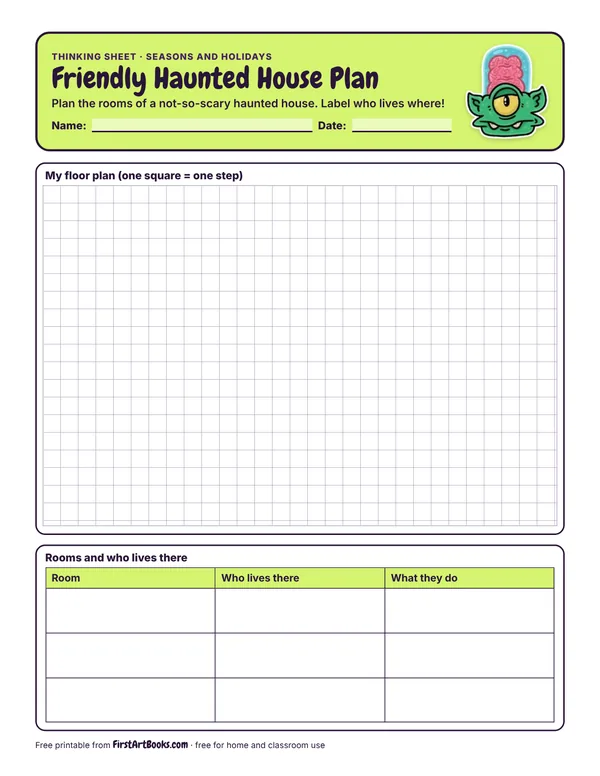
Draw the floor plan of a haunted house where the monsters are friendly. Who lives in each room?
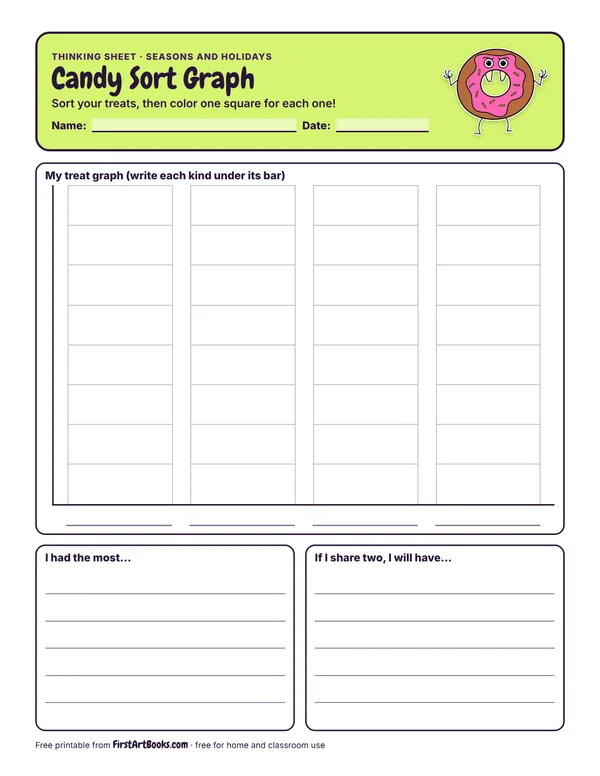
Sort a handful of treats (or pictures of treats) by color or kind and graph them.
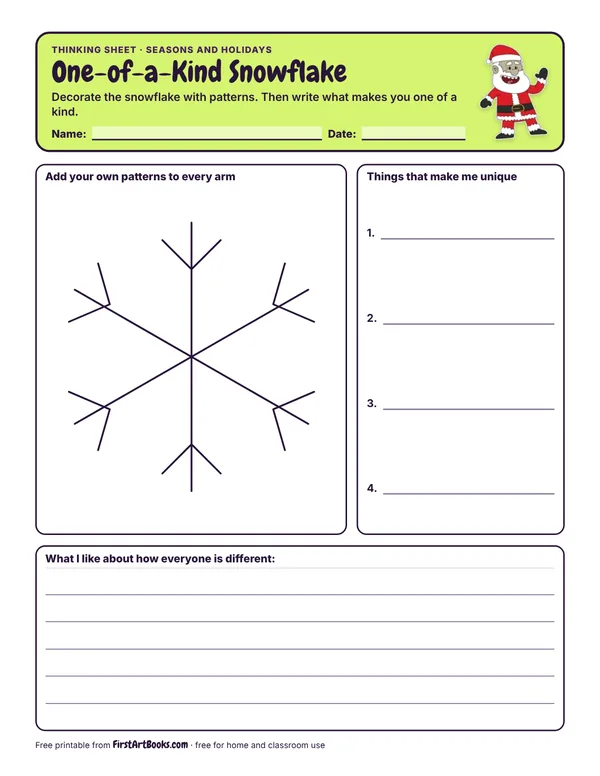
No two snowflakes are the same, and no two people are either. Decorate a snowflake that is all you.
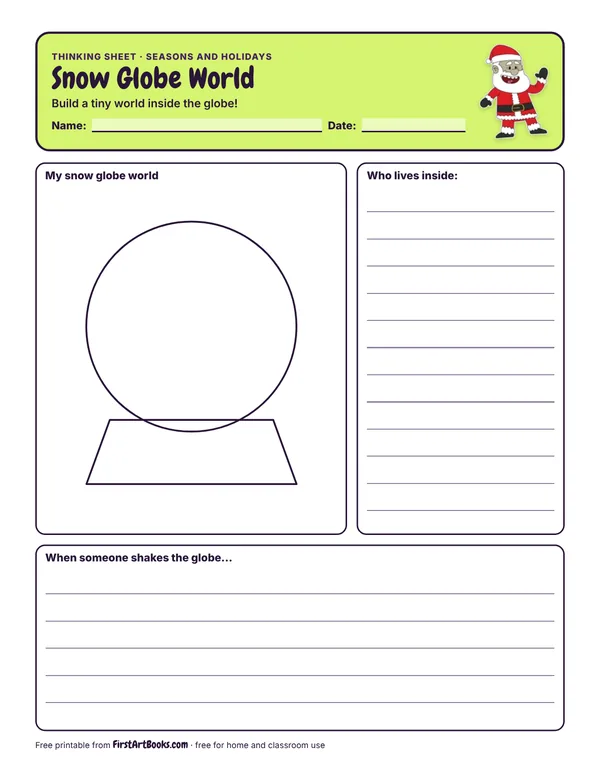
Design a tiny world inside a snow globe. Who lives in there, and what happens when it’s shaken?
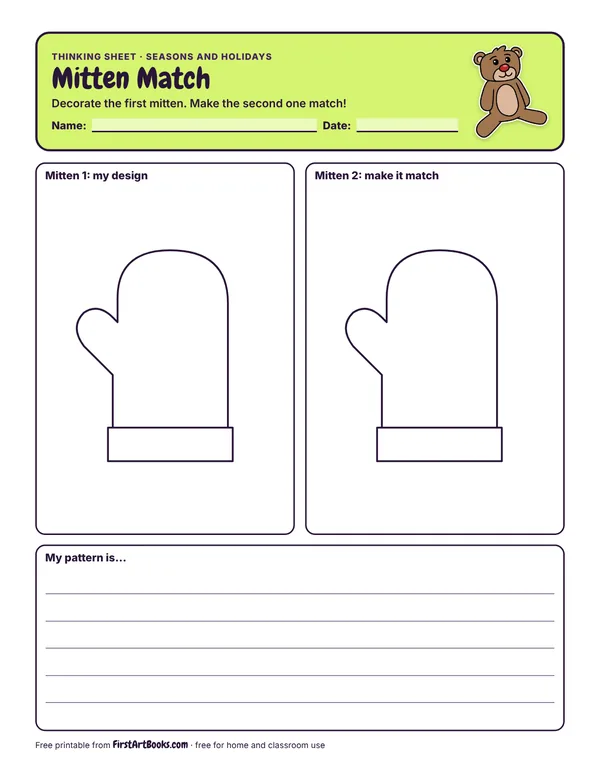
Design one mitten, then make its partner match exactly. A pattern and symmetry warm-up for little hands.
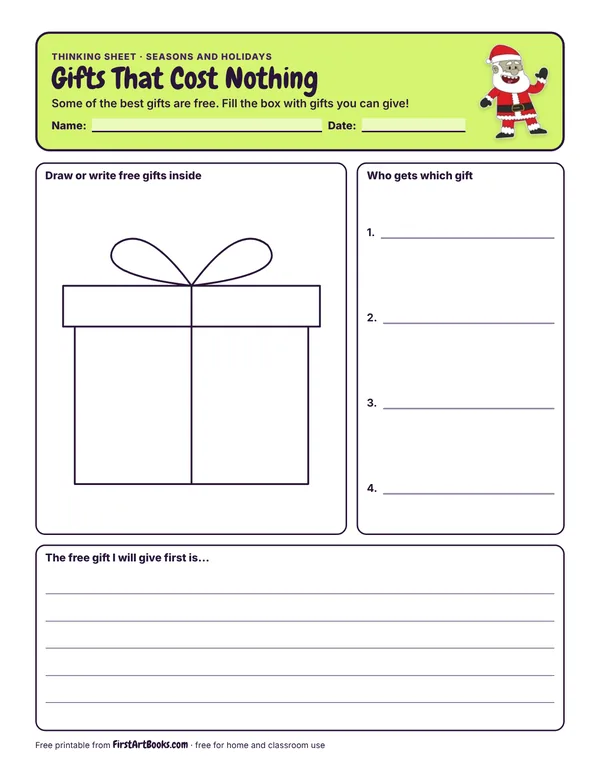
Fill the gift box with presents that don’t cost a thing: a hug, a song, a chore done or a drawing.
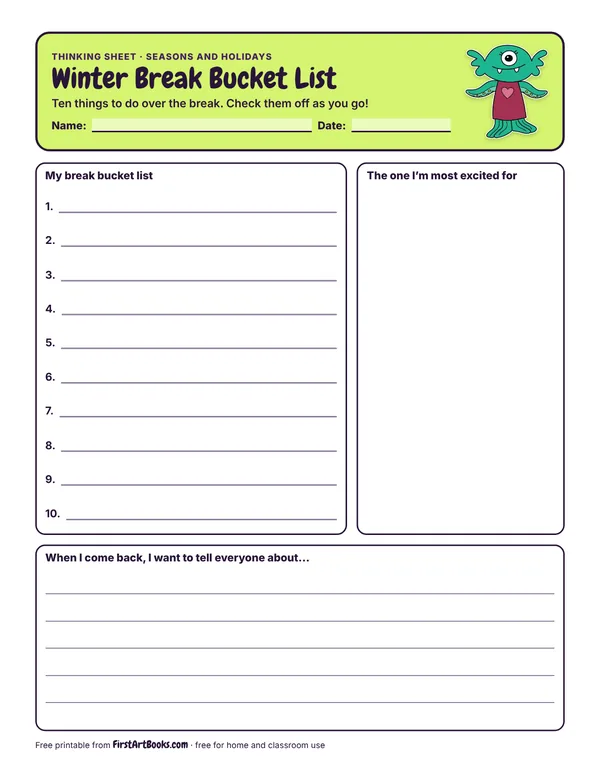
Plan ten things to do over winter break, check them off, and bring the list back to school.
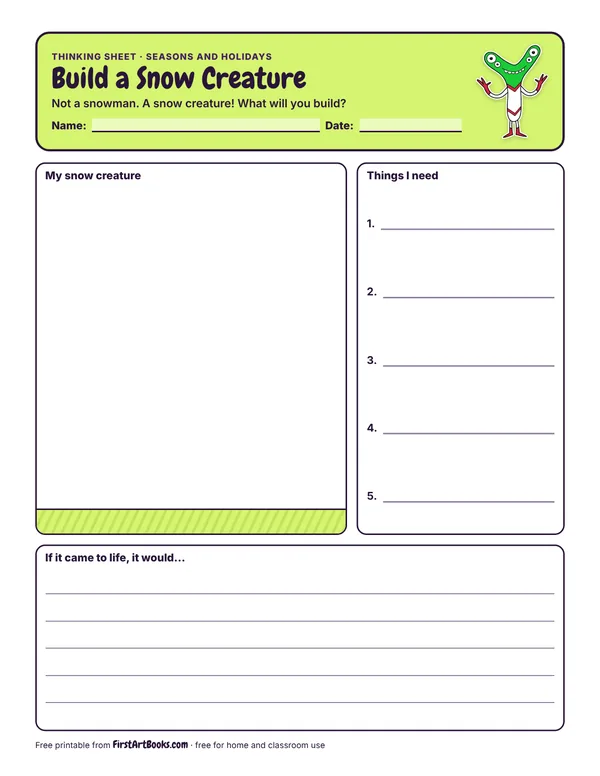
Forget snowmen. Design a snow dragon, snow cat or snow robot, and list what you need to build it.
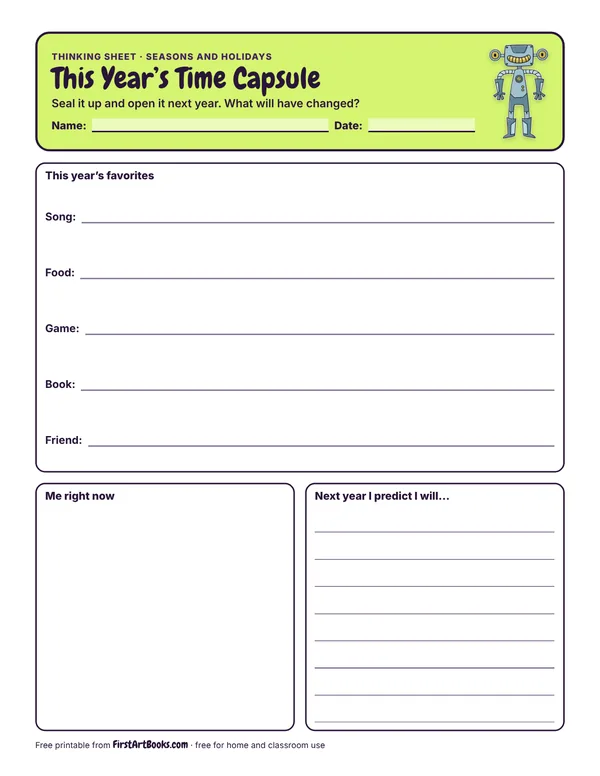
Fill a time capsule with this year’s favorites and predictions, to open again next year.
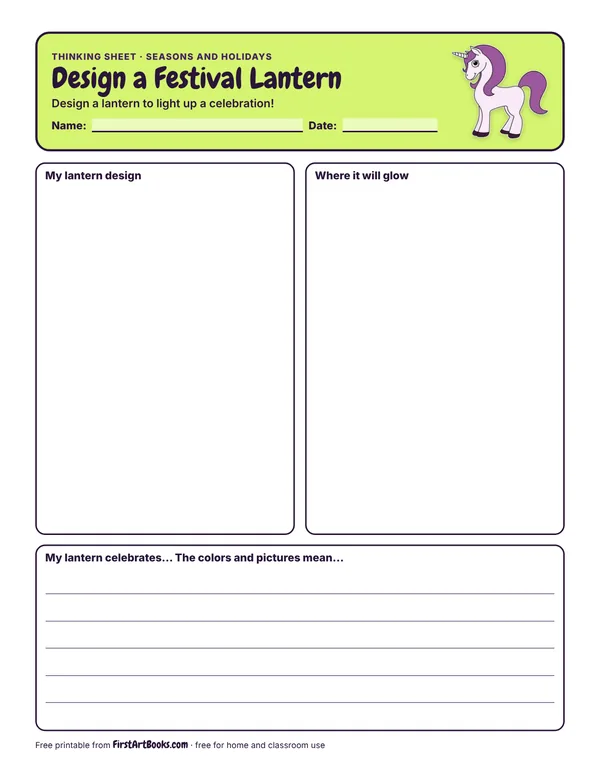
Lanterns light up festivals all over the world. Design your own and decide what it celebrates.
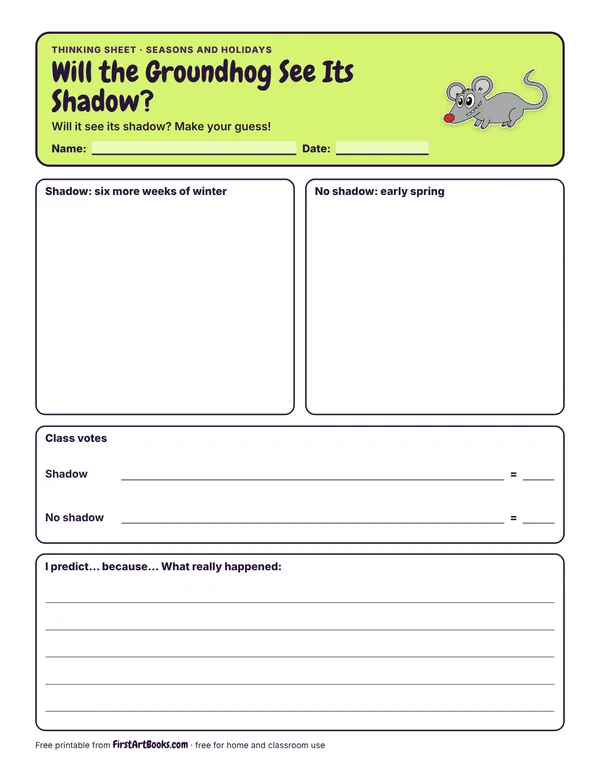
Make your Groundhog Day prediction, tally the class votes and check the result.
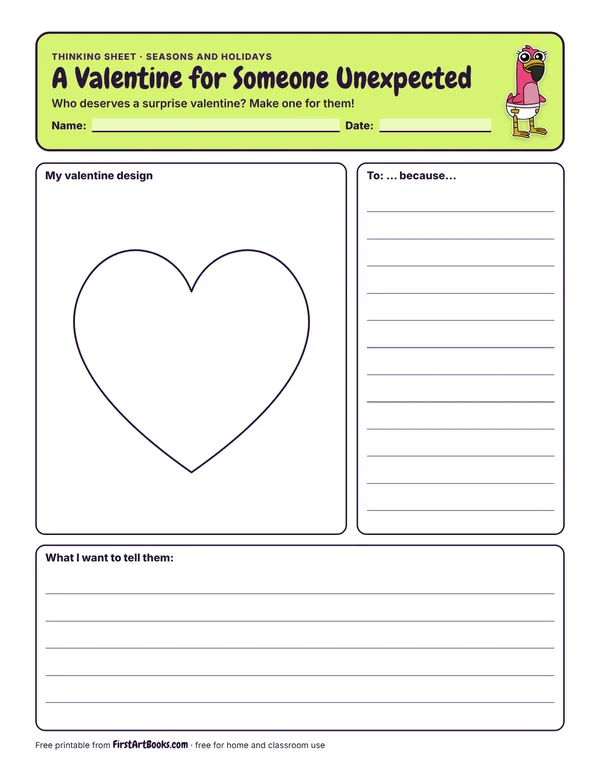
Make a valentine for someone who doesn’t usually get one: the bus driver, the lunch team, a neighbor.
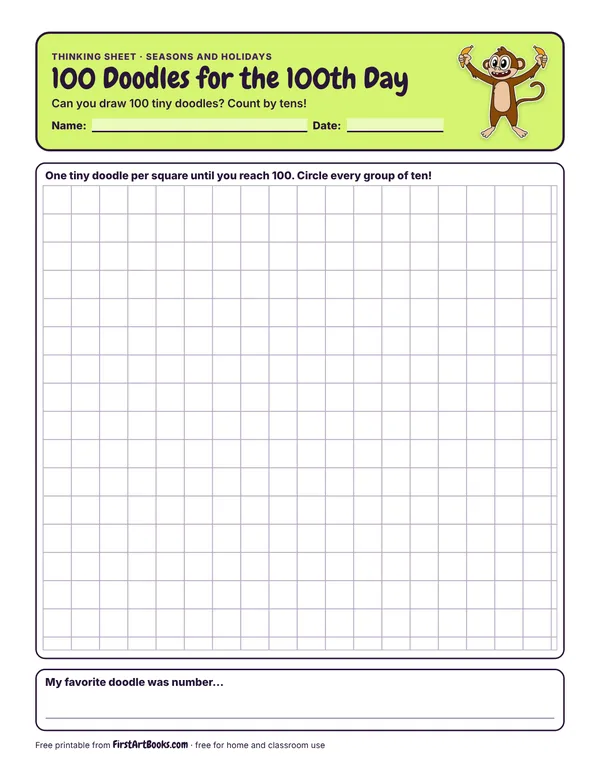
Fill a grid with 100 tiny doodles, counting by tens as you go.
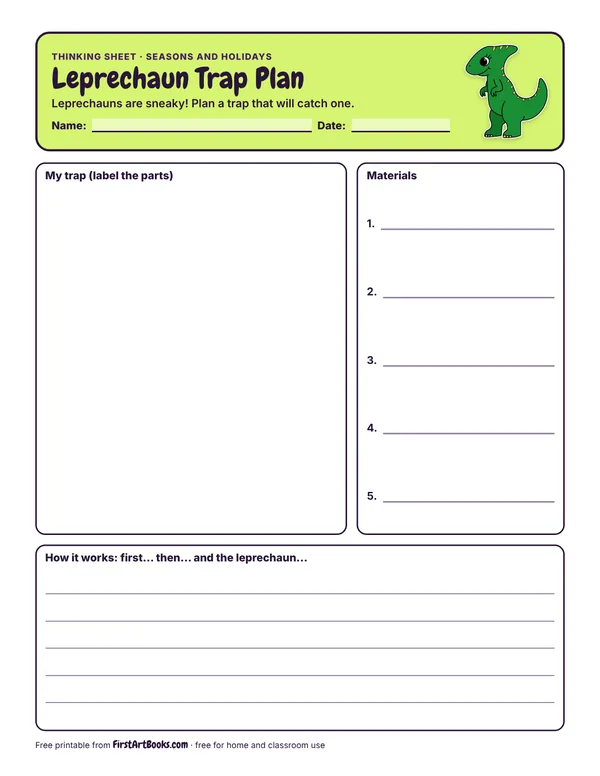
Design a trap to catch a tricky leprechaun, then list the materials and test your idea.
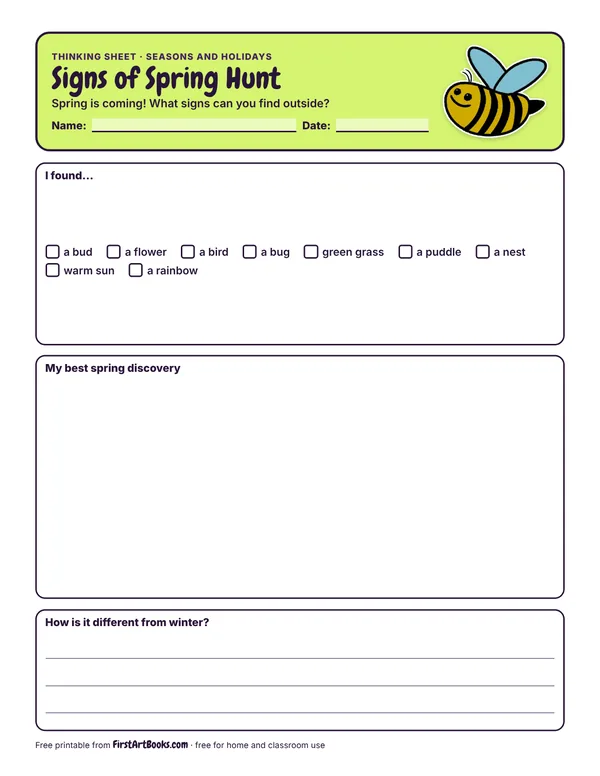
Go outside and hunt for signs of spring. Check off what you find and draw your best discovery.
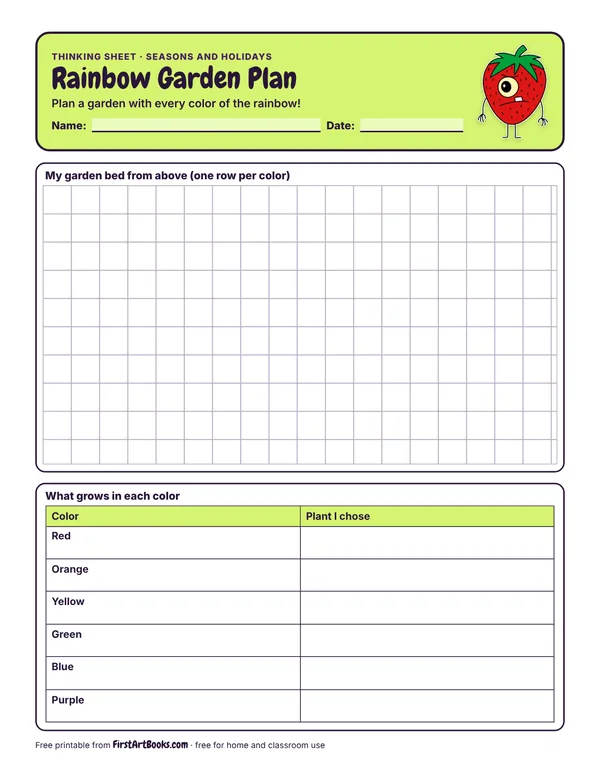
Plan a garden bed with a row of flowers or vegetables for each color of the rainbow.
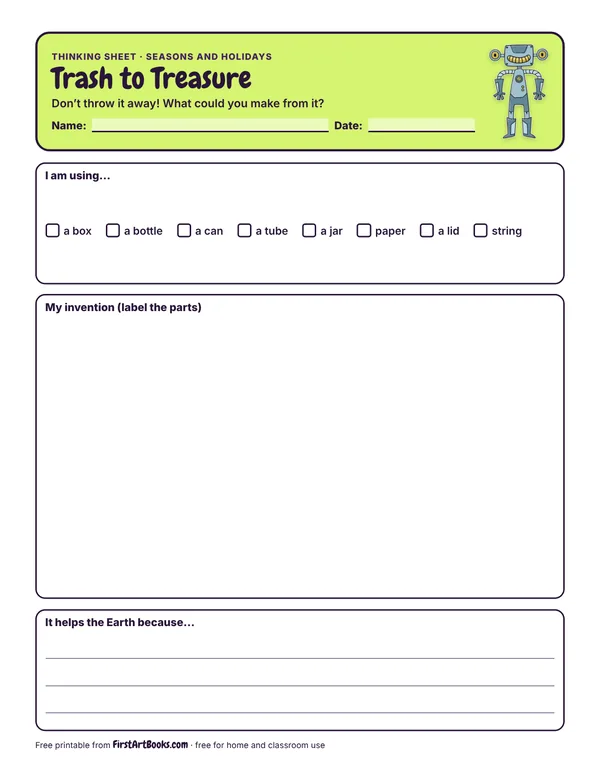
For Earth Day: turn three pieces of recycling into something useful or beautiful.
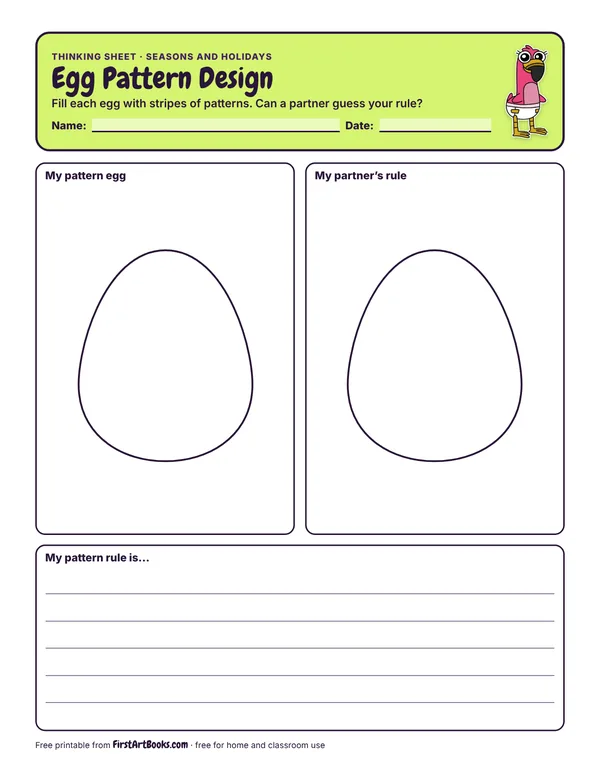
Decorate two eggs with bands of patterns: one with your rule, one with a partner’s rule.
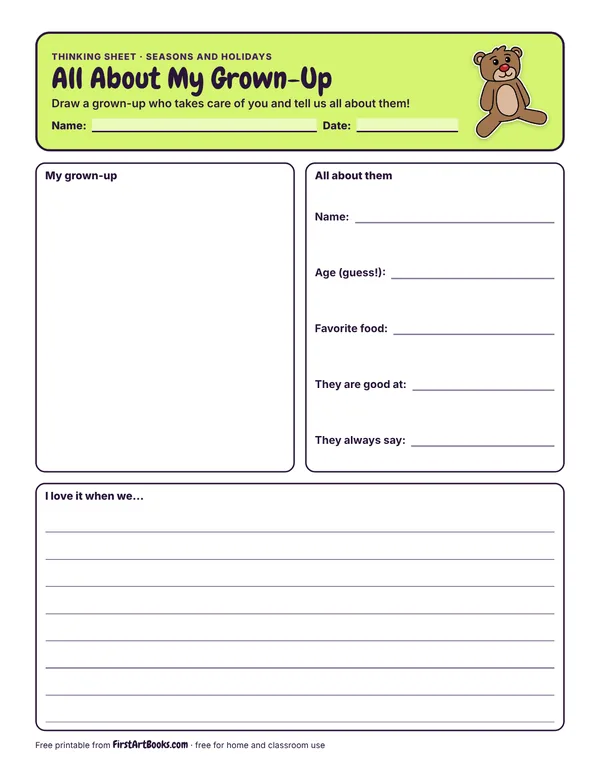
A gift page for any grown-up who loves you: draw them and answer fun questions about them.
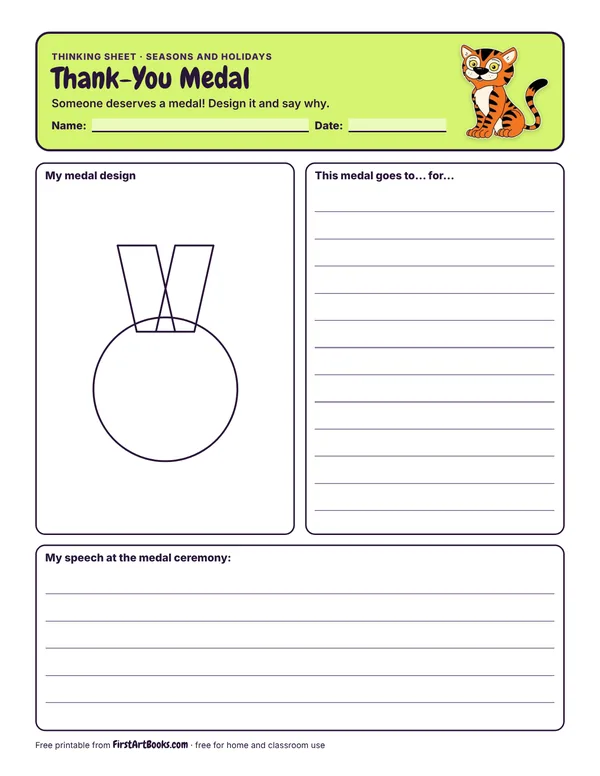
Award a medal to a teacher, coach or helper. What is it for, and what would you say at the ceremony?
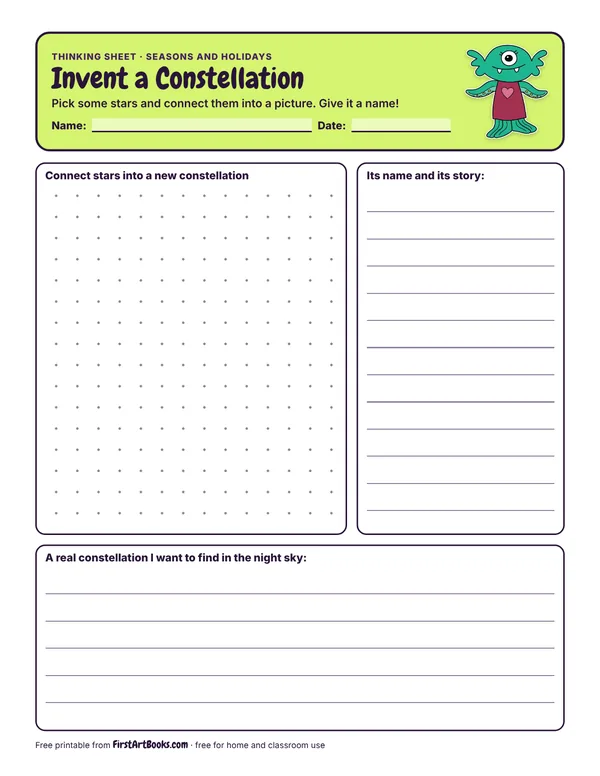
Connect the dots into a brand-new constellation for summer stargazing, then tell its story.
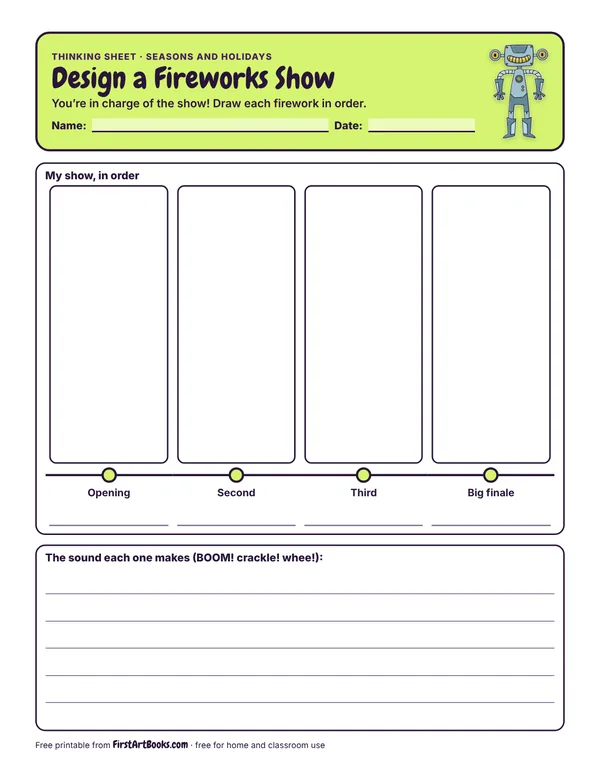
Plan four fireworks for a celebration show, in order, with their colors, shapes and sounds.
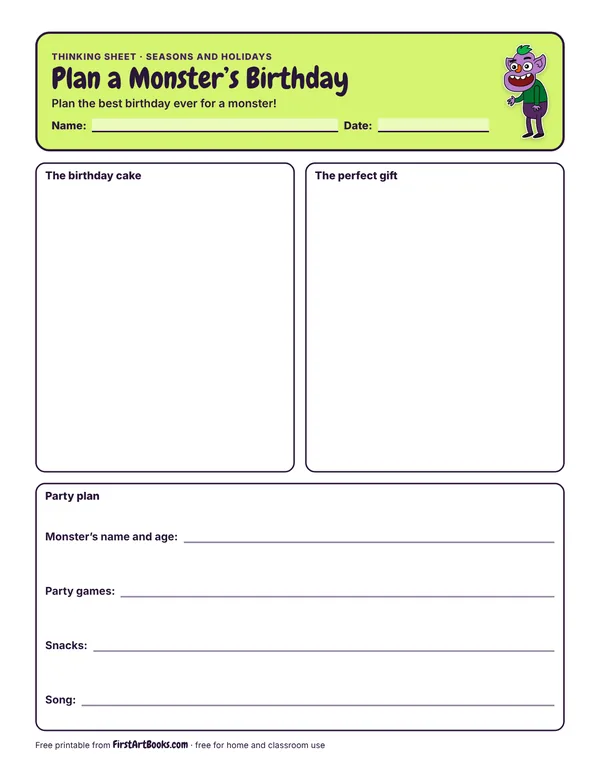
It’s a monster’s birthday! Plan the cake, the games and the gift.
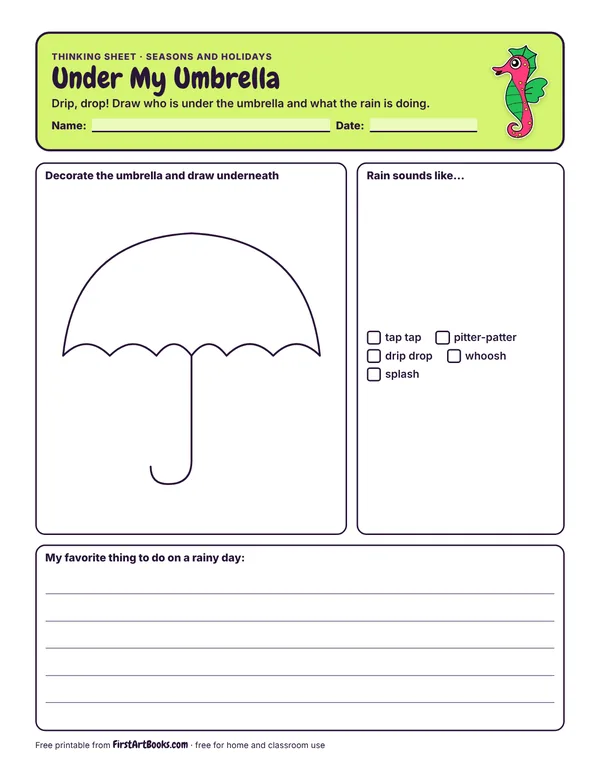
A rainy spring day: draw what’s under your umbrella and what the rain is falling on.
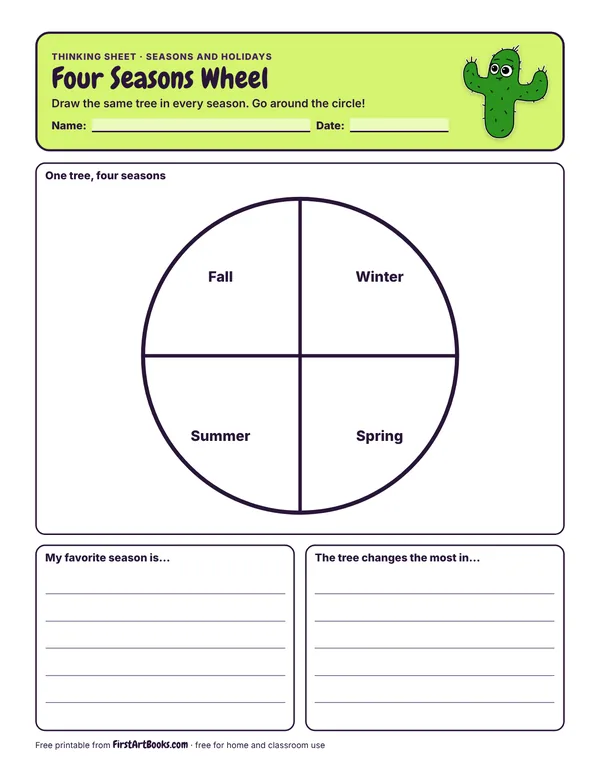
Draw the same tree (or your street) in all four seasons around a wheel.
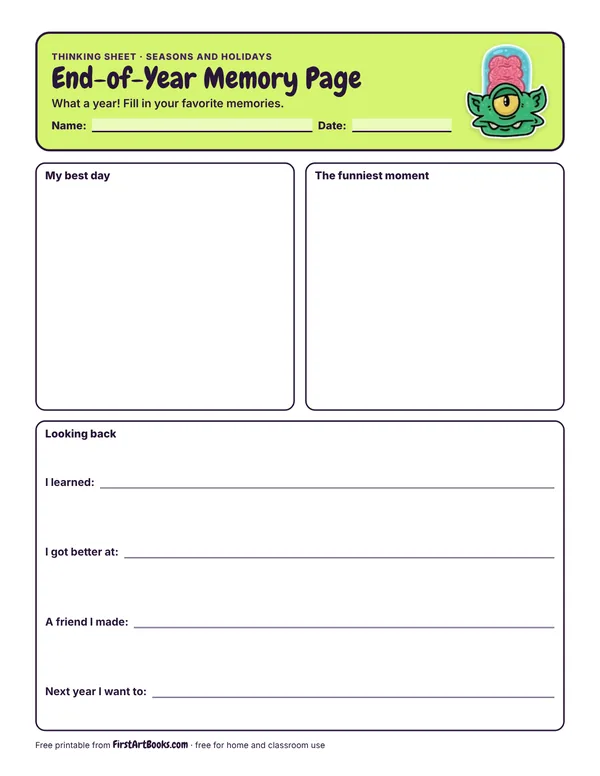
Look back on the school year: your best day, the funniest moment and what you learned.
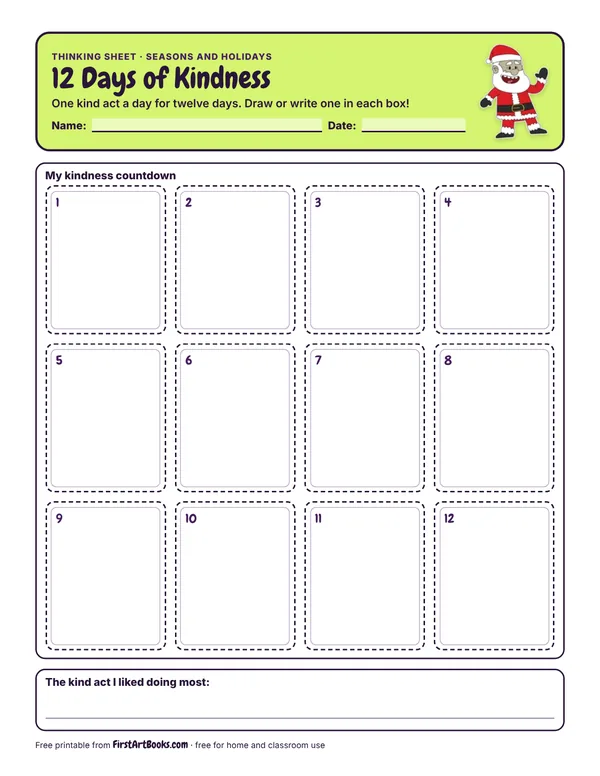
Plan twelve small acts of kindness for the twelve days before a break. Check one off each day.
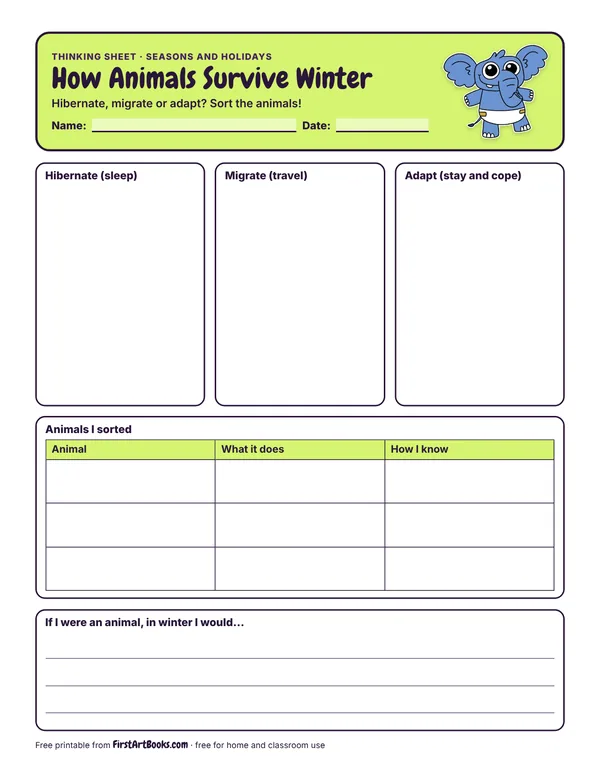
Some animals sleep, some fly away and some adapt. Sort and draw animals by what they do in winter.
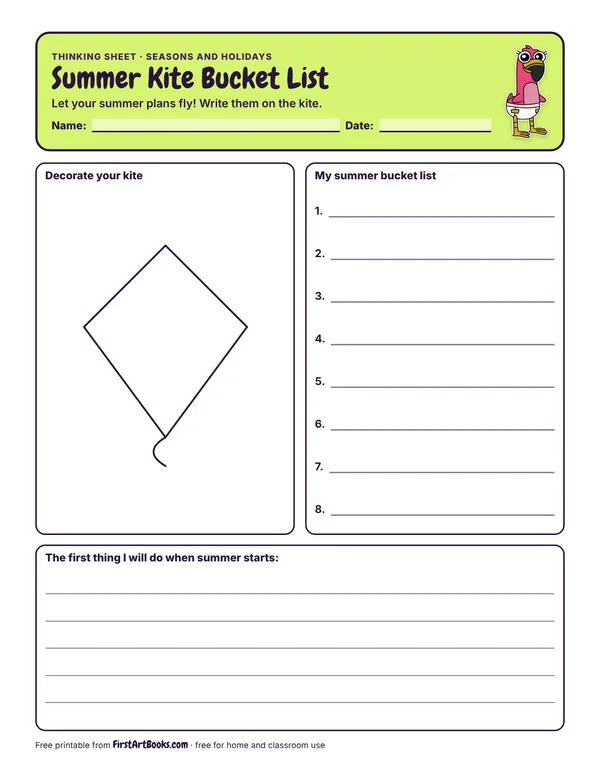
Write your summer bucket list on the kite and its tail, one goal for every bow.
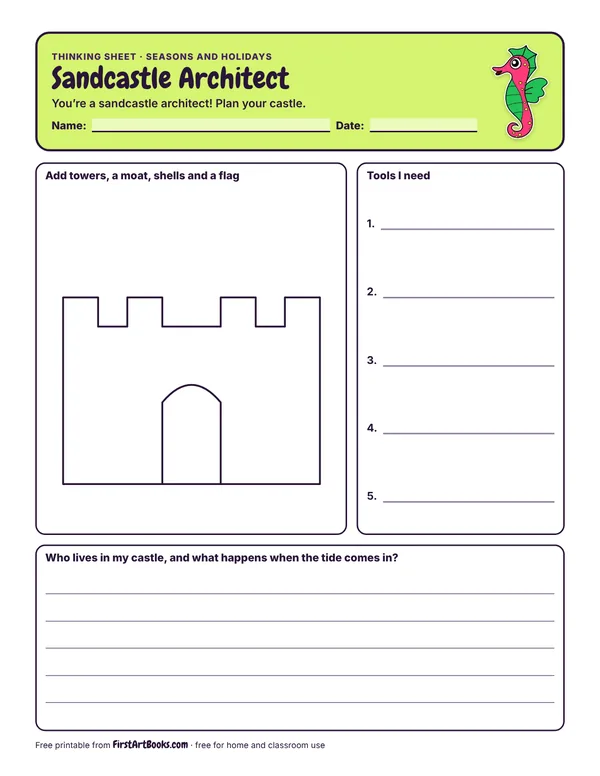
Design the greatest sandcastle ever, with towers, a moat and a flag. Who lives inside?
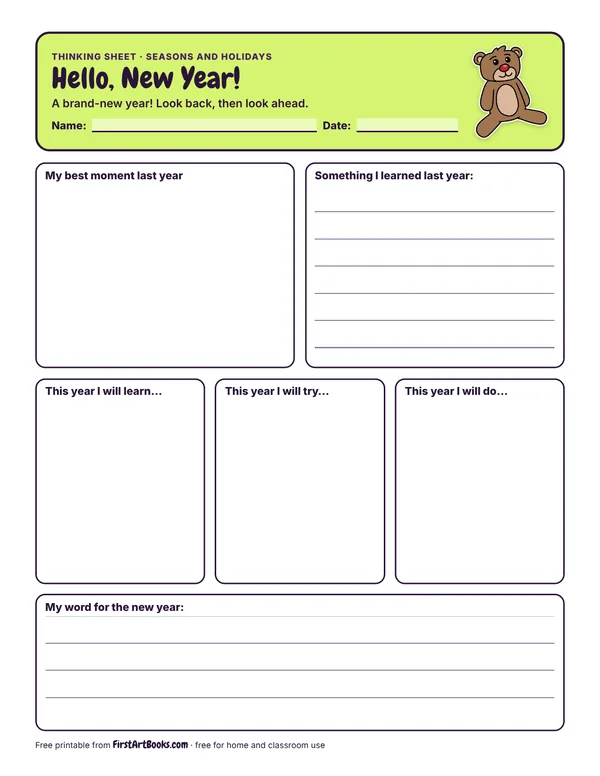
Look back at last year’s best moments and look ahead to three things you want to learn, try and do.
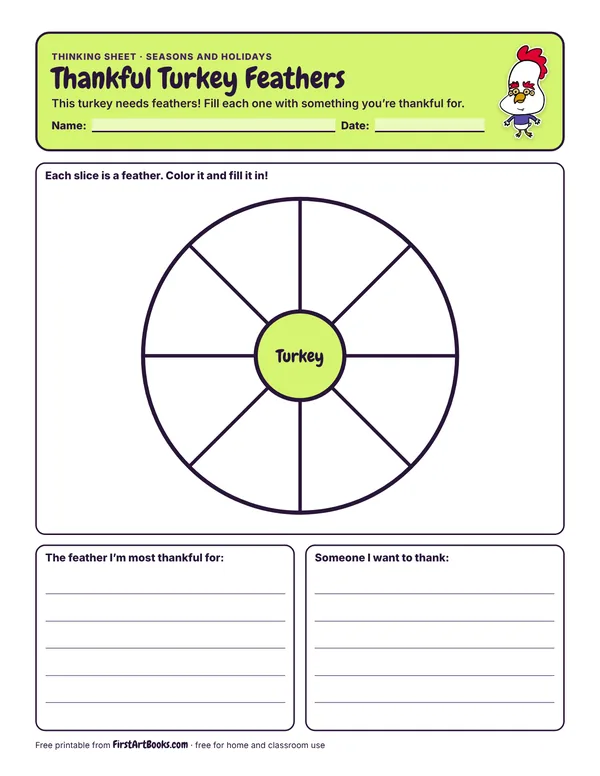
Give a turkey its feathers: draw or write one thing you’re thankful for on each one.
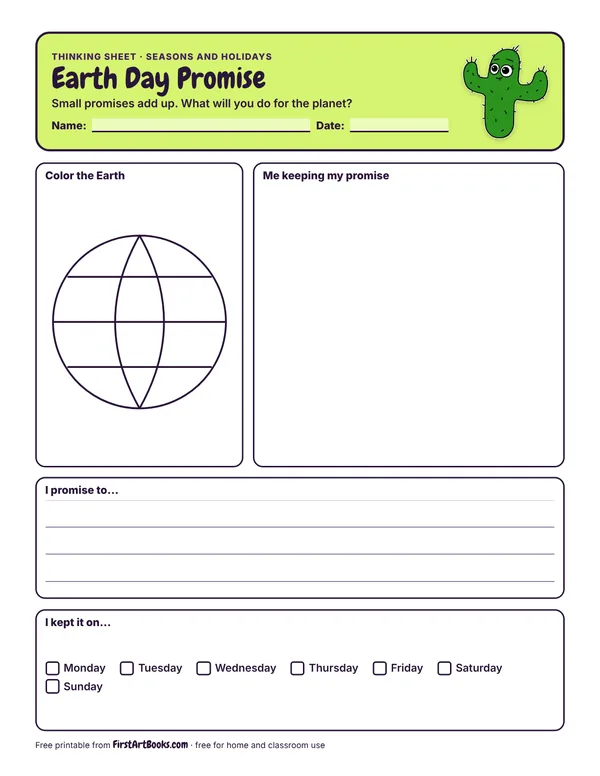
Make one small promise to help the Earth, draw it in action and track it for a week.
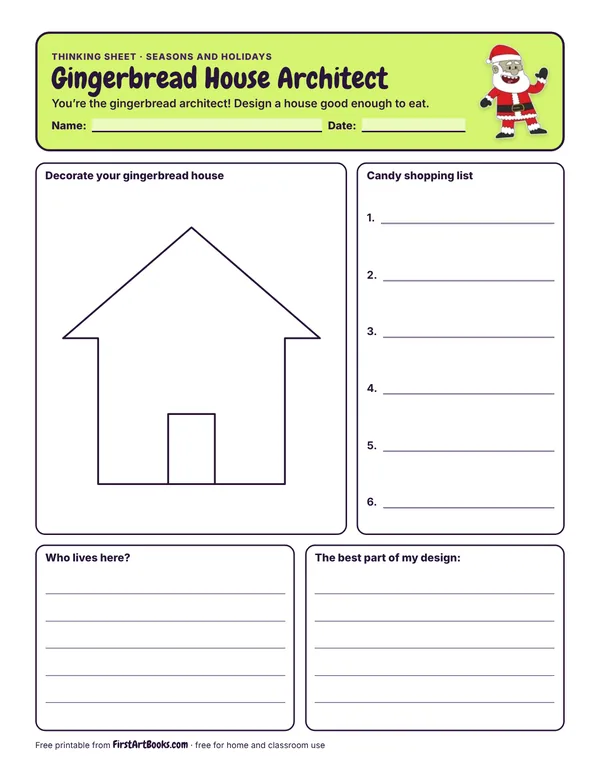
Design the sweetest gingerbread house: candy roof, frosting windows, a gumdrop path. Then write its shopping list.
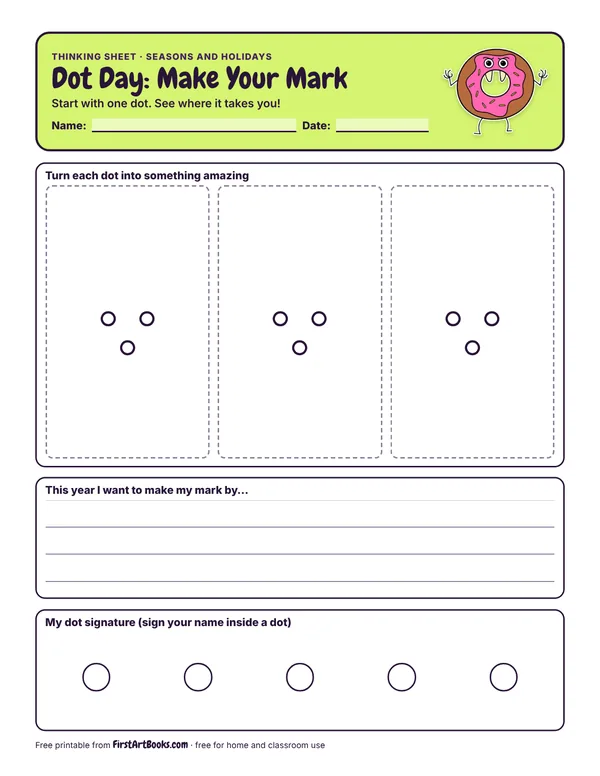
Every big idea starts small. Turn one dot into art, then write how you want to make your mark this year.
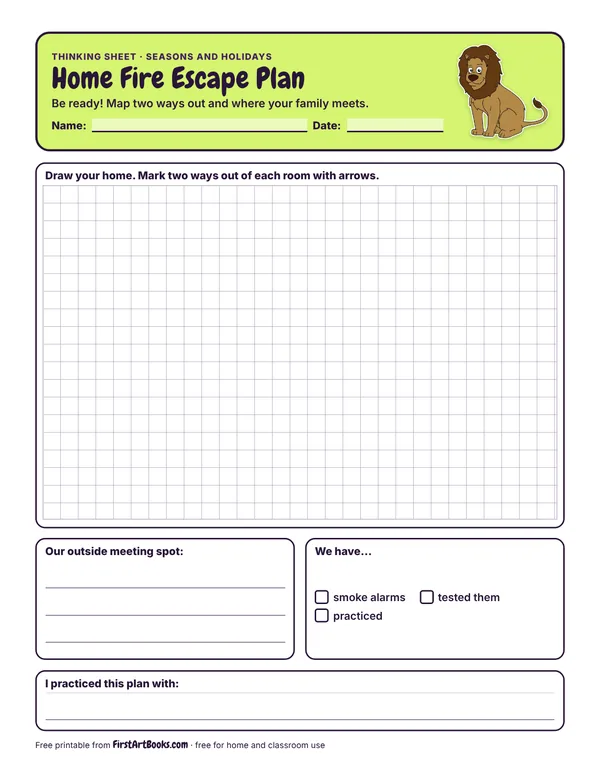
For Fire Prevention Week in October: draw your home, mark two ways out of each room and pick a family meeting spot.
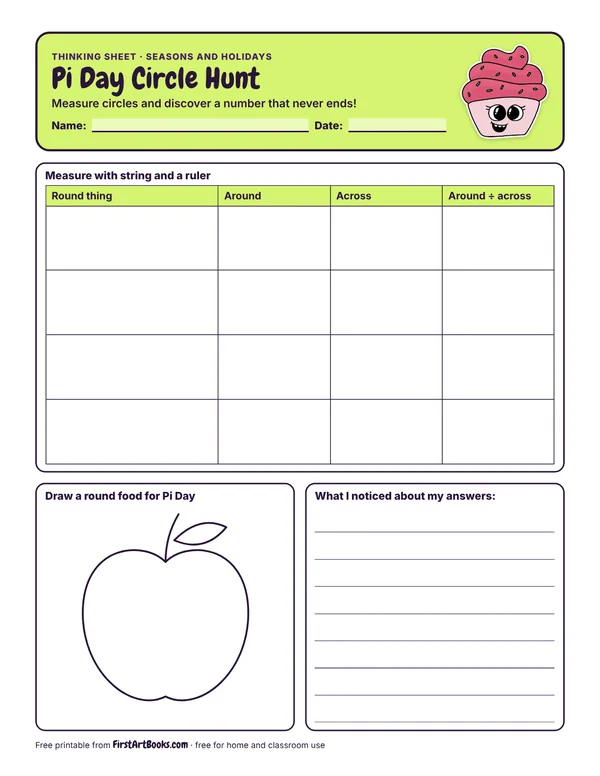
For March 14: measure round things with string and find out that the distance around is always a bit more than three times across.
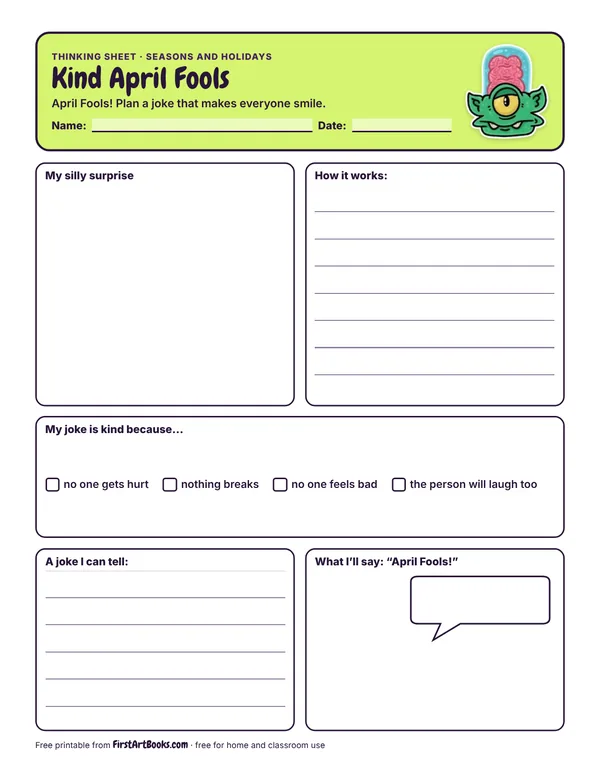
Plan an April 1 surprise that makes everyone laugh, including the person it’s on. Kind jokes only!
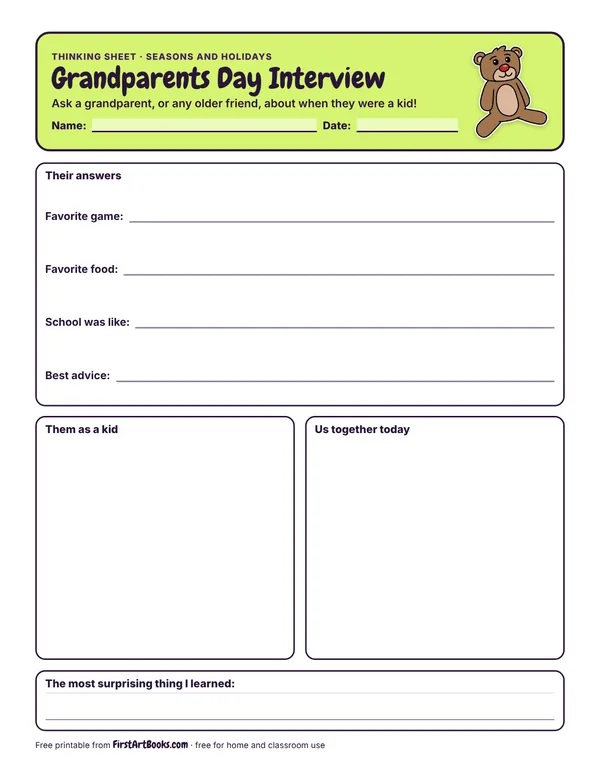
For Grandparents Day in September: interview a grandparent or older friend about when they were your age.
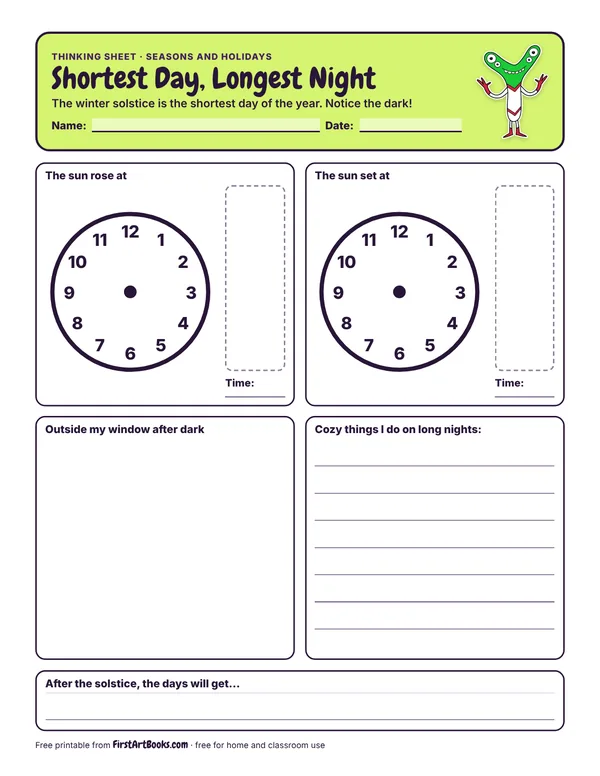
In December the night is longest. Track sunrise and sunset, and draw what you do in the dark hours.
Design your own maze on squared paper with one true path and lots of dead ends, then swap with a friend.
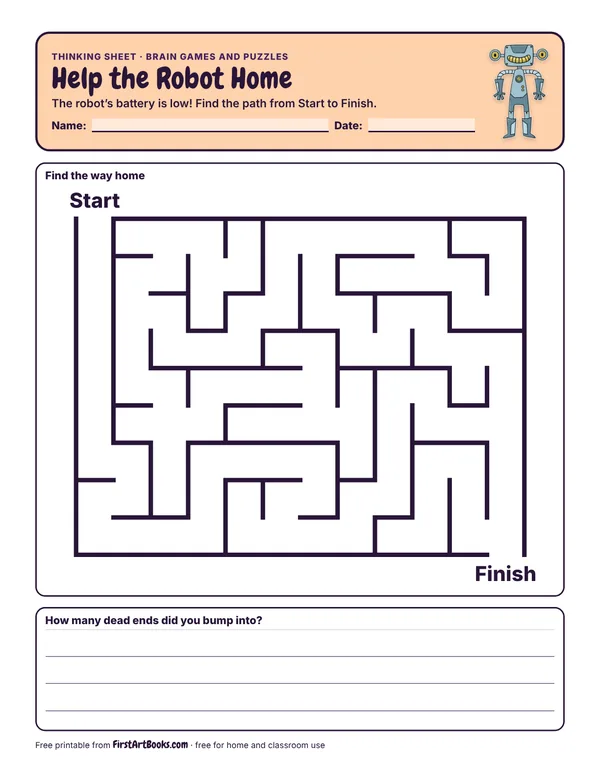
Guide the robot through the maze to its charging station, then decorate the walls.
Tic-tac-toe with doodles instead of X and O. Each player picks a tiny picture as their mark.
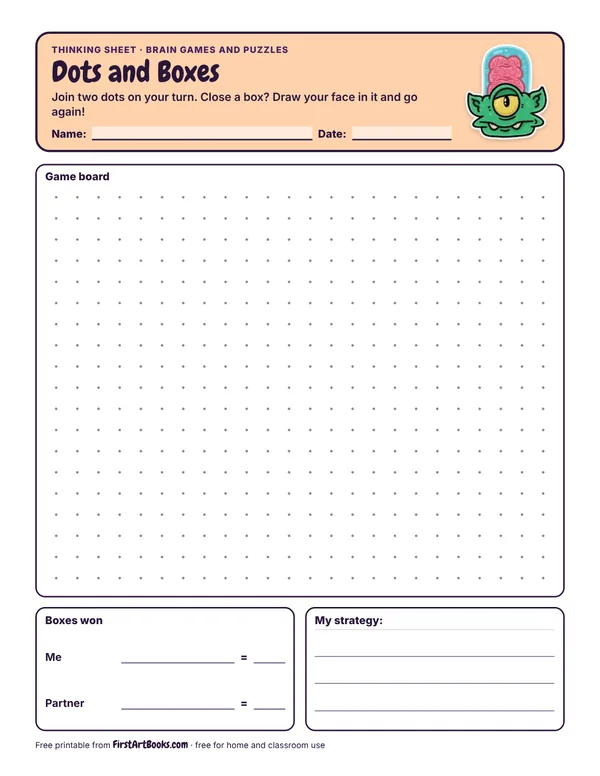
The classic pencil game: take turns joining dots, close a box to claim it and draw a tiny face inside.
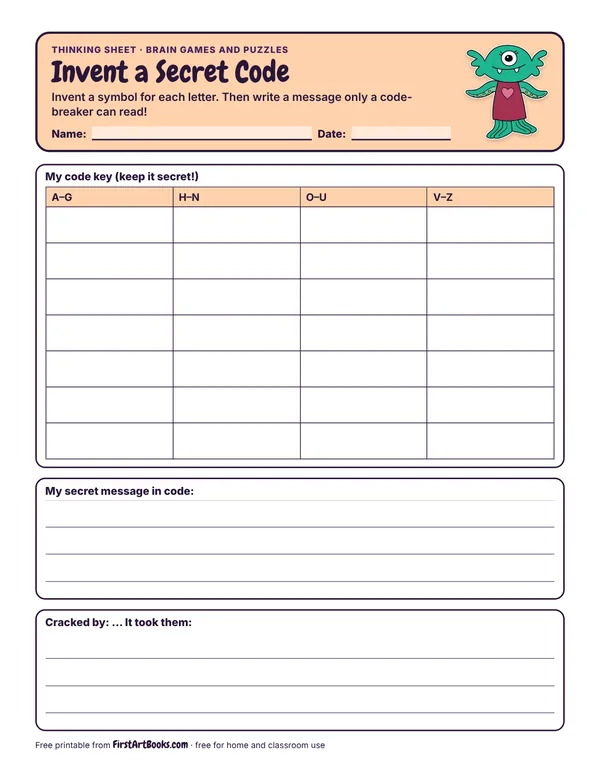
Make up a symbol for each letter, write a secret message and challenge a friend to crack it.
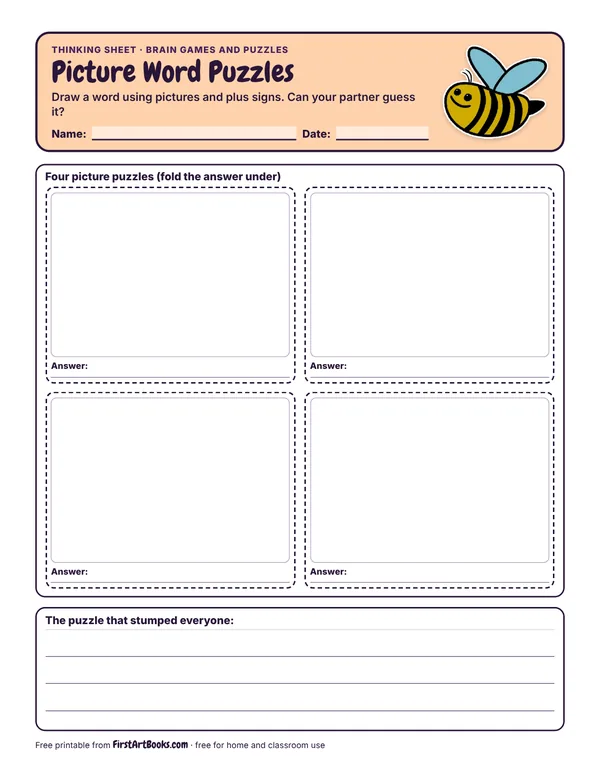
Bee + leaf = belief! Turn words into picture puzzles (rebuses) and test them on a partner.
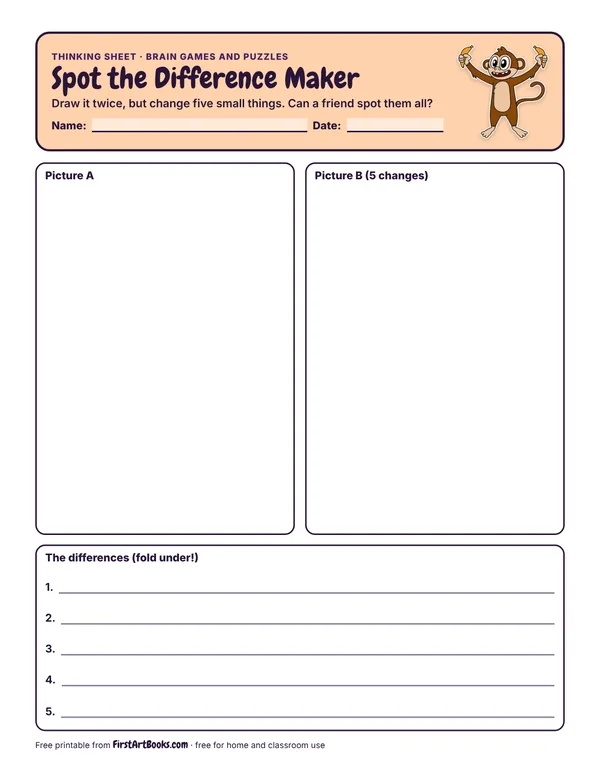
Draw the same scene twice with five sneaky differences, then challenge a friend to find them.
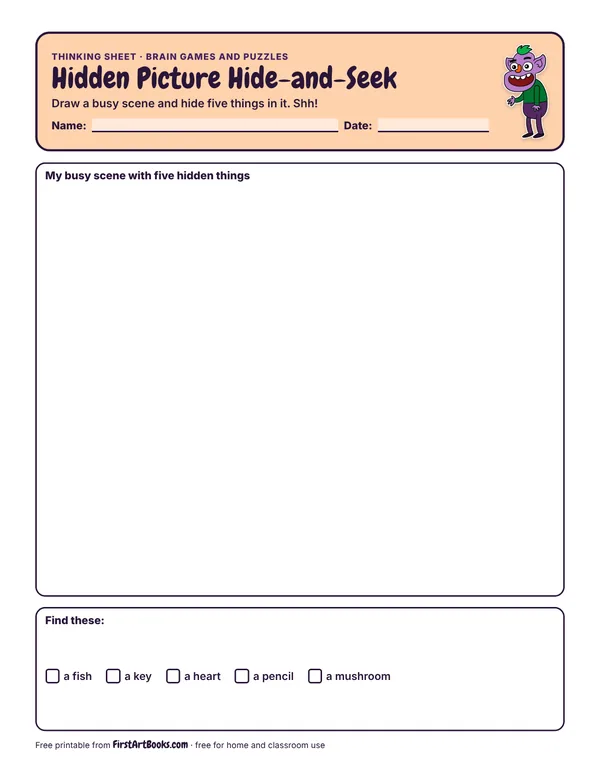
Hide five objects inside a busy drawing, like a banana in the clouds, and see who can find them.
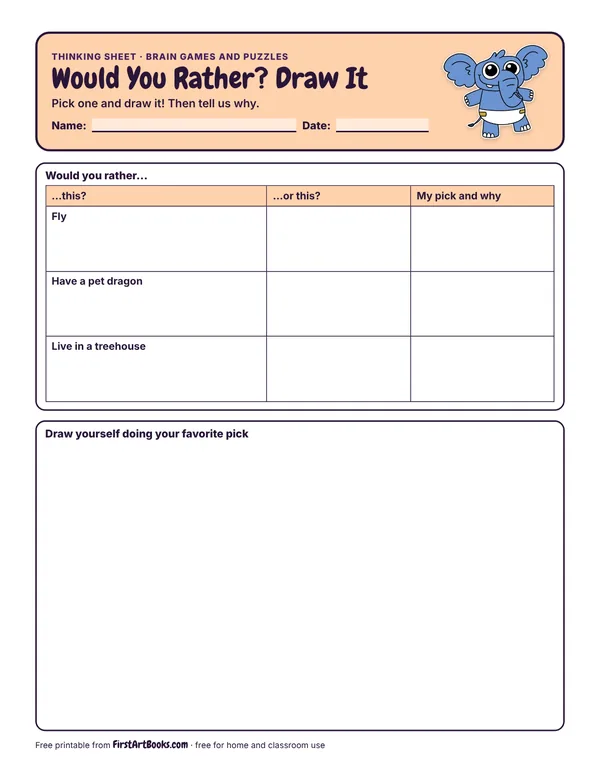
Would you rather fly or breathe underwater? Pick, draw and give your reasons.
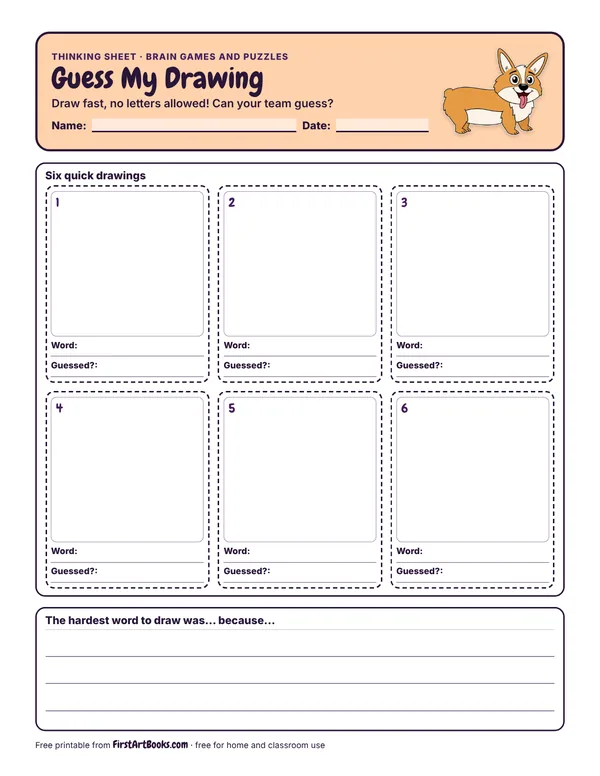
Draw six secret words in 30 seconds each. Your team guesses; keep score.
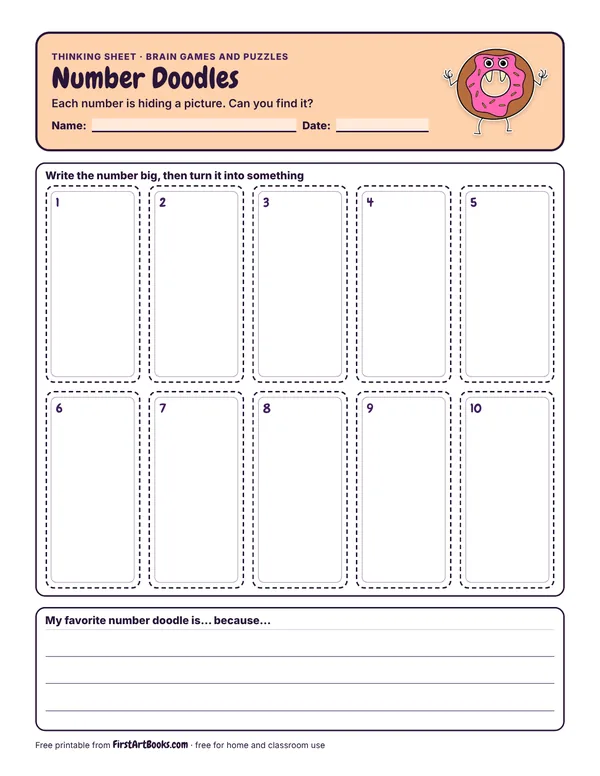
Turn each number from 1 to 10 into a picture: a 2 becomes a swan, an 8 becomes a snowman.
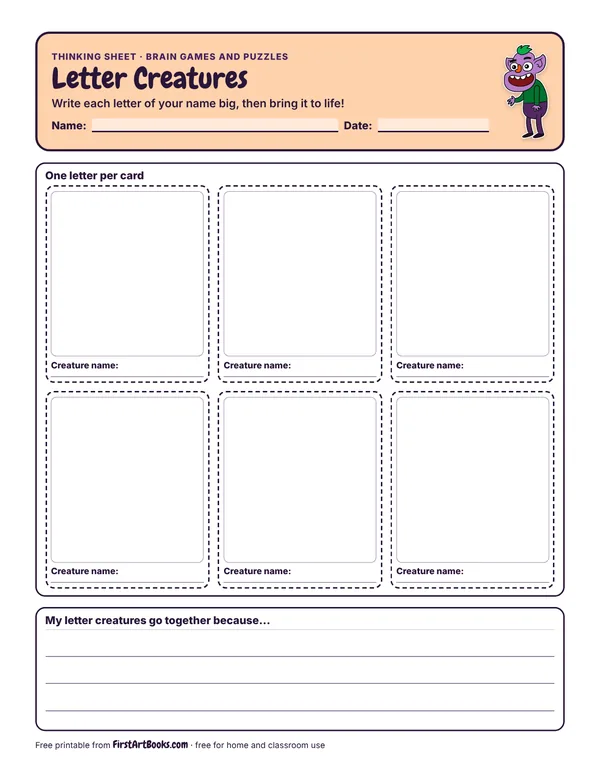
Turn the letters of your name into creatures: an M with legs, an O with eyes.
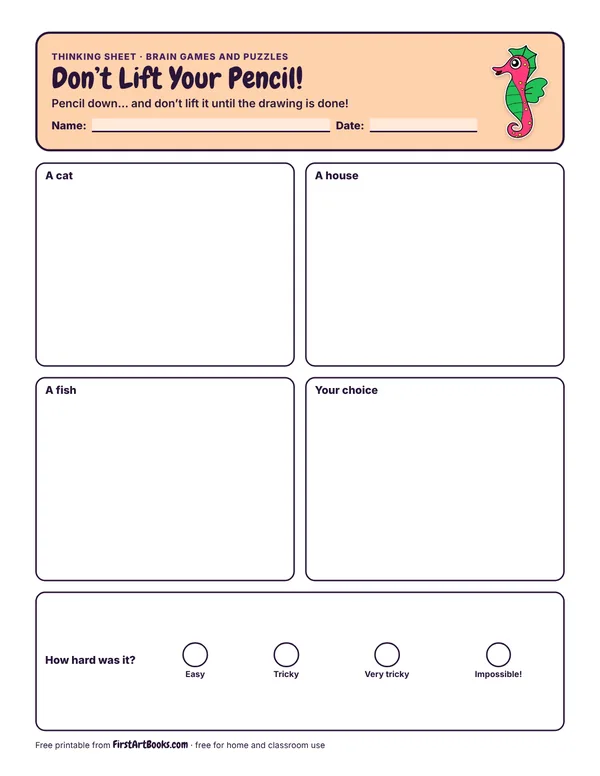
Draw four things without lifting your pencil once. Loops and doubling back are allowed!
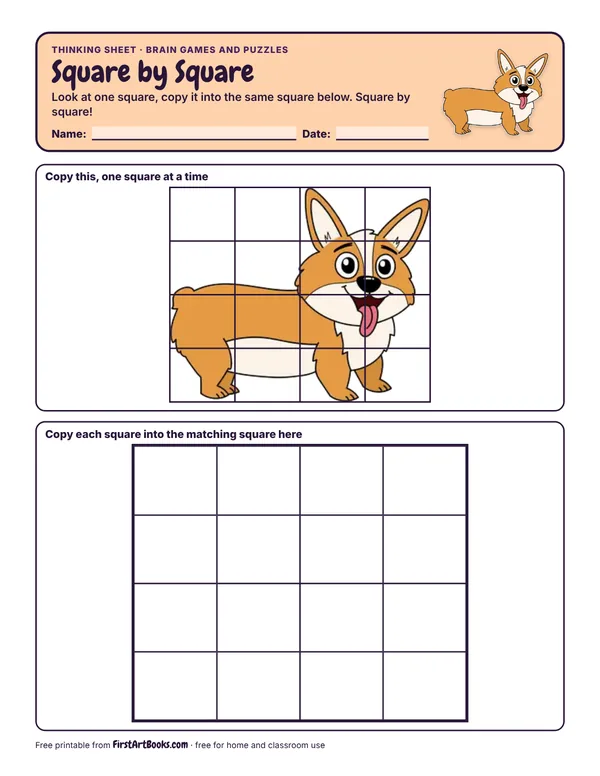
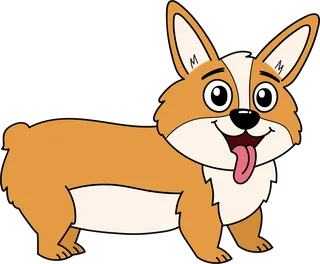
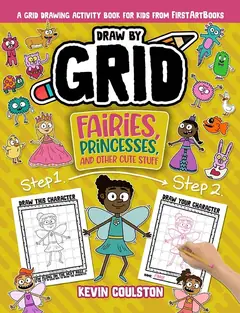
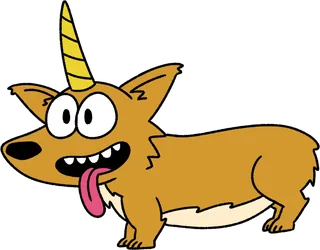
Copy the corgi one square at a time. The grid turns a hard drawing into 16 easy ones.
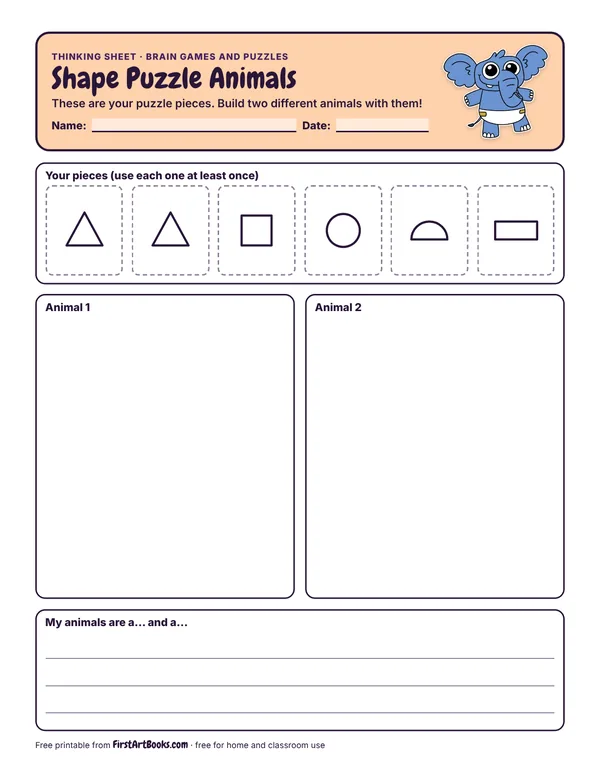
Use only these shapes to build an animal, then build a different one with the same shapes.
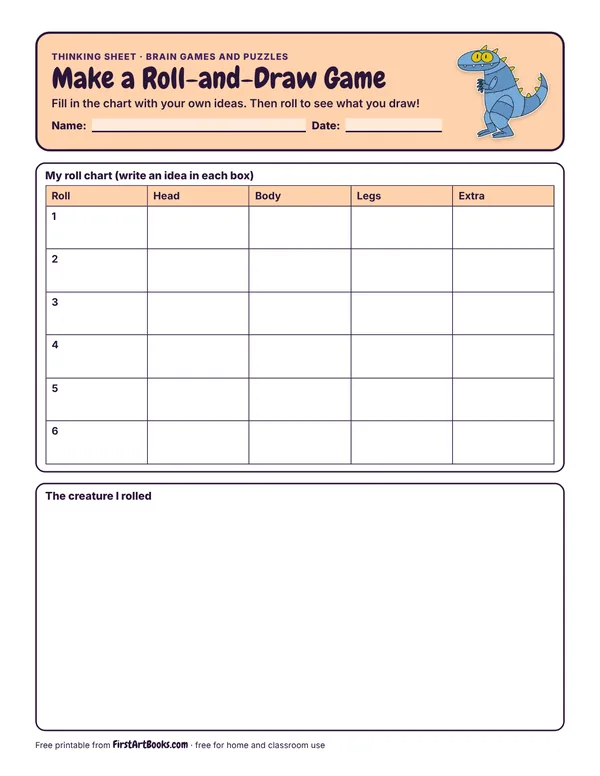
Fill in your own roll-and-draw chart, then roll a die to build a wacky creature.
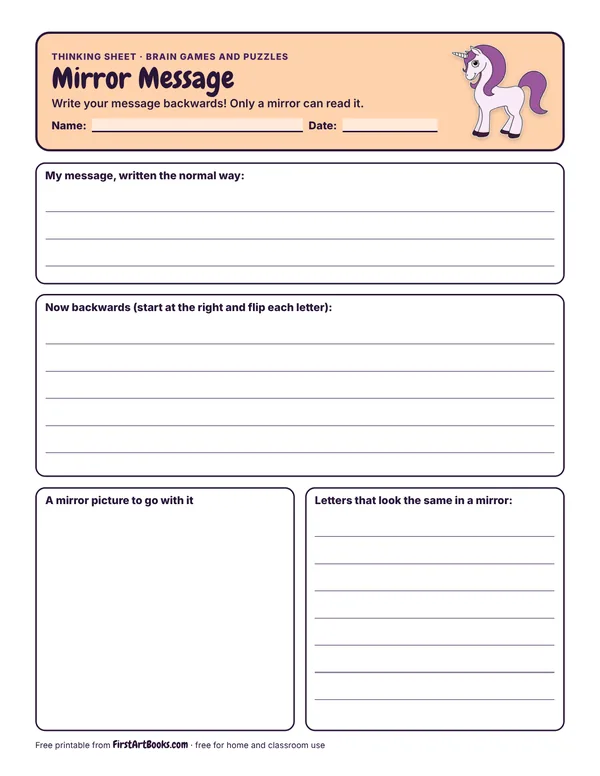
Write a secret message backwards so it can only be read in a mirror.
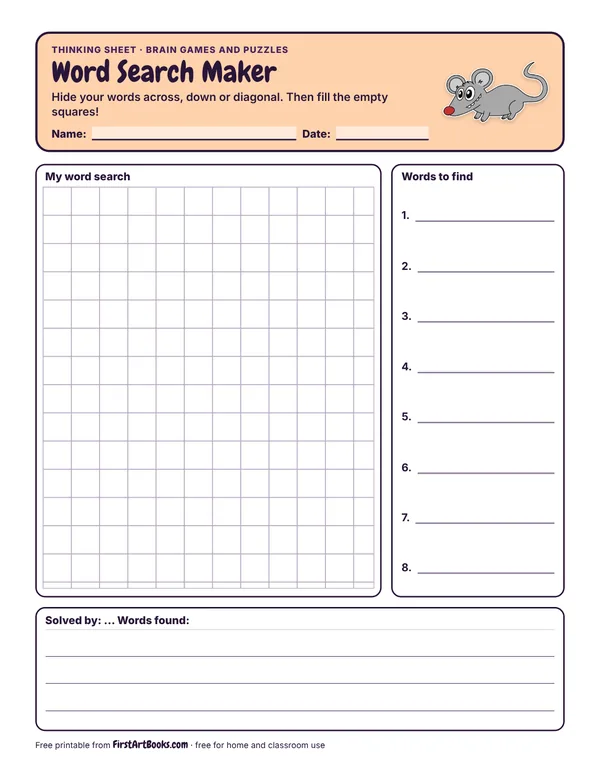
Hide eight words in a grid, fill the rest with random letters and give it to a friend.
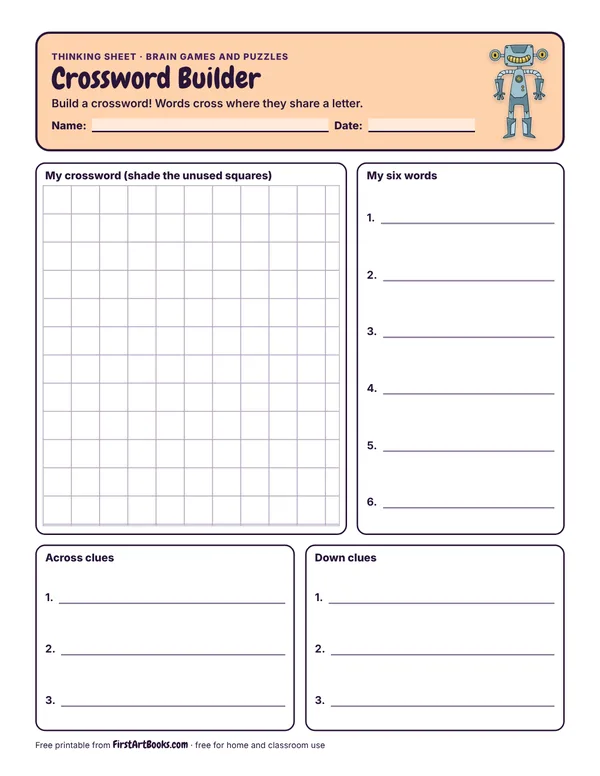
Link six words where they share letters, number them and write the clues.
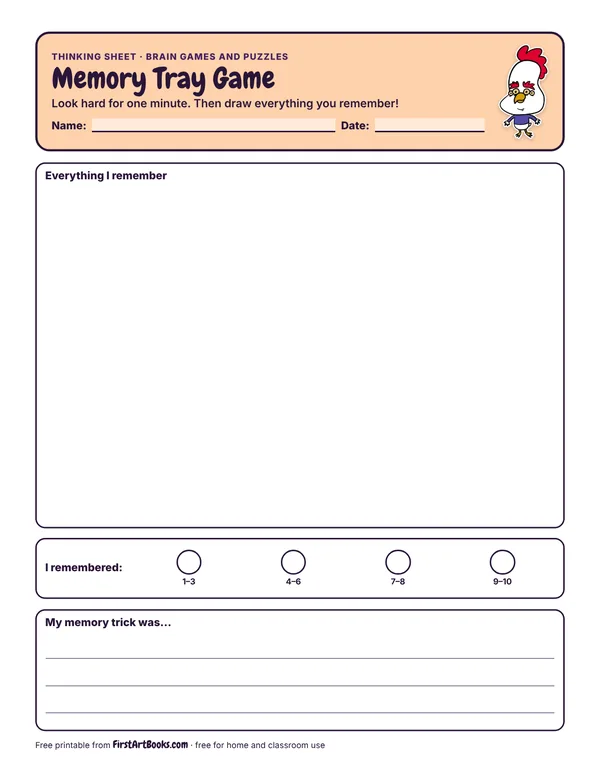
Look at ten objects for one minute, cover them up and draw everything you remember.
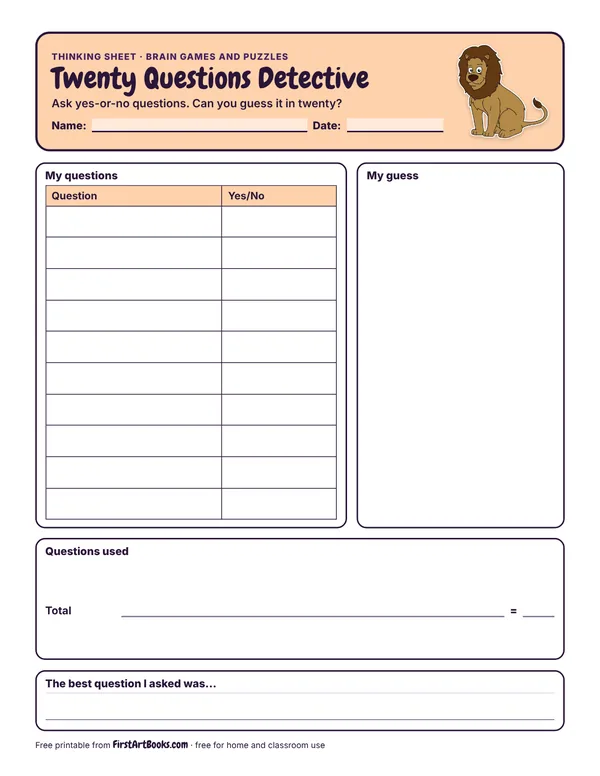
Guess the secret thing with yes-or-no questions. Track each one and draw your guess.
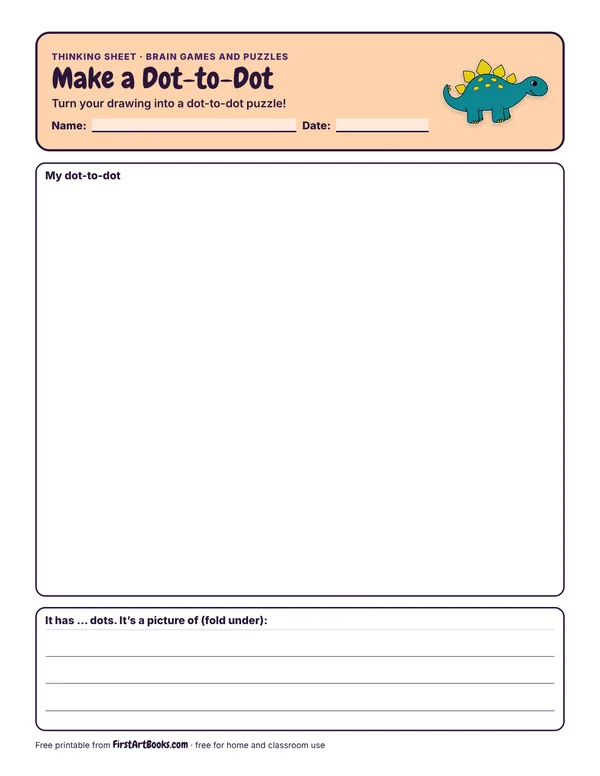
Draw a picture lightly, turn its outline into numbered dots, erase and give it to a friend.
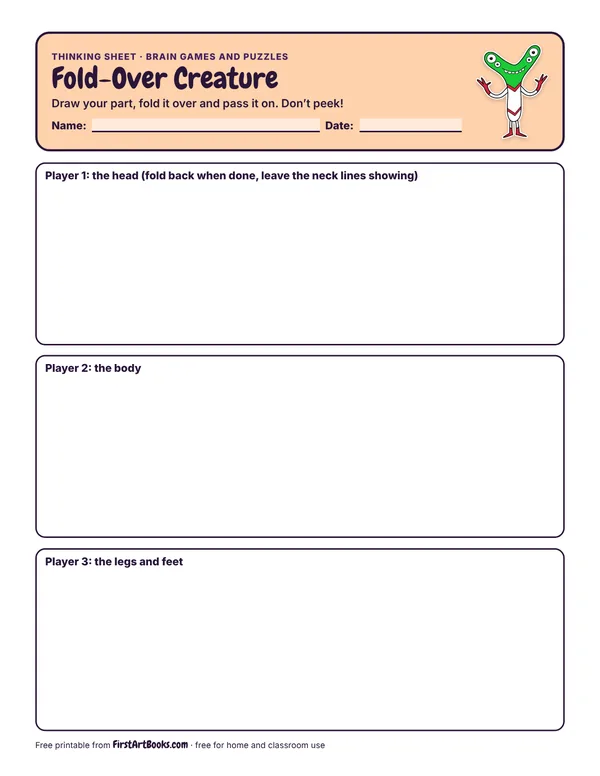
Three players draw a head, a body and legs without seeing each other’s parts. Unfold for a surprise!
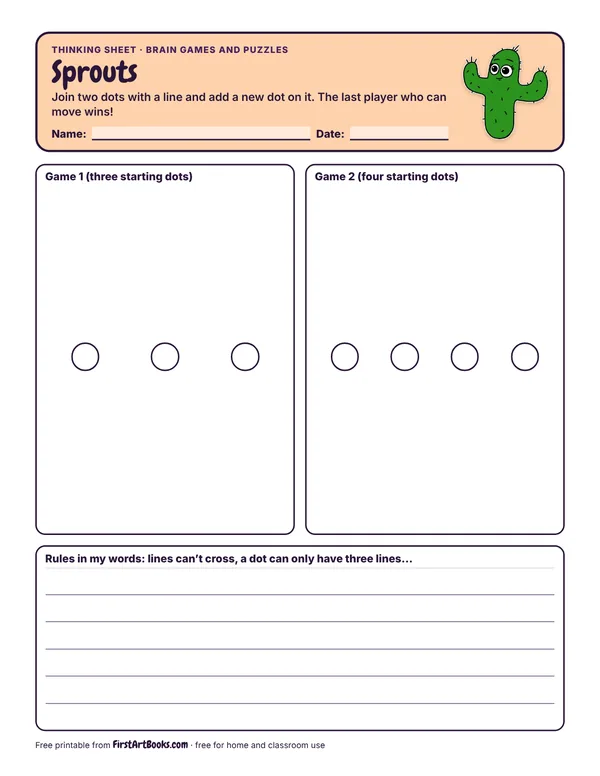
A two-player pencil game: join dots with curvy lines, add a new dot each turn and don’t get stuck.
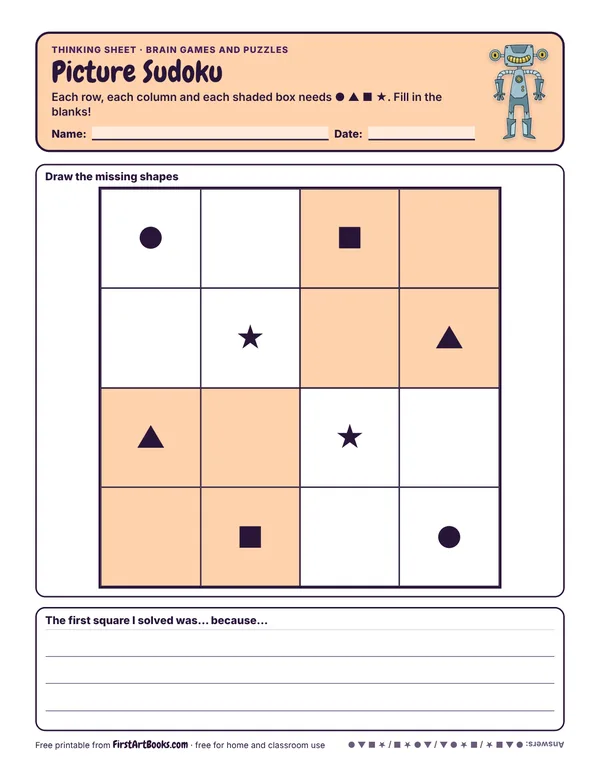
Every row, column and box needs one of each shape. Draw the missing shapes.
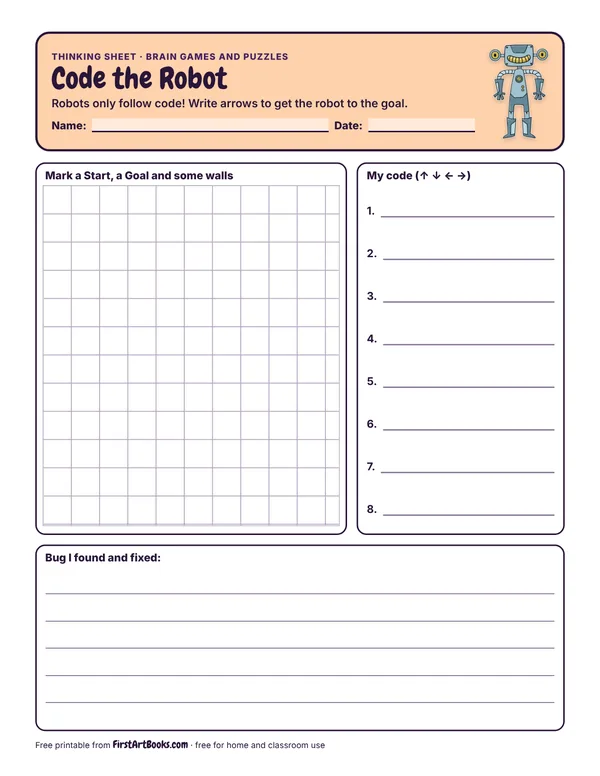
Write arrow code to move a robot from start to goal on the grid. Then debug a friend’s code.
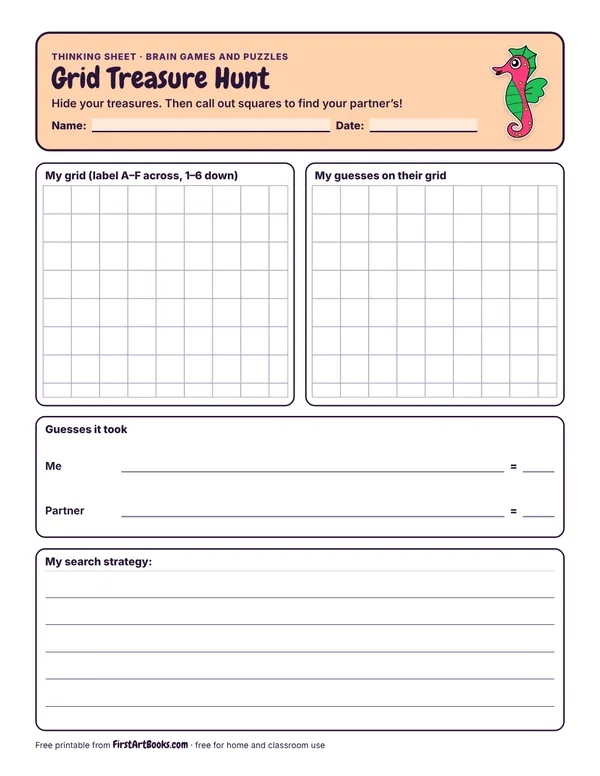
Hide three treasures on your grid and find your partner’s by calling out squares like B4.
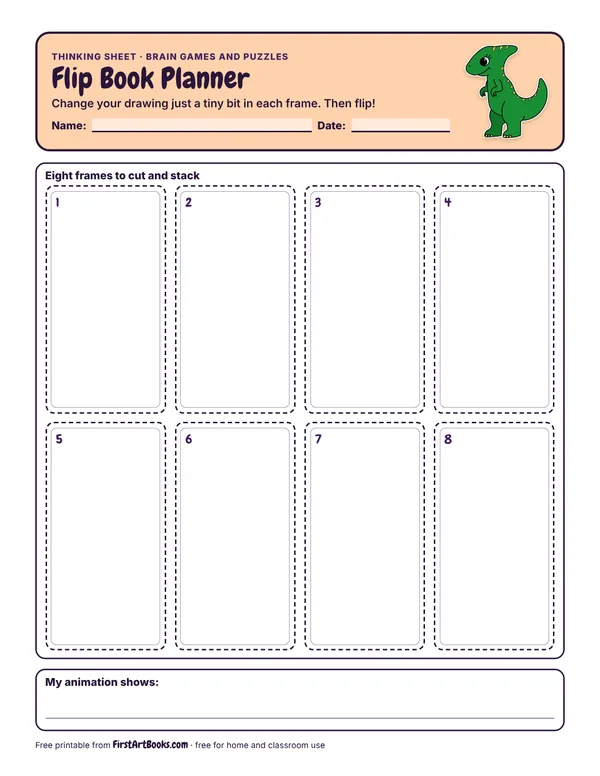
Plan an eight-frame flip book animation, then cut, stack and flip it to see it move.
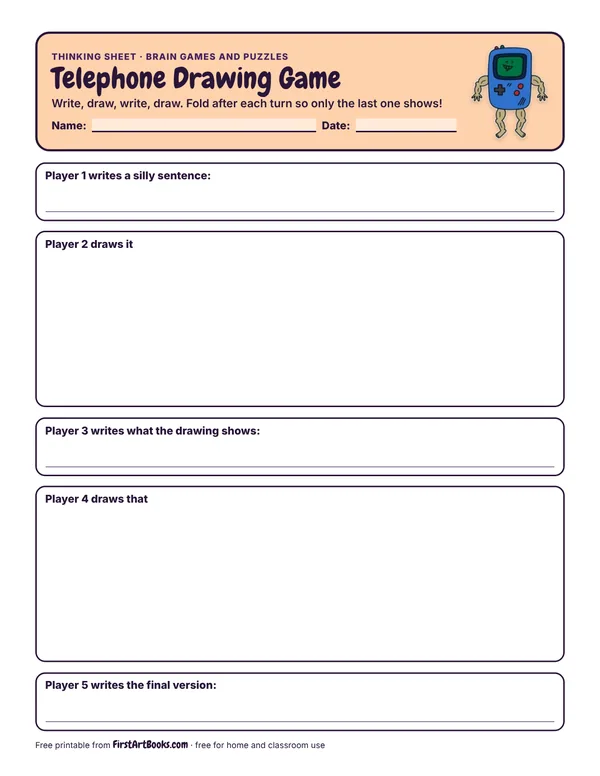
Write a sentence, the next player draws it, the next writes what they see… How much will it change?
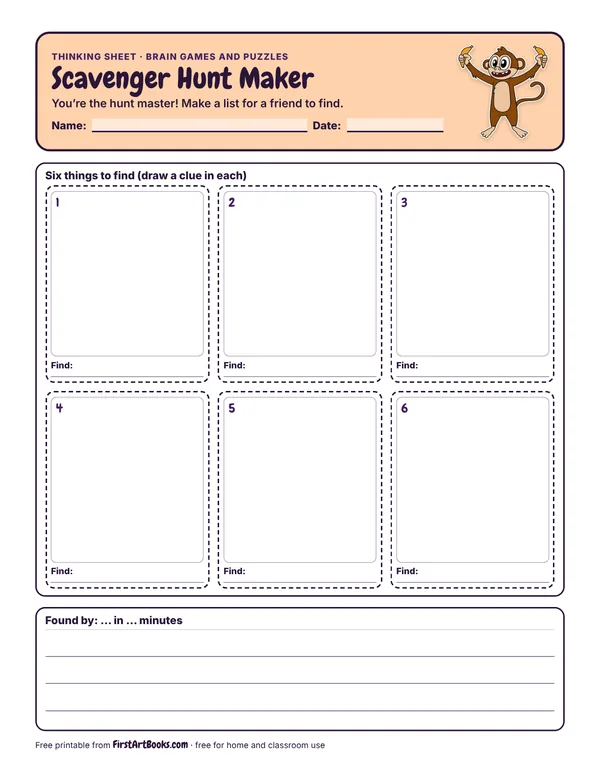
Design a scavenger hunt for a friend: six things to find, with a picture clue for each.
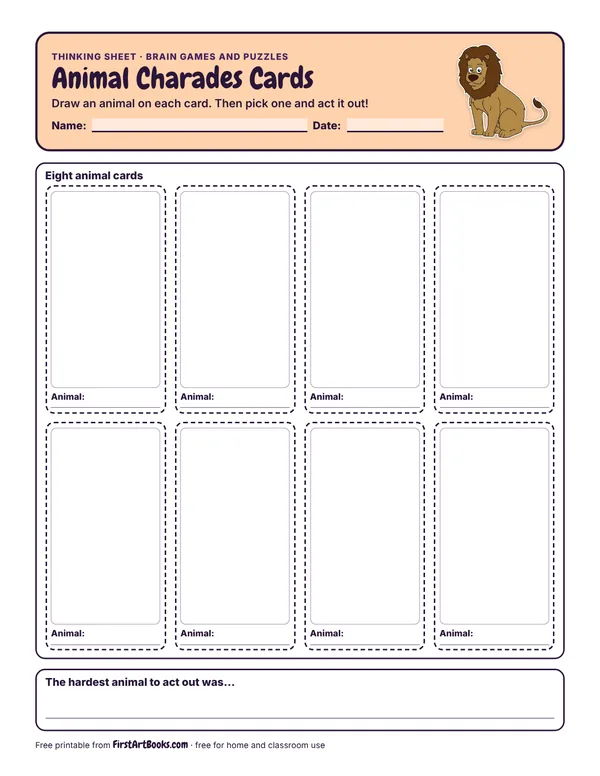
Draw eight animal cards, cut them out and act them out. No sounds allowed!
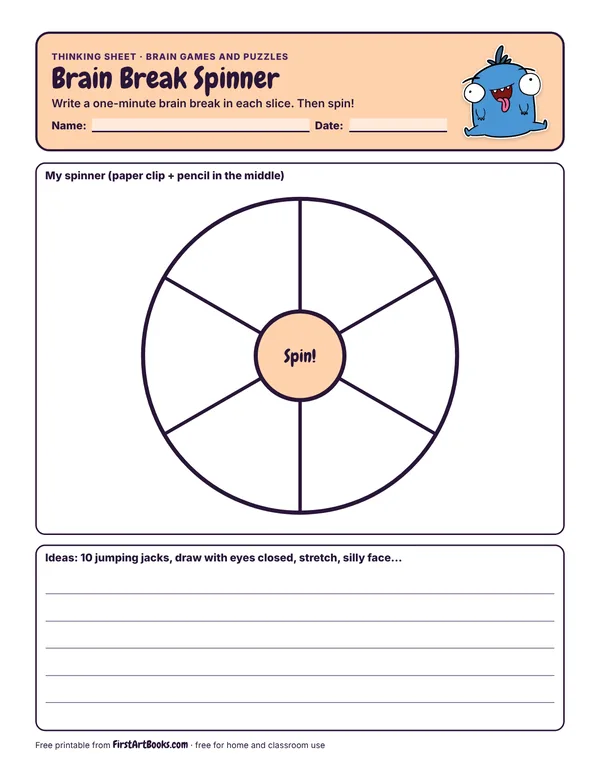
Fill in a spinner with six one-minute brain breaks. Spin with a pencil and a paper clip.
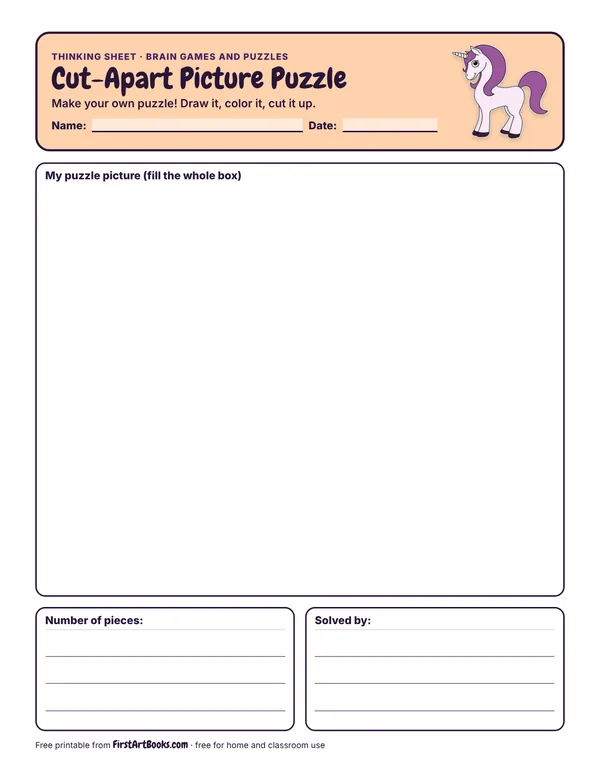
Draw a picture, color it, then draw puzzle lines and cut it into pieces for a friend.
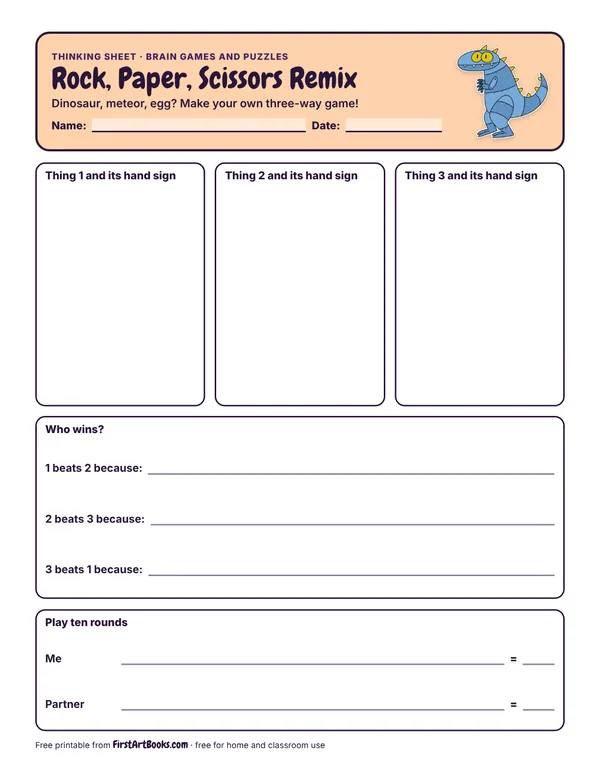
Invent a new version with three new things. What beats what, and why?
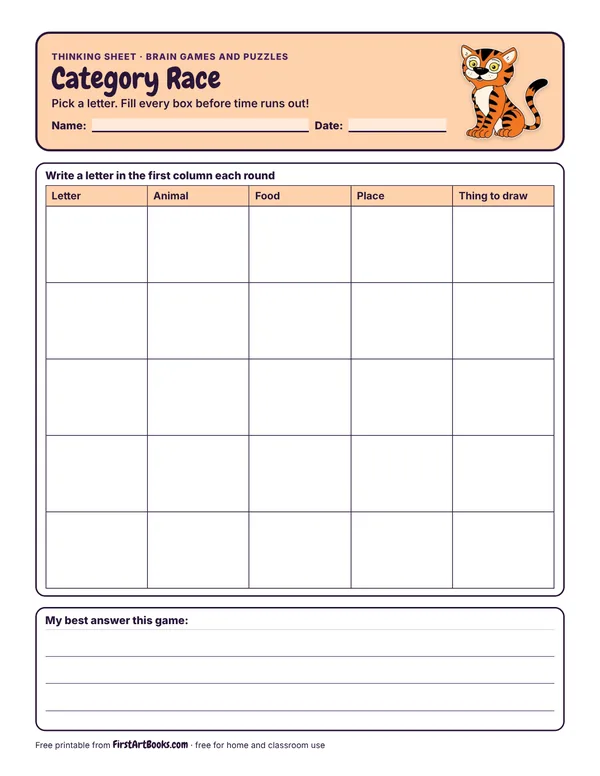
Pick a letter and race to fill every category: an animal, a food, a place and something you can draw.
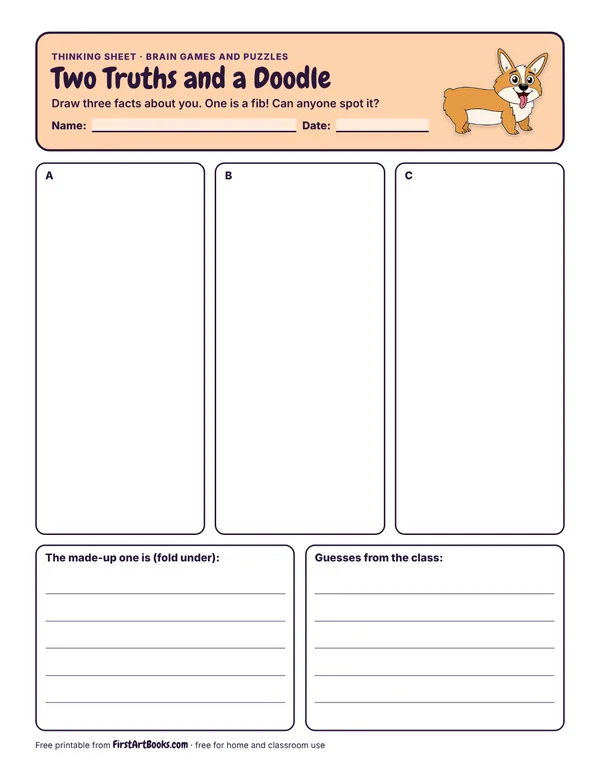
Draw three things about yourself. Two are true and one is made up. Can the class guess the fake?
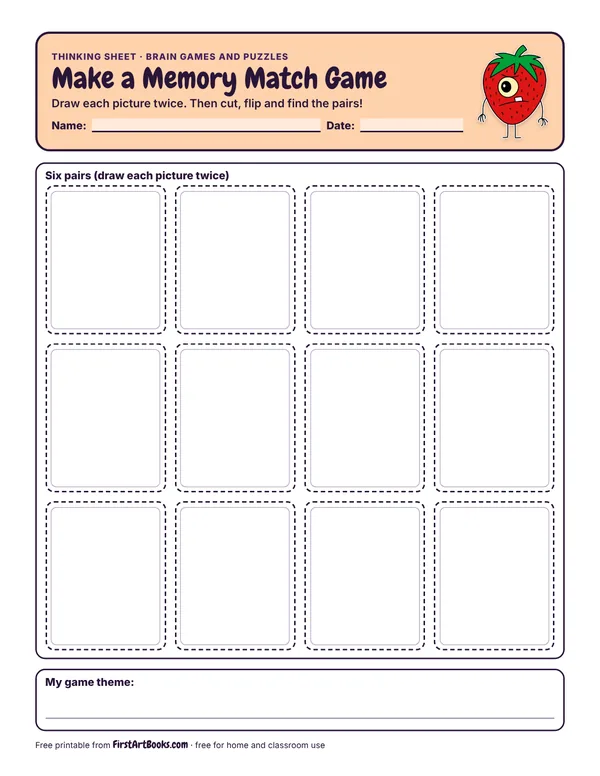
Draw six pairs of matching cards, cut them out and play memory with a friend.
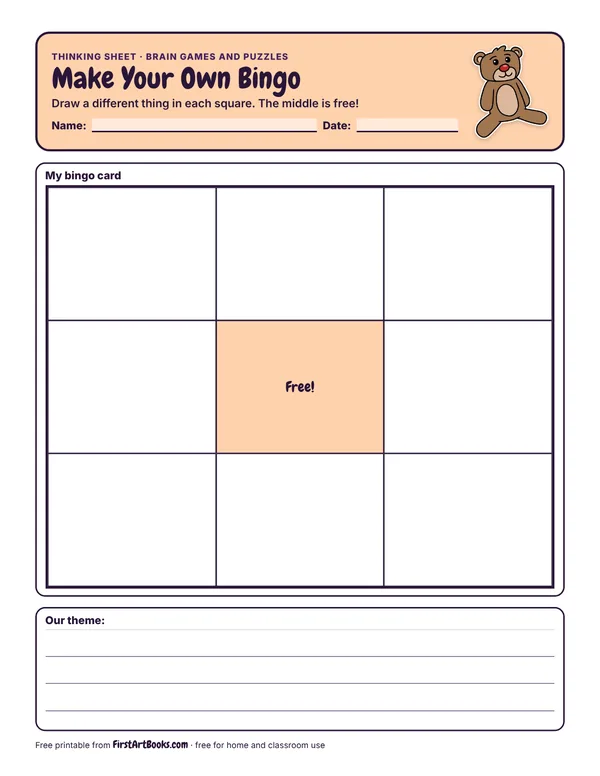
Fill a bingo card with eight drawings from a theme. The caller says them in any order.
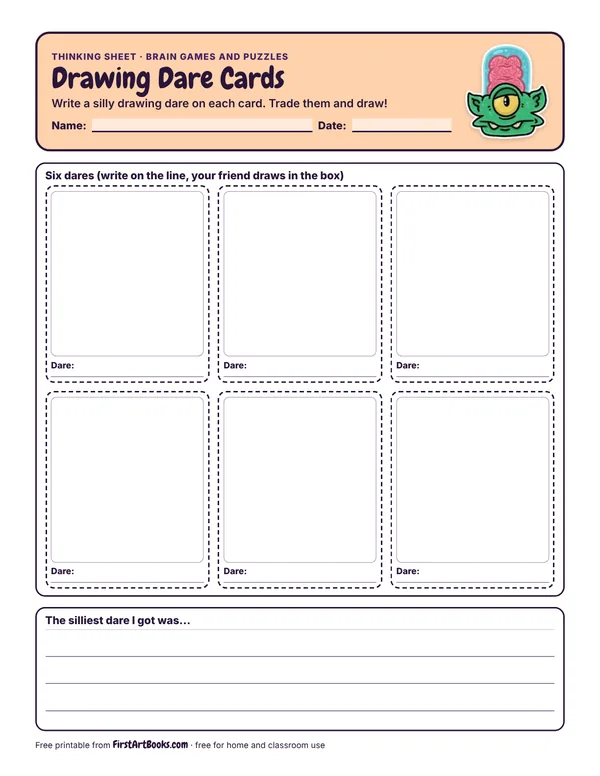
Write six drawing dares for a friend, like “a cat wearing a cake.” Cut, trade and draw.
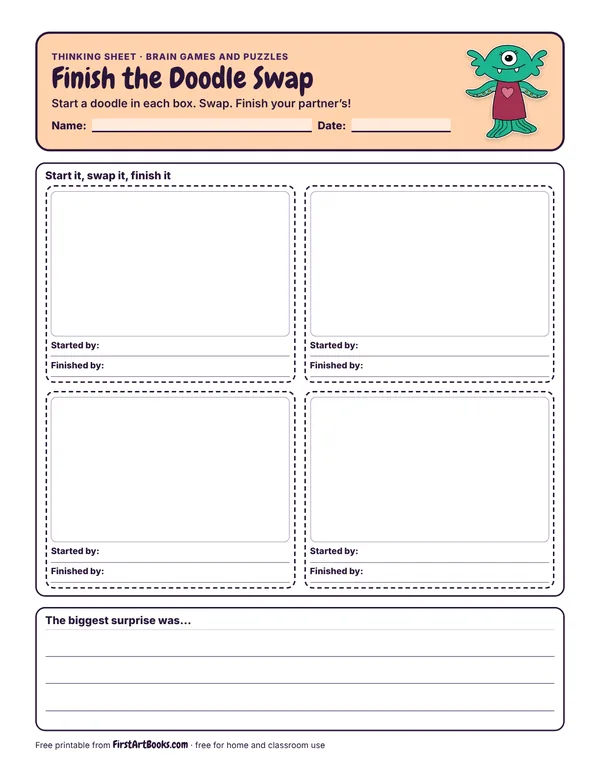
Start four doodles, swap with a partner and finish theirs. What did their squiggle become?
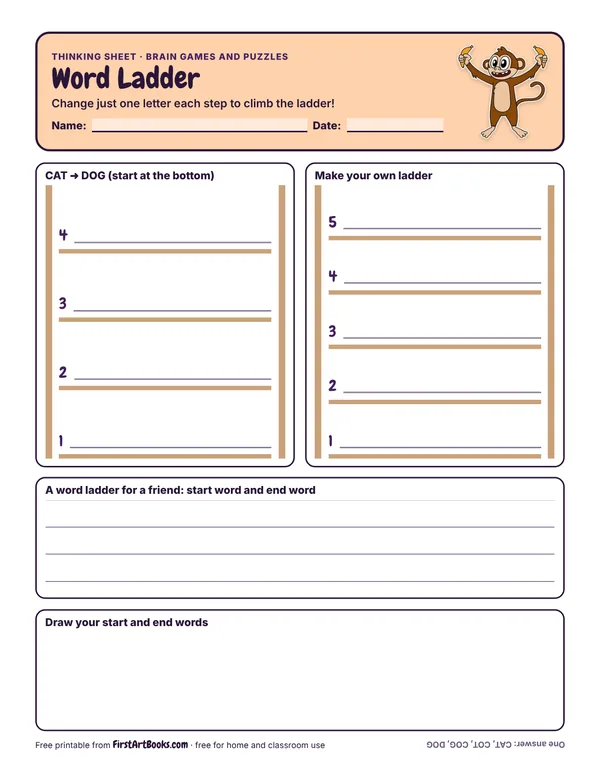
Climb from one word to another by changing one letter at a time. CAT to DOG in three steps?
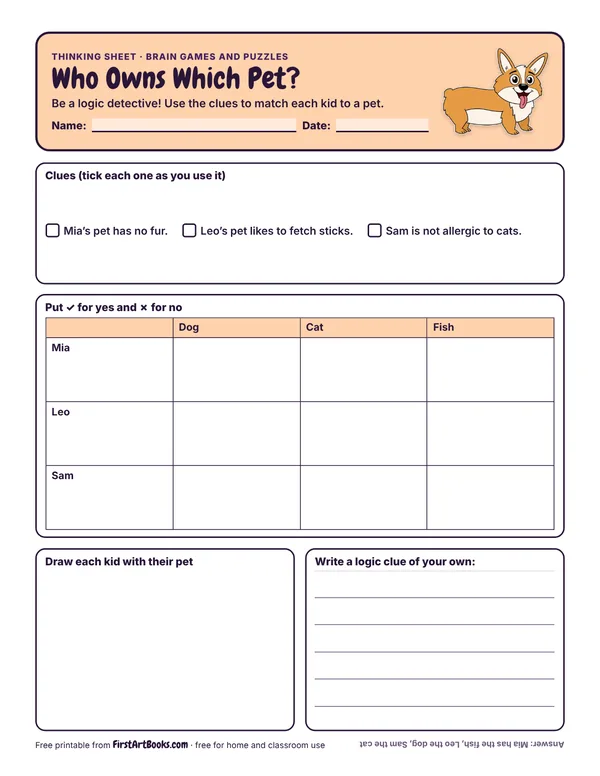
Use the clues and the logic grid to figure out which kid owns the dog, the cat and the fish.
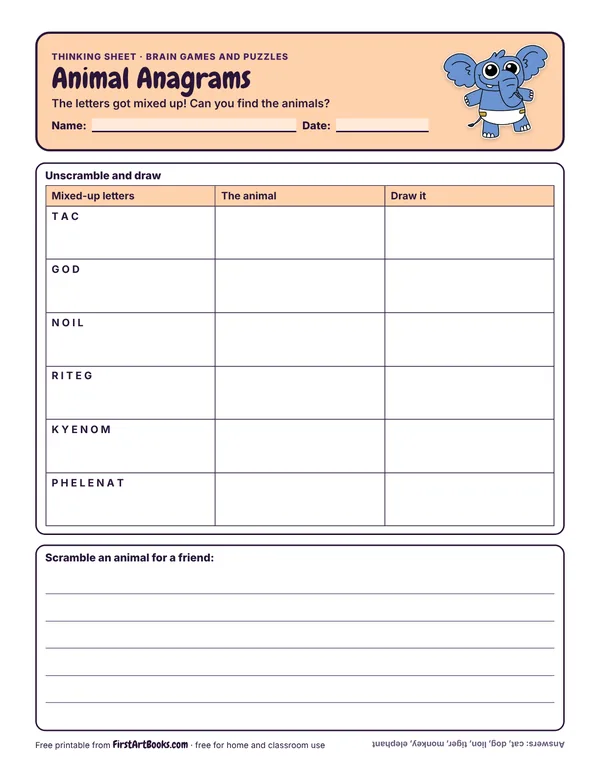
Unscramble the letters to find six animals hiding in the jumble, then draw each one.
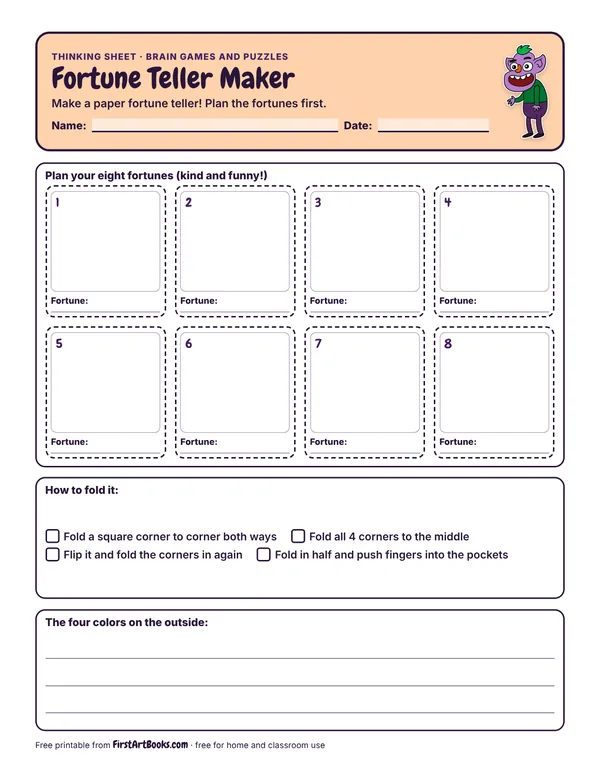
Plan the eight fortunes and the colors for a folded paper fortune teller, then fold one and play.
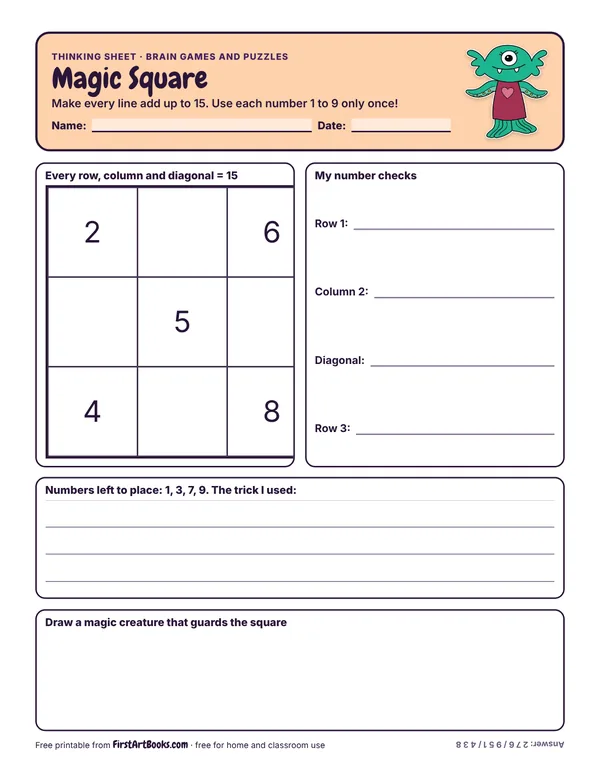
Fill the missing numbers so every row, column and diagonal adds up to 15. Use 1 to 9 just once.
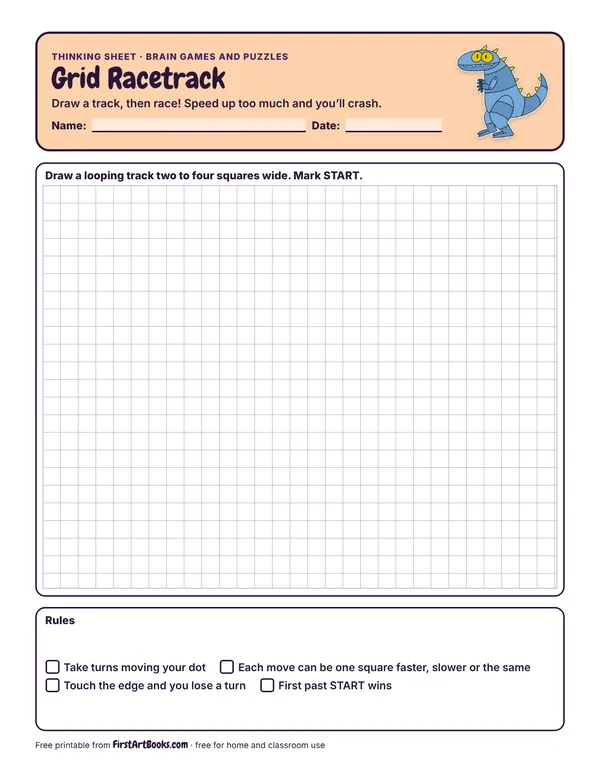
Draw a racetrack on the grid and race a friend: each move can speed up or slow down by one square.
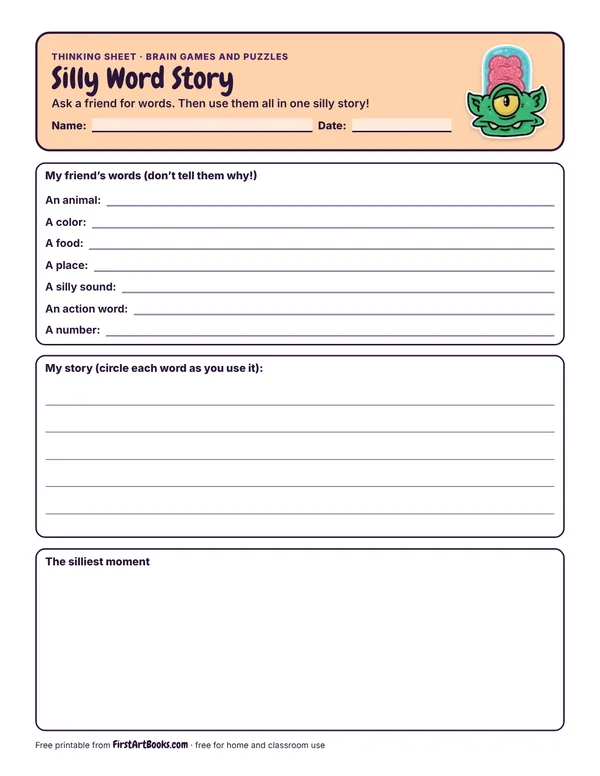
Collect seven random words from a friend, then write and draw a story that uses every single one.
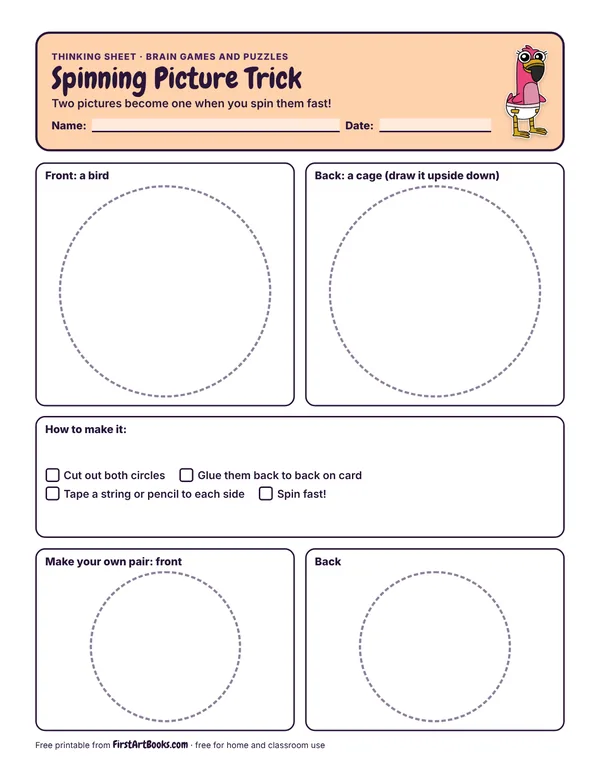
Draw a bird on one side and a cage on the other, spin it on a string and watch the bird appear inside.
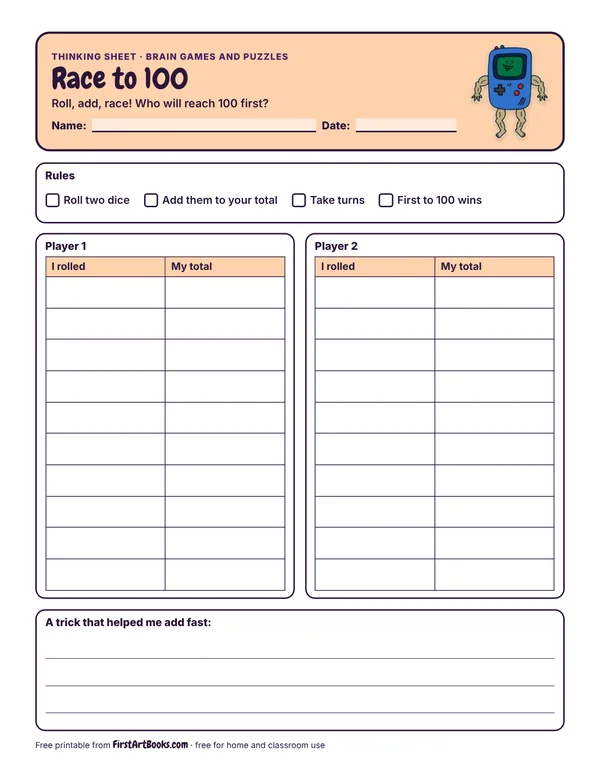
Roll two dice, add them to your total and race a partner to 100. Can you add in your head?
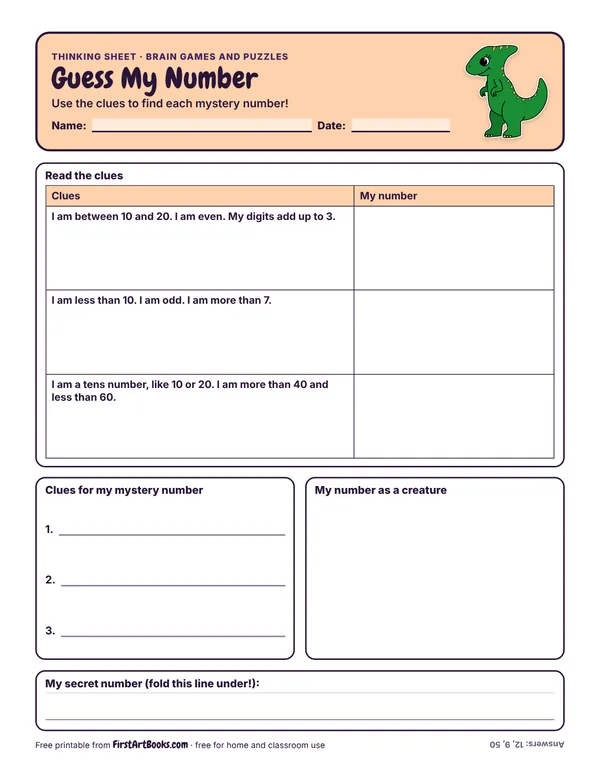
Read the clues and find each mystery number, then write clues for a mystery number of your own.
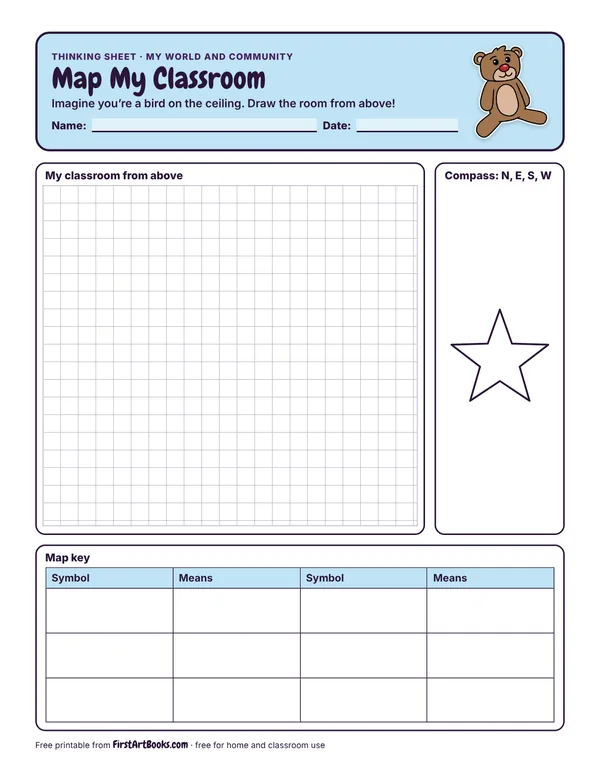
Draw a bird’s-eye map of your classroom with a key and a compass rose.
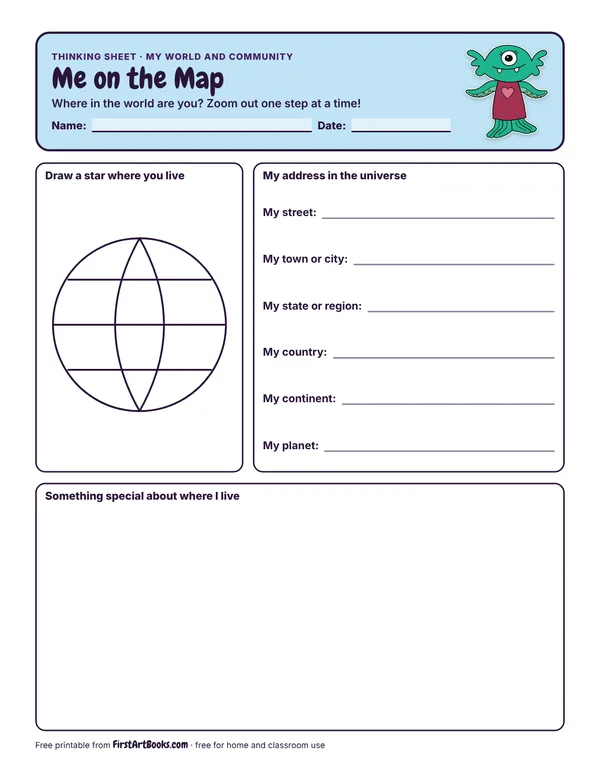
Zoom out from your street to your town, your country, your continent and the whole planet.
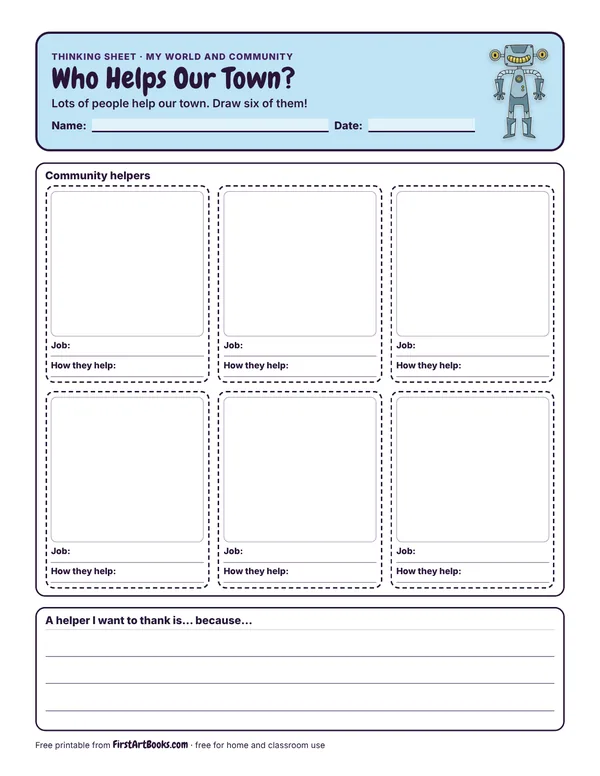
Draw six community helpers at work and write how each one keeps the town running.
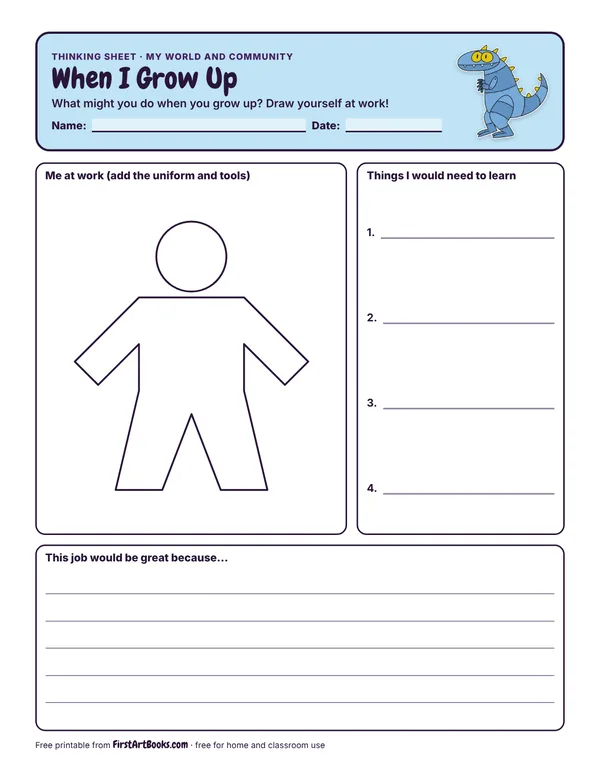
Draw yourself at a job you might love, with the uniform, tools and workplace.
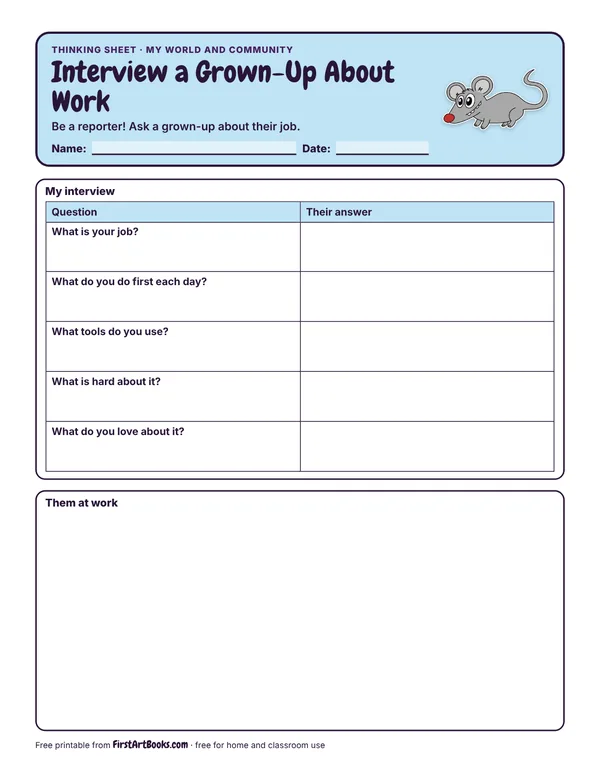
Interview a grown-up about their job and draw a day in their working life.
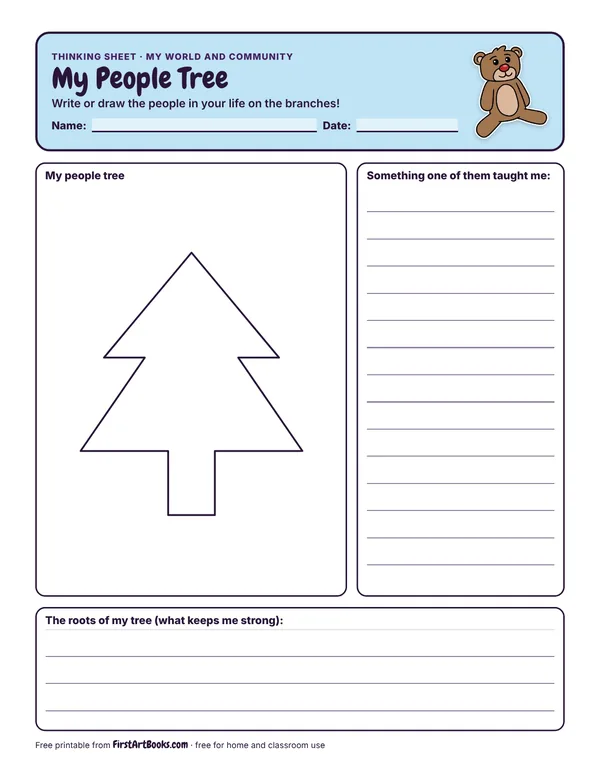
Fill a tree with the people who matter to you: family, friends, neighbors and helpers.
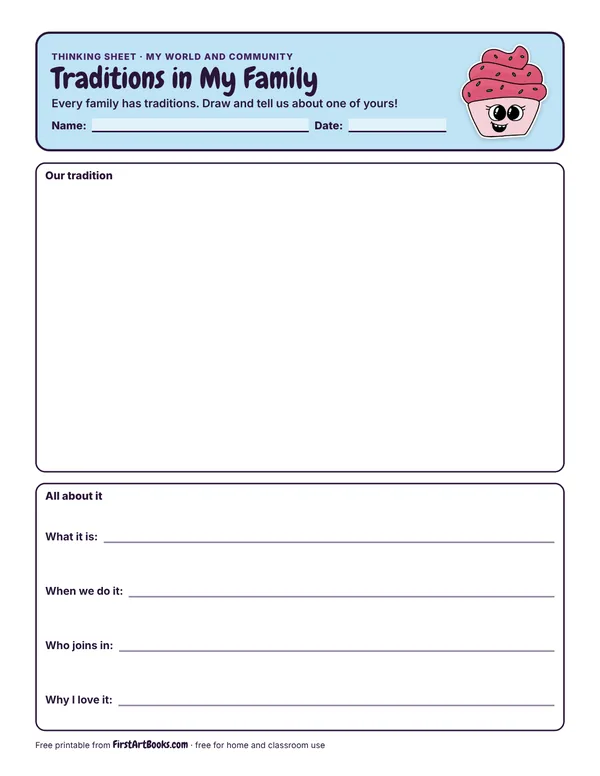
Share a tradition your family loves: a food, a celebration, a game or a saying.
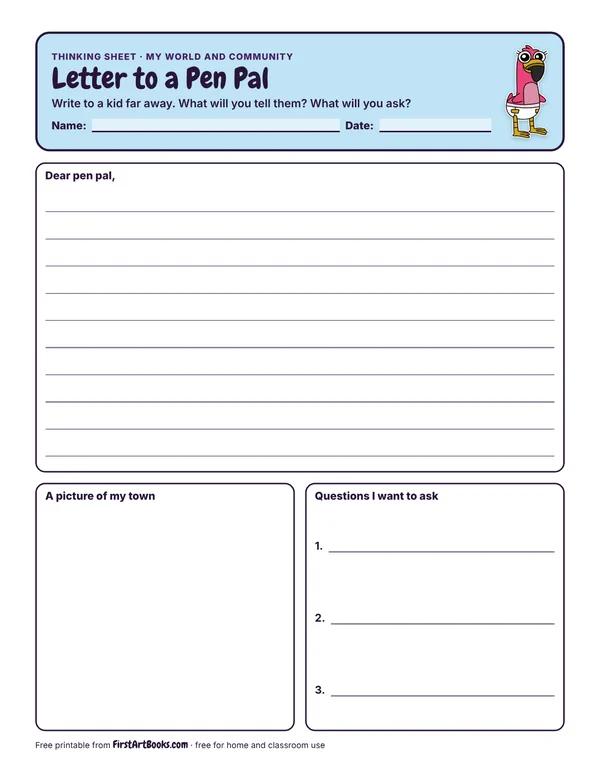
Write to a kid in another place: tell them about your world and ask about theirs.
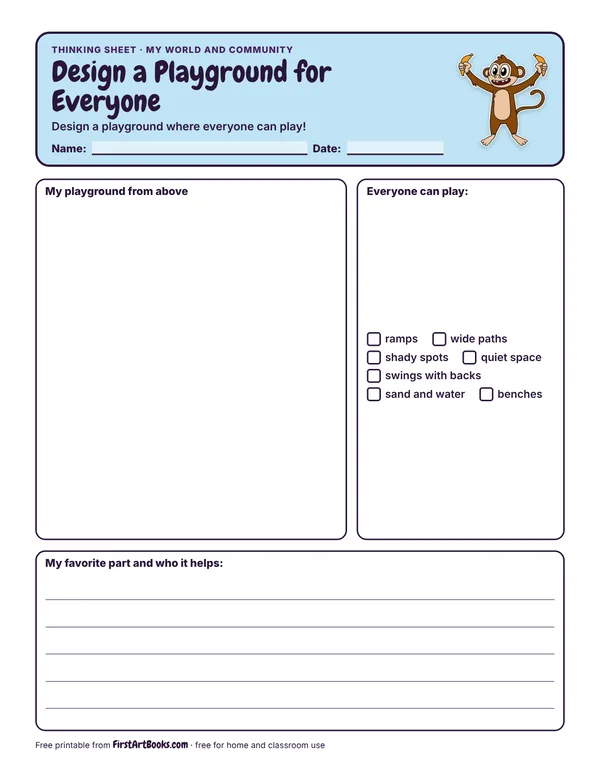
Design a playground that kids of all ages and abilities can enjoy together.
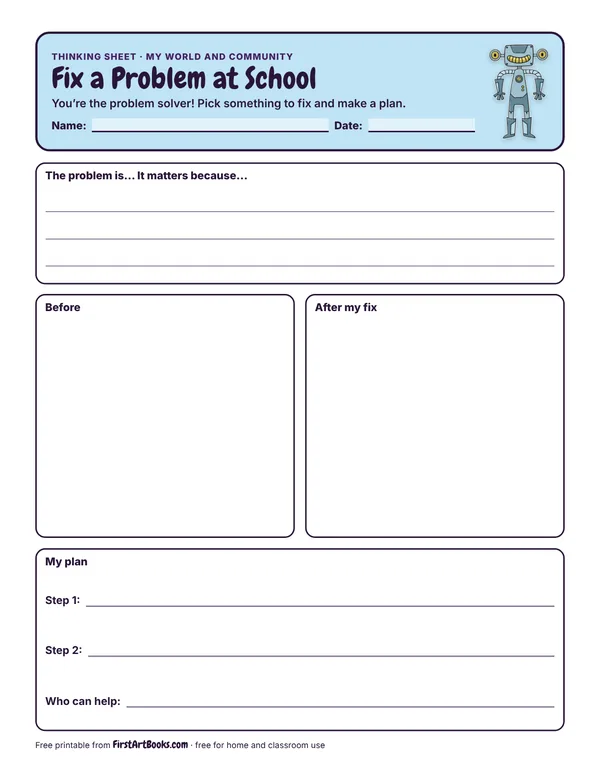
Pick a real problem at school, like a messy coat area or long lunch lines, and plan a fix.
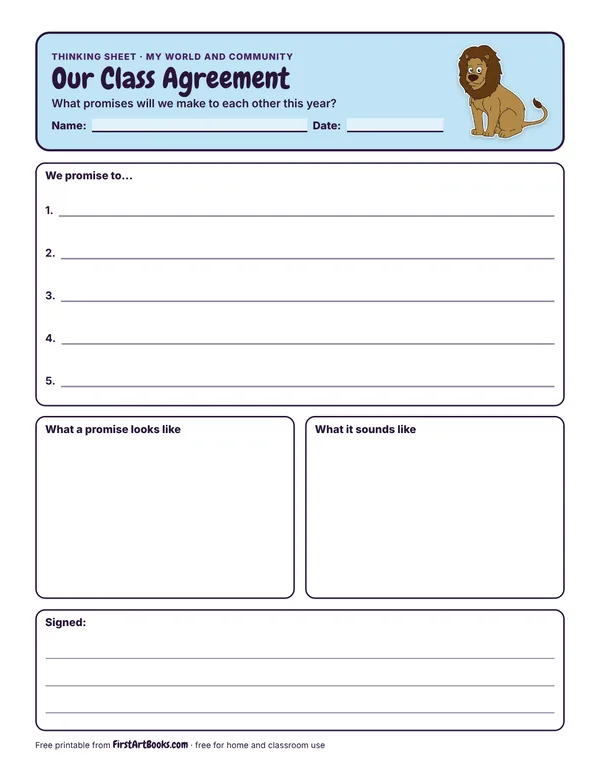
Write the promises your class makes to each other, draw what they look like and sign it together.
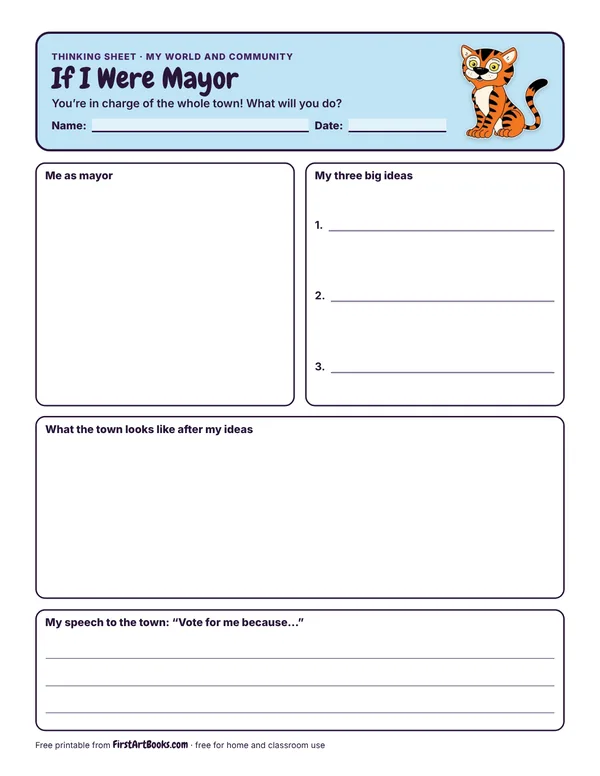
You’re the mayor for a day. What three things would you change in your town, and how?
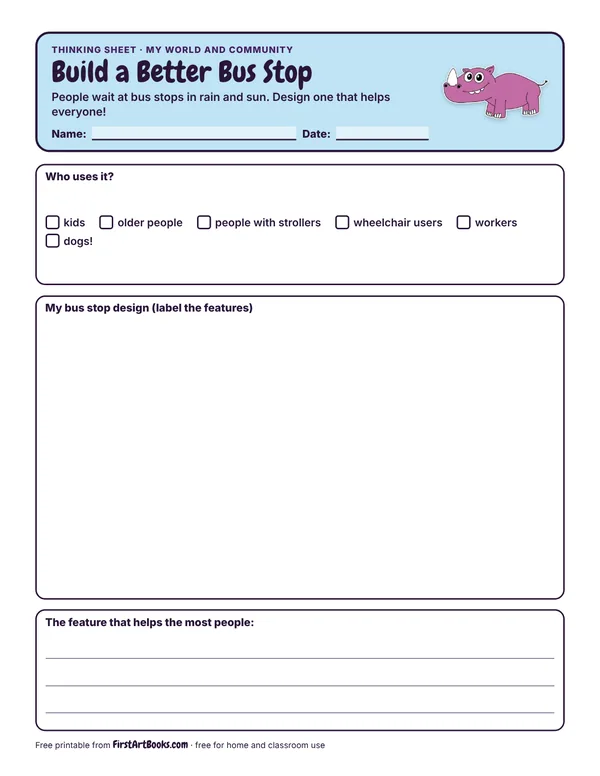
Redesign a bus stop for everyone who waits there: kids, grandparents, people with strollers or wheelchairs.
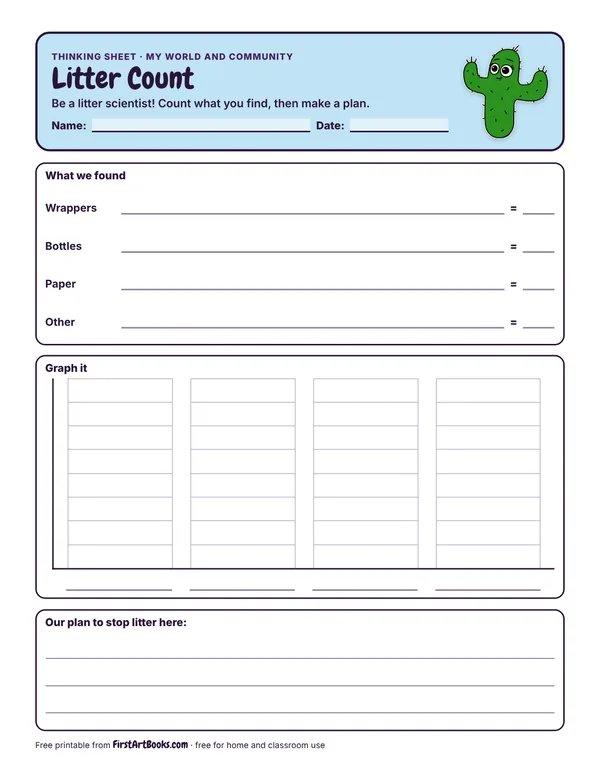
Count the litter in one area (with gloves!), graph what you found and plan how to stop it.
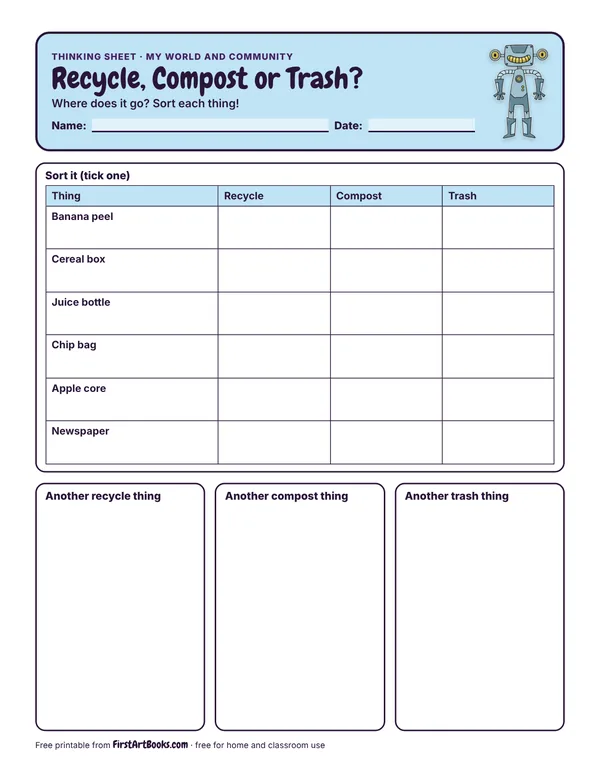
Sort everyday things into recycle, compost or trash, and draw one more for each.
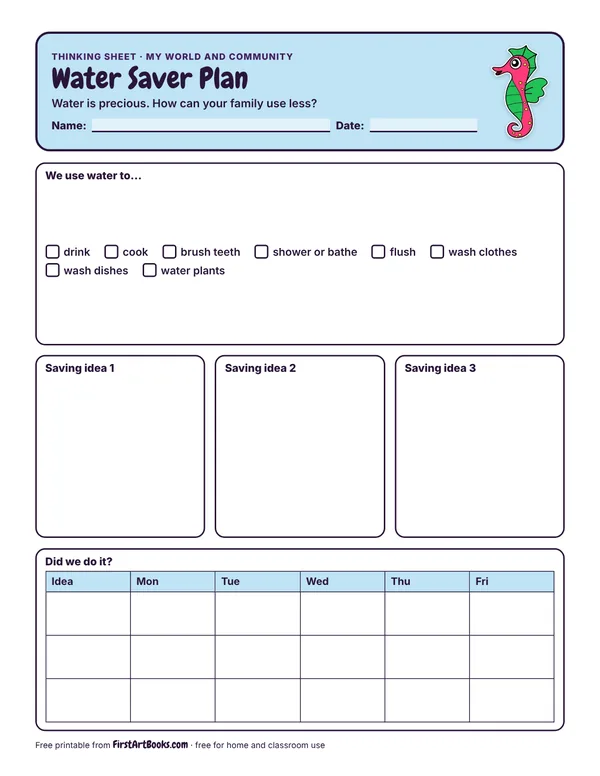
Find the ways your family uses water and pick three ways to save some this week.
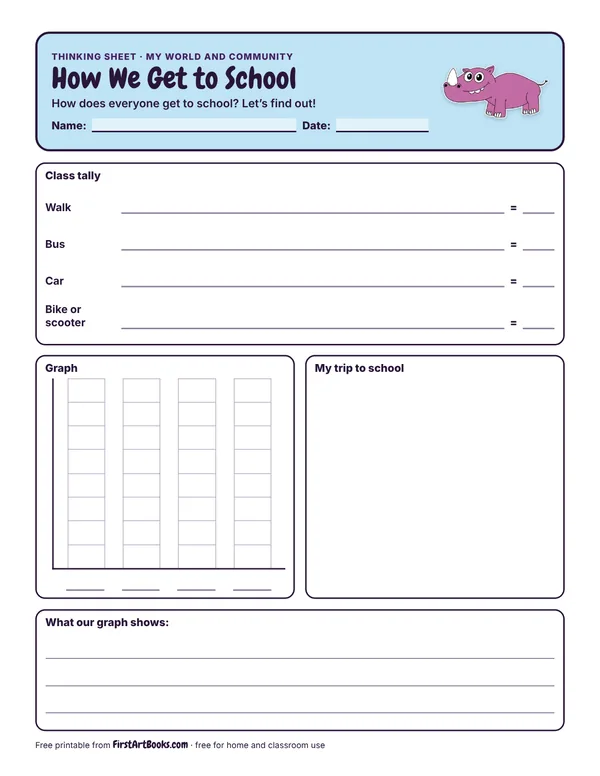
Survey the class: walk, bus, car, bike or scooter? Tally it, graph it, draw your trip.
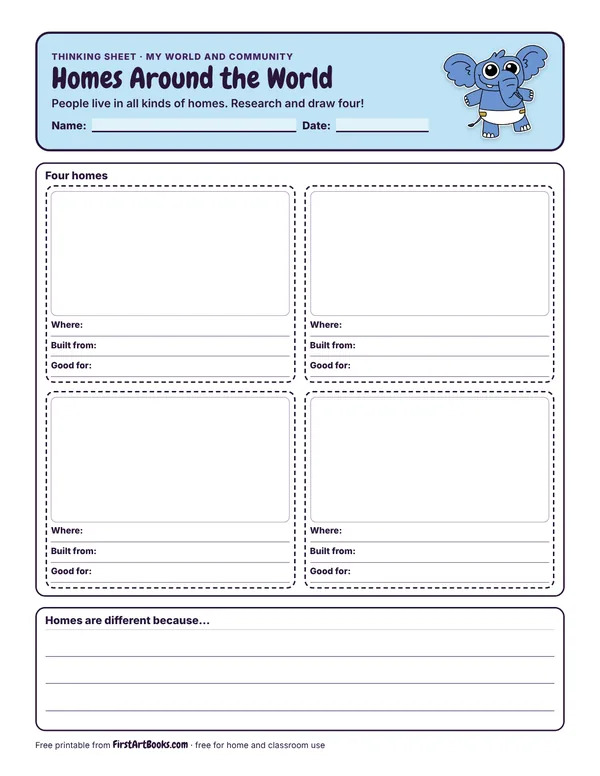
Research four kinds of homes from different places and climates, then draw and compare them.
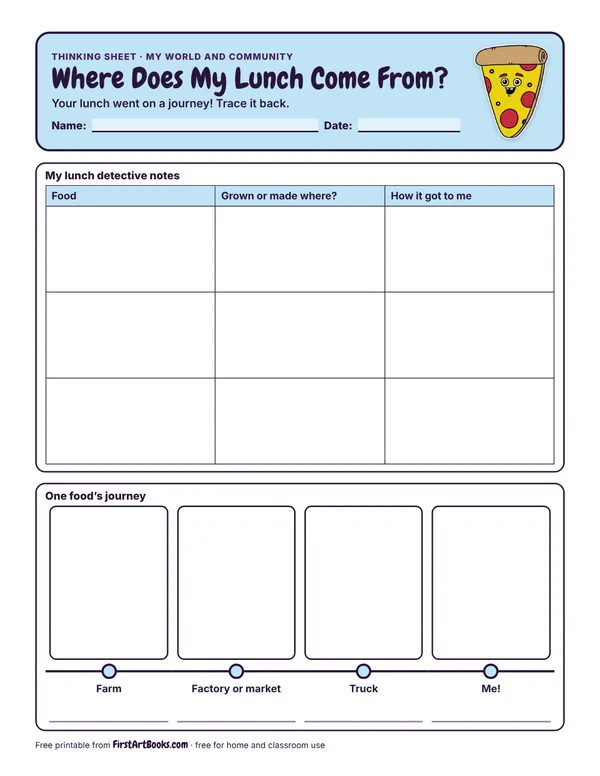
Trace three parts of your lunch back to the farm, the factory and the truck.
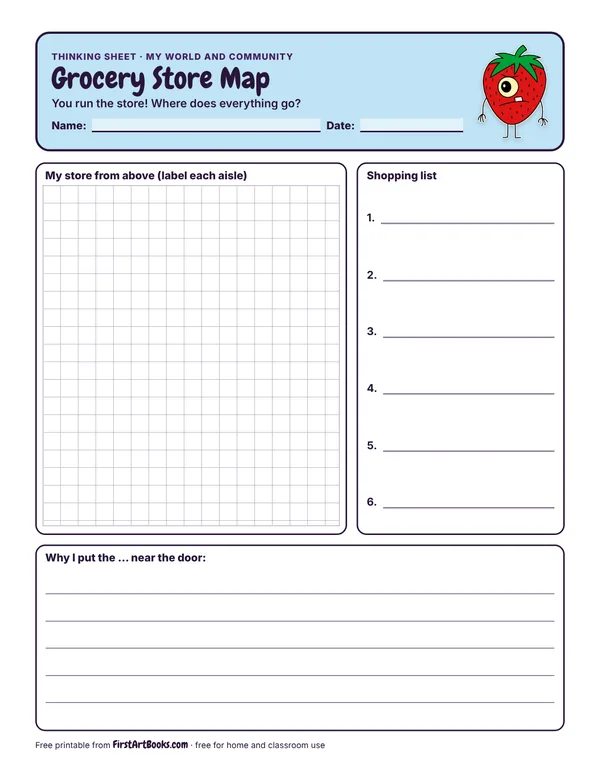
Design a grocery store: where do the fruit, bread and frozen foods go? Then plan a shopping route.
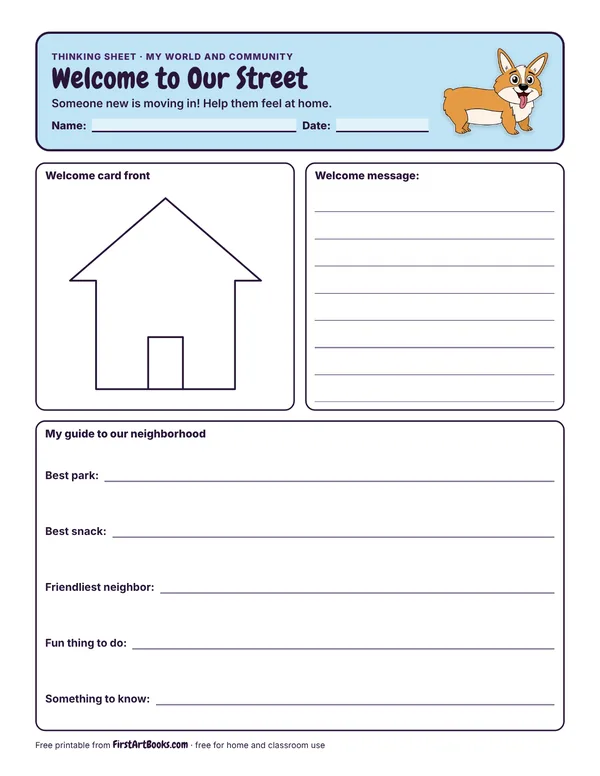
A new family is moving in. Make a welcome card and a mini guide to the best things nearby.
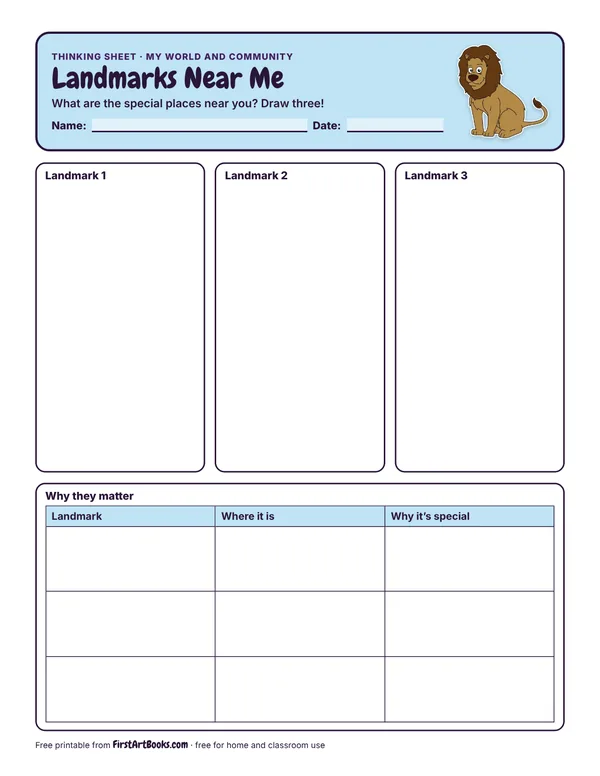
Draw three landmarks in your area, from a big statue to a funny-shaped tree, and say why they matter.
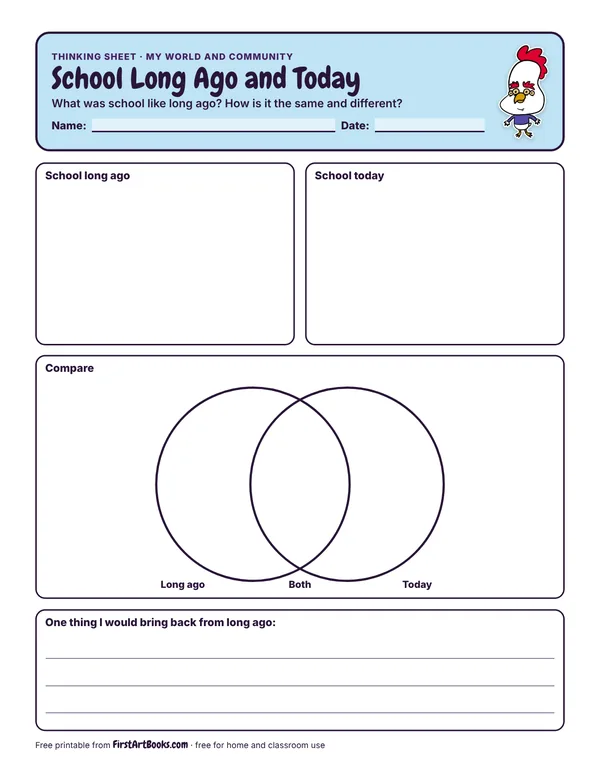
Compare school 100 years ago with school today: desks, lessons, lunches and recess.
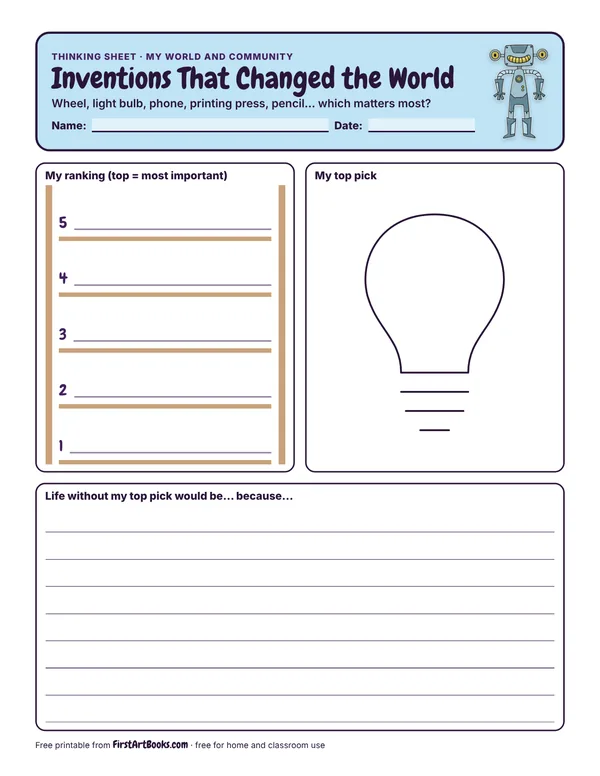
Rank five inventions from most to least important and defend your top pick.
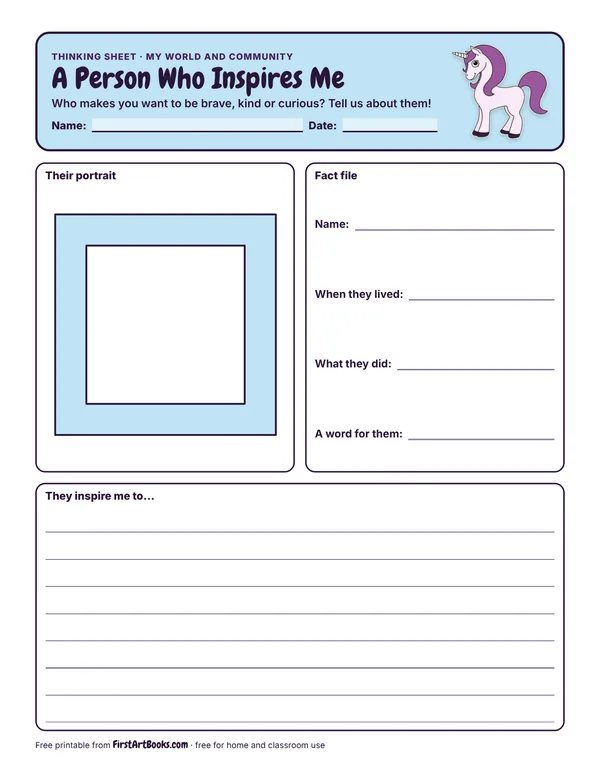
Draw a portrait of someone who inspires you, from history or from your life, and share what they did.
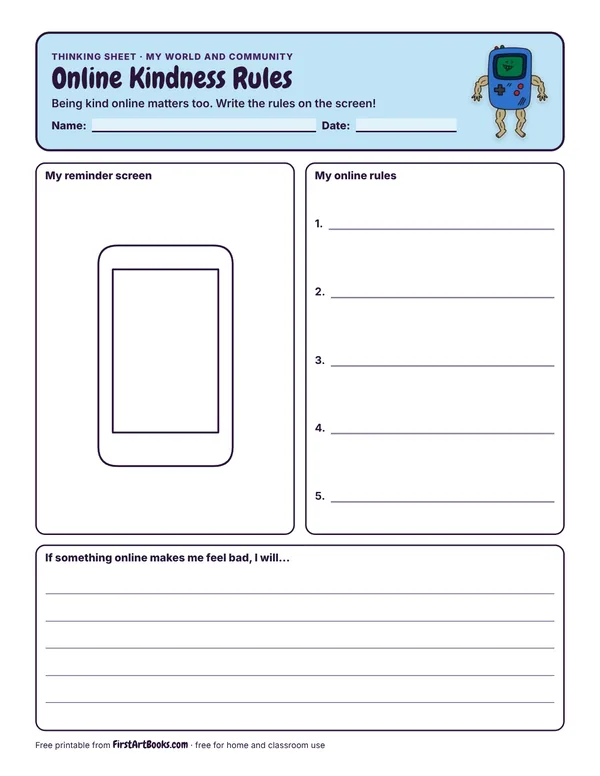
Write five rules for being kind and safe online and design a screen to remind you.
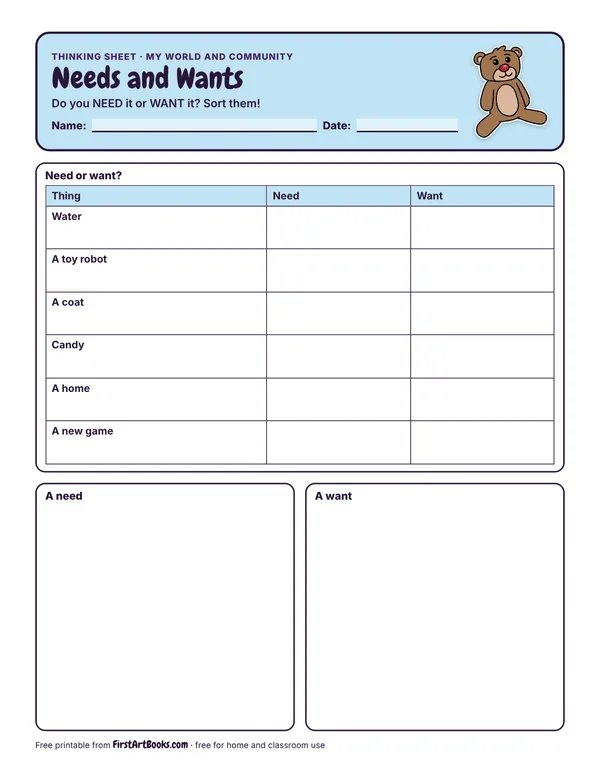
Sort things into needs and wants, then draw one of each that matters to you.
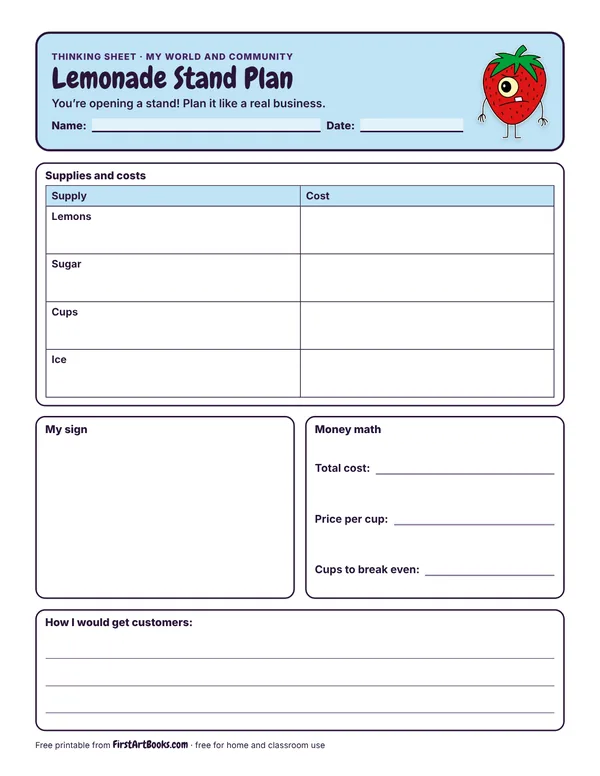
Plan a lemonade stand: supplies, costs, price and a sign. Will you make a profit?
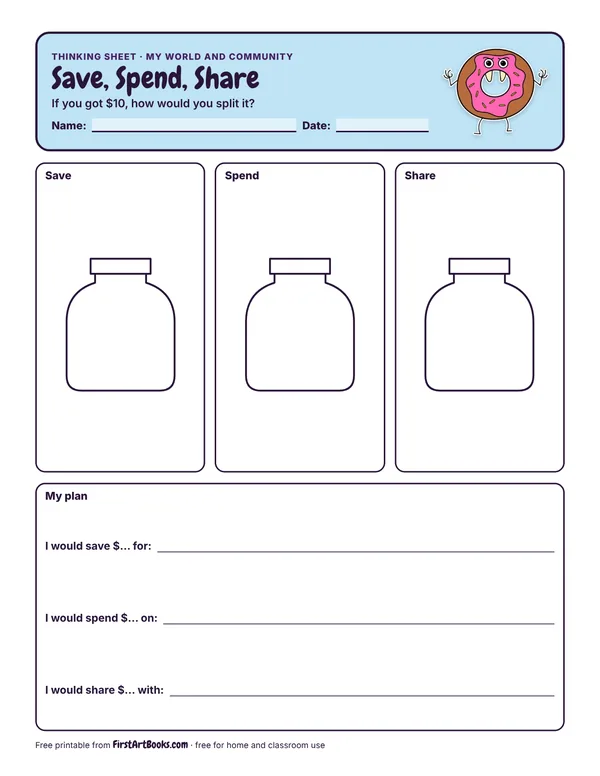
Decorate three jars and plan how you would split money between saving, spending and sharing.
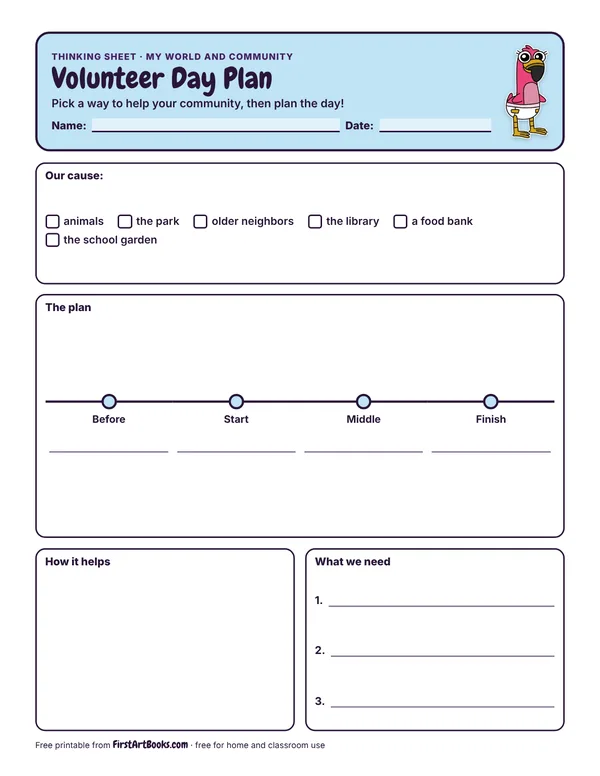
Pick a cause, plan a volunteer day step by step and draw how it will help.
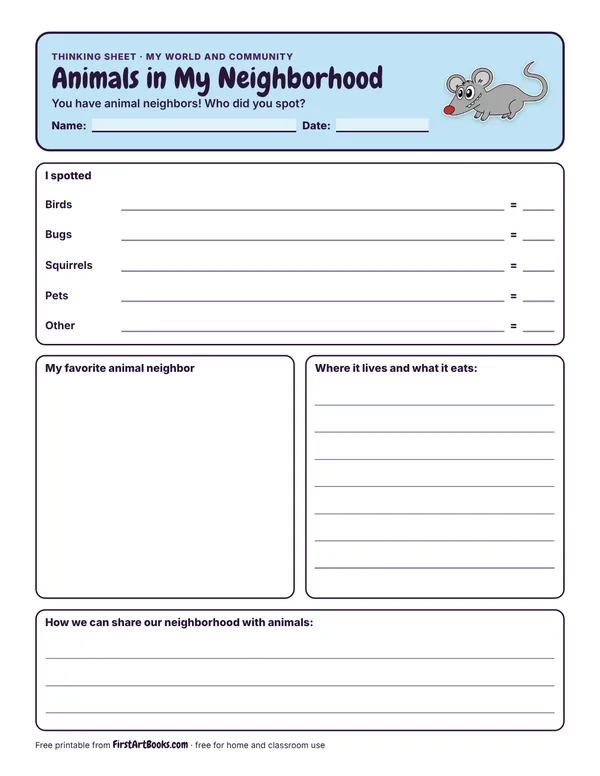
Spot the animals that share your neighborhood: birds, bugs, squirrels and pets. Tally and draw them.
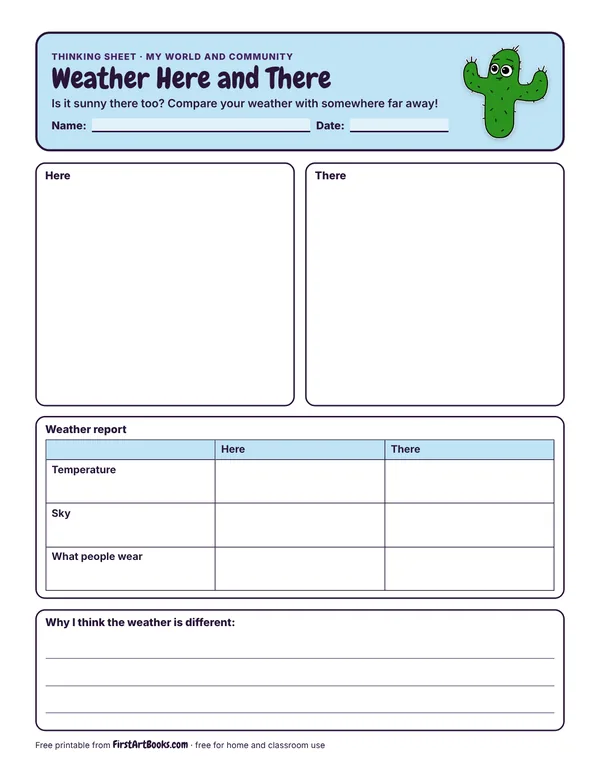
Compare today’s weather where you live with a faraway place, then draw both.
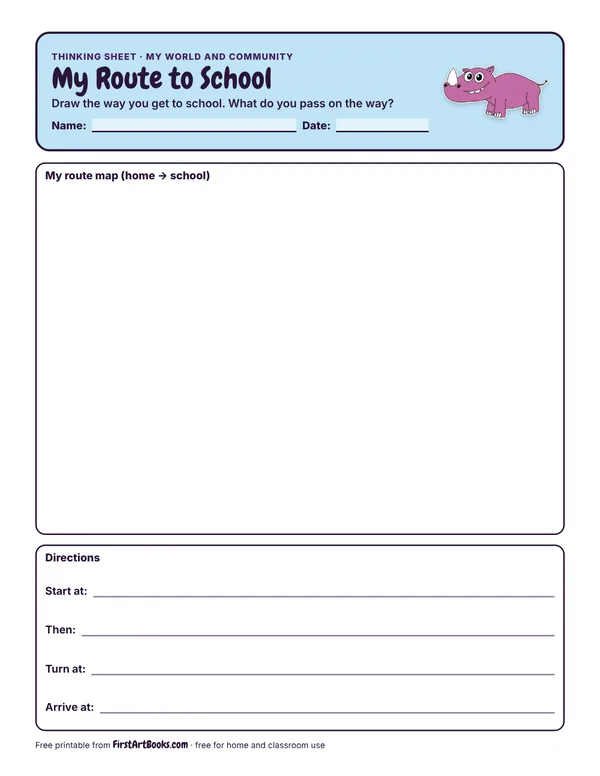
Map your trip to school with landmarks, turns and a start and finish.
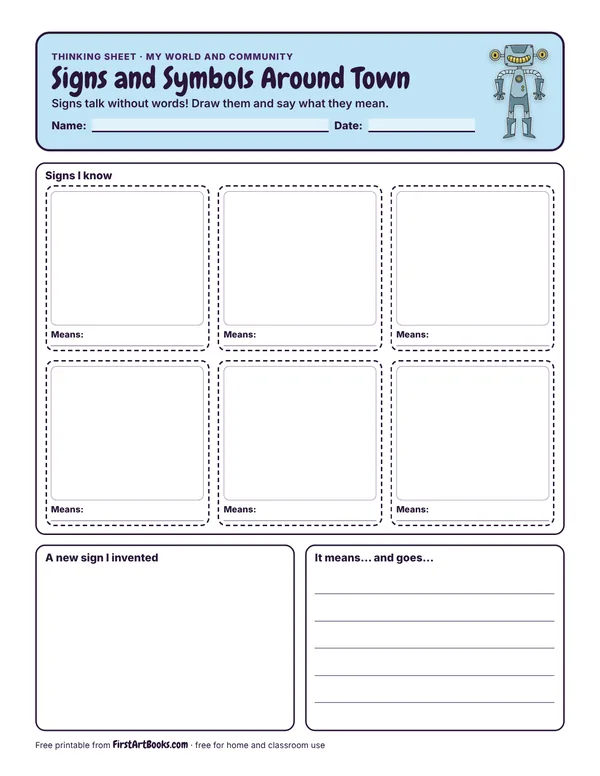
Draw six signs you see around town, say what they mean, then invent a new one.
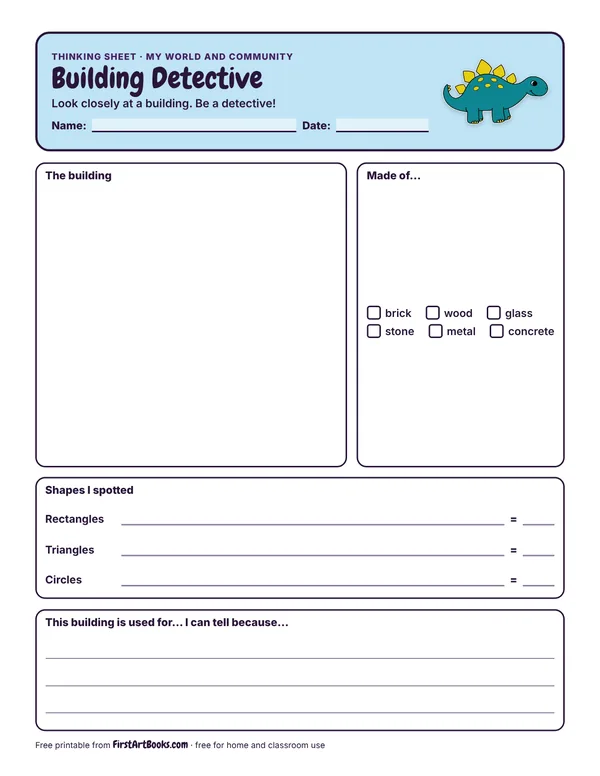
Study a building near you: what is it made of, what shapes can you find and what is it for?
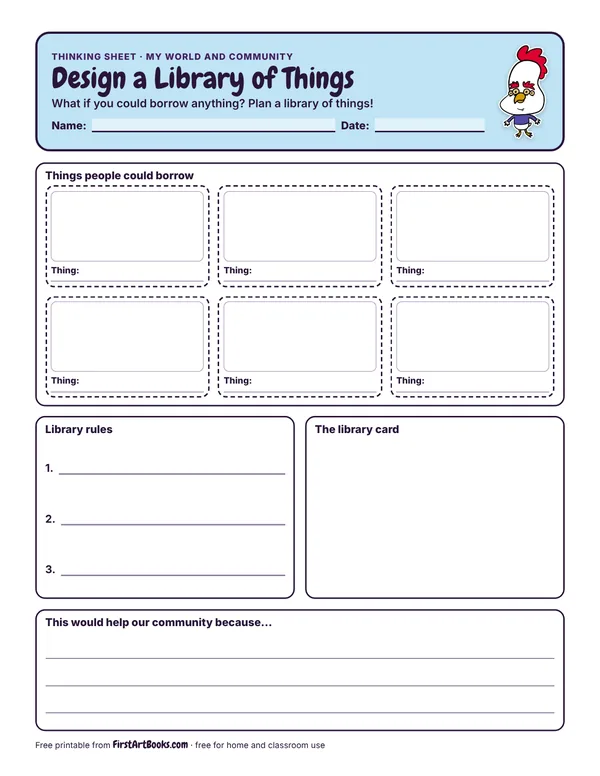
Libraries lend books, but some lend tools, games and instruments too. Plan one for your community.
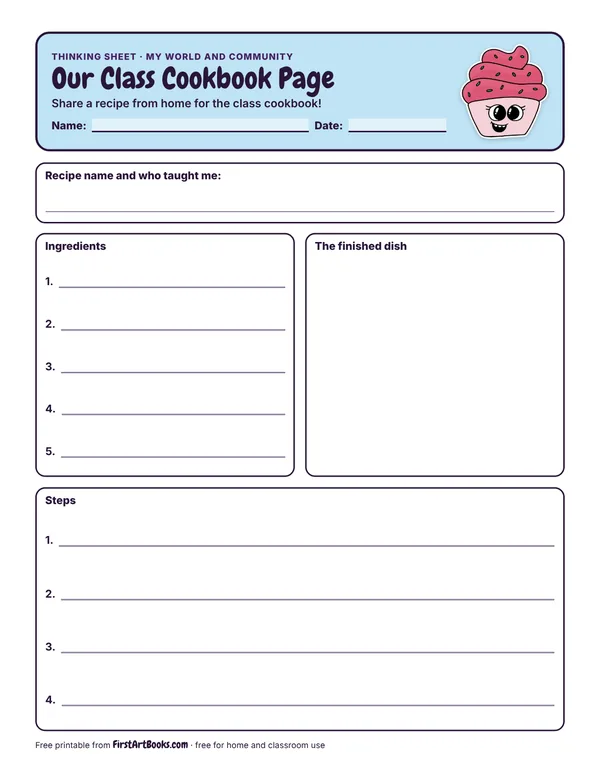
Share a recipe your family loves for a class cookbook: ingredients, steps and a picture.
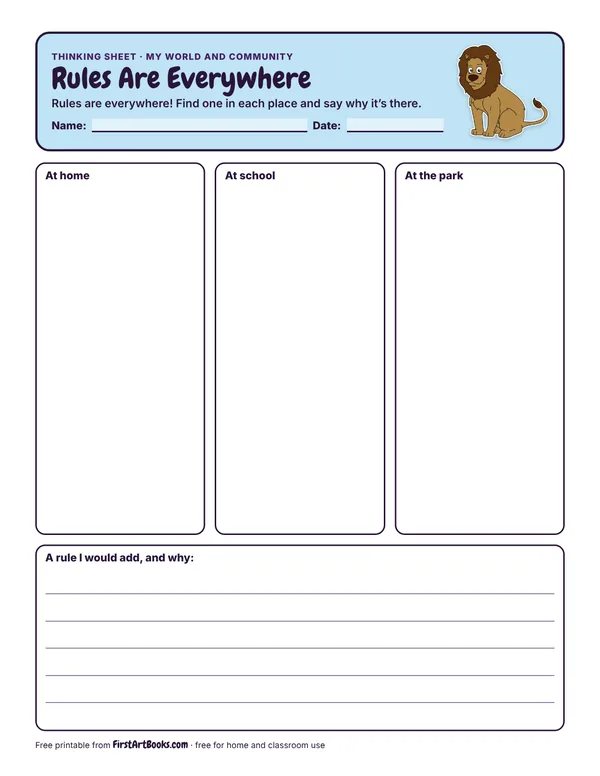
Find a rule at home, at school and at the park. Why does each one exist?
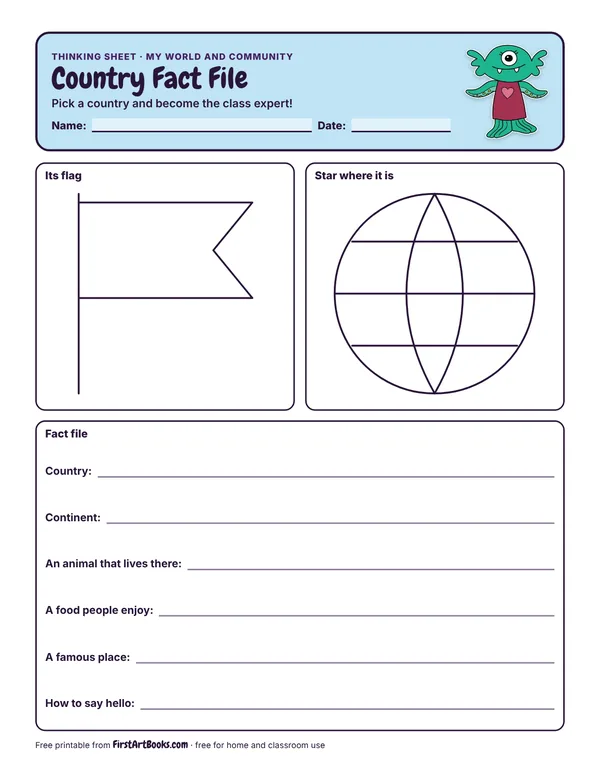
Research a country and fill a fact file: its flag, an animal, a food, a landmark and a greeting.
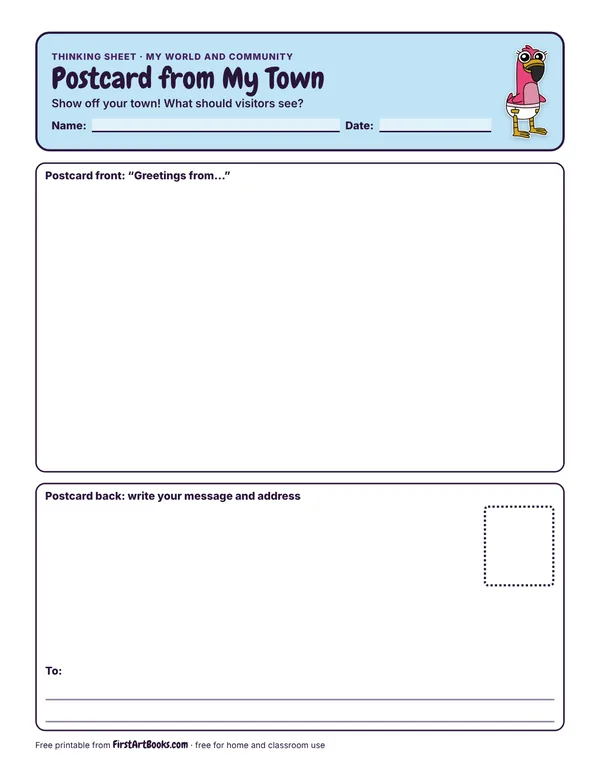
Design a tourist postcard that shows off the best of your town, then write it to someone far away.
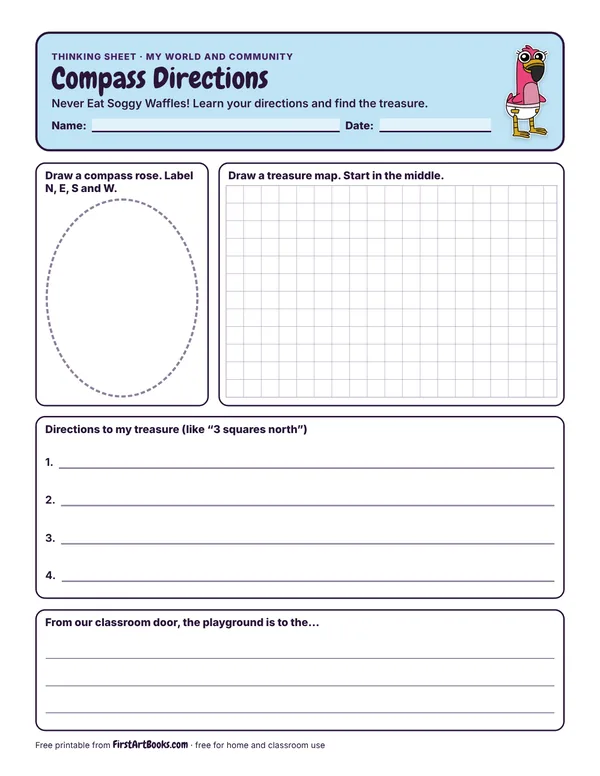
Label a compass rose, then follow north, south, east and west directions to move a character around a grid.
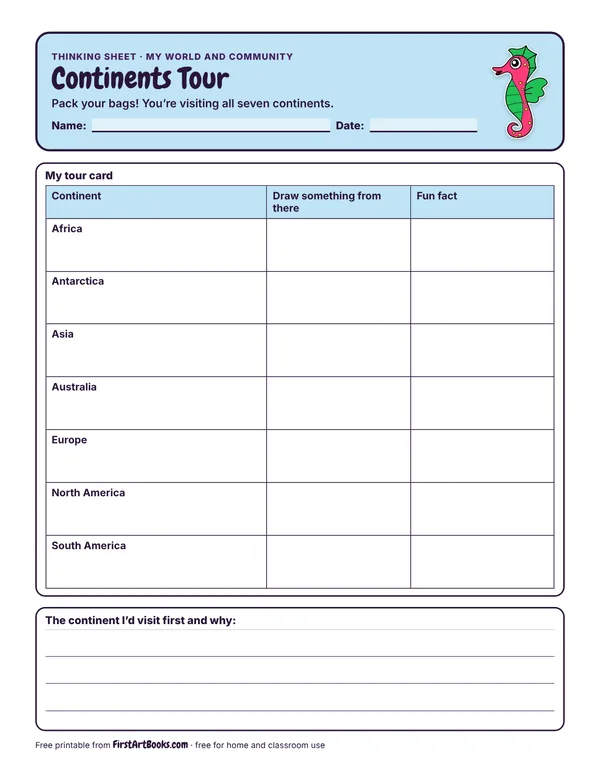
Visit all seven continents. Draw one animal, one landmark or one food from each on your tour card.
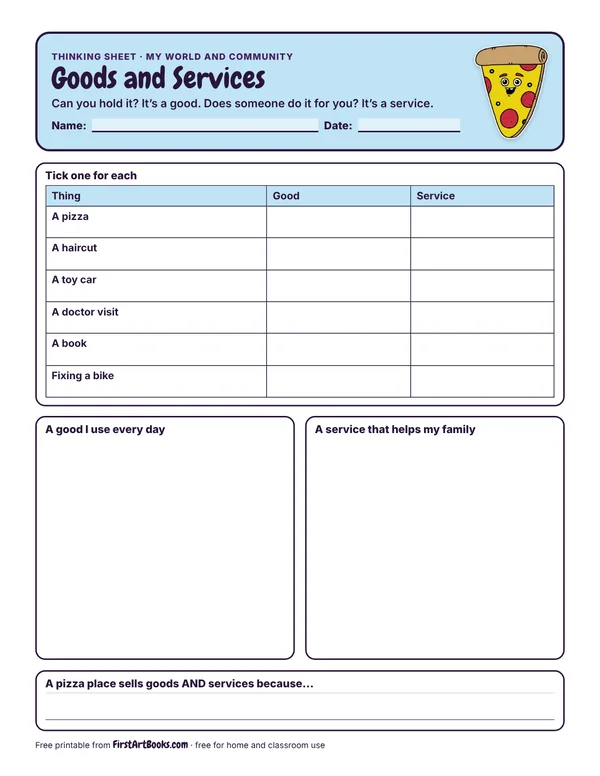
Goods are things you can hold. Services are jobs people do for you. Sort examples and find both in your town.
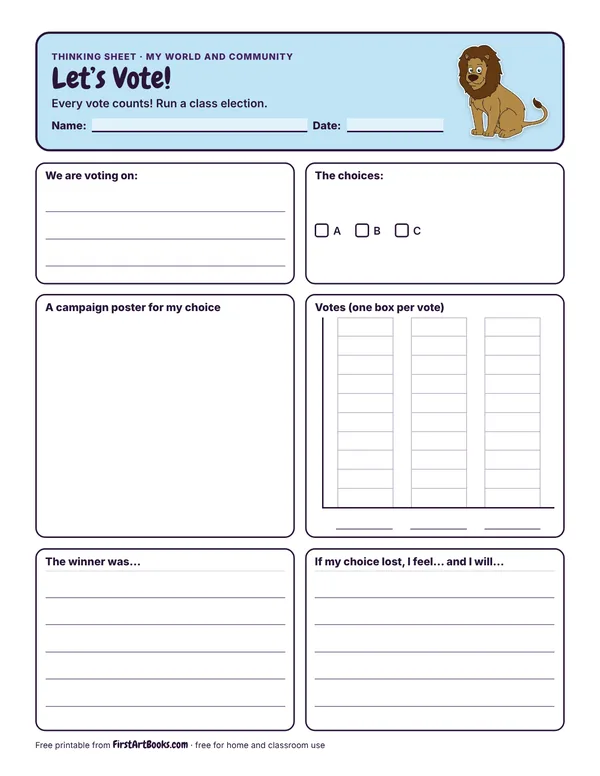
Hold a class vote: make the ballot, make a campaign poster, count the votes and talk about fair results.
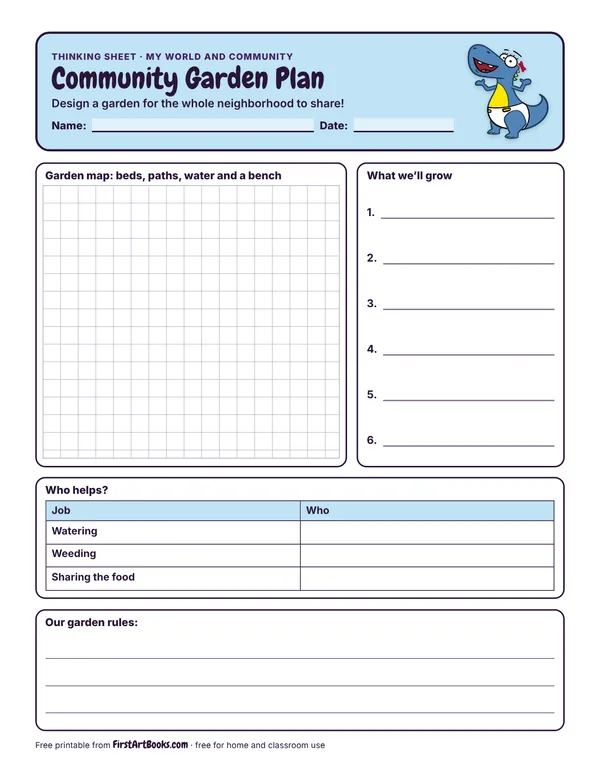
Plan a garden your whole neighborhood can share: beds, paths, a bench and who takes care of what.
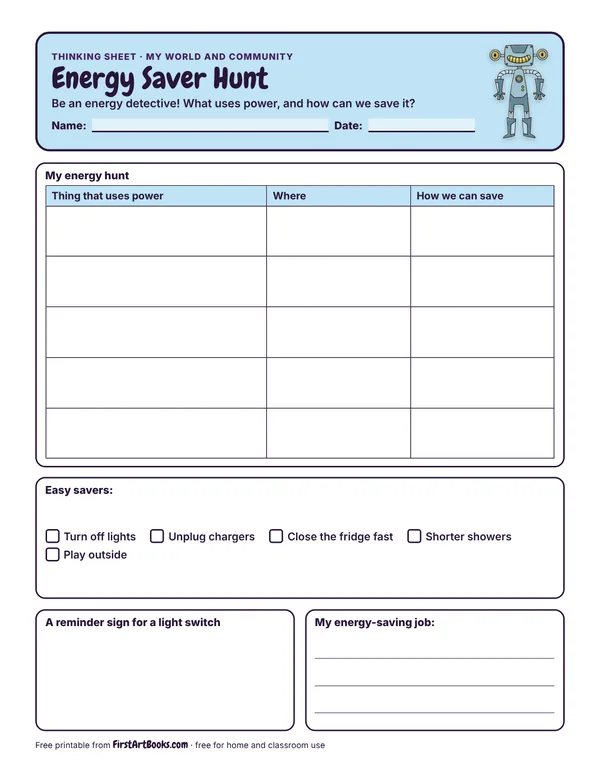
Hunt for things that use electricity at home or school, and find a way to save energy with each one.
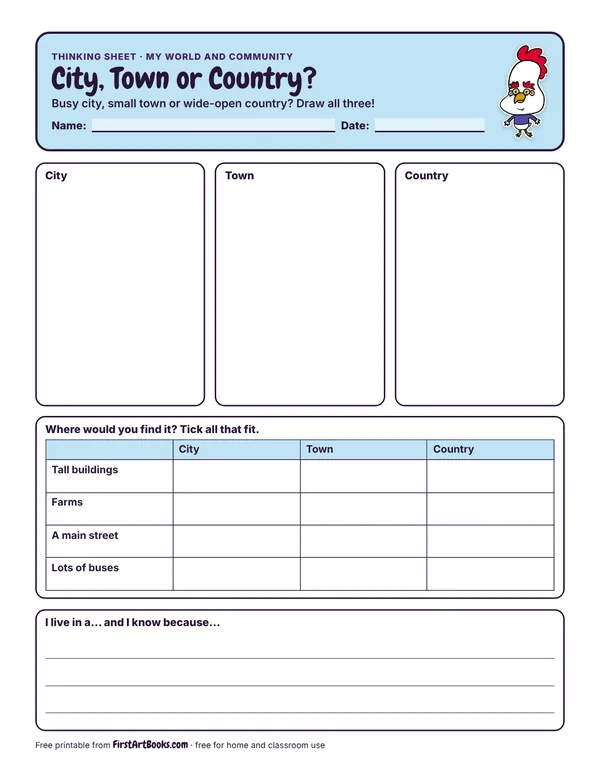
Compare life in a big city, a small town and the countryside. Draw each one and decide where you live.
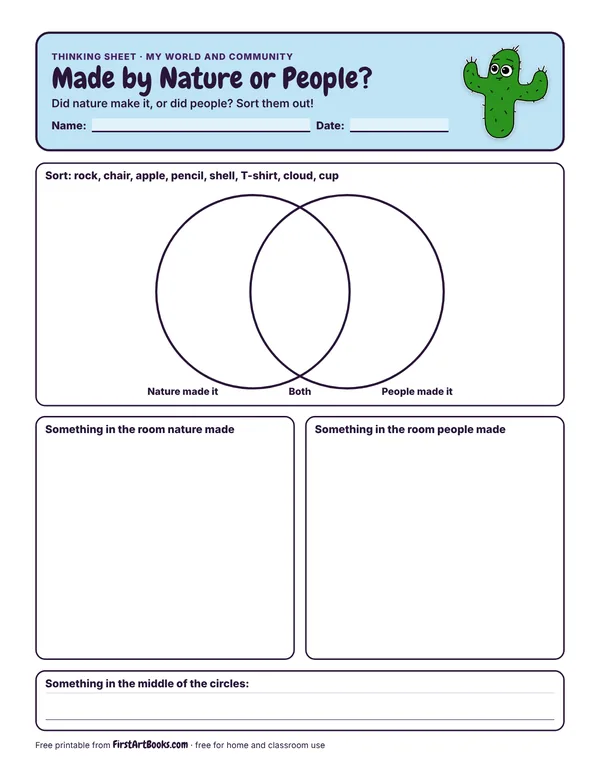
Sort a rock, a chair, a shell, a pencil and more into made by nature and made by people, then find one of each in the room.
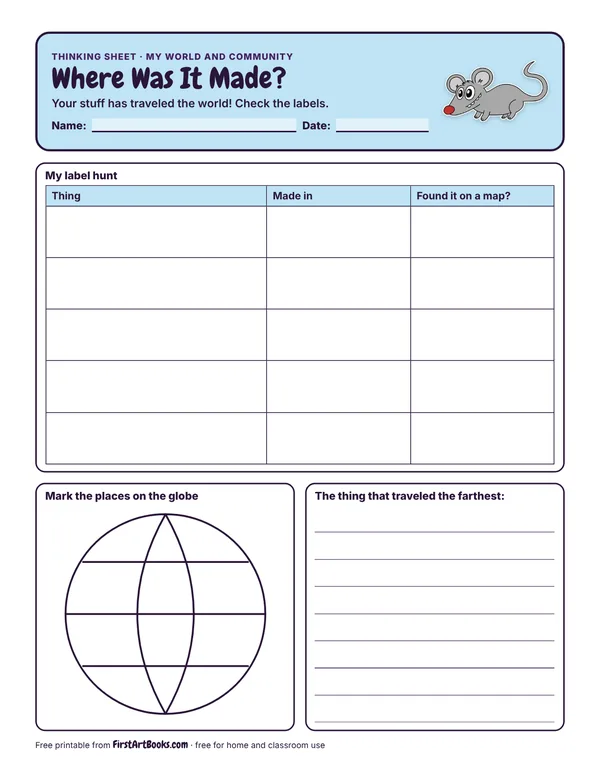
Check the tags and labels on five things at home or school, write where each was made and find the places on a map.
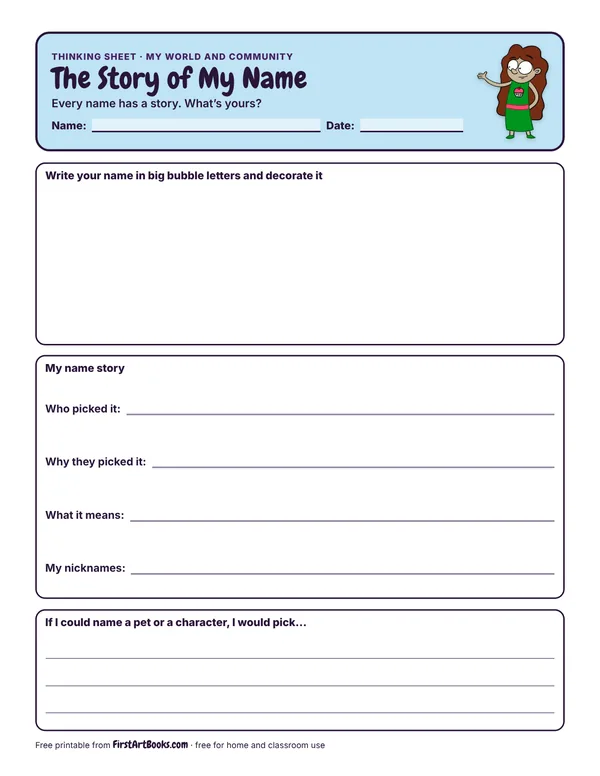
Ask your family how you got your name, what it means and any nicknames, then decorate your name in bubble letters.
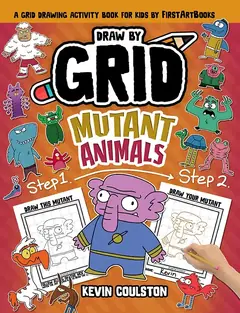
A thinking sheet is a single printable page that asks a child to think something through on paper: look closely at a picture, name a feeling, plan a drawing, invent a creature or explain an idea. Drawing comes first, so kids who aren’t confident writers can still show what they think. Older kids add sentences, labels and lists.
Every sheet here is original to FirstArtBooks and links to free drawing lessons and books on the same theme.
Practice line, shape and color, and look at art the way artists do.
Ready-to-go sheets for fall, winter, spring, summer and the days kids count down to.
Mazes, codes, logic and drawing games that stretch the brain.
Maps, jobs, neighbors, money and caring for the places we share.
All sheets are US Letter, print well in black and white, and are free for home and classroom use. More for teachers: the lesson plan builder, early-finisher cards, the drawing guides and Story Studio for story writing.
12 printable pages: six step-by-step lessons, a grid activity, draw-and-write sheets and teacher notes, sent with your welcome email. After that, new classroom printables by email.