



K–5th grade
My Daily Visual Schedule
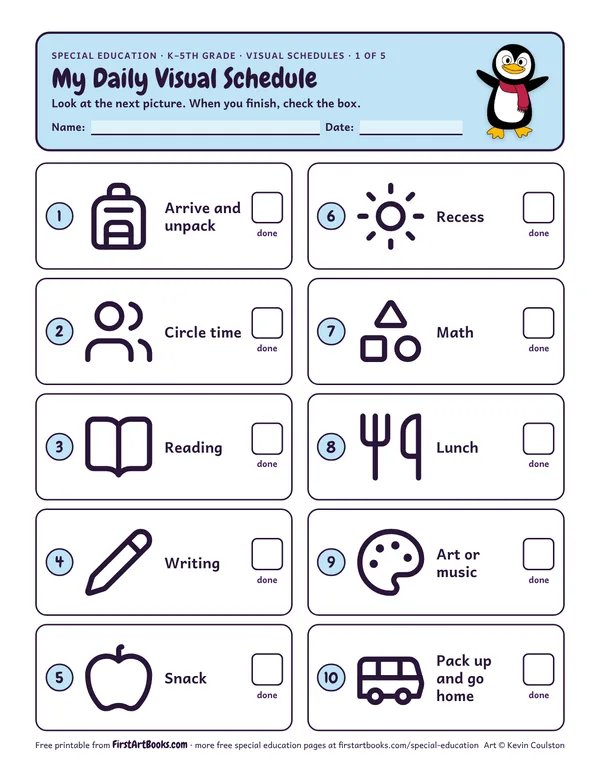
A picture schedule for a school day, from arriving to going home, with a done box after each step.
Print this sheet (PDF)Teacher notes and tips50 free printables for special education classrooms, resource rooms, therapy and home, in 10 topics: visual schedules, adapted work, fine motor, social stories, calm-down supports, communication boards, token boards, life skills, functional skills and IEP tools. Big pictures, short words and one of Kevin Coulston’s cartoon characters on every page.
Picture schedules for the school day and home routines, a First/Then board and cut-apart schedule cards.
A picture schedule for a school day, from arriving to going home, with a done box after each step.
Print this sheet (PDF)Teacher notes and tips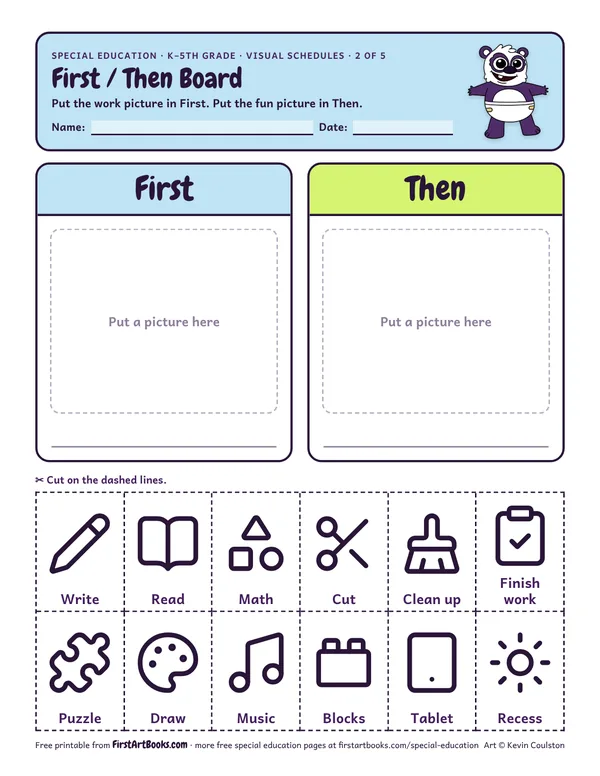
A big First/Then board with work and reward picture cards to cut out and stick on with tape or Velcro.
Print this sheet (PDF)Teacher notes and tips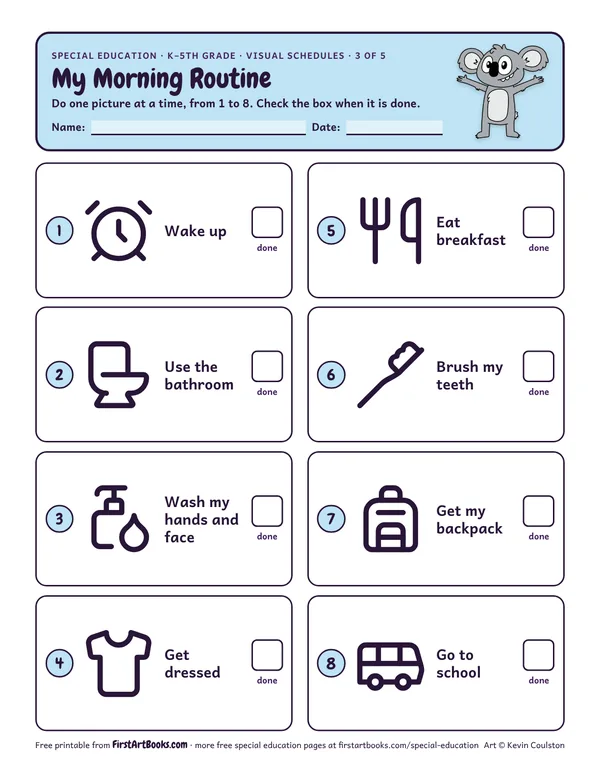
Eight picture steps for getting ready at home: wake up, bathroom, wash, dress, eat, brush teeth, backpack, go.
Print this sheet (PDF)Teacher notes and tips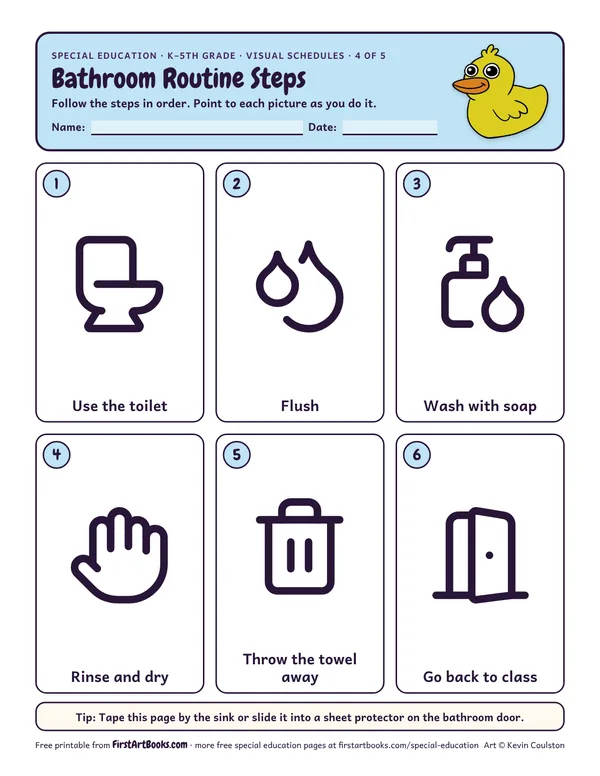
Six picture steps to post by the bathroom: use the toilet, flush, wash with soap, rinse, dry and go back to class.
Print this sheet (PDF)Teacher notes and tips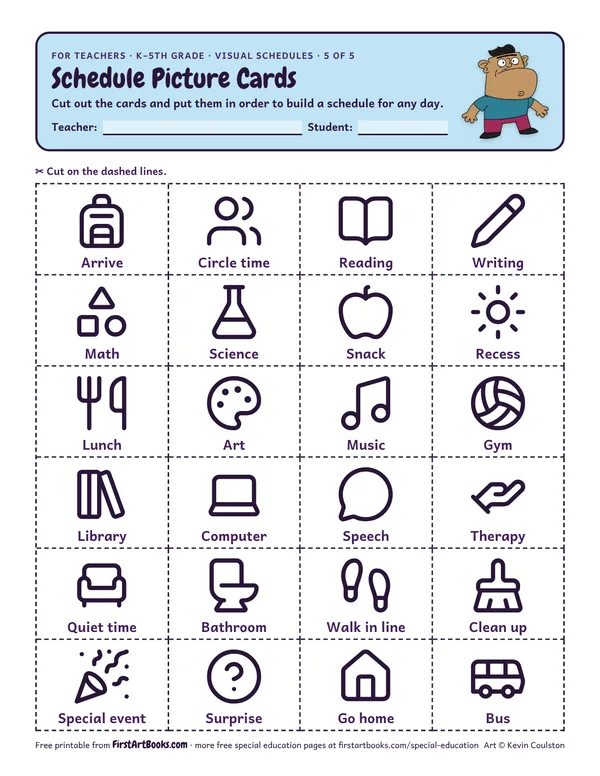
24 cut-apart picture cards for school activities, specials and transitions, to build a schedule strip.
Print this sheet (PDF)Teacher notes and tips

Big, clear picture matching, sorting and finding the same, with a few answers per page and answer keys.
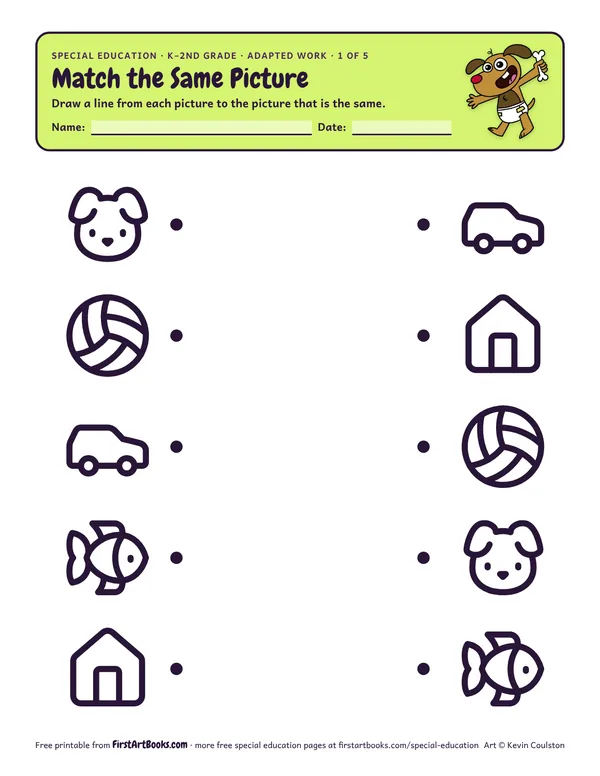
Five big pictures to match to the same picture: a dog, a ball, a car, a fish and a house.
Print this sheet (PDF)Teacher notes and tips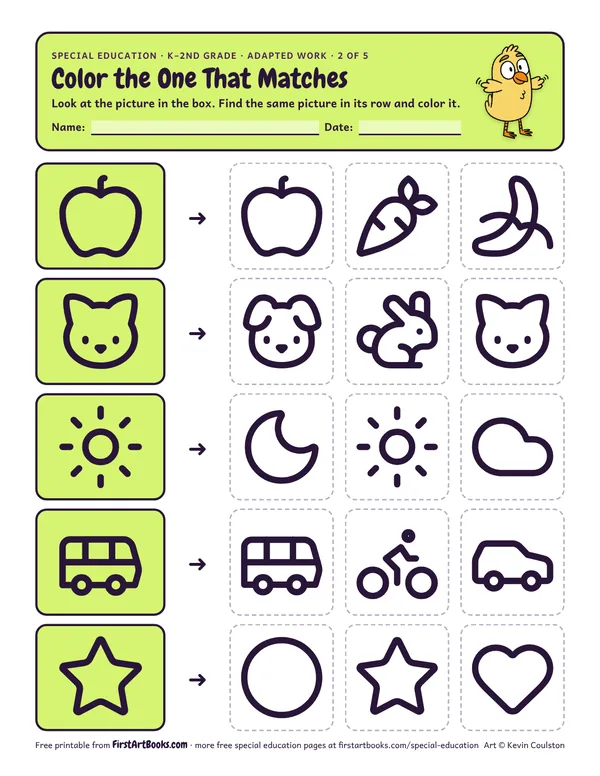
Five rows: look at the picture in the box and color the same one from three choices.
Print this sheet (PDF)Teacher notes and tips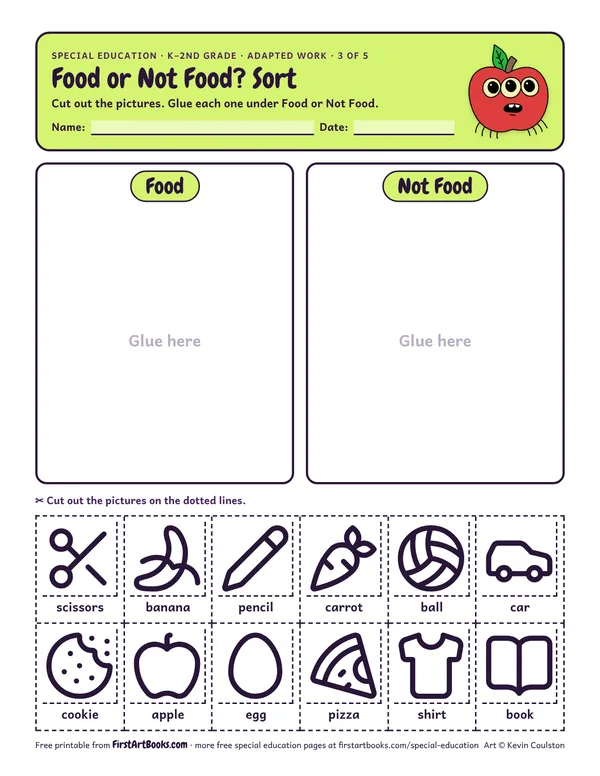
A cut-and-glue picture sort with twelve pictures: six foods and six things you cannot eat.
Print this sheet (PDF)Teacher notes and tips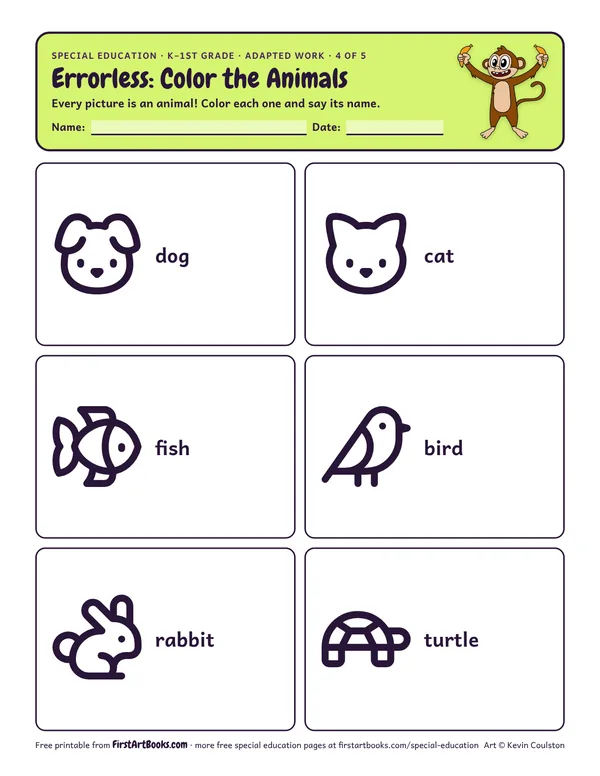
An errorless page: all six pictures are animals, so every choice is right. Color them and name them.
Print this sheet (PDF)Teacher notes and tips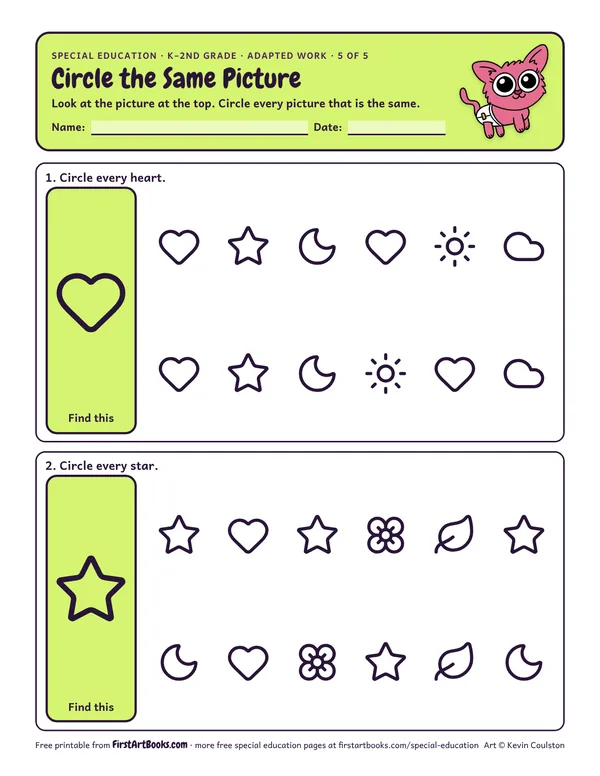
Find and circle the four hearts and the four stars hiding among other pictures.
Print this sheet (PDF)Teacher notes and tips

Trace lines and curves, cut along strips, connect dots to 10 and follow wide paths.
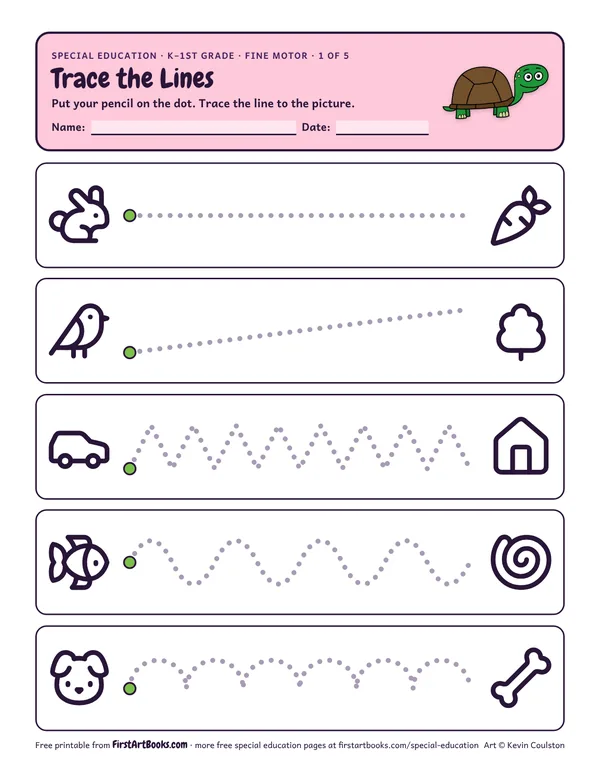
Five tracing paths from picture to picture: straight, slanted, zigzag, wavy and bumpy lines.
Print this sheet (PDF)Teacher notes and tips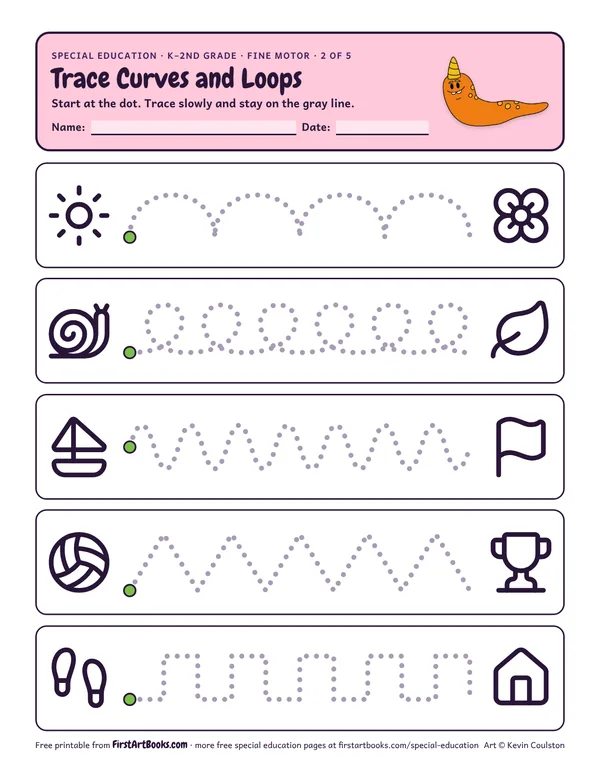
Five rows of harder tracing: arches, loops, tight waves, tall peaks and steps, from picture to picture.
Print this sheet (PDF)Teacher notes and tips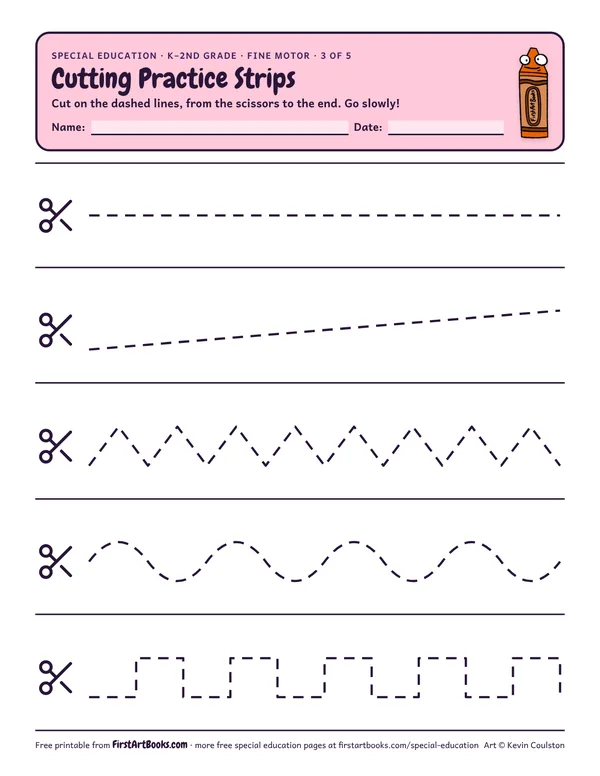
Five cutting strips that get harder: straight, slanted, zigzag, wavy and step lines across the page.
Print this sheet (PDF)Teacher notes and tips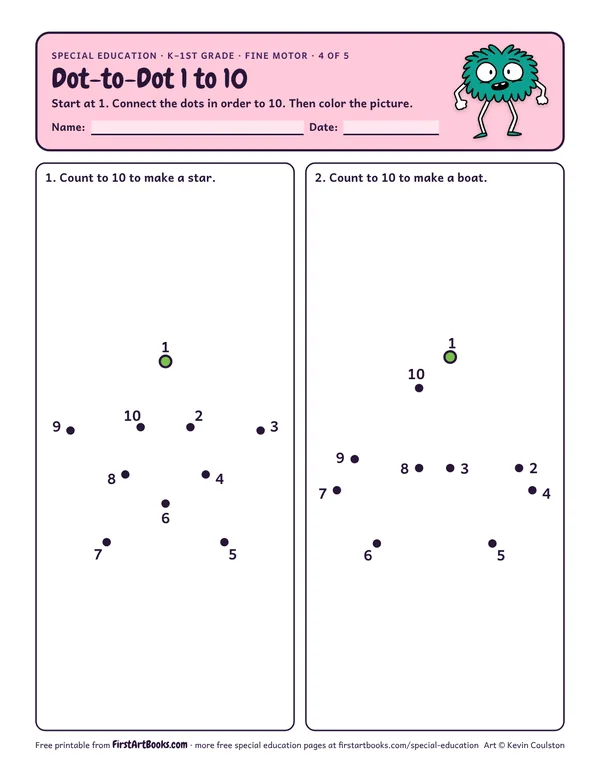
Two big dot-to-dots that count from 1 to 10: a star and a sailboat, then color them in.
Print this sheet (PDF)Teacher notes and tips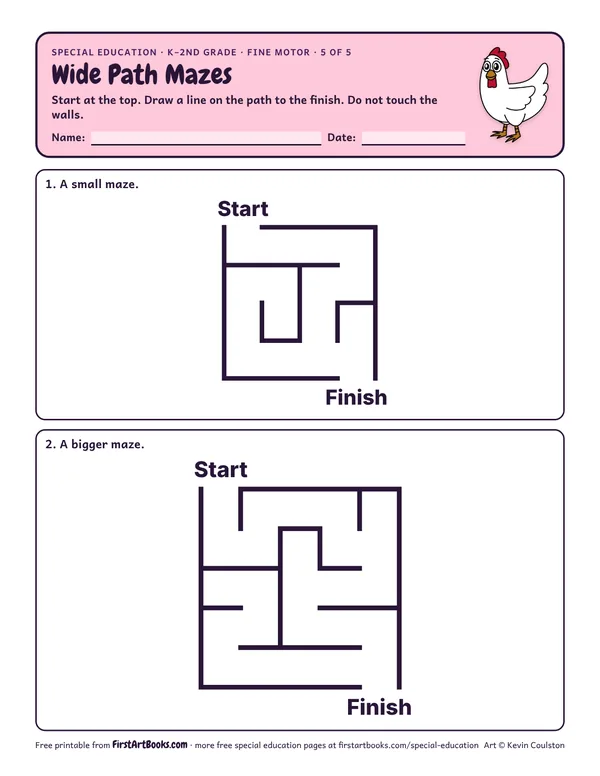
Two small mazes with wide paths for steady pencil control: a 4 by 4 maze and a 5 by 5 maze.
Print this sheet (PDF)Teacher notes and tips

Breathing shapes, a feelings check-in, break cards, a calm-down menu and a sensory helper plan.
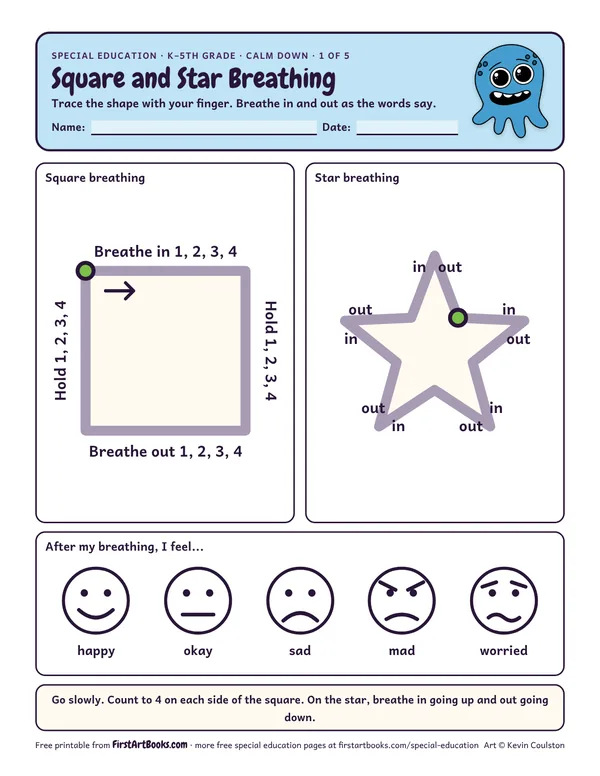
Two breathing shapes to trace with a finger: square breathing (in, hold, out, hold) and star breathing, then a feelings check.
Print this sheet (PDF)Teacher notes and tips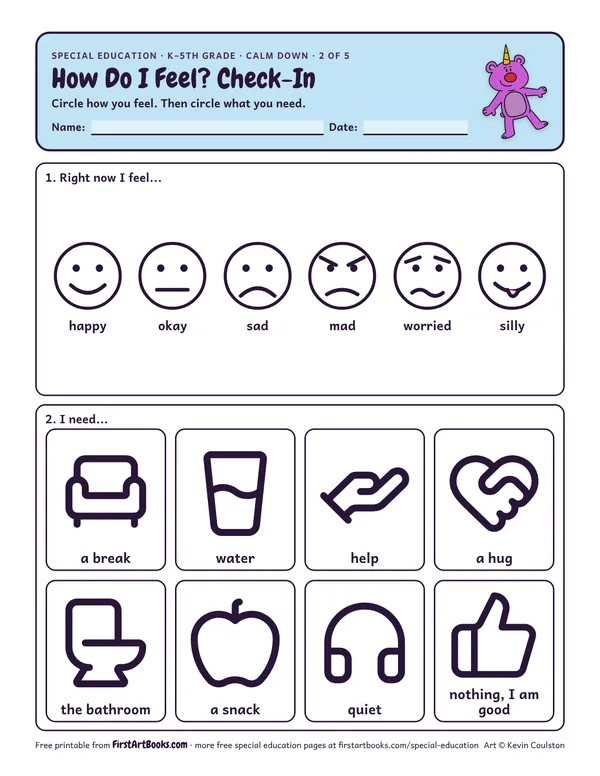
A picture check-in: circle a feeling face, then circle what would help, like a break, water, help or a hug.
Print this sheet (PDF)Teacher notes and tips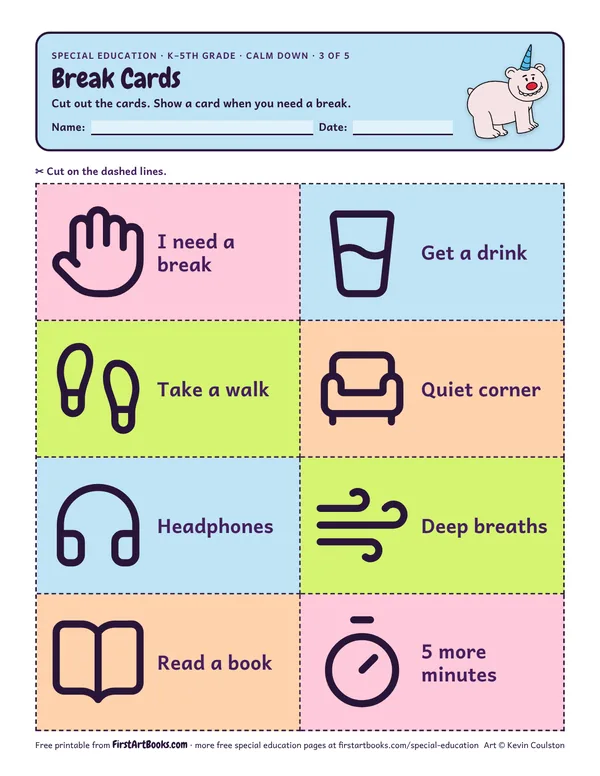
Eight big cut-apart break cards: I need a break, get a drink, take a walk, quiet corner and more.
Print this sheet (PDF)Teacher notes and tips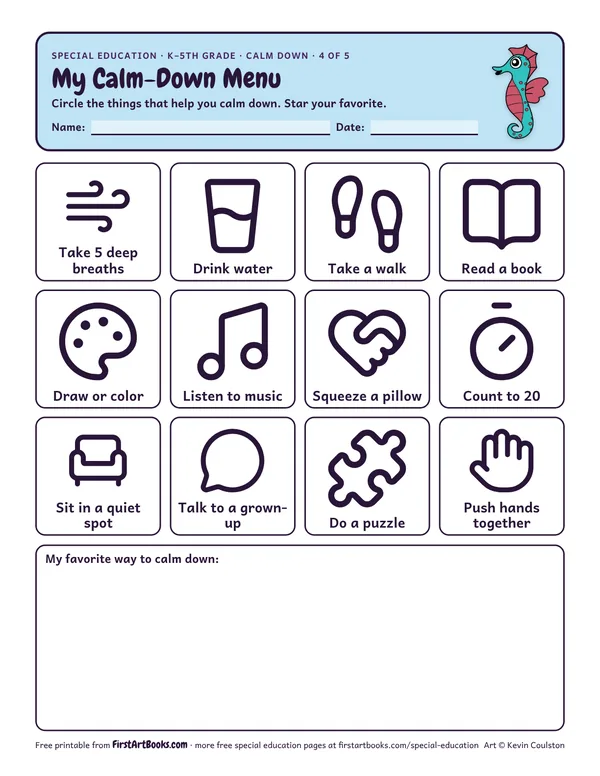
Twelve calm-down choices with pictures to circle, plus a box to draw your favorite way to calm down.
Print this sheet (PDF)Teacher notes and tips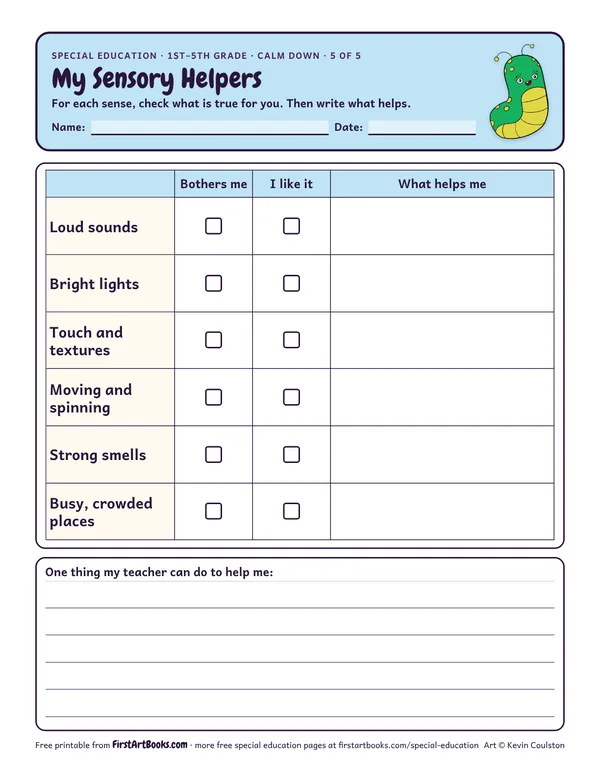
A sensory plan: sounds, lights, touch, moving and smells, what bothers me or what I like, and what helps.
Print this sheet (PDF)Teacher notes and tips

A core word board, “I need” cards, choice boards and a desk strip for yes, no, help and break.
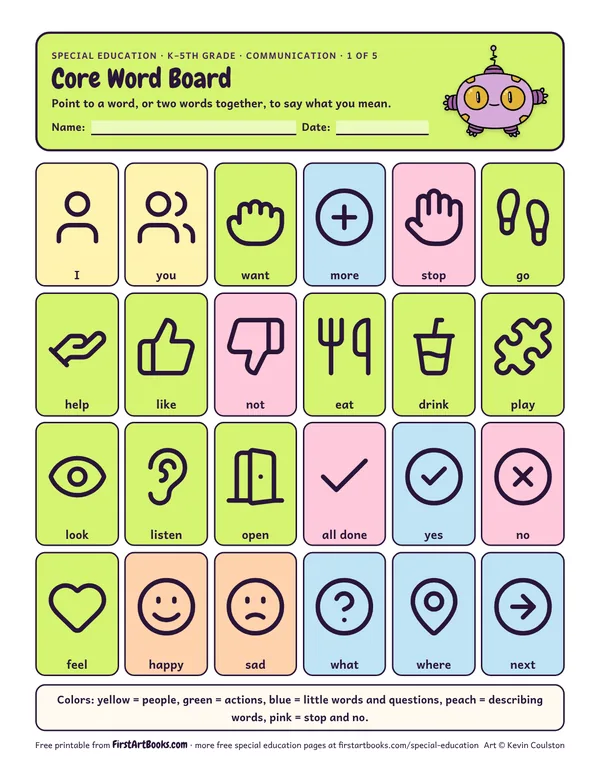
A 24-word core vocabulary board with pictures, colored by kind of word, to point to and build short phrases.
Print this sheet (PDF)Teacher notes and tips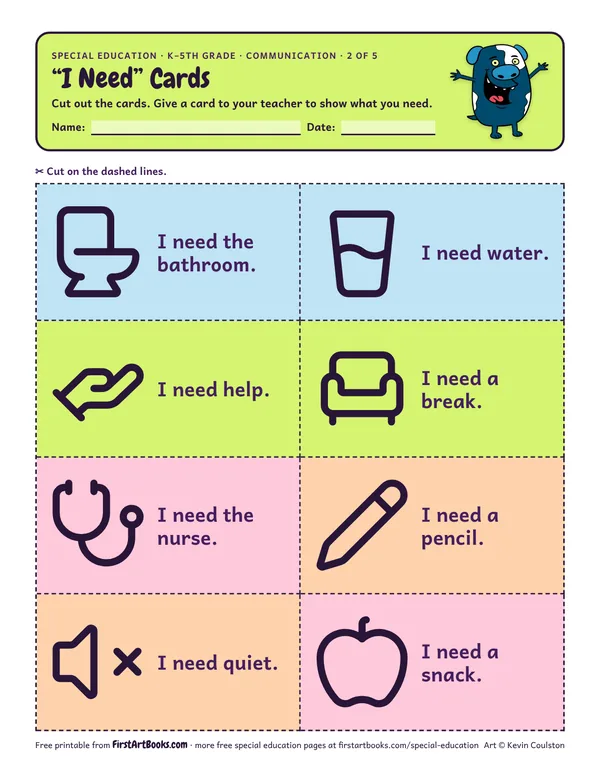
Eight big cut-apart cards to ask for the bathroom, water, help, a break, the nurse, a pencil, quiet and a snack.
Print this sheet (PDF)Teacher notes and tips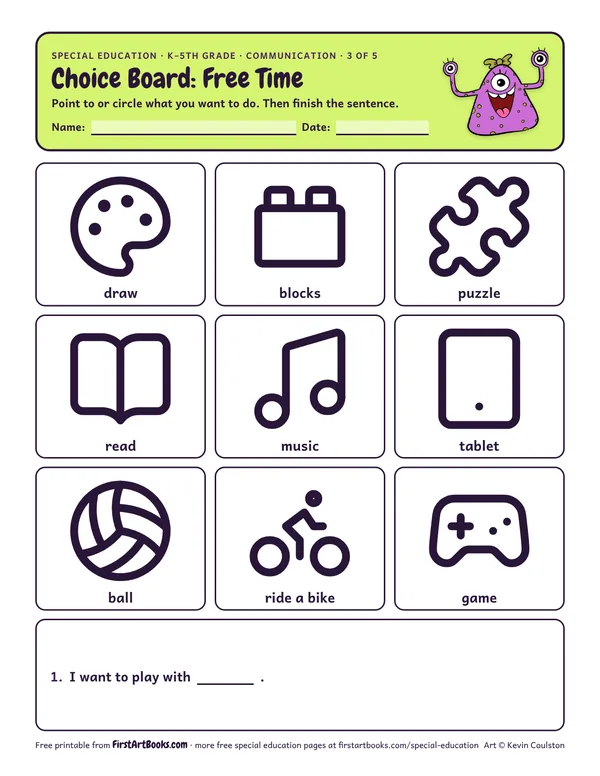
A free-time choice board with nine activities to point to, and an “I want ___” sentence strip.
Print this sheet (PDF)Teacher notes and tips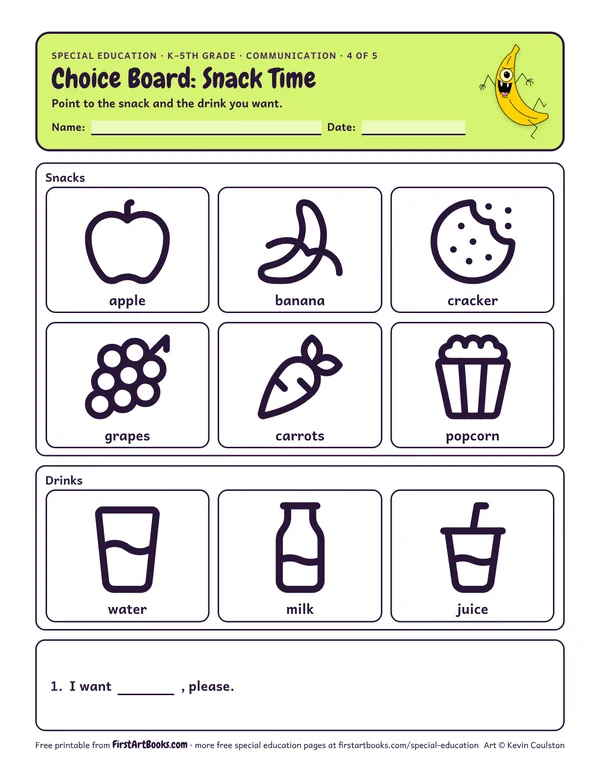
A snack-time choice board with six snacks and three drinks to point to, plus “I want ___, please.”
Print this sheet (PDF)Teacher notes and tips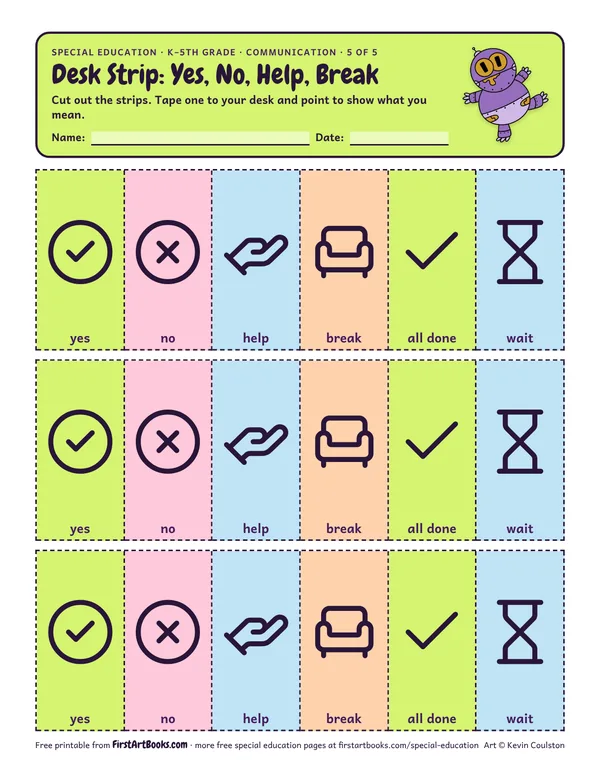
Three cut-apart desk strips with six big buttons each: yes, no, help, break, all done and wait.
Print this sheet (PDF)Teacher notes and tips

3, 5 and 10 token boards, a daily sticker chart and a reward menu to pick what to work for.
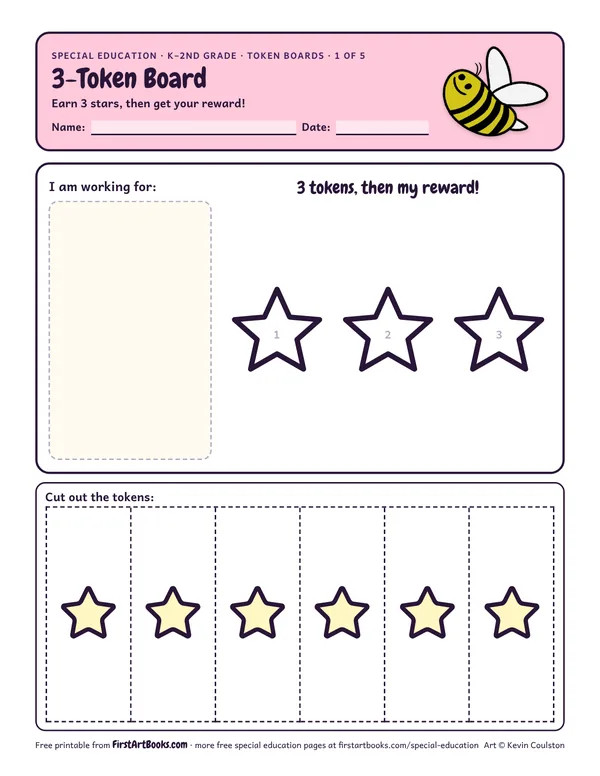
A first token board with three big stars to color or cover, and a box for the reward picture.
Print this sheet (PDF)Teacher notes and tips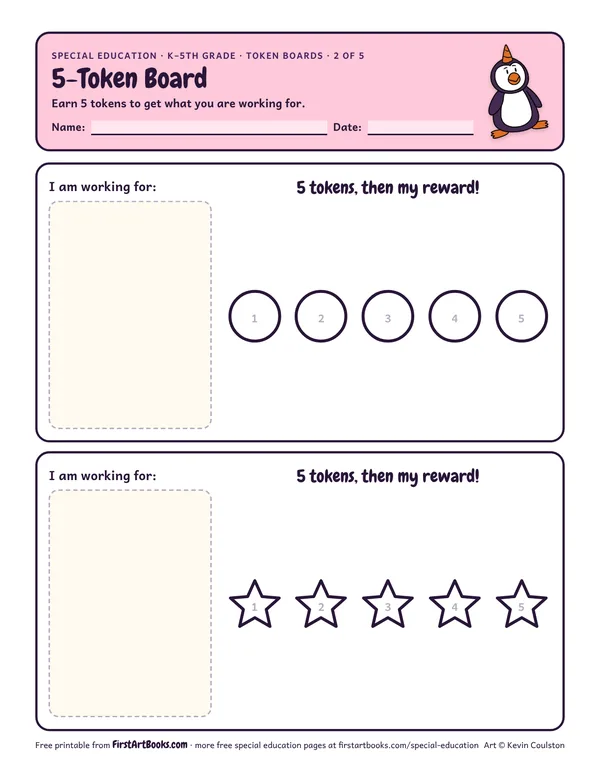
Two 5-token boards on one page: draw or glue the reward, then color a circle for each token earned.
Print this sheet (PDF)Teacher notes and tips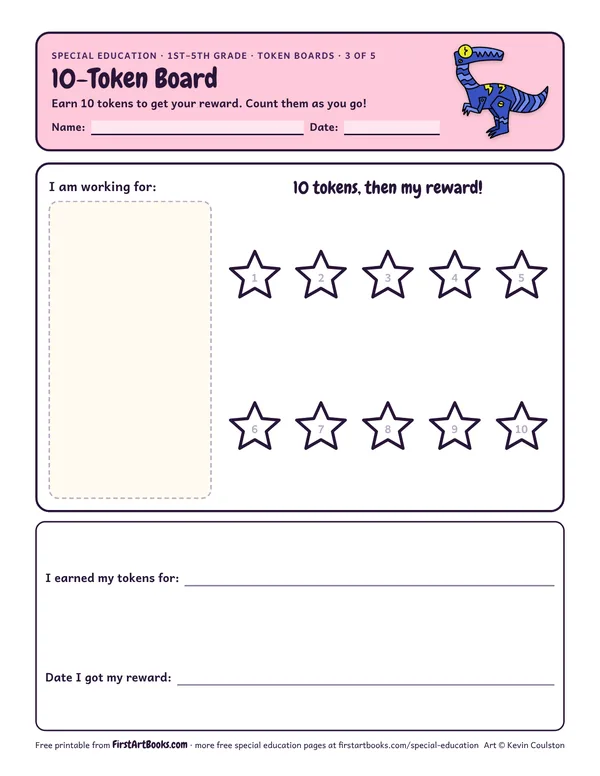
A 10-token board in two rows of five for longer goals, with an “I am working for” box.
Print this sheet (PDF)Teacher notes and tips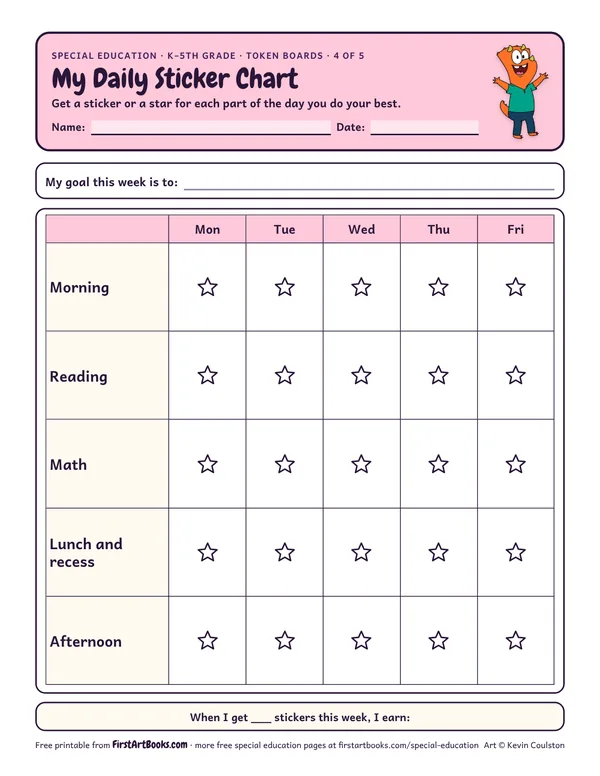
A week-long sticker chart: five parts of the school day by Monday to Friday, with a goal for the week.
Print this sheet (PDF)Teacher notes and tips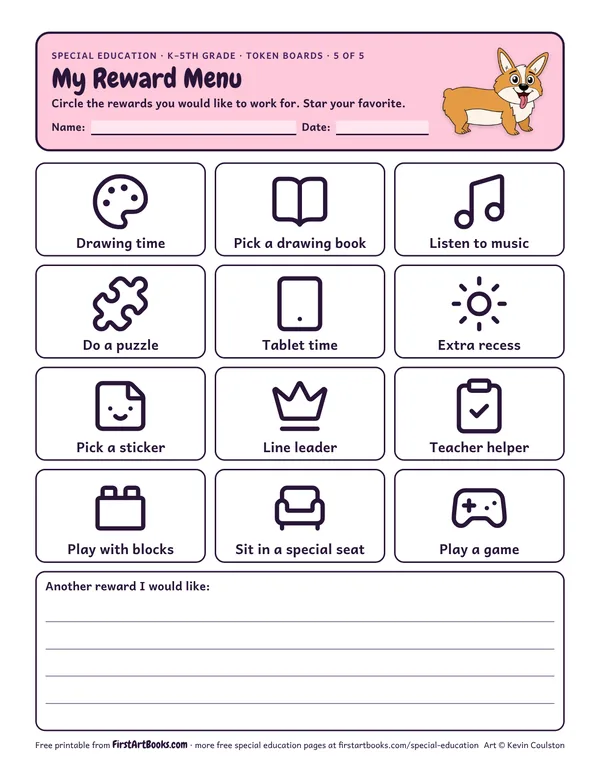
Twelve rewards with pictures to pick from, like drawing time, a drawing book, music, a helper job or extra recess.
Print this sheet (PDF)Teacher notes and tips

Handwashing and toothbrushing steps, safety signs, coins and telling time to the hour.
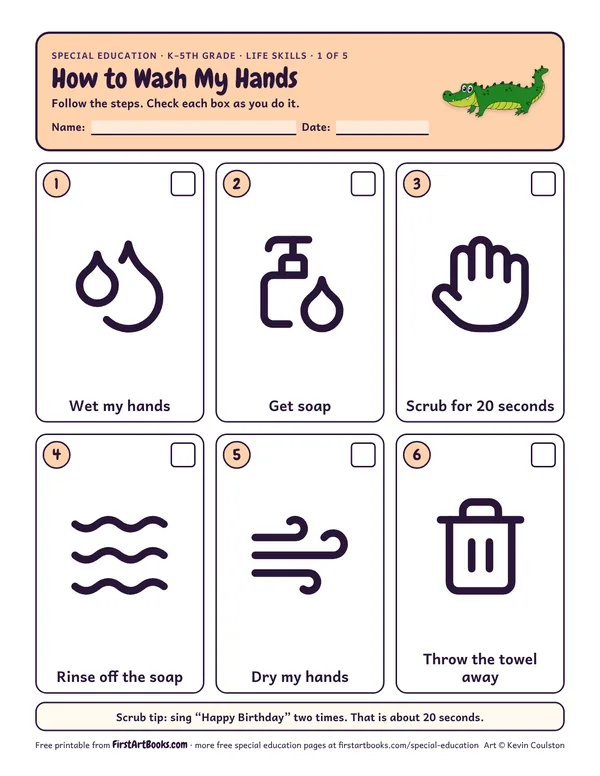
Six handwashing steps with pictures: wet, soap, scrub for 20 seconds, rinse, dry and throw the towel away.
Print this sheet (PDF)Teacher notes and tips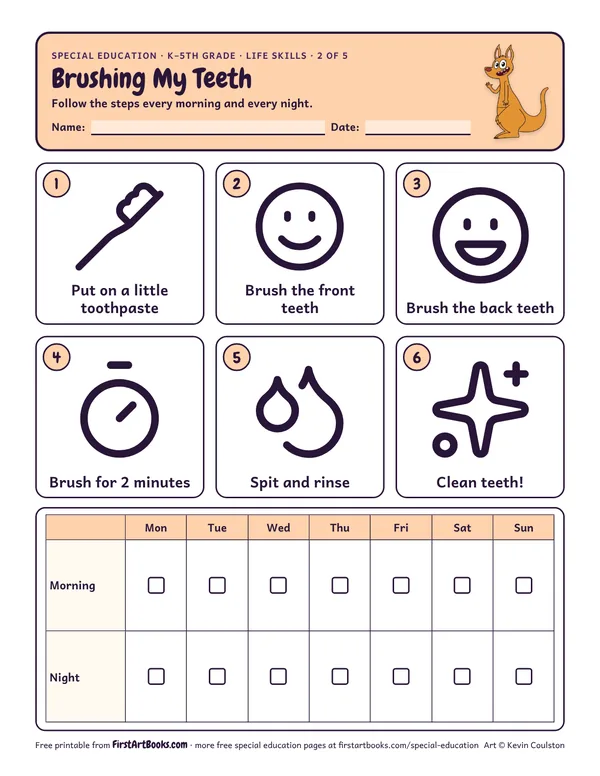
Six toothbrushing steps with pictures, from toothpaste to rinse, and a morning and night chart for the week.
Print this sheet (PDF)Teacher notes and tips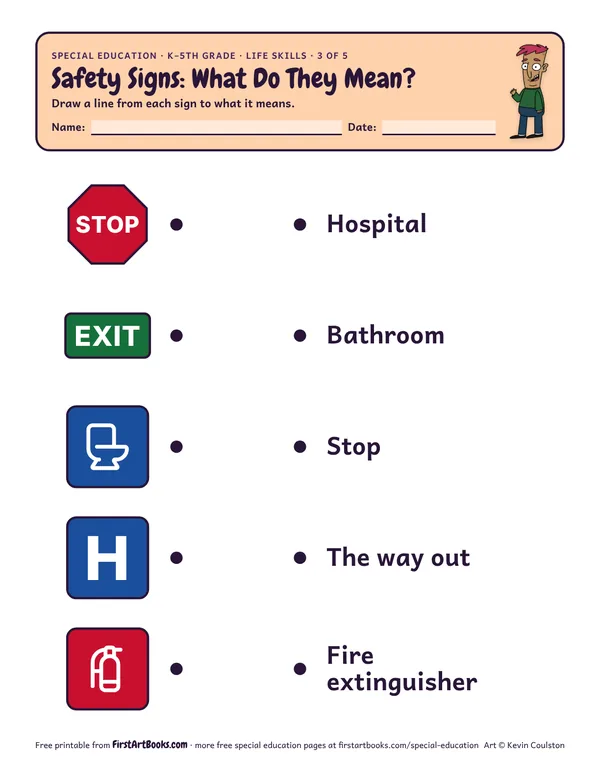
Match five signs kids see every day to their meaning: stop, exit, bathroom, hospital and fire extinguisher.
Print this sheet (PDF)Teacher notes and tips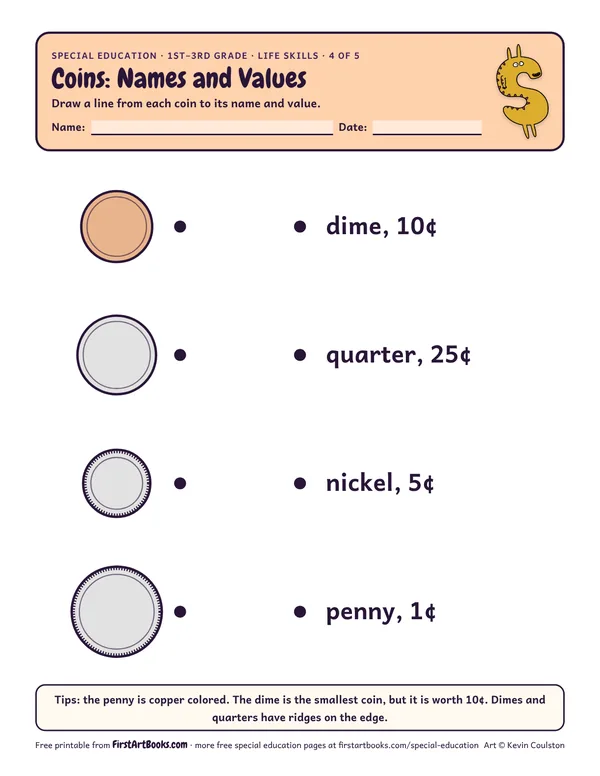
Match the penny, nickel, dime and quarter to their names and values in cents.
Print this sheet (PDF)Teacher notes and tips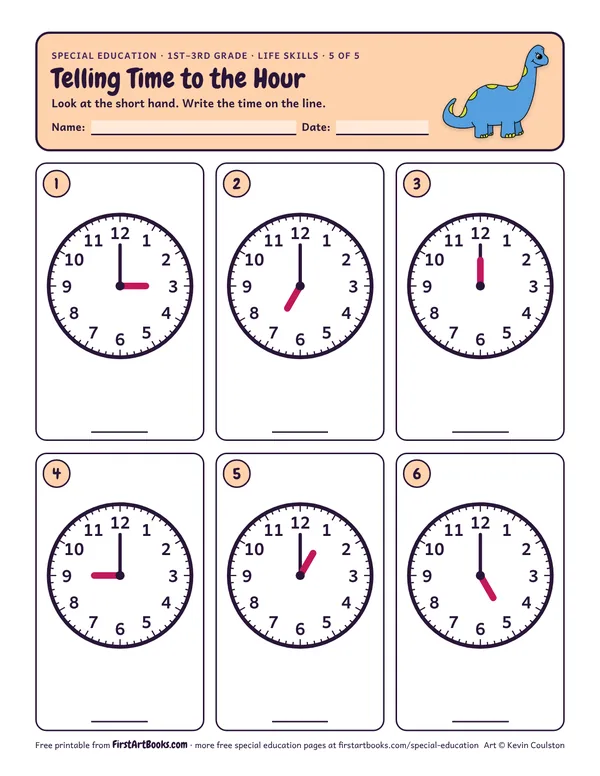
Six clocks set to the hour: read the short hand and write the time, like 3:00.
Print this sheet (PDF)Teacher notes and tips

Places in the community, counting to 10, a picture shopping list, a picture recipe and paying with pennies.
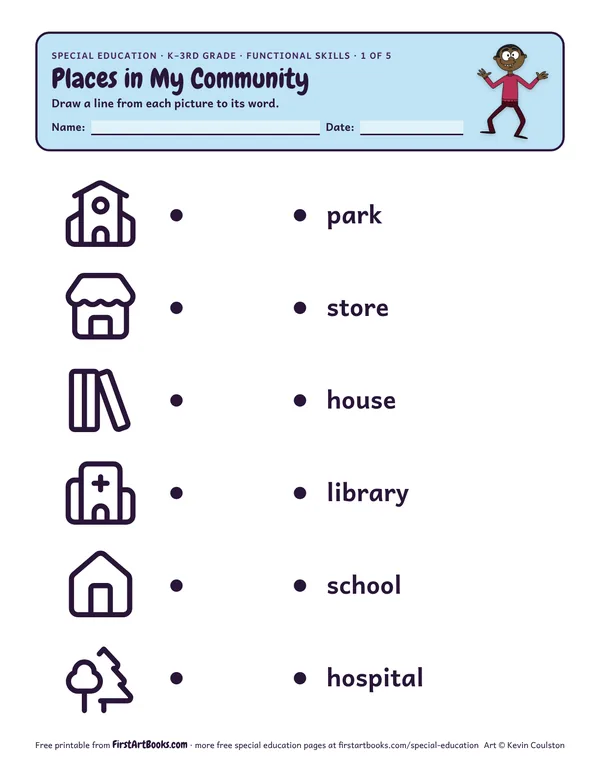
Match six community places to their words: school, store, library, hospital, house and park.
Print this sheet (PDF)Teacher notes and tips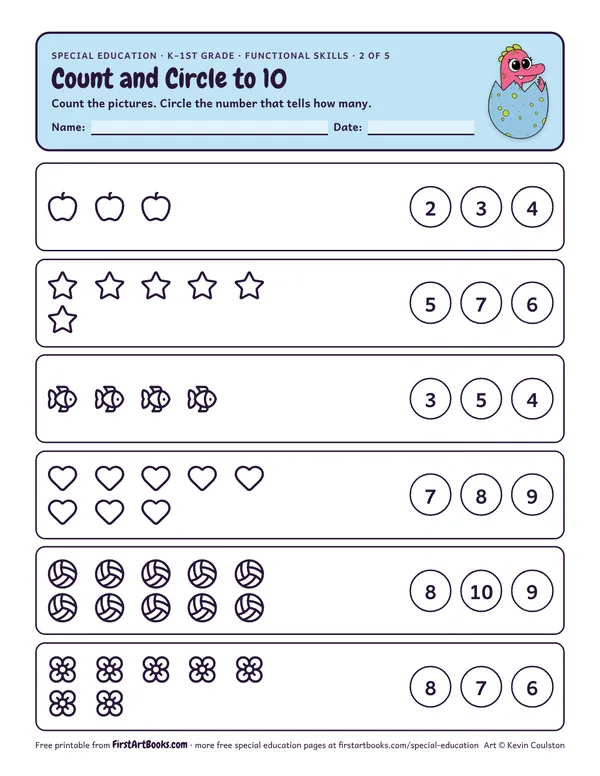
Six rows to count from 2 to 10 pictures and circle the right number from three choices.
Print this sheet (PDF)Teacher notes and tips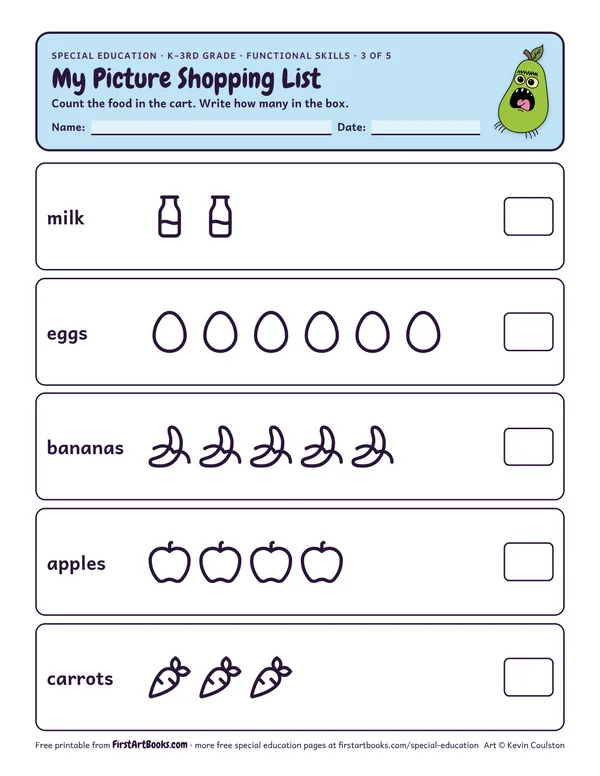
A picture shopping list: count the milk, eggs, bananas, apples and carrots in the cart and write how many.
Print this sheet (PDF)Teacher notes and tips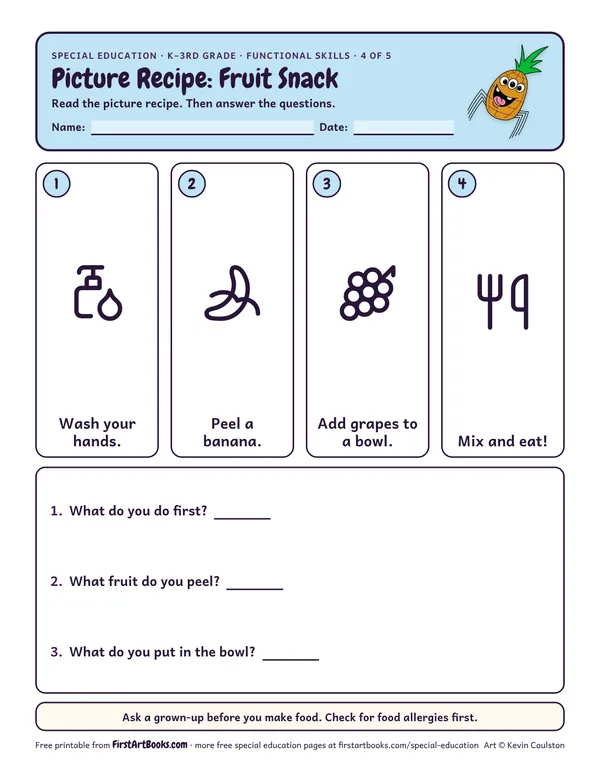
A four-step picture recipe for a fruit snack, then three questions about the steps. With a grown-up only.
Print this sheet (PDF)Teacher notes and tips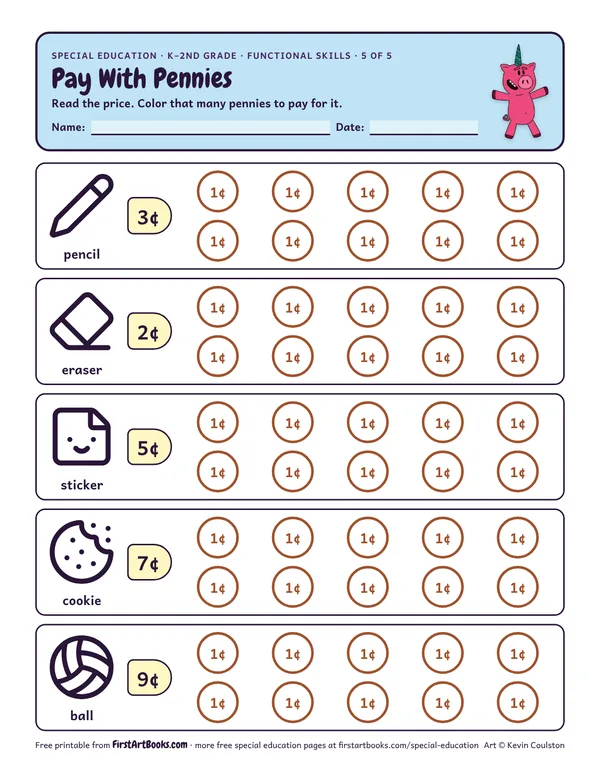
Five things with prices from 2¢ to 9¢: color the right number of pennies to pay for each one.
Print this sheet (PDF)Teacher notes and tips

An IEP goal tracker, ABC behavior data, a student profile, a family contact log and a daily home note.
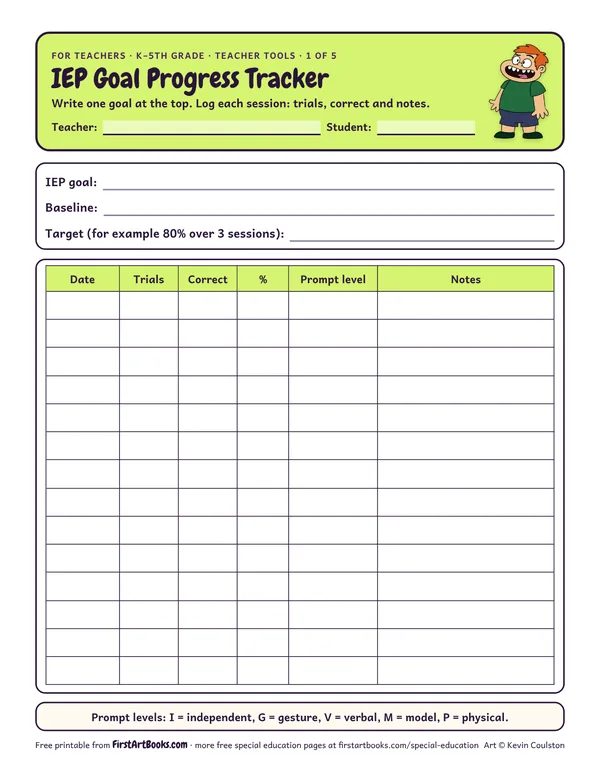
Track one IEP goal: the goal and baseline, then date, trials, number correct, percent and prompt level for each session.
Print this sheet (PDF)Teacher notes and tips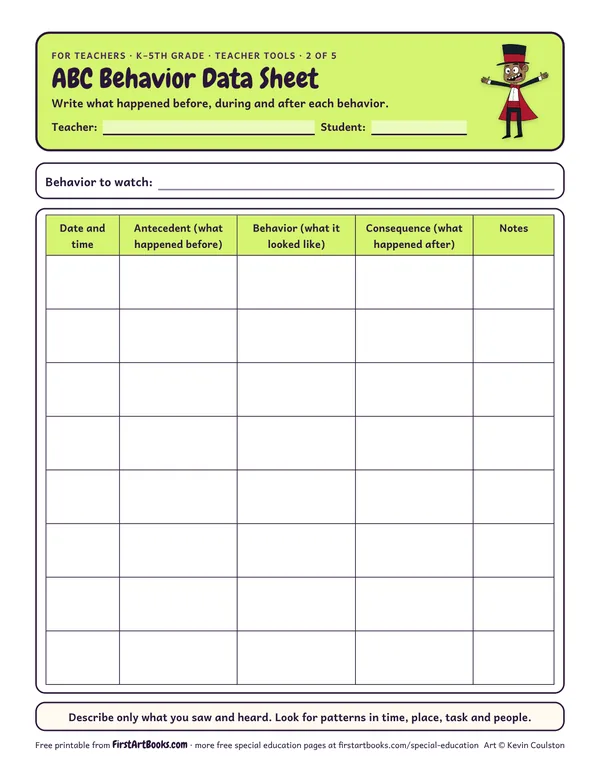
An ABC data sheet: date and time, antecedent, behavior, consequence and notes, to spot patterns over time.
Print this sheet (PDF)Teacher notes and tips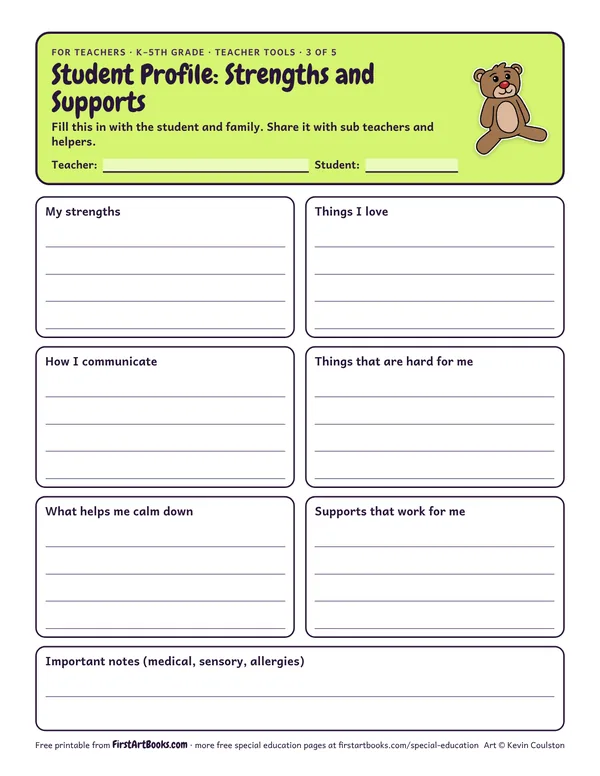
A one-page student profile: strengths, interests, how I communicate, what upsets me, what calms me and supports.
Print this sheet (PDF)Teacher notes and tips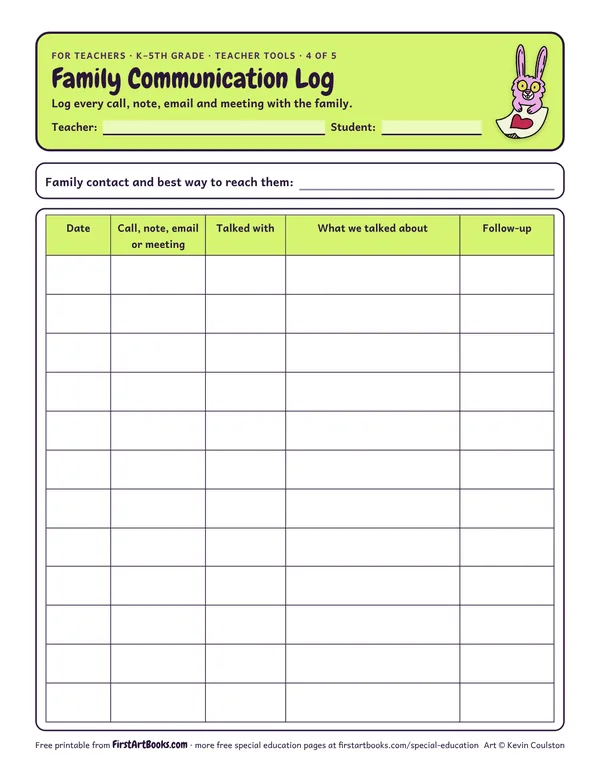
A family contact log: date, how you reached them, who you talked to, what you talked about and follow-up.
Print this sheet (PDF)Teacher notes and tips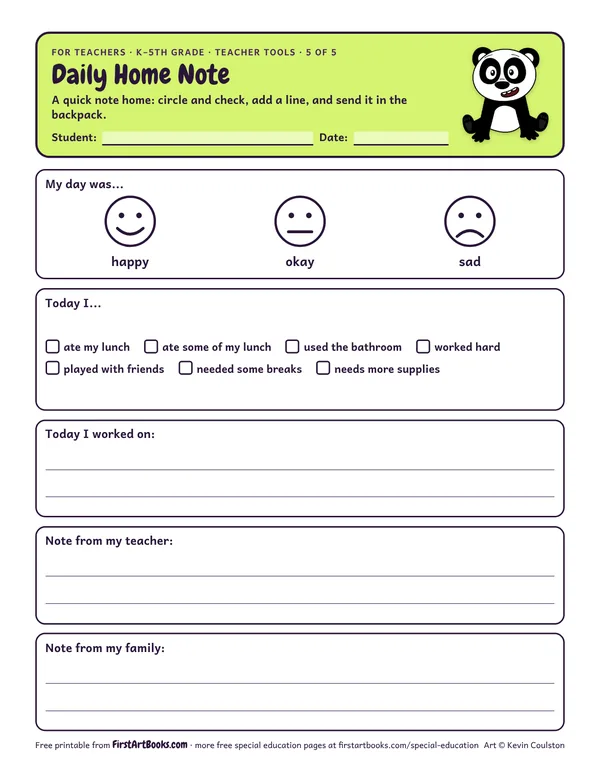
A daily note for families: my day, what I ate, what I did today, a note from the teacher and a family reply.
Print this sheet (PDF)Teacher notes and tips

Start with these four: My Daily Visual Schedule, First / Then Board, 5-Token Board and Break Cards.
Each topic has a pack of its five pages: visual schedules, adapted work, fine motor, social stories, calm down, communication, token boards, life skills, functional skills, teacher tools.
Drawing time is a reward many kids will work for. Kevin Coulston’s Trace Then Color books have bold lines for beginners, and the How to Draw books build one small step at a time.
Yes. All 50 pages, the answer keys and the topic packs are free to print for home, classroom and therapy use. Print one page, a topic pack of five or the whole set in one PDF.
Students in kindergarten to 5th grade who learn best with pictures, clear routines and a few big items on a page: kids with autism, developmental delays, speech and language needs, ADHD or anxiety, and any child who is still building these skills. Older students working on the same skills can use them too. The grade buttons are only a guide.
A page where every answer is right, so a student can practice the routine of doing work, build confidence and work on their own. “Errorless: Color the Animals” is one. The other adapted pages have a few clear choices and an answer key.
On a First/Then board, put the work picture under First and something the student likes under Then, and say “First reading, then blocks.” On a token board, let the student pick a reward, then give a token for each small success. When the board is full, give the reward right away. Laminate the boards or use a sheet protector so you can reuse them.
6 pages are teacher tools: the schedule picture cards, the IEP goal progress tracker, the ABC behavior data sheet, the student profile, the family communication log and the daily home note. Each card says “For teachers”.
No. They are simple classroom supports. Follow each student’s IEP and the advice of their speech, occupational and behavior specialists, and use a student’s own communication system first. The communication boards here are for quick classroom use and are not a full AAC system.
Yes. The pictures are bold black outlines, and nothing depends on color. The colors on the core word board and the cards print as light grays. Sheets are US Letter and also print on A4.
All pages are US Letter, print well in black and white, and are free for home and classroom use. Pages are set in Andika, a clear font for young readers. More for teachers in the teacher resources library.
12 printable pages: six step-by-step lessons, a grid activity, draw-and-write sheets and teacher notes, sent with your welcome email. After that, new classroom printables by email.
Social stories K–5th grade
Short picture stories, told in the first person, for waiting, fire drills, sub days, the hallway and changes.
Waiting My Turn
A first-person social story about waiting: friends take turns, I can count, breathe or look, and my turn will come.
About 10 minutes
Print this sheet (PDF)Teacher notes and tipsWhen There Is a Fire Drill
A calm social story about fire drills: the loud alarm, lining up, walking outside, waiting and going back in.
About 10 minutes
Print this sheet (PDF)Teacher notes and tipsWhen I Have a Substitute Teacher
A social story for sub days: my teacher will come back, a new grown-up is in charge, and my schedule stays the same.
About 10 minutes
Print this sheet (PDF)Teacher notes and tipsWalking in the Hallway
A social story about lining up and walking in the hall: my spot, quiet voice, walking feet and hands to myself.
About 10 minutes
Print this sheet (PDF)Teacher notes and tipsWhen Plans Change
A social story about changes to the schedule: plans can change, I may feel upset, and I can breathe and ask what is next.
About 10 minutes
Print this sheet (PDF)Teacher notes and tips5+
Draw by Grid: Cartoon Dinosaurs
Copy one square at a time. Early finishers love it.
See it on AmazonBrowse All Books