
CharactersAges 4–6
Meet My Character
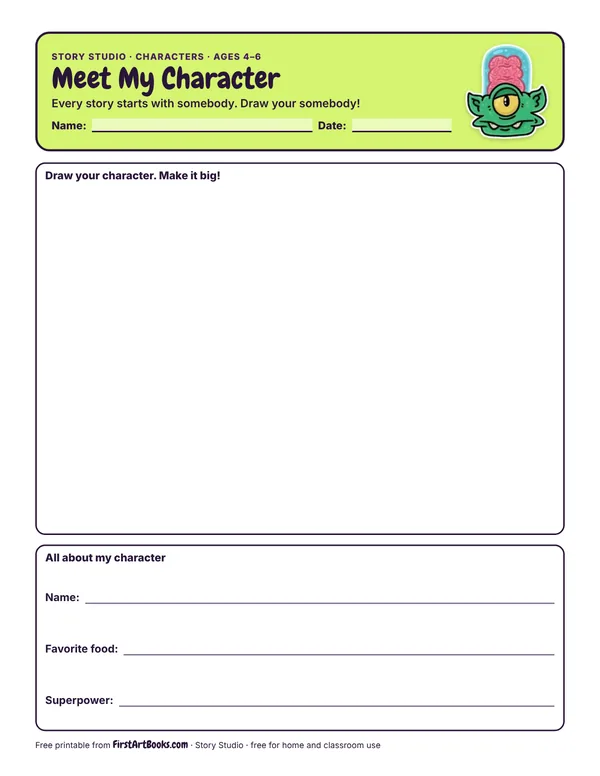
Draw a brand-new character, then give it a name, a favorite food and a superpower.
Kids who say “I don’t know what to write” nearly always know what to draw. Start with the comic story starter below, then print story sheets, story starter cards and a fold-up mini-book, all with Kevin Coulston’s characters.
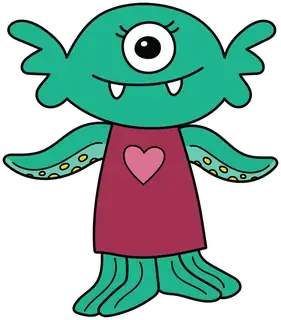
A Crusty Goober wakes up and finds it has grown a third eye overnight.
Suddenly, all the Goobers start to float.
How does it end? You decide!
Draw in the boxes with a finger, a stylus or a mouse, or print the comic and draw on paper. The speech bubble and sound effect are just ideas: use them, change them or make up your own.
One big picture and one sentence. Kids can tell the story out loud while a grown-up writes it down.
5 sheets, plus the mini-book and certificateAges 6–8 · grades 1–3Draw and writeBeginning, middle and end in three boxes, with sentence starters to lean on.
9 sheets, plus the mini-book and certificateAges 8–11 · grades 3–5Build a storyCharacter files, villains, maps and stories where the reader chooses what happens.
8 sheets, plus the mini-book and certificateEach sheet is one page, prints well in black and white, and starts with a drawing. Filter by age or by the part of the story you want to work on.
CharactersAges 4–6
Draw a brand-new character, then give it a name, a favorite food and a superpower.
CharactersAges 6–8
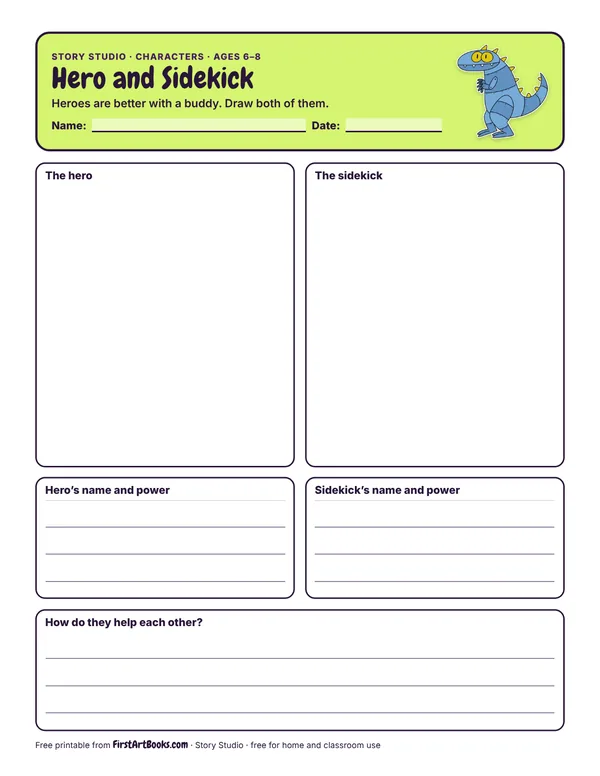
Design a hero and the sidekick who always has their back. What can each one do that the other can’t?
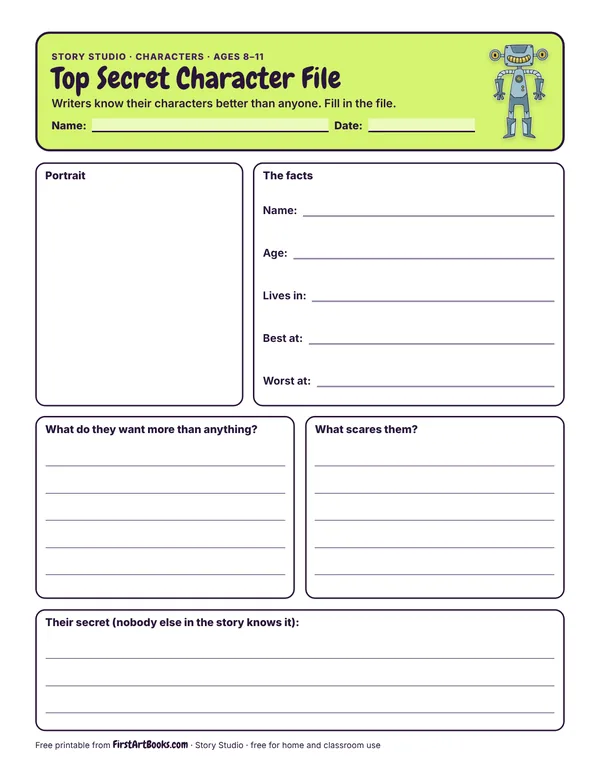
CharactersAges 8–11
A detective-style file on your main character: portrait, facts, what they want, what they fear and their secret.
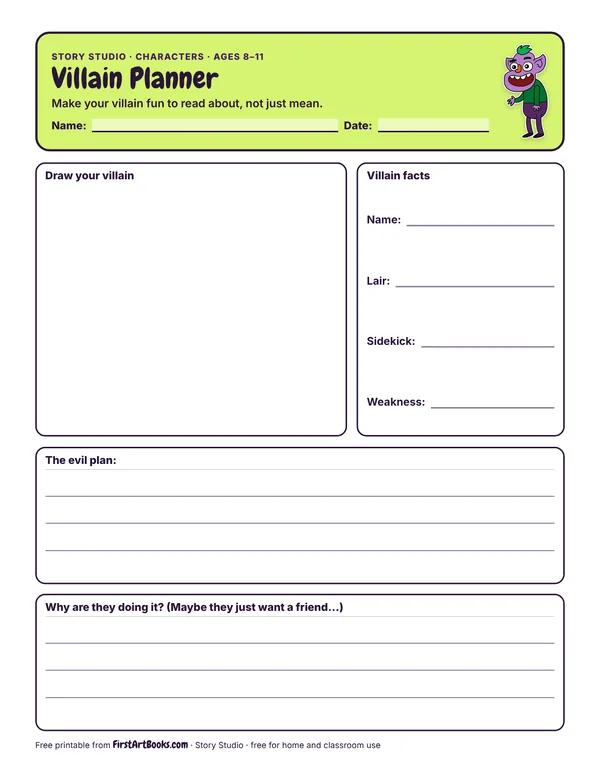
CharactersAges 8–11
Every good story needs trouble. Design a villain with a lair, a plan and one big weakness.
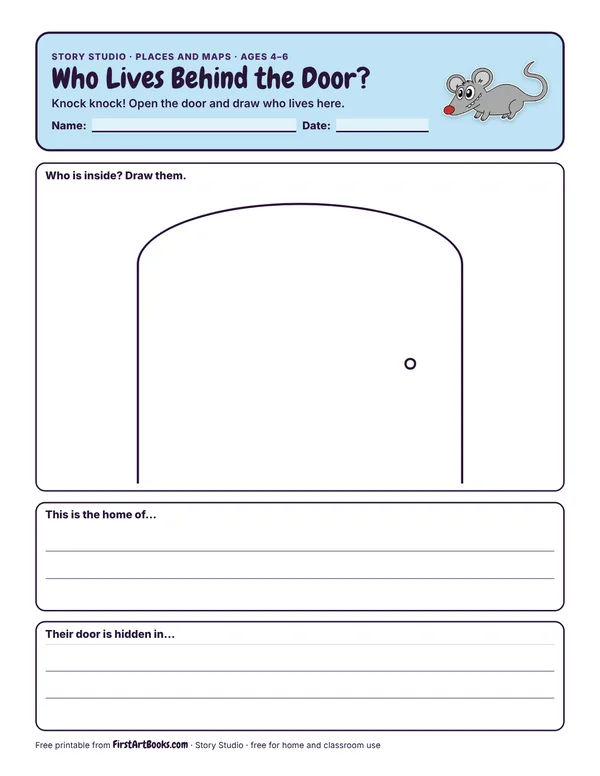
Places and mapsAges 4–6
Draw who lives behind a little door, then tell where it is and what their favorite room looks like.
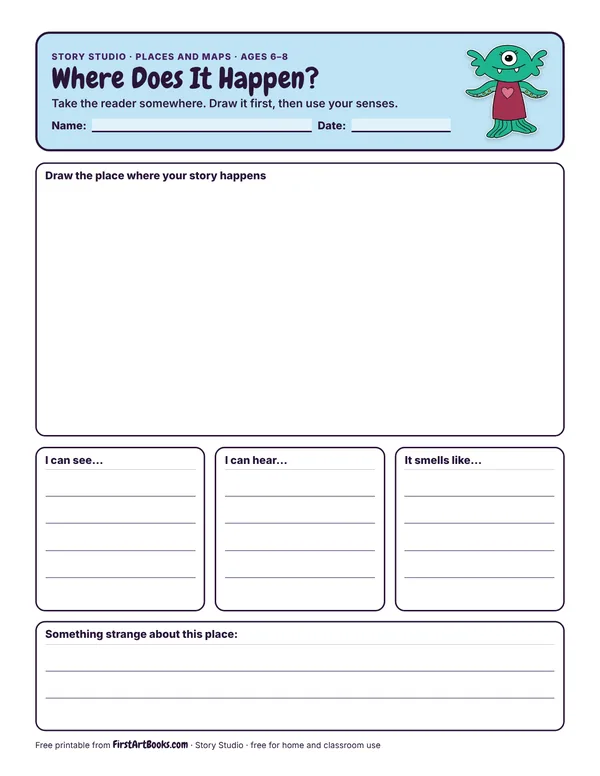
Places and mapsAges 6–8
Draw the setting of a story, then use your senses to describe it: what can you see, hear and smell?
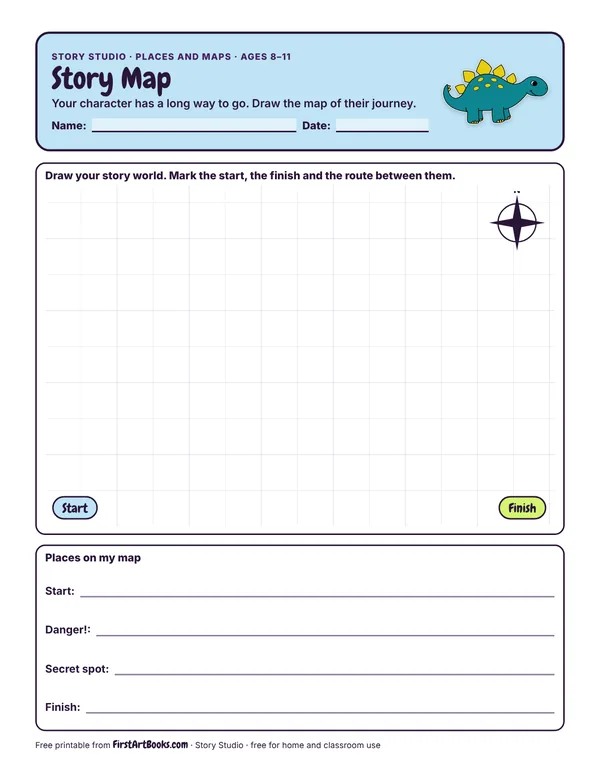
Places and mapsAges 8–11
Draw the map of your story world, mark the danger and the secret spot, then plan the route from start to finish.
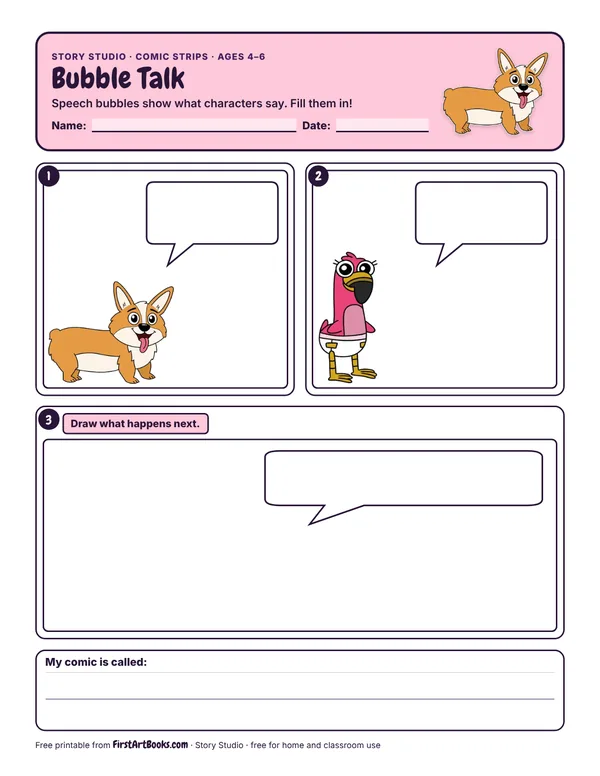
Comic stripsAges 4–6
Two friends meet in a two-box comic. Fill their speech bubbles, then draw what happens next.
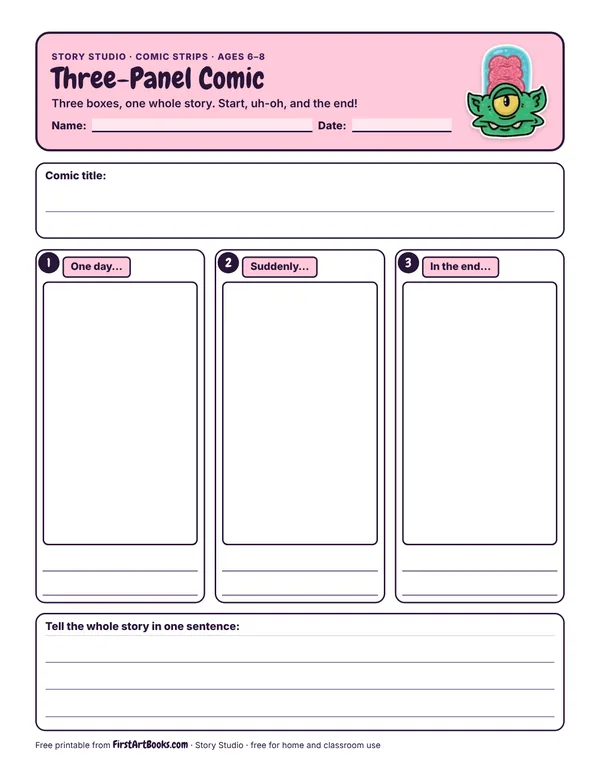
Comic stripsAges 6–8
Beginning, middle and end in three comic panels, with a sentence starter under each one.
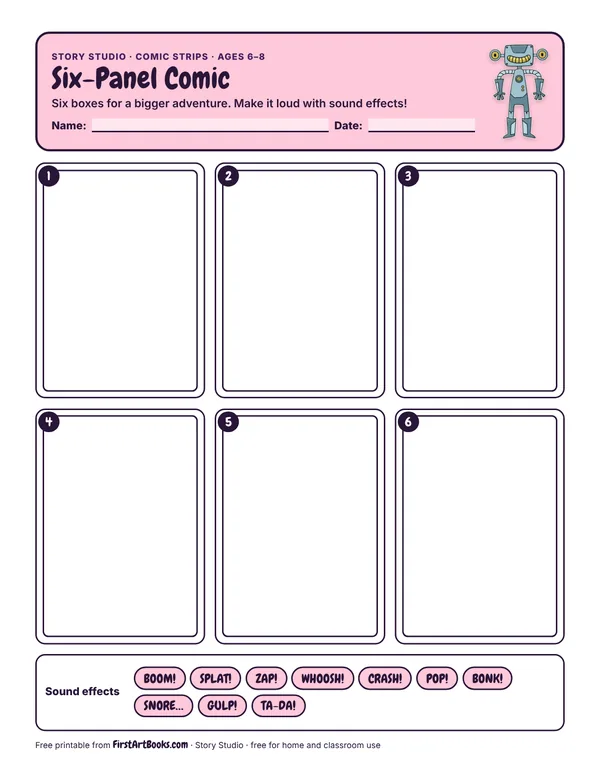
Comic stripsAges 6–8
A longer comic with room for a real adventure, plus a word bank of sound effects to drop in.
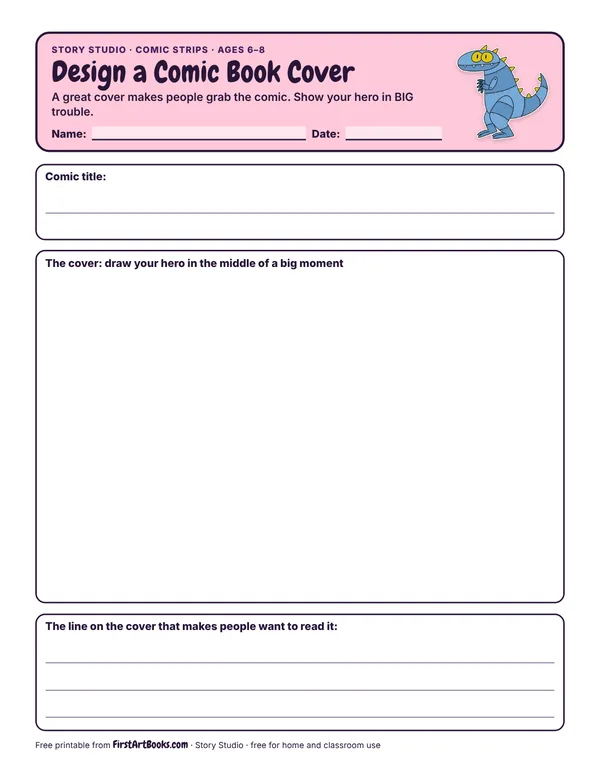
Comic stripsAges 6–8
Make the front cover of your own comic book: the title, the hero in big trouble and a line that makes people want to read it.
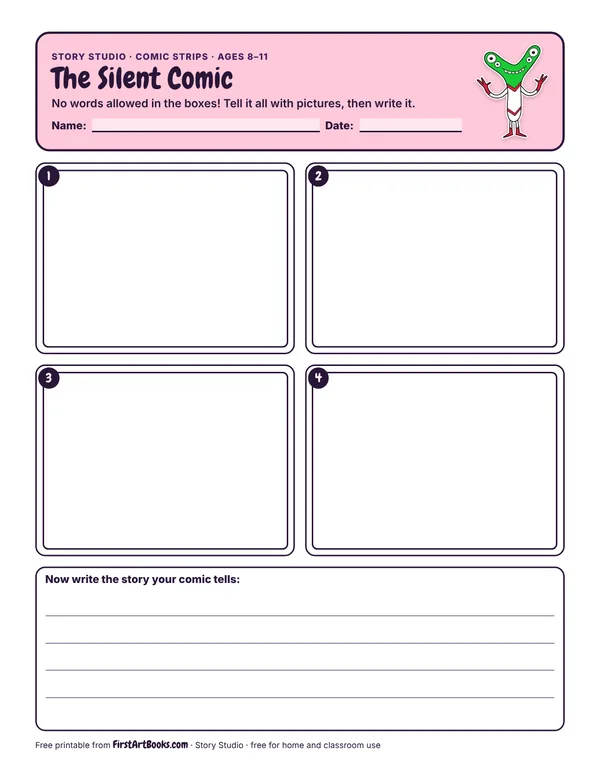
Comic stripsAges 8–11
Draw a four-panel comic with no words at all, then write the story it tells underneath.
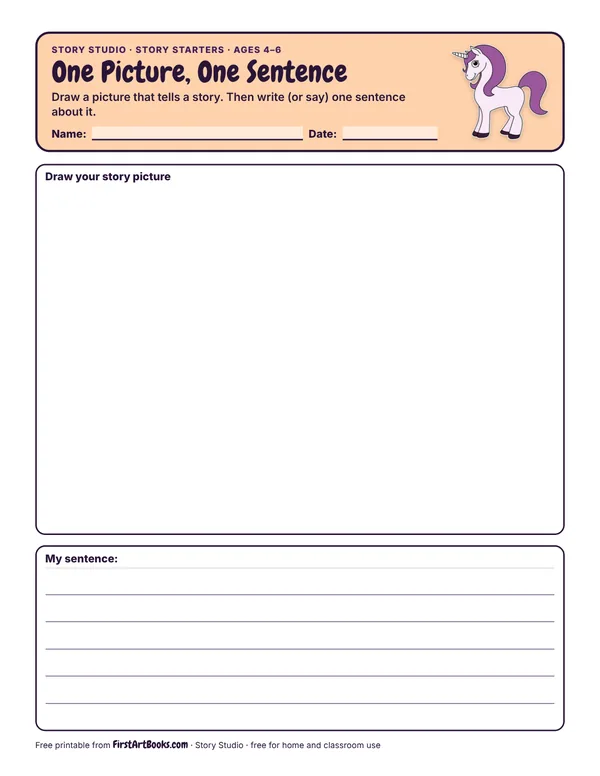
Story startersAges 4–6
The first story page: a big box for a drawing and writing lines for one sentence about it.
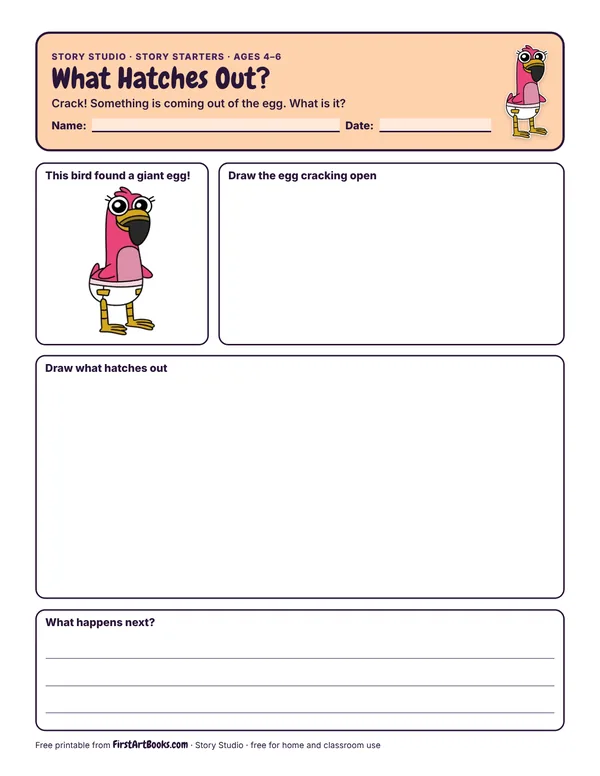
Story startersAges 4–6
A bird has found a giant egg. Draw what hatches out of it and say what happens next.
Story startersAges 6–8
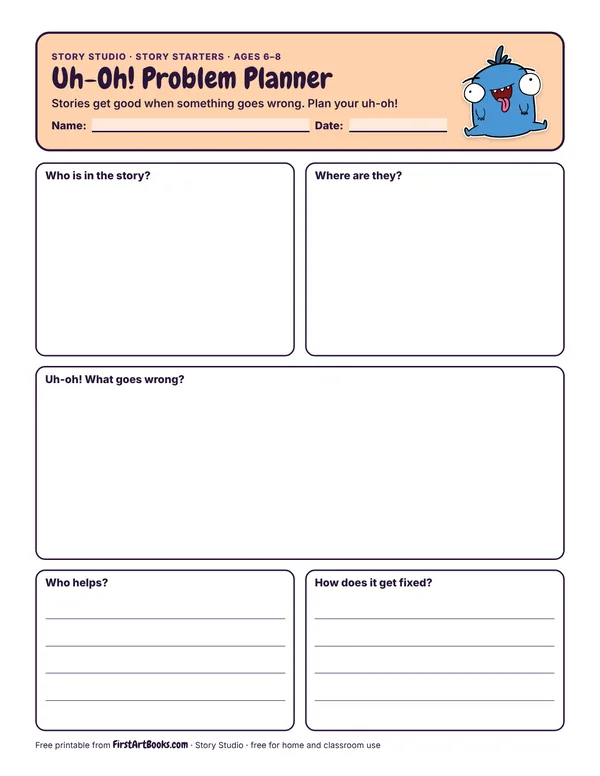
Plan a story around a problem: who is in it, where they are, what goes wrong and how it gets fixed.
Story startersAges 6–8
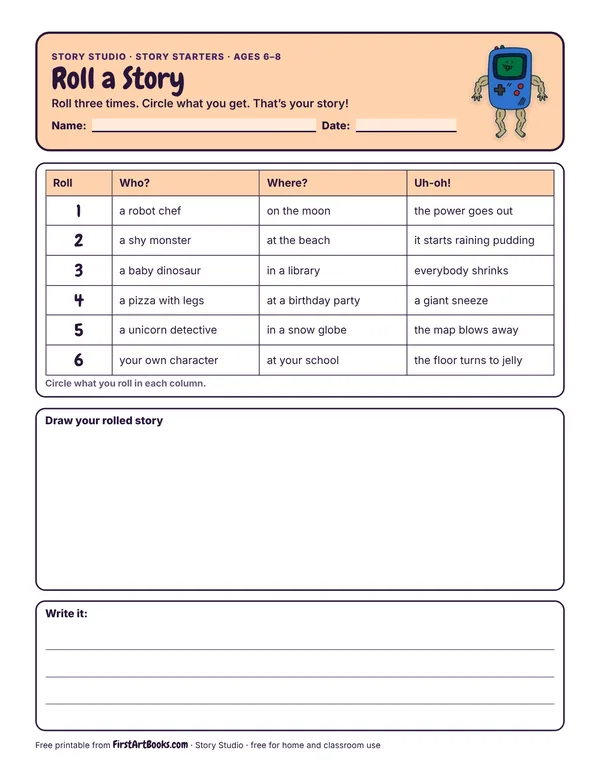
Roll a die three times to pick who, where and what goes wrong. Then draw and write the story you rolled.
Story startersAges 8–11
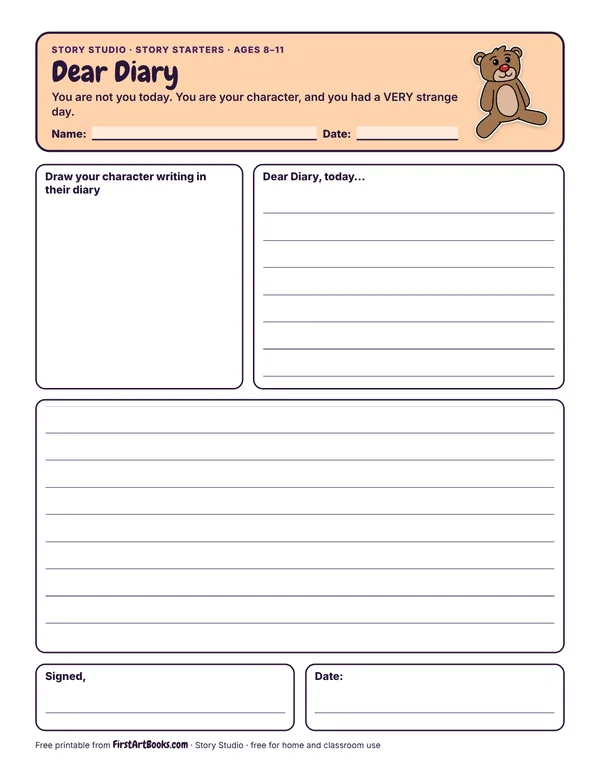
Write a diary entry as your character, about the strangest day of their life, with a picture of them writing it.
Story startersAges 8–11
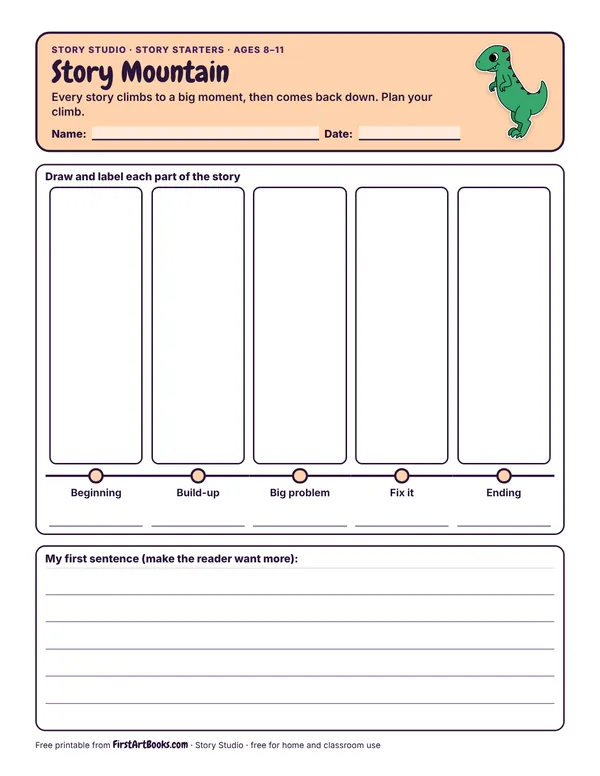
Plan a whole story as a mountain: the beginning, the build-up, the big problem at the top, the fix and the ending.
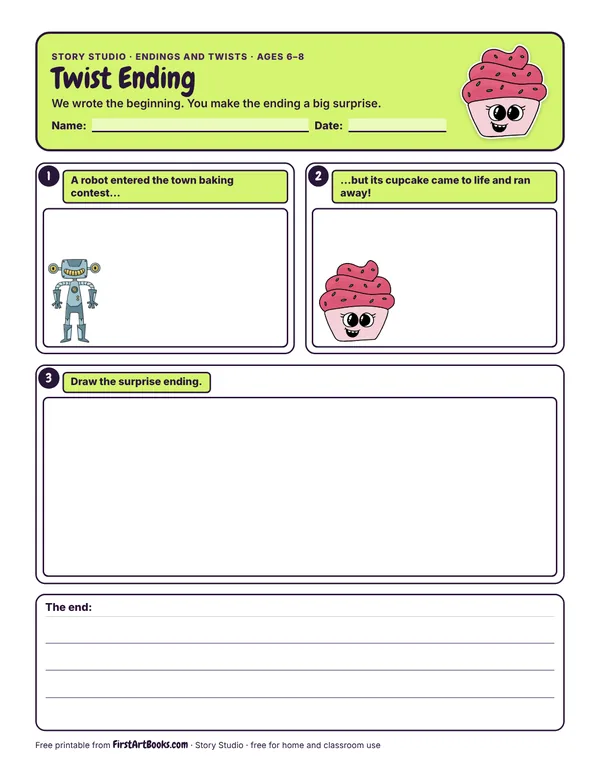
Endings and twistsAges 6–8
The story is started for you. Draw and write a surprise ending nobody saw coming.
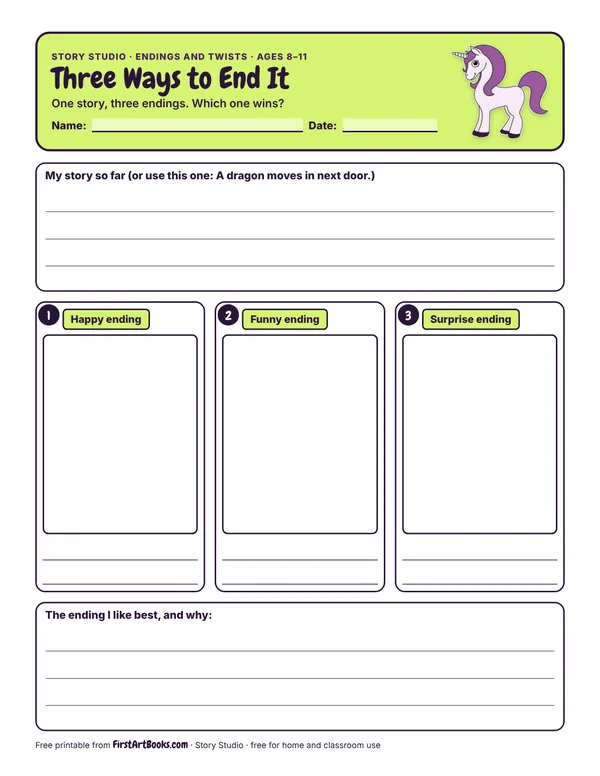
Endings and twistsAges 8–11
Write a happy ending, a funny ending and a surprise ending for the same story, then pick the winner.
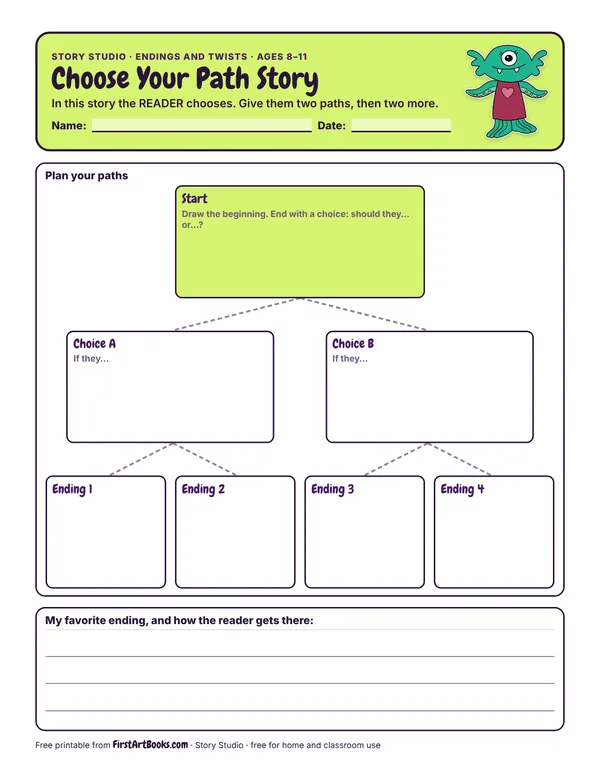
Endings and twistsAges 8–11
Write a story where the reader decides what happens: one start, two choices and four different endings.
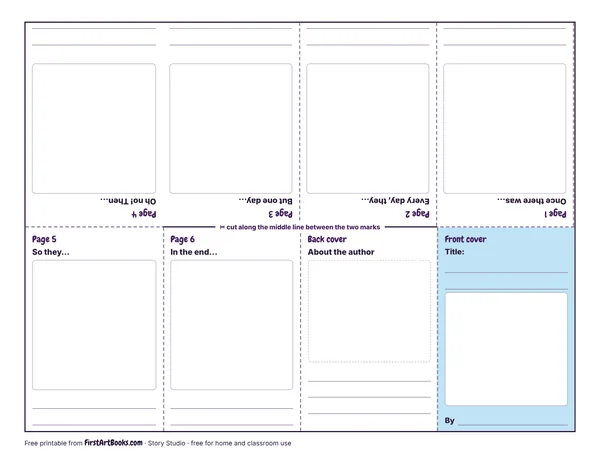
Make a bookAll ages
One sheet of paper becomes an 8-page book: a cover, six story pages and an “about the author” page on the back.
Make a bookAges 6–8
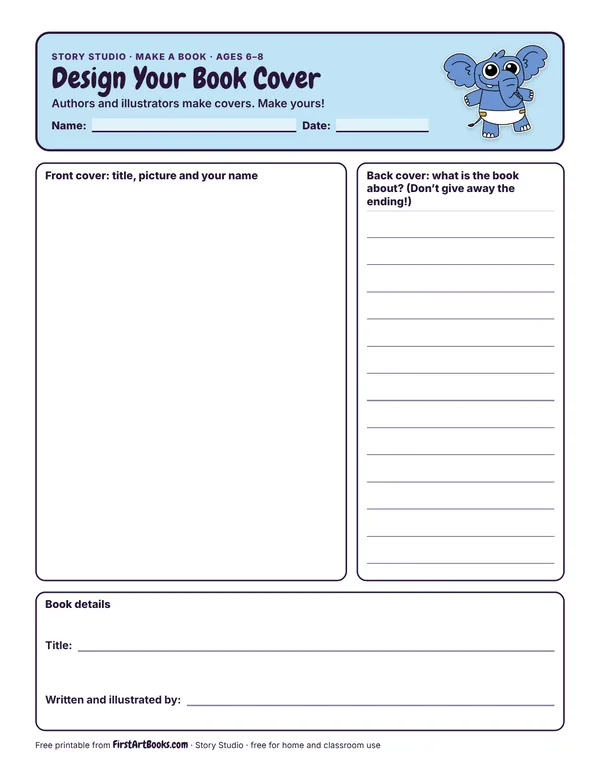
Design the front cover of your story and write the blurb for the back, without giving away the ending.
Make a bookAll ages
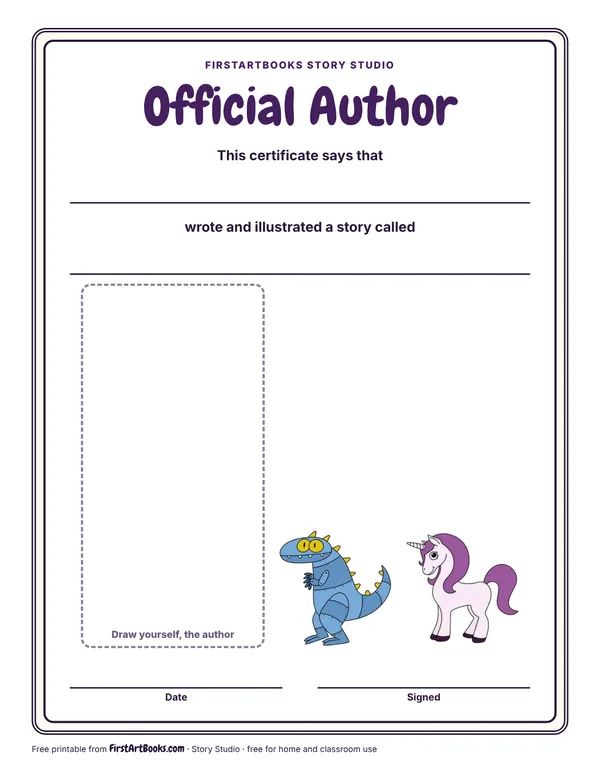
A certificate for every finished story: the author’s name, the title of their story and room for a self-portrait.
No sheets match both filters. Try “Every age”.
Pick a world, draw one of its characters with a free step-by-step lesson, then choose a starter. Each world has printable starter cards and a ready-to-go comic.
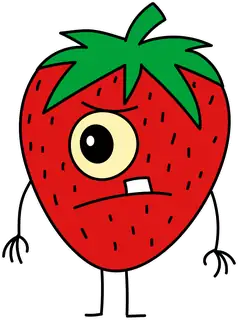 Crusty GoobersWeird, wonderful little creatures with big feelings and very strange habits.12 starters
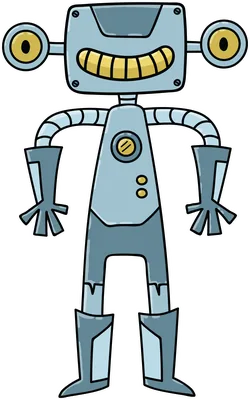
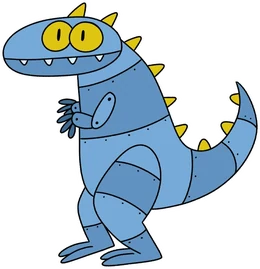
 RobotsBolts, beeps and big ideas: stories about robots who don’t quite work the way they should.12 starters
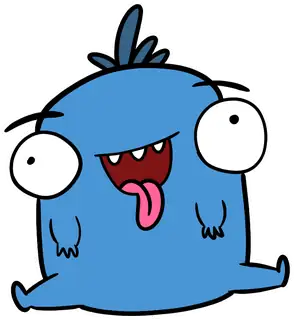
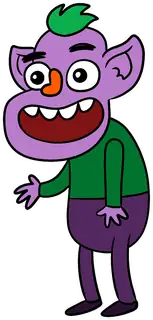
 MonstersFuzzy, slimy and mostly friendly: monster stories that are more silly than scary.12 starters
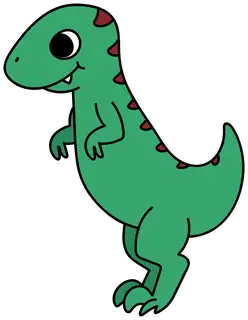
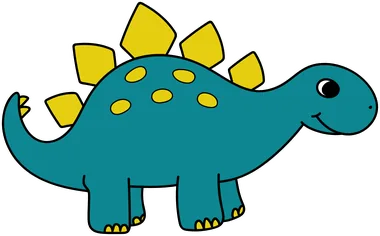
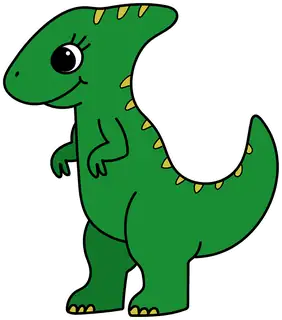 DinosaursStomping, roaring, egg-hatching stories from long, long ago (and some from right now).12 starters
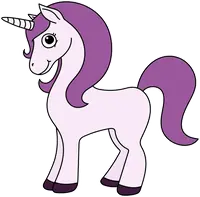
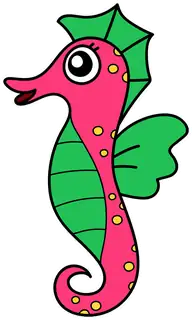
 Unicorns and mermaidsSparkly, magical stories with a little bit of mischief.12 starters
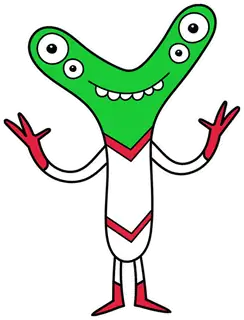 Aliens and spaceBeam-ups, crash landings and very confused visitors from other planets.12 starters
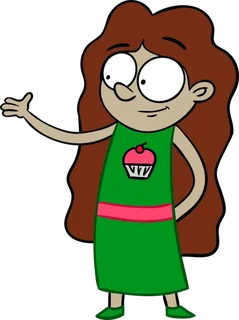
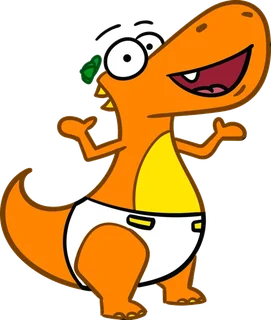
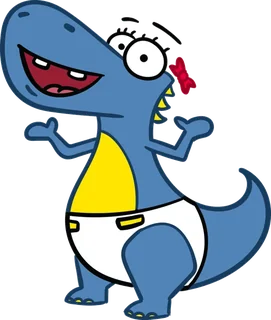 Alexis and the T-RexesNew adventures for Alexis and her baby T. rex friends, Snap and Daisy.12 starters
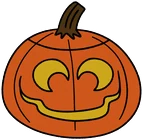 HalloweenSpooky (but not too spooky) stories for the last week of October.12 starters · Halloween
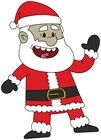
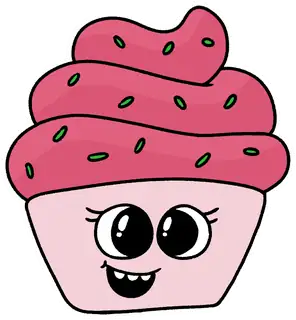 ChristmasCozy, funny stories for the busiest week of the year.12 starters · ChristmasMake a bookFold a mini-book from one sheet of paperEight pages, three minutes of folding and one real book with the child’s name on the cover. Kevin makes books; now kids can make one too.See how to fold it
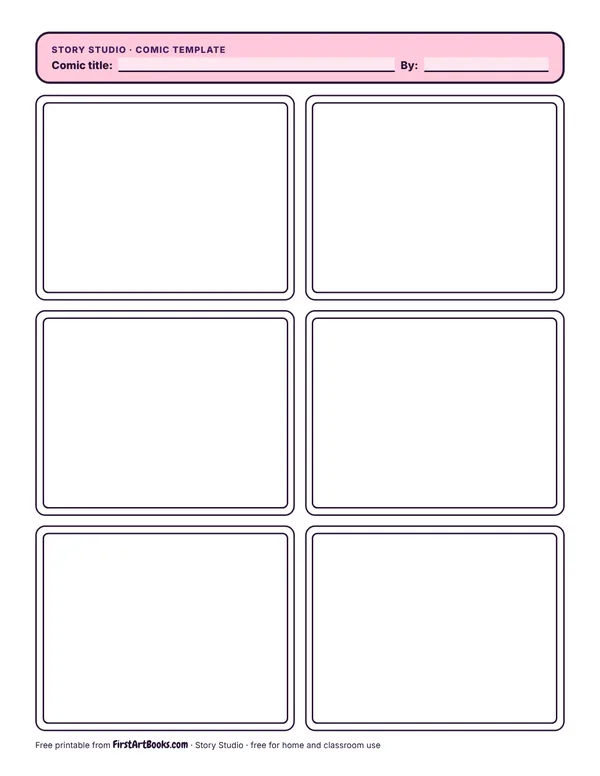 Comic stripsComic strip templatesBlank 3, 4, 6 and 9-panel pages, plus comic sheets with speech bubbles, sound effects and a silent comic.Get the templates
Story writing lessonsGrades K–5 · 45 minutes each
Every How to Draw book by Kevin Coulston is a cast of characters waiting for a story. His Alexis and the T-Rexes picture books are stories you can keep going.
As an Amazon Associate, FirstArtBooks earns from qualifying purchases.
Start with a drawing instead of a blank page. Ask them to draw a character, then ask three questions: who is it, what goes wrong, and how does it end? Write down what they say. The three-panel comic turns those three answers into a story.
Four and five-year-olds can tell stories with pictures and say a sentence for a grown-up to write. Most six to eight-year-olds can write a beginning, middle and end in short sentences. By eight to eleven, kids can plan characters, settings and twists on their own.
A story starter is the first line of a story, like “A robot starts sneezing bolts and can’t stop.” The child decides what happens next. Story Studio has 108 of them, sorted into story worlds with Kevin Coulston’s characters.
Yes. Print as many copies as you need for your own kids, your class or your homeschool group. Please share a link to the page instead of re-posting the files.
All Story Studio printables are free for home and classroom use.
12 printable story writing pages (comic strips, a character file, a villain planner, a story map, a choose-your-path planner and an author certificate) sent with your welcome email. After that, new free pages and book news.
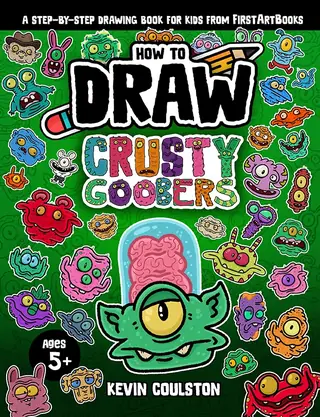 How to Draw: Crusty Goobers
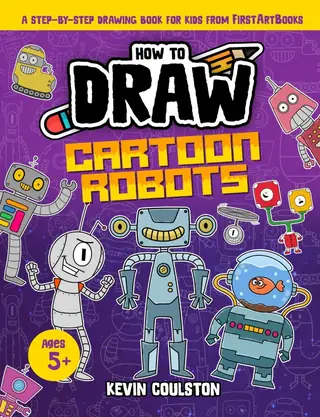 How to Draw: Cartoon Robots
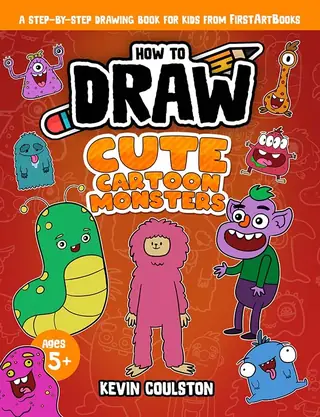 How to Draw: Cute Cartoon Monsters
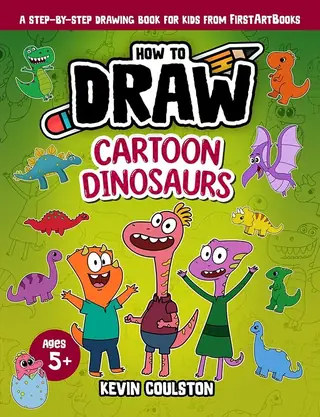 How to Draw: Cartoon Dinosaurs
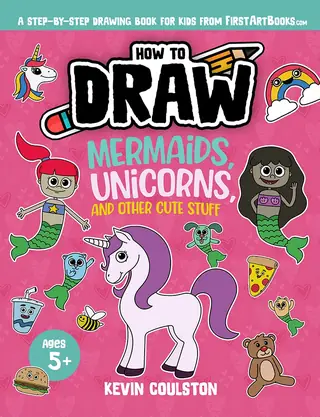 How to Draw: Mermaids, Unicorns, and Other Cute Stuff
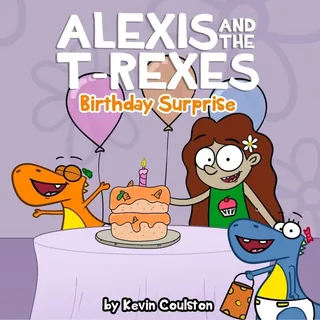 Alexis and the T-Rexes: Birthday Surprise