

Drawing helps kids develop fine motor skills, focus, confidence, problem-solving, emotional expression, early math and reading readiness, and creativity. It’s cheap, it works at any age, and it fits in ten minutes a day. Different kinds of drawing build different skills, so a mix of tracing, step-by-step lessons, grid drawing and free drawing gives kids the most benefit.
12 benefits of drawing
1. Fine motor skills
Holding a pencil, making controlled lines and coloring build the hand strength and control needed for writing. Try: tracing and coloring. See fine motor activities.
2. Handwriting readiness
The lines and curves in drawings are the same strokes used in letters. Try: pre-writing strokes.
3. Focus and patience
Finishing a drawing takes sustained attention. Try: grid drawing for focus.
4. Confidence
A finished drawing is proof that “I can do hard things.” Try: a short step-by-step lesson.
5. Following instructions
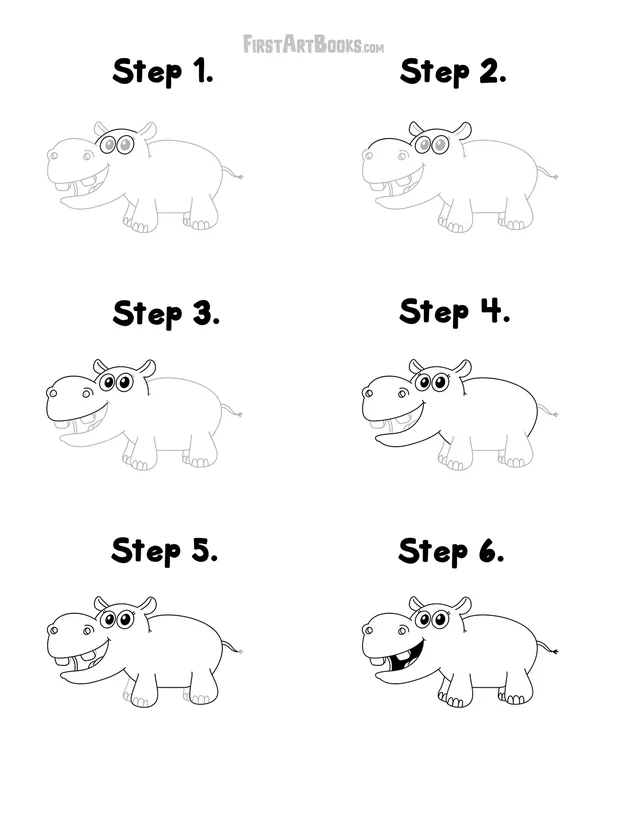
Step-by-step lessons practice listening and doing things in order. Try: directed drawing.
6. Problem-solving
How do I draw a cat sitting down? Where does the tail go? Try: drawing a lesson character in a new pose.
7. Observation
Drawing teaches kids to look closely at shapes, sizes and details. Try: drawing a real object, or a grid drawing.
8. Math thinking
Shapes, symmetry, counting, coordinates and scale. Try: grid drawing and math.
9. Emotional expression
Kids can draw feelings they can’t put into words. Try: cartoon expressions.
10. Calm
Drawing and coloring can settle busy or anxious kids. Try: calming drawing activities.
11. Storytelling and literacy
Drawings become stories, comics and books. Try: draw then write prompts.
12. Creativity
Inventing characters, mixing ideas and making something new. Try: character design for kids.
How to get the benefits
- Make it regular. Ten minutes a day beats an hour once a month. See how often kids should draw.
- Mix guided and free drawing. Lessons build skills; blank paper lets kids use them.
- Praise effort. It keeps kids drawing. See how to praise a child’s drawing.
- Follow their interests. Dinosaurs, robots, unicorns: whatever gets them drawing.
Which kind of drawing builds what
- Tracing (ages 3+): motor control, writing readiness, confidence. See Trace Then Color.
- Step-by-step (ages 5+): shapes, following steps, drawing on your own. See How to Draw.
- Grid drawing (ages 5+): observation, proportion, focus, math. See Draw by Grid.
- Free drawing (all ages): imagination and expression.
To get started, see how to help your child learn to draw.
The book that helps
Each kind of drawing builds different skills. The Cute Cartoon Animals trio covers all three: tracing, step-by-step and grid.
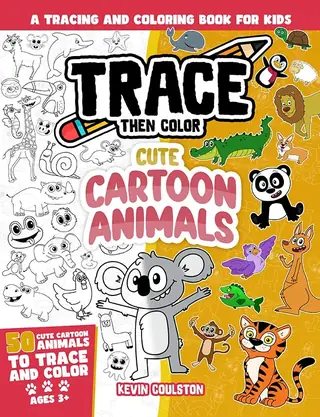 Trace Then Color: Cute Cartoon Animals
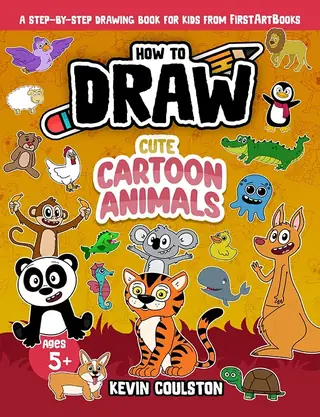 How to Draw: Cute Cartoon Animals
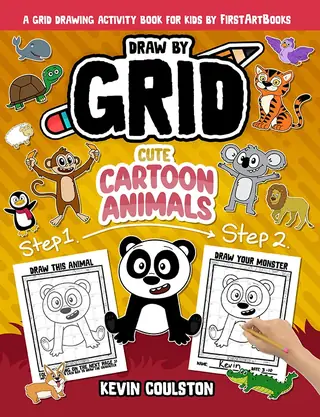 Draw by Grid: Cute Cartoon Animals
As an Amazon Associate, FirstArtBooks earns from qualifying purchases.
Get free drawing pages by email
Kevin’s newsletter brings new printable drawing and coloring pages and book news. New subscribers also get the free bonus packs: Christmas, animals, dinosaurs, robots, monsters and more, plus the Classroom Drawing Kit.
Questions
Why is drawing important for child development?
Drawing builds fine motor skills, focus, confidence, problem-solving, emotional expression and early math and literacy skills.
How does drawing help kids in school?
It builds the hand control needed for writing, practices following instructions and focus, and supports storytelling and math.
How much should kids draw to get the benefits?
About 10 to 20 minutes most days is enough.