

Directed drawing is a guided lesson where the teacher shows a drawing one step at a time and the whole class follows along. Students learn to build a picture from simple shapes, everyone finishes with a drawing they’re proud of, and the last few minutes are for making it their own. It works from kindergarten to grade 5 and takes about 30 minutes.
Why directed drawing works
- It teaches shapes and order. Big shapes first, details last.
- It builds listening skills. Students follow spoken and visual steps.
- It builds confidence. Every child succeeds, including kids who say they “can’t draw.”
- It connects to writing. A drawing becomes the start of a story. See draw then write prompts.
- It’s low prep. Paper, pencils and one lesson.
A 30-minute directed drawing lesson
1. Hook (2 minutes)
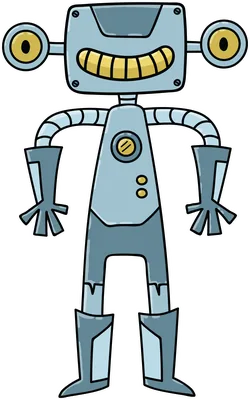
Show the finished drawing. “Today we’re drawing a robot who lost his sock.”
2. Warm-up (3 minutes)
Air-draw the main shapes together: big circle, two small circles, a rectangle.
3. Draw step by step (15 minutes)
- Show one step at a time on the board or projector.
- Say each step out loud with shape words: “Draw a big oval for the body.”
- Wait until most students are ready before the next step.
- Remind them to draw lightly at first.
4. Make it yours (7 minutes)
Students add a background, a friend, a hat or a story detail. This is where creativity comes in.
5. Share (3 minutes)
A quick gallery walk or a pair-share: “Tell your partner one thing you added.”
Pacing a whole class
- Fast drawers: give a challenge card (“Draw it a friend”), or let them help a neighbor.
- Slow drawers: reassure them they can finish details later; keep the steps on the board.
- Kids who get upset: remind them that every drawing is different and that’s the point.
Tips that help
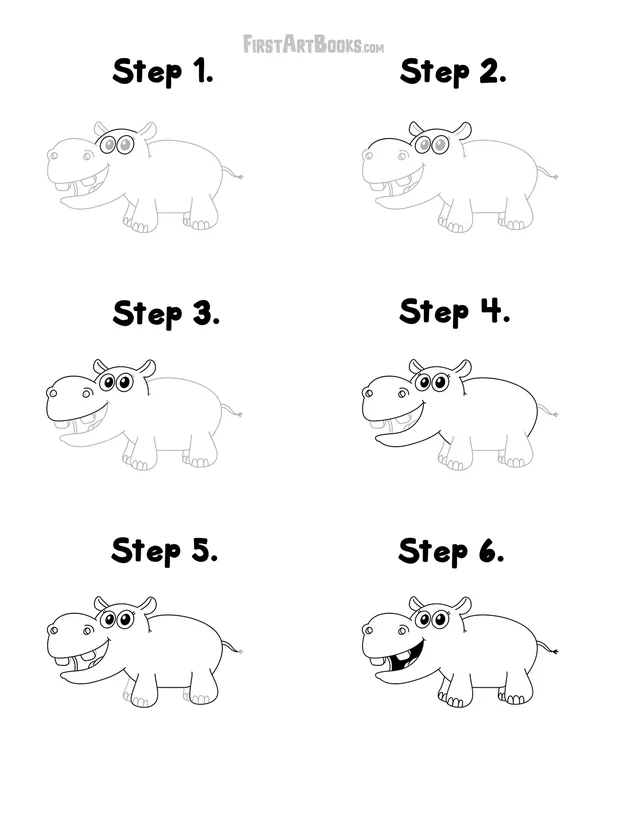
- Project the lesson. On a How to Draw page, a light gray outline shows the whole finished drawing on every step, so students can see where each part goes. See how a How to Draw page works.
- Use shape vocabulary. Oval, triangle, curve, overlap.
- Draw it yourself first. You’ll know where the tricky step is.
- Praise variety. “Look how many different robots we have!”
Directed drawing vs free drawing
Some educators worry that directed drawing limits creativity. Used alone, it might. But paired with free drawing time, it gives students the skills to draw what they imagine. Read why step-by-step drawing works.
Ready-made lessons
- Free step-by-step pages: drawing ideas.
- One-session plans: no-prep sub plans.
- Build a lesson by age and time: lesson plan builder.
- Station cards: art center cards.
- More: teacher resources.
The book that helps
Each How to Draw book is a bank of ready-made directed drawing lessons, with a light gray outline of the finished drawing on every step so students can check their spacing.
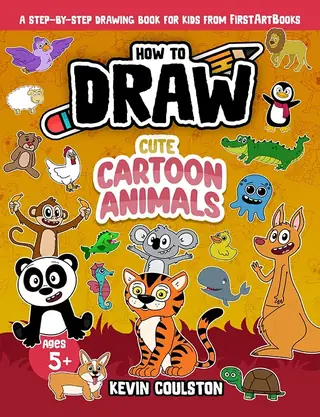 How to Draw: Cute Cartoon Animals
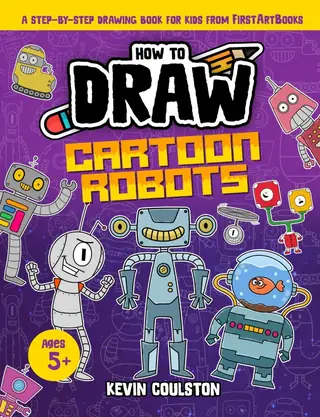 How to Draw: Cartoon Robots
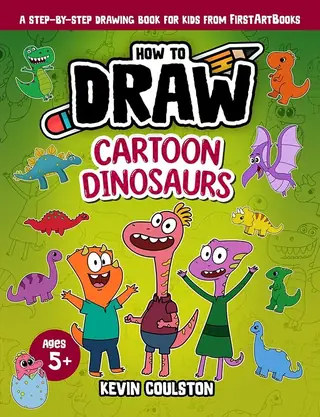 How to Draw: Cartoon Dinosaurs
As an Amazon Associate, FirstArtBooks earns from qualifying purchases.
Get free drawing pages by email
Kevin’s newsletter brings new printable drawing and coloring pages and book news. New subscribers also get the free bonus packs: Christmas, animals, dinosaurs, robots, monsters and more, plus the Classroom Drawing Kit.
Questions
What is directed drawing?
A guided lesson where the teacher shows a drawing one step at a time and students follow along, then add their own details.
What grade is directed drawing for?
It works from kindergarten through grade 5, with simpler subjects for younger students.
How long is a directed drawing lesson?
About 30 minutes, including a warm-up, the steps, time to personalize and sharing.
Does directed drawing limit creativity?
Not when paired with time to personalize and with free drawing. It gives students skills to draw their own ideas.