


To help a perfectionist child with drawing, lower the stakes and change what success means. Use tracing pages or step-by-step guides so the start isn’t scary, try silly subjects that can’t be “wrong,” make “no erasing” warm-ups a game, praise effort rather than results, and show them your own imperfect drawings. The goal is a child who enjoys drawing, not one who draws perfectly.
Signs of perfectionism in drawing
- Erasing over and over, sometimes through the paper.
- Crumpling or ripping drawings.
- Refusing to start (“I’ll mess it up”).
- Tears or anger at small mistakes.
- Comparing every drawing with someone else’s.
These kids often care a lot and have high standards. That’s not a bad thing. They just need help getting comfortable with the messy middle of learning.
9 ways to help
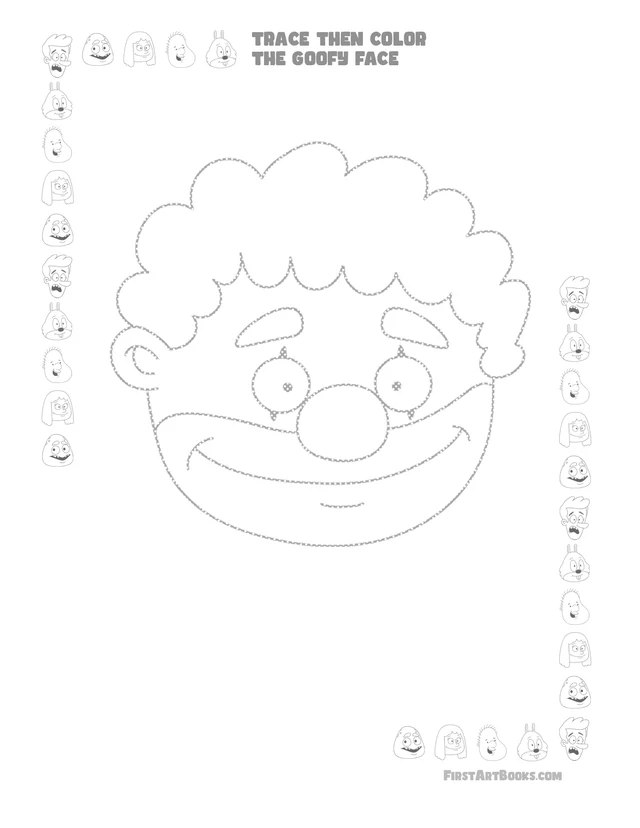
- Remove the blank page. A tracing outline or a step-by-step guide gives a safe start. On a How to Draw page, a light gray outline shows the whole finished drawing on every step, so kids know where every line goes. See how a How to Draw page works.
- Go silly. Goofy faces and weird monsters have no “right” look. See silly face drawing.
- Play no-erase games. Blind contour drawing, drawing with your other hand, 30-second sketches. Mess is the point.
- Use pen sometimes. It sounds scary, but removing the eraser removes the endless fixing.
- Turn mistakes into ideas. A wobbly line becomes a tail. See growth mindset art activities.
- Praise the process. “You tried something new with the hair” beats “It’s perfect.” See how to praise a drawing.
- Show your mistakes. Draw next to them and say, “Oops, that leg’s too long. I’ll make it a giraffe.”
- Set a timer. “We’re drawing for 10 minutes, then we stop, finished or not.”
- Keep a “practice” sketchbook. Pages that are just for trying. See sketchbook ideas.
What to avoid
- Saying “It’s perfect!” (it raises the bar for next time).
- Fixing their drawing for them.
- Comparing with siblings or classmates. See drawing with mixed ages.
- Hanging up only the “best” drawings.
When it’s more than drawing
If perfectionism shows up everywhere (schoolwork, sports, getting dressed) and causes a lot of distress, talk to your child’s teacher or pediatrician. Drawing can still be a gentle place to practice being okay with imperfect.
Related
Read what to do when a kid says “I can’t draw” and common drawing mistakes and fixes.
The book that helps
Silly faces are hard to get “wrong,” and a gray guide or a tracing outline takes away the blank-page fear.
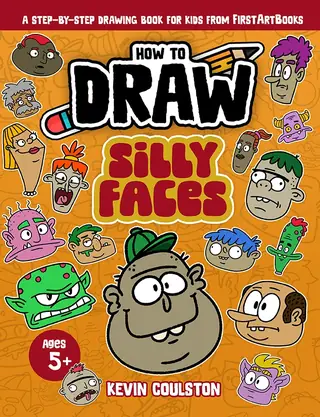 How to Draw: Silly Faces
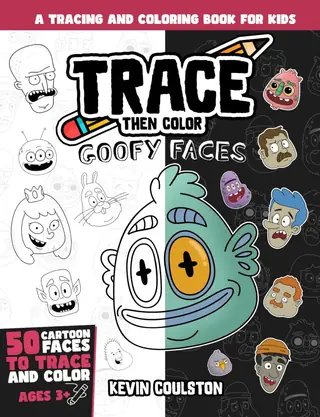 Trace Then Color: Goofy Faces
As an Amazon Associate, FirstArtBooks earns from qualifying purchases.
Get free drawing pages by email
Kevin’s newsletter brings new printable drawing and coloring pages and book news. New subscribers also get the free bonus packs: Christmas, animals, dinosaurs, robots, monsters and more, plus the Classroom Drawing Kit.
Questions
Why does my child erase everything when drawing?
Often because they have a clear picture in their head and feel upset when the drawing doesn’t match it. Guides, silly subjects and no-erase games help.
How do I help a perfectionist child enjoy art?
Lower the stakes, praise effort, use tracing or step-by-step guides, and show your own imperfect drawings.
Should I take away my child’s eraser?
Sometimes, as a game. No-erase warm-ups help kids get comfortable with imperfect lines.