
The best way to help a child learn to draw is to give them small wins, often. Start with tracing, move on to step-by-step drawing, then try grid drawing, and keep sessions short: ten minutes a day does more than an hour once a month. You don’t need to draw well yourself. You need to sit nearby, notice the effort and keep paper within reach.
Why drawing is a skill, not a gift
Most adults who say “I can’t draw” stopped practicing around age 9 or 10. Drawing is like reading: it is learned in stages, and each stage builds on the one before. A child who draws a lot at 6 draws better at 8. That is good news, because it means your job is not to find talent. Your job is to keep the practice going and keep it fun. Our guide on whether drawing is a talent or a skill goes deeper.
Stage 1: trace, then color (ages 3 and up)
Tracing is the first rung of the ladder. A child follows a dotted outline with a pencil or crayon and ends up with a finished character on the very first try. That success matters. Tracing also builds the pencil control kids need for drawing and, soon, writing.
- Use thick crayons or triangular pencils for small hands.
- Trace one character, then color it in. Coloring is half the fun and builds control too.
- Read is tracing cheating? if you’re worried it holds kids back. It doesn’t.
The Trace Then Color books are built for this stage: each page is one character with a dotted outline to trace, then a picture to color.
Stage 2: step by step (ages 5 and up)
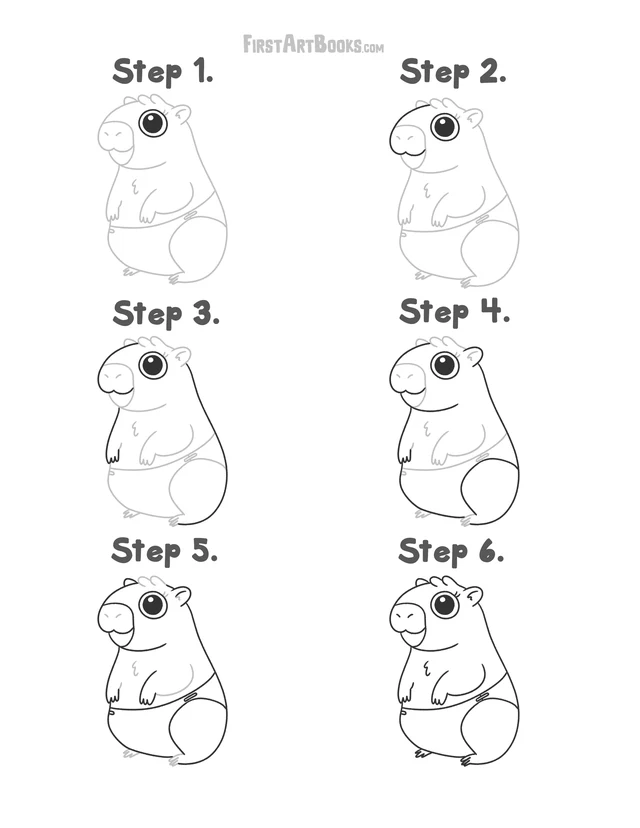
Once tracing feels easy, kids are ready to draw on their own with a little help. A step-by-step lesson breaks a character into about six small steps, so no step is hard. On every page of a How to Draw book, a light gray outline shows the whole finished drawing, so kids can see where each part goes and how big to make it. They draw the black lines of each step on top.
- Do one lesson together. Draw it yourself too: kids love a drawing buddy.
- Let them change something at the end: a new hat, a different mood, a silly color.
- See how a How to Draw page works for a walk-through.
Stage 3: draw by grid (ages 5 and up, best from 7)
Grid drawing teaches kids to look closely. A picture is divided into squares, and kids copy one square at a time onto an empty grid. A big, hard drawing becomes many small, easy ones. Kids who love puzzles often love grid drawing, and older kids enjoy how “real” the results look. Our beginner’s guide to grid drawing explains it.
Ten minutes a day
The routine matters more than the book. Pick a time that is already calm: after breakfast, after school, before bath. Keep the supplies in one box. Ten minutes is enough, and a child who wants to keep going will. Our guide on how often kids should draw has a simple weekly plan.
What to say
When your child shows you a drawing, describe what you see instead of grading it: “You gave him really big eyes!” or “You kept going on the hard part.” Our list of 20 ways to praise a drawing has more. And if your child gets stuck or upset, read what to do when a kid says “I can’t draw”.
Which stage is right for my child?
Go by what feels easy, not by age alone. A 7-year-old who has never drawn much may enjoy a few tracing pages first. A 5-year-old who already draws all day may jump straight to step-by-step lessons. Not sure? Our short guide which series is right for my child? helps you choose, and the drawing milestones by age guide shows what is typical at each stage.
A plan you can start today
- Print one free page from the free activity pages.
- Sit down together for ten minutes and do it side by side.
- Hang the result on the fridge.
- Tomorrow, do another one. When it feels easy, move up a stage.
The book that helps
The Baby Animals trio is the whole plan in three books: the same cute animals to trace, to draw step by step, and to draw by grid. Start at the stage that fits your child and move up when it feels easy.
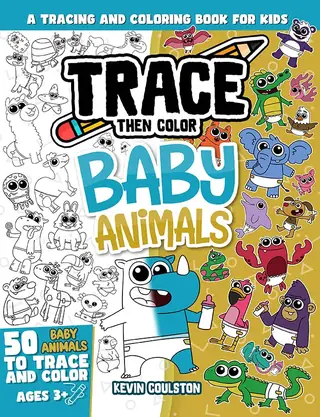 Trace Then Color: Baby Animals
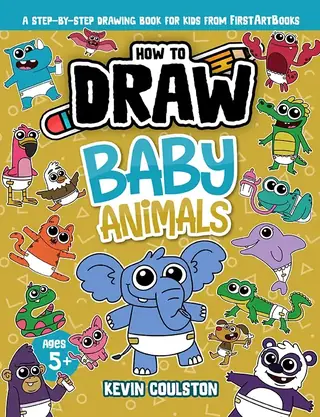 How to Draw: Baby Animals
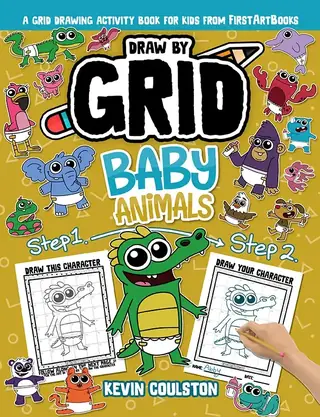 Draw by Grid: Baby Animals
As an Amazon Associate, FirstArtBooks earns from qualifying purchases.
Get free drawing pages by email
Kevin’s newsletter brings new printable drawing and coloring pages and book news. New subscribers also get the free bonus packs: Christmas, animals, dinosaurs, robots, monsters and more, plus the Classroom Drawing Kit.
Questions
What is the best age to start teaching a child to draw?
Around age 3, when most kids can hold a crayon and follow a line. Start with tracing and coloring, then move to step-by-step drawing around 5.
Do I need to be good at drawing to teach my child?
No. Step-by-step and tracing books do the teaching. Your job is to sit nearby, keep sessions short and praise the effort.
How long should a drawing session be?
About 10 minutes for preschoolers and 15 to 30 minutes for school-age kids. Daily short sessions work better than long ones once in a while.
Should kids learn to draw from books or by drawing freely?
Both. Guided pages teach skills, and free drawing lets kids use them. A good mix is one guided page, then a blank page to make their own version.