

Tracing and coloring are among the simplest fine motor activities for preschoolers. Following a line and coloring inside a shape work the small muscles of the fingers and hand, train eyes and hands to work together, and build the control kids need for writing, cutting and buttoning. A few minutes a day, with the right tools and a subject your child loves, is enough.
What are fine motor skills?
Fine motor skills are the small, precise movements of the hands and fingers: holding a pencil, turning a page, zipping a coat, using scissors. They develop over the preschool years and are a big part of school readiness. Drawing and coloring are natural, fun ways to practice them.
Why tracing and coloring work
- Tracing asks for slow, controlled movement along a line.
- Coloring builds stamina and control as kids fill a shape.
- Both strengthen the tripod grip (thumb, index and middle finger) used for writing. See pencil grip by age.
- Both are calm and absorbing, so kids practice longer than they would with drills.
12 fine motor activities with drawing
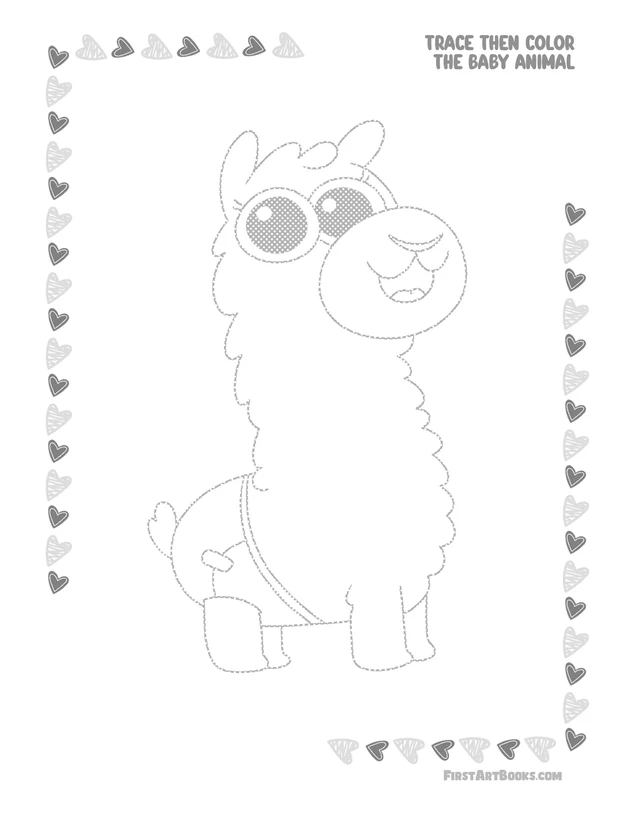
- Trace a character, then color it. The classic. Free pages in the activity library.
- Rainbow tracing. Trace the same outline three times in three colors.
- Trace on a vertical surface. Tape paper to a wall or easel; it strengthens the wrist and shoulder.
- Tiny crayons. Broken crayon pieces force a pincer grip.
- Dot-to-dot. Connecting dots is tracing with a puzzle.
- Line paths. Draw a road from a car to a house and have kids trace it.
- Pre-writing patterns. Zigzags, waves, loops. See pre-writing strokes.
- Color with cotton swabs and paint. A different grip, same control.
- Stickers on the lines. Peeling and placing stickers is great finger work.
- Play-dough before drawing. Squeezing warms up the hand muscles.
- Trace with a finger first. Then with a crayon.
- Finish the picture. Draw half a shape and let them complete it.
The right tools
- Short, chunky or triangular crayons for ages 2 to 4.
- Triangular jumbo pencils for ages 4 to 5.
- Washable markers for fun, but crayons and pencils give more resistance, which builds strength.
More in art supplies by age.
How much is enough?
Five to ten minutes once or twice a day is plenty for most preschoolers. Look for signs of tiredness: a fist grip, pressing very hard, or shaking out the hand. That’s the time to stop.
When to ask for help
Every child develops at their own pace. If your child avoids all hand activities, has great difficulty holding a crayon at 4 or 5, or is very frustrated by drawing, talk to your pediatrician or preschool teacher. An occupational therapist can help, and tracing is often part of what they recommend at home.
For a full introduction, read tracing for kids.
The book that helps
Trace Then Color pages are fine motor practice disguised as fun: follow the dotted outline, then color the character in.
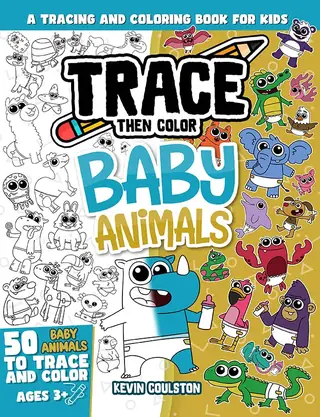 Trace Then Color: Baby Animals
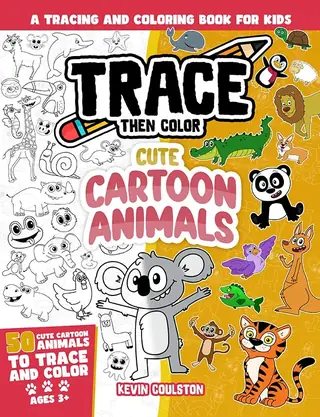 Trace Then Color: Cute Cartoon Animals
As an Amazon Associate, FirstArtBooks earns from qualifying purchases.
Get free drawing pages by email
Kevin’s newsletter brings new printable drawing and coloring pages and book news. New subscribers also get the free bonus packs: Christmas, animals, dinosaurs, robots, monsters and more, plus the Classroom Drawing Kit.
Questions
Is coloring good for fine motor skills?
Yes. Coloring builds hand strength, control and endurance, especially with crayons or colored pencils.
What are good fine motor activities for 3-year-olds?
Tracing big shapes, coloring with chunky crayons, play-dough, stickers and finger tracing are all great at 3.
How does tracing help fine motor development?
Following a line takes small, controlled finger and wrist movements and trains eyes and hands to work together.