
To teach a preschooler to draw, keep it short, playful and big. Give them chunky crayons, large paper and simple shapes to copy, and let tracing pages do some of the work. At this age, drawing is about moving the hand and having fun, not about getting it “right.” Ten minutes a day is plenty.
What to expect at each age
- Age 3: Scribbles turn into circles and lines. Many kids draw a “tadpole person”: a circle head with legs coming out of it. That is a big step.
- Age 4: Shapes start to mean things. A circle with lines becomes the sun; a square with a triangle becomes a house. Kids will tell you what they drew, and it may change halfway through.
- Age 5: Drawings get bodies, arms, fingers and ground lines. Kids can follow simple steps and copy shapes.
Every child moves at their own pace. Our guide to drawing milestones by age shows the whole path from scribbles to scenes.
Start with shapes
Everything a preschooler will ever draw is made of circles, ovals, squares, triangles and lines. Play with them:
- Draw a big circle and ask, “What could this be?” A ball, a face, a cookie, a bug.
- Make a shape “family”: a big circle, a medium one and a tiny one.
- Turn shapes into animals: a circle body, two triangle ears, a line tail. That’s a cat.
The drawing with shapes guide has more shape games.
Let tracing do some of the teaching
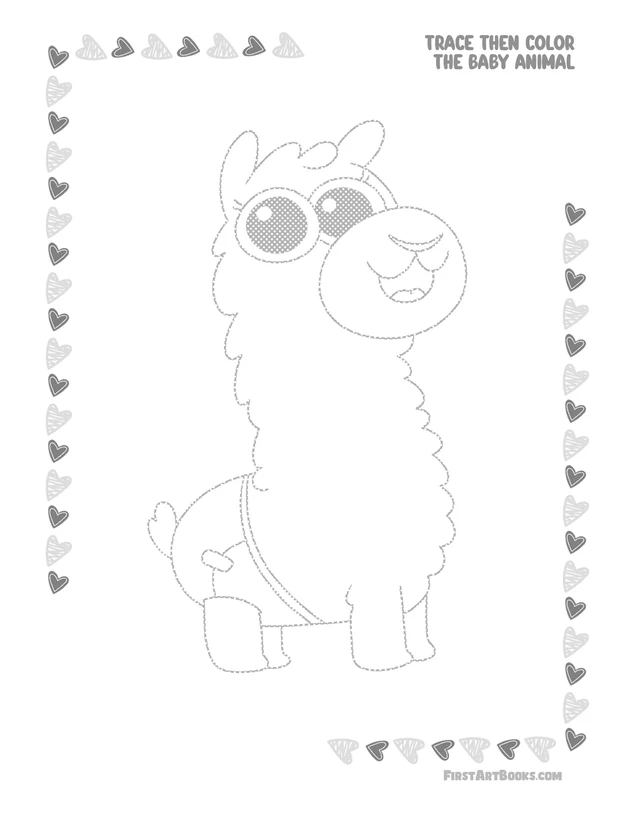
Tracing is a great fit for 3 to 5-year-olds. A child follows a dotted outline and ends up with a whole character, which feels amazing. Along the way, they practice holding the pencil, slowing down and following a line. Then they get to color it in. The tracing guide explains why it works, and this one answers the “is tracing cheating?” question.
Tips that make it easier
- Use the right tools. Chunky or triangular crayons are easier to grip. See art supplies by age.
- Tape the paper down. Paper that slides around is frustrating for small hands.
- Go big. Large paper and big shapes are easier than small details.
- Keep it short. Five to ten minutes, then stop while it’s still fun.
- Draw together. Sit beside your child and draw too. They learn a lot from watching.
- Ask, don’t guess. Say “Tell me about your drawing” instead of “Is that a dog?”
What not to worry about
Don’t worry about coloring outside the lines, purple dogs or people with no bodies. Don’t correct a preschooler’s drawing or “fix” it for them. And don’t worry if they want to draw the same thing over and over: repetition is how kids practice.
When they’re ready for more
When your preschooler can trace a page easily and loves to draw, try a simple step-by-step lesson with them. Many 5-year-olds are ready for a How to Draw page, where a light gray outline shows the finished drawing on every step and they add the black lines a few at a time. See how to teach a kindergartner to draw for the next stage.
The book that helps
Trace Then Color books give preschoolers a finished character on the first try: trace the dotted outline, then color it in. Big, simple shapes, no reading needed.
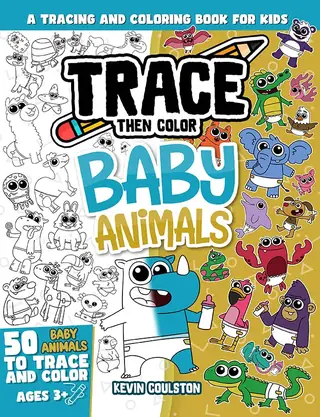 Trace Then Color: Baby Animals
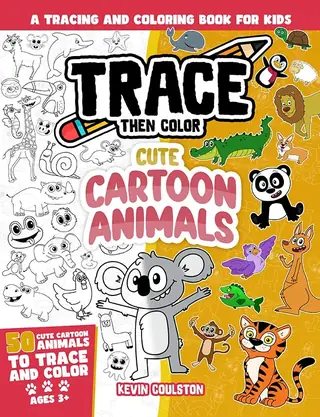 Trace Then Color: Cute Cartoon Animals
As an Amazon Associate, FirstArtBooks earns from qualifying purchases.
Get free drawing pages by email
Kevin’s newsletter brings new printable drawing and coloring pages and book news. New subscribers also get the free bonus packs: Christmas, animals, dinosaurs, robots, monsters and more, plus the Classroom Drawing Kit.
Questions
Can a 3-year-old learn to draw?
Yes. At 3, drawing means circles, lines and scribbles with meaning. Tracing and shape games help them gain control quickly.
What should a 4-year-old be able to draw?
Many 4-year-olds draw a person with a head and legs, a sun, a house and simple shapes. Every child is different, and all progress counts.
Is tracing good for preschoolers?
Yes. It builds pencil control and gives kids a finished picture they are proud of. Pair it with free drawing on blank paper.
How do I get my preschooler interested in drawing?
Start with what they love, like animals or trucks, keep sessions short and draw alongside them.