
Parents sometimes worry that tracing is cheating, or that it will stop a child from learning to draw on their own. It is a fair question. The short answer: tracing is not cheating. Used the right way, it is one of the best first steps into drawing, and it is how many artists, animators and cartoonists practiced when they were young.
What tracing actually teaches
- Pencil control. Following a line slowly builds the small hand muscles and steady movement that drawing and handwriting both need.
- How a drawing is built. Tracing a cartoon character shows a child where the head ends and the body starts, how big the eyes are and how the lines join. That is information they use later when they draw freehand.
- Confidence. A child who traces a character gets a drawing they are proud of on the first try. That good feeling is what brings them back to the paper tomorrow.
- Coloring with purpose. Once the outline is done, the coloring is all theirs: every choice of color is a creative decision.
How Trace Then Color pages work
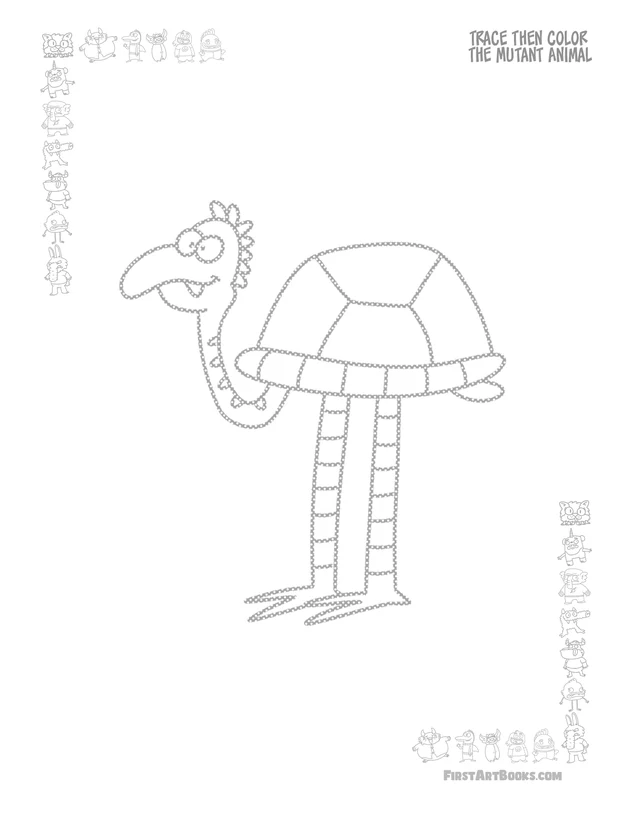
Each page in the Trace Then Color books shows one of Kevin Coulston’s cartoon characters as a dotted gray outline. Kids go over the dots with a pencil or marker, then color the character any way they like. There are no numbers and no right colors. The free pages below work the same way.
- Trace and Color a Turtle Flamingo Hybrid
- A Robot Dinosaur Coloring Page
- Trace Then Color an Alien Cyborg
When tracing becomes copying, and copying becomes drawing
Tracing is a starting point, not the whole path. Most kids move through three stages, often without being pushed:
- Trace a character until it feels easy (ages 3 to 6 is typical).
- Copy the same character next to the traced one, looking back and forth. Step-by-step lessons help here: the How to Draw books break each character into about six steps.
- Change it. Draw the character again with a new hat, a new mood or a new friend. That is real, original drawing.
Older kids who want a bigger challenge can try grid drawing, where they copy a drawing one square at a time. It trains the same careful looking that tracing starts.
How to use tracing well
- Let your child trace as much as they like, and also offer blank paper next to the tracing page.
- Ask “Can you draw one more next to it?” rather than “Now do it without tracing.”
- Celebrate the coloring and the changes they make, not only the neatness of the lines.
- Move on to step-by-step pages when tracing starts to look easy or boring.
Tracing is not a shortcut around drawing. It is the first rung on the ladder. You can find every free tracing page in the activity finder (choose “Trace then color”), and the full series on the Trace Then Color books page.
Questions
Is tracing bad for kids learning to draw?
No. Tracing builds pencil control and shows how a drawing is put together. Offer blank paper alongside it so kids can try their own version next.
At what age should kids stop tracing?
There is no set age. Most kids move on by themselves around 6 or 7, when tracing starts to feel easy. Step-by-step and grid pages are good next steps.