
Kindergarten is when most kids become ready to follow a drawing step by step. The best approach is simple: start every drawing with a big shape, add a few lines at a time, and let kids finish with their own colors and details. Short, guided lessons give five and six-year-olds the success that keeps them drawing.
What kindergartners can do
By five, most children can copy a circle, square, triangle and cross, hold a crayon with more control, and follow two or three spoken steps. Their drawings start to show a ground line, a sky, and people with bodies, arms and sometimes fingers. They are also starting to compare their drawings with other kids’, which is why guided lessons help: everyone gets a drawing they like.
Teach the shape habit
Show that every drawing starts with a shape. A bunny is an oval body, a circle head and two long oval ears. A robot is a box on top of a bigger box. Once kids see shapes inside everything, drawing gets much easier. Play “shape spotting” on a walk or in a picture book. The drawing with shapes guide has more ideas, and the try a shape game is a fun warm-up.
Use a lesson with a guide
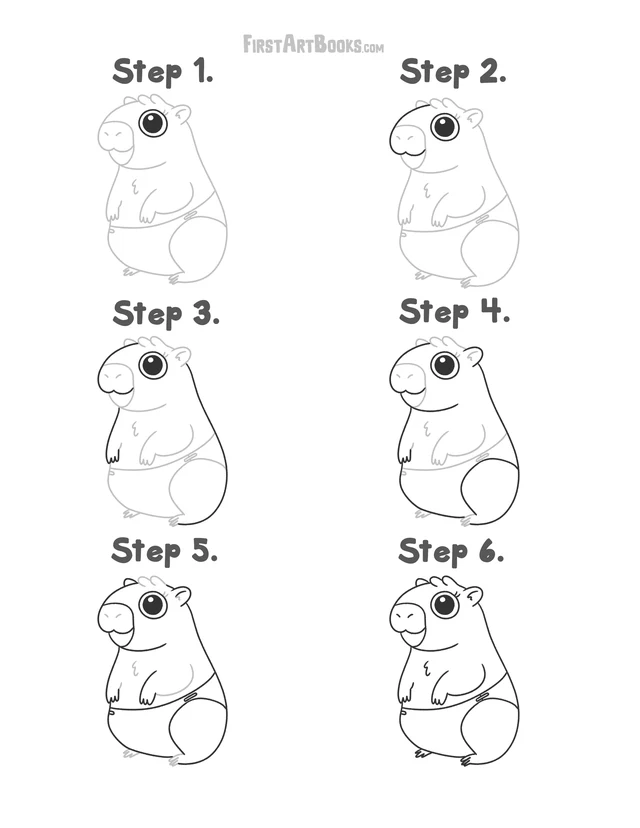
Kindergartners do best when they can see where they are going. On each page of a How to Draw book, the whole finished drawing is shown as a light gray outline, and each step adds a few black lines. Kids can see how big to make the head and where the ears go, so their drawing fits the page. Read how a How to Draw page works to see the method.
A 15-minute kindergarten drawing lesson
- Warm up (2 minutes). Draw big circles in the air, then on paper.
- Show the finished drawing (1 minute). “Today we’re drawing a baby elephant.”
- Draw together, one step at a time (8 minutes). Say each step out loud and wait until everyone is ready.
- Make it yours (4 minutes). Add a hat, a friend, a background or a name.
Teachers can find ready-to-run versions in the art center cards and the directed drawing guide.
Encourage, don’t correct
A kindergartner’s elephant may have a very long trunk or six legs. That’s fine. Praise what they did (“You remembered the big ears!”), not how close it is to the example. Our 20 phrases for praising a drawing help. If a child gets upset, try these steps for “I can’t draw”.
Mix guided and free drawing
After a guided lesson, give a blank page and ask, “Can you draw your elephant at the beach?” Kids use what they just learned in their own way. That is where real drawing skill grows.
When to try tracing or grids
If steps feel hard, a Trace Then Color page builds confidence first. If they fly through the steps, a simple Draw by Grid page is a fun new challenge. The drawing activities for 6 and 7-year-olds guide shows what comes next.
The book that helps
How to Draw: Baby Animals is a gentle first step-by-step book, with a light gray outline of the finished drawing on every step. The Shape Drawing Challenge turns one shape into many characters.
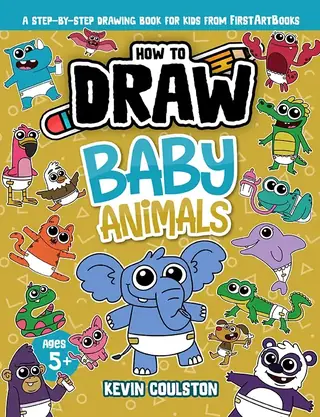 How to Draw: Baby Animals
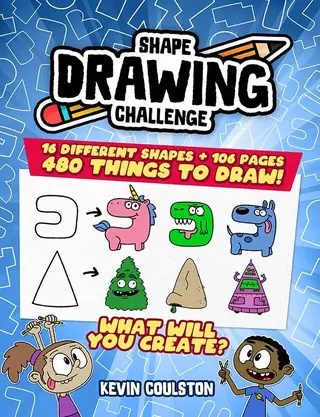 Shape Drawing Challenge
As an Amazon Associate, FirstArtBooks earns from qualifying purchases.
Get free drawing pages by email
Kevin’s newsletter brings new printable drawing and coloring pages and book news. New subscribers also get the free bonus packs: Christmas, animals, dinosaurs, robots, monsters and more, plus the Classroom Drawing Kit.
Questions
What should a kindergartner be able to draw?
Most can draw a person with a head, body, arms and legs, simple animals, houses and suns, and can copy basic shapes.
How do you teach drawing to kindergarten students?
Start each drawing with a big shape, add a few lines at a time, say each step out loud, and finish with free time to add details.
How long should a kindergarten drawing lesson be?
About 15 to 20 minutes, including a warm-up and time to add their own details.