


Coloring and drawing teach different things. Coloring builds hand control, focus and color sense, and it’s calming. Drawing builds planning, observation, imagination and problem-solving. Both are valuable, and the best activities combine them: draw (or trace) a character, then color it in.
The benefits of coloring
- Fine motor control. Staying near the lines takes careful, controlled strokes. See fine motor activities.
- Hand strength and stamina. Filling a shape is a workout for small hands.
- Focus. Coloring is absorbing; many kids (and adults) find it calming. See calming drawing activities.
- Color knowledge. Naming, choosing and mixing colors.
- Completion. A finished page is satisfying.
The benefits of drawing
- Planning. Deciding where things go and how big to make them.
- Observation. Looking closely at shapes and spaces.
- Imagination. Inventing characters, scenes and stories.
- Problem-solving. Figuring out how to draw something you’ve never drawn.
- Communication. Drawing is how young kids express ideas before they can write.
More in 12 benefits of drawing for kids.
Is coloring “less creative”?
Some people worry that coloring books limit creativity because the lines are already drawn. Coloring alone doesn’t make a child less creative, but it’s only half of art. If a child only ever colors, they miss the planning and inventing that drawing teaches. The answer isn’t to ban coloring pages; it’s to add drawing.
The best of both
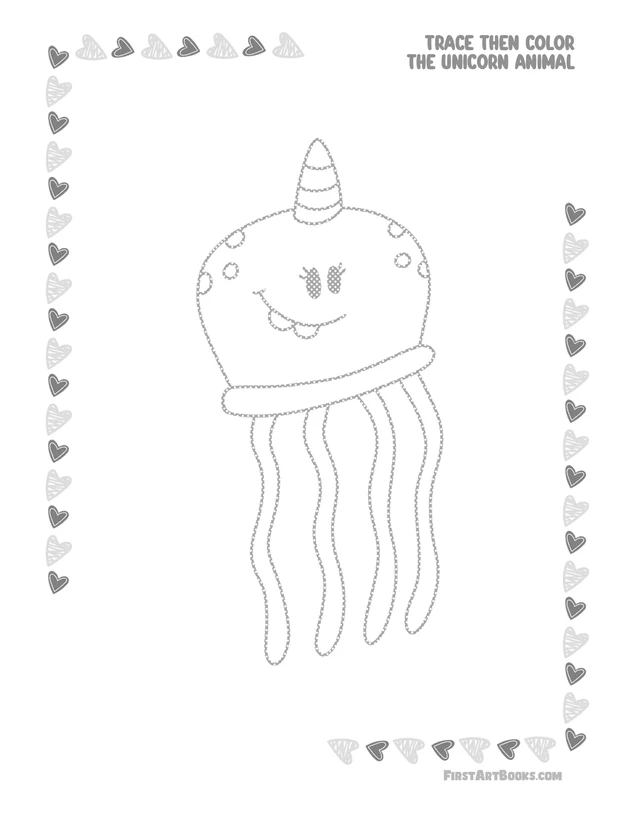
- Trace, then color. Kids draw the character by tracing it, then color it. That’s the idea behind Trace Then Color.
- Draw, then color. Follow a step-by-step lesson, then color the result.
- Color, then add. Color a page, then draw a background or a friend for the character.
- Free drawing day. One day a week, blank paper only.
By age
- Ages 3 to 4: mostly coloring and tracing, with lots of scribbling and shape drawing.
- Ages 5 to 7: an even mix; step-by-step drawing becomes possible.
- Ages 8 and up: more drawing, with coloring for relaxing.
Activity books vs coloring books
If you’re choosing between book types, see activity books vs coloring books. And for a full guide to the tracing stage, read tracing for kids.
The book that helps
Trace Then Color pages give kids both in one sitting: draw the character by tracing it, then color it in.
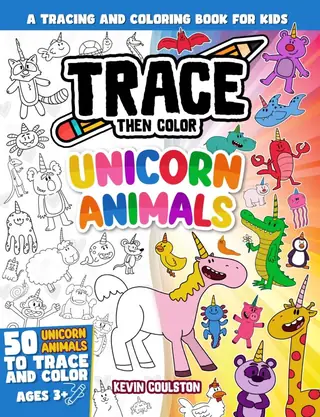 Trace Then Color: Unicorn Animals
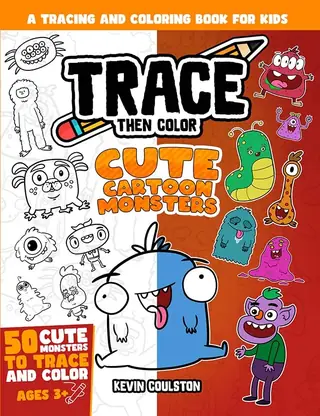 Trace Then Color: Cute Cartoon Monsters
As an Amazon Associate, FirstArtBooks earns from qualifying purchases.
Get free drawing pages by email
Kevin’s newsletter brings new printable drawing and coloring pages and book news. New subscribers also get the free bonus packs: Christmas, animals, dinosaurs, robots, monsters and more, plus the Classroom Drawing Kit.
Questions
Is coloring as good as drawing for kids?
They teach different things. Coloring builds control and focus; drawing builds planning and imagination. Kids benefit from both.
Do coloring books limit creativity?
Not on their own, but kids also need blank paper and drawing time to invent their own pictures.
What are the benefits of coloring for kids?
Fine motor control, hand strength, focus, color knowledge, calm and the satisfaction of finishing.