
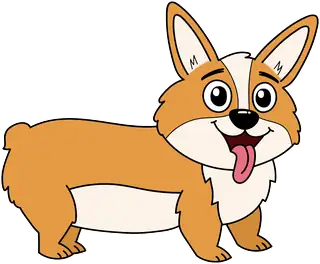
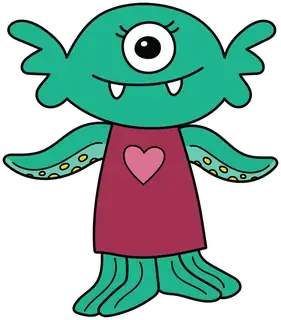
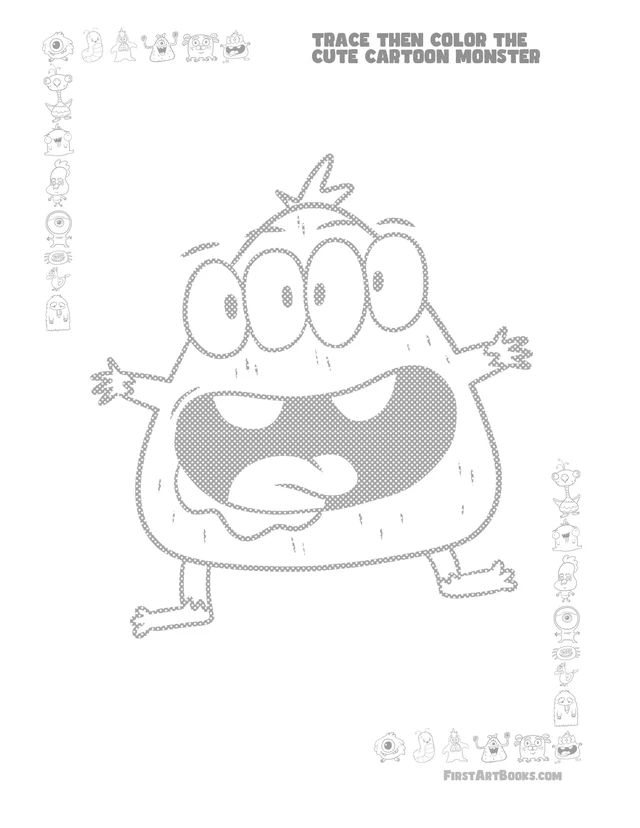
Tracing builds handwriting readiness by practicing the same skills writing needs: pencil grip, controlled lines and curves, eye-hand coordination and the patience to slow down. When kids trace a cartoon character, they’re practicing the vertical lines, circles and diagonals that make up every letter, often without noticing it’s practice at all.
What is handwriting readiness?
Before children can write letters comfortably, they need:
- Hand strength and a working grip. See pencil grip by age.
- Control of basic strokes. Vertical and horizontal lines, circles, crosses, diagonals and triangles.
- Eye-hand coordination. Watching the line and moving the pencil along it.
- Crossing the midline. Moving the hand across the body.
- Attention. Staying with a small task for a few minutes.
The strokes inside the alphabet
Letters are made of a few basic strokes. Children usually master them in this order: vertical line, horizontal line, circle, cross, diagonal lines, square, X and triangle. Every one of these appears in simple drawings, which is why drawing and tracing are such good preparation. See pre-writing strokes for activities for each one.
How tracing pictures helps
- It repeats the strokes in a fun context. A robot is all straight lines; a monster is all circles and curves.
- It slows kids down. Following a line rewards careful movement.
- It strengthens the hand. Ten minutes of tracing and coloring is a hand workout.
- It builds confidence. Kids who feel successful with a pencil are more willing to try writing.
A simple routine
- Warm up: big air circles and lines with the whole arm.
- Trace: one character page, slowly.
- Color: fill it in, trying to stay near the lines.
- Try a letter: if your child is ready, trace or write one letter that appears in the picture, or the first letter of their name.
When are kids ready to write letters?
Many children are ready to start forming letters around 4 to 5, once they can copy a cross and a circle confidently. Before that, focus on drawing and tracing. Pushing letters too early can make kids anxious about writing.
Make letters fun
Turning letters into characters is a great bridge. Try alphabet drawing activities with monsters, where each letter becomes a silly creature. For more on tracing in general, read tracing for kids.
The book that helps
Alphabet Monsters turns each letter into a character. Tracing them practices letter shapes in a way kids find funny, not tiring.
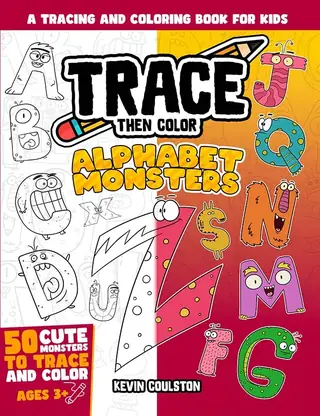 Trace Then Color: Alphabet Monsters
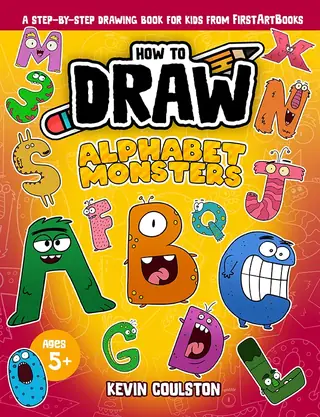 How to Draw: Alphabet Monsters
As an Amazon Associate, FirstArtBooks earns from qualifying purchases.
Get free drawing pages by email
Kevin’s newsletter brings new printable drawing and coloring pages and book news. New subscribers also get the free bonus packs: Christmas, animals, dinosaurs, robots, monsters and more, plus the Classroom Drawing Kit.
Questions
Does tracing help with writing?
Yes. Tracing practices the strokes used in letters and builds grip, control and eye-hand coordination.
What are handwriting readiness skills?
Hand strength, a working grip, control of basic strokes, eye-hand coordination, crossing the midline and attention.
When should a child start tracing letters?
Usually around 4 to 5, once they can copy a circle and a cross. Before that, tracing pictures and shapes is better practice.