
Most children’s pencil grip develops in stages: a fist grip around 1 to 2, a fingers-down grip around 2 to 3, a four-finger grip around 3 to 4, and a mature tripod grip (thumb, index and middle finger) by about 4 to 6. You can help with short pencils, triangular crayons, tracing and coloring, and fun hand games, without constant correction.
The stages of pencil grip
Ages 1 to 2: fist grip
The whole hand wraps around the crayon and the movement comes from the shoulder. Scribbles are big and loopy. Totally normal.
Ages 2 to 3: fingers pointing down
The crayon is held with the fingers, palm facing down, and the movement comes from the elbow.
Ages 3 to 4: four-finger grip
Four fingers hold the pencil, and the wrist starts to move. Control improves a lot.
Ages 4 to 6: tripod grip
The pencil rests between the thumb and index finger, supported by the middle finger. The movement comes from the fingers. Some children use a four-finger version of this and write perfectly well.
How to help, gently
- Use short tools. Short crayons and golf pencils naturally push kids into a finger grip.
- Try triangular crayons and pencils. The flat sides guide fingers into place.
- Draw on a slant or vertical surface. An easel or paper on the wall puts the wrist in a good position.
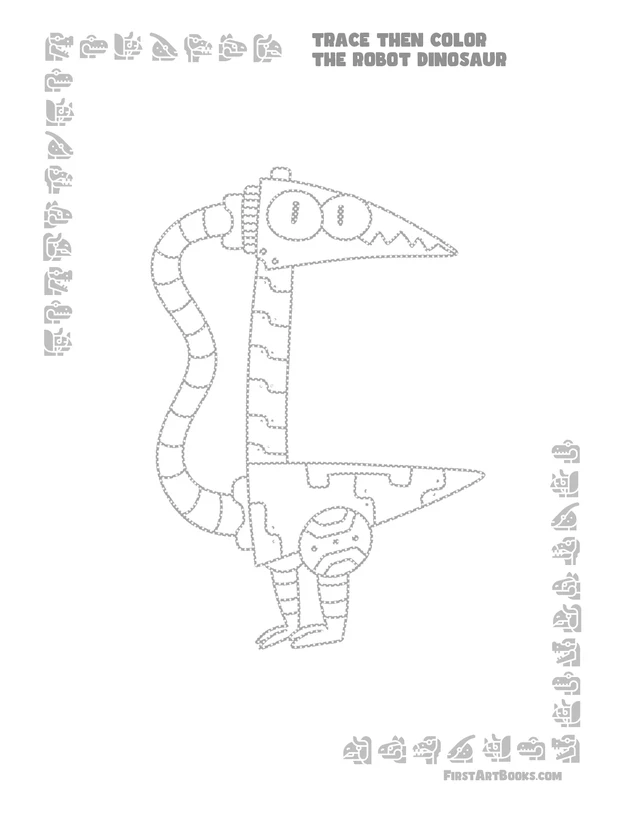
- Trace and color. Regular, short sessions build strength. See fine motor activities with tracing.
- Play finger games. Pinching clothespins, picking up small objects, play-dough.
- Show, don’t nag. Model the grip. A quick “pinch the pencil like a crab” works better than repeated correction.
The “pinch and flip” trick
Lay the pencil on the table pointing toward your child. They pinch it with thumb and index finger near the tip, then flip it back over their hand. It lands in a tripod grip. Kids think it’s a magic trick.
Should I use a pencil grip aid?
Rubber grips can help some kids, but they aren’t necessary for most. Try short pencils and triangular tools first. If your child is 5 or older and still uses a fist grip, or writing makes their hand hurt, ask their teacher or an occupational therapist.
Lefties
Left-handed kids follow the same stages, but paper position matters more. See left-handed kids and drawing.
Keep it fun
Grip practice works best when kids don’t notice it. A tracing page of a favorite character is grip practice they’ll ask for. Start with tracing for kids.
The book that helps
Short daily tracing sessions are one of the gentlest ways to practice a good grip. Trace Then Color pages make the practice something kids ask for.
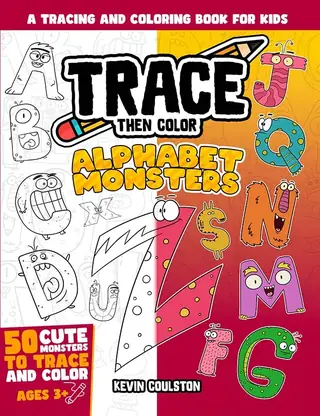 Trace Then Color: Alphabet Monsters
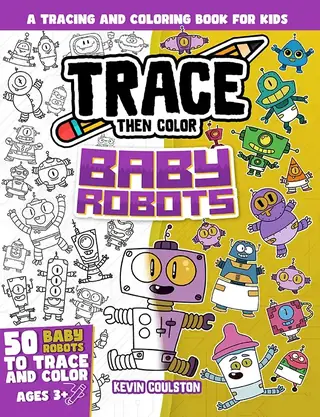 Trace Then Color: Baby Robots
As an Amazon Associate, FirstArtBooks earns from qualifying purchases.
Get free drawing pages by email
Kevin’s newsletter brings new printable drawing and coloring pages and book news. New subscribers also get the free bonus packs: Christmas, animals, dinosaurs, robots, monsters and more, plus the Classroom Drawing Kit.
Questions
At what age should a child hold a pencil correctly?
Most children develop a mature tripod or four-finger grip between about 4 and 6.
How do I fix my child’s pencil grip?
Use short pencils and triangular crayons, try the “pinch and flip” trick, and practice with short tracing and coloring sessions instead of constant correction.
Is a four-finger grip wrong?
Not necessarily. Many people write well with a four-finger grip. What matters is comfort and control.