

You can teach homeschool art without being able to draw. Use step-by-step lessons and tracing pages that do the teaching for you, draw alongside your kids as a fellow learner, and follow a simple weekly rhythm: one guided lesson, one free-drawing session and one art appreciation or project time. Your enthusiasm matters far more than your skill.
Why you don’t need to draw
The idea that only artists can teach art keeps many homeschool families from doing it at all. But in a homeschool, you’re a guide, not a lecturer. Good materials teach the techniques; your job is to set up the time, provide supplies, encourage effort and talk about the work. Many parents find they learn to draw right alongside their kids.
Let the books do the teaching
- Tracing books (ages 3+) need no instruction at all: trace the dotted outline, then color. See tracing for kids.
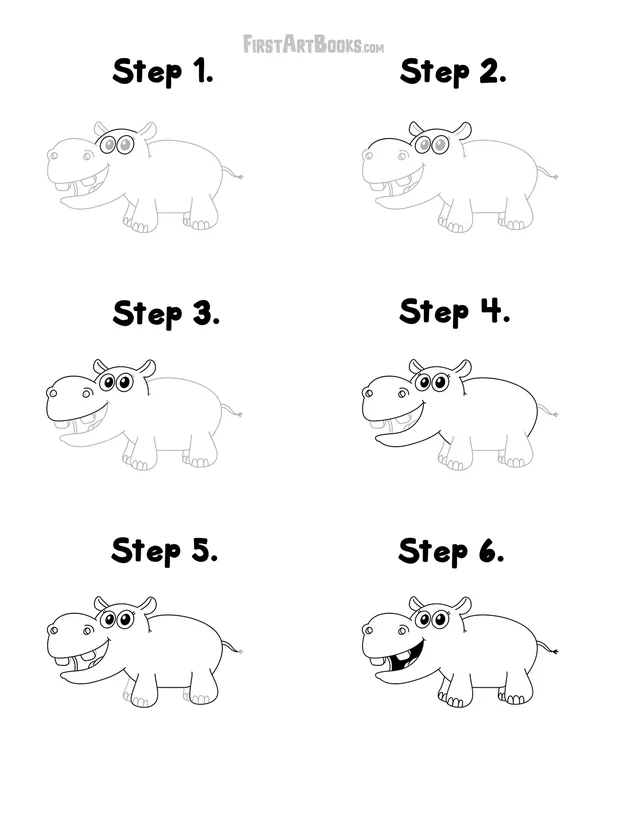
- Step-by-step books (ages 5+) show each step clearly. In a How to Draw book, a light gray outline of the finished drawing appears on every step, and kids add the black lines a few at a time. See how a How to Draw page works.
- Grid books (ages 5+, best from 7) teach observation one square at a time. See what is grid drawing?
- Videos let kids watch a lesson. See the videos page.
A simple weekly rhythm
- Day 1: guided lesson (20 to 30 minutes). One step-by-step or grid page.
- Day 2: free drawing (20 minutes). Draw the same character in a new way, or anything they like.
- Day 3: project or art talk (30 minutes). A comic, a card, a mural, or looking at a famous artwork and talking about it.
That’s about an hour a week, and it’s plenty. For a full schedule, see the 36-week homeschool drawing curriculum or build one with the homeschool art planner.
Draw alongside them
The single best thing you can do is sit down and draw too. Kids learn from watching you make and fix mistakes, and they love seeing a parent try. Say things like “This step is tricky for me too.” See perfectionism in kids’ art for why modeling imperfection helps.
What to say about their work
Skip grades. Describe what you see and ask questions. See how to praise a child’s drawing and questions to ask kids about their art.
Multiple ages
Give each child the format that fits, in the same theme. See drawing with mixed ages.
Tie art to other subjects
- Science: draw dinosaurs, sea creatures and planets. See art and science activities.
- Writing: draw then write. See draw then write prompts.
- Math: grid drawing. See grid drawing and math.
- Reading: draw characters from books. See reading response drawing.
Keep a portfolio
Date every drawing and keep it in a folder. At the end of the year, the progress is clear, and many states ask for work samples anyway. See how to display and store kids’ art.
The book that helps
The three series cover every age in a homeschool: tracing for the youngest, step-by-step for 5 and up, and grids for older kids, all in matching themes.
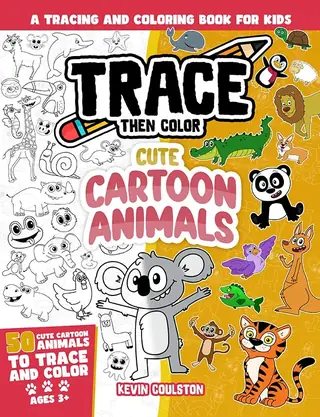 Trace Then Color: Cute Cartoon Animals
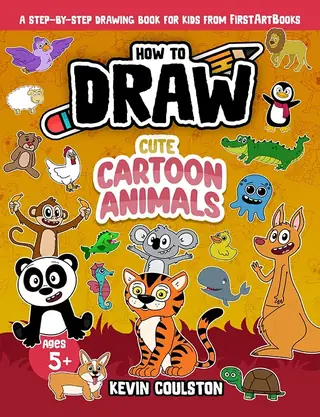 How to Draw: Cute Cartoon Animals
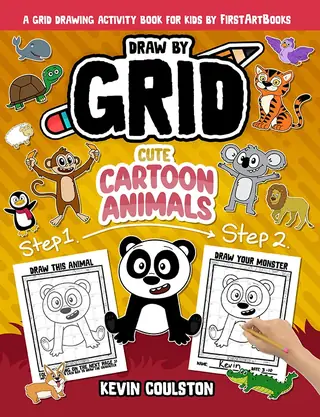 Draw by Grid: Cute Cartoon Animals
As an Amazon Associate, FirstArtBooks earns from qualifying purchases.
Get free drawing pages by email
Kevin’s newsletter brings new printable drawing and coloring pages and book news. New subscribers also get the free bonus packs: Christmas, animals, dinosaurs, robots, monsters and more, plus the Classroom Drawing Kit.
Questions
Can I teach art at home if I can’t draw?
Yes. Use tracing and step-by-step books that teach the technique, draw alongside your kids and focus on encouragement.
How much art should a homeschooler do?
About an hour a week, split into a guided lesson, free drawing and a project, works well.
What is the easiest homeschool art curriculum?
One that follows a simple weekly rhythm with ready-made lessons, such as a step-by-step drawing book and a free-drawing day.