
Art and science go well together because drawing makes kids look closely, and looking closely is the start of science. These three drawing units (dinosaurs, ocean animals and space) pair a few simple facts with step-by-step drawings and a project, for a week or two of learning that sticks. They work for homeschool and for classrooms from kindergarten to grade 5.
Why combine art and science?
- Observation. Drawing an animal means noticing its shape, parts and features.
- Memory. Kids remember what they draw.
- Vocabulary. Labeling a drawing teaches science words.
- Engagement. A fun drawing makes the facts stick.
Unit 1: Dinosaurs
Facts to learn:
- Dinosaurs lived millions of years ago; scientists learn about them from fossils.
- Some ate plants (herbivores) and some ate meat (carnivores).
- Dinosaur names often describe them: triceratops means “three-horned face.”
Drawings: a T-rex, a triceratops, a stegosaurus, a brachiosaurus. Free lessons in the dinosaurs hub.
Project: a dinosaur fact card for each drawing (name, meaning, food, size). Or a “dig site” drawing with fossil bones.
More dinosaur ideas: why kids love dinosaurs.
Unit 2: Ocean animals
Facts to learn:
- The ocean has zones: sunlit, twilight and deep dark water.
- Fish breathe with gills; whales and dolphins are mammals that breathe air.
- Many sea creatures use camouflage or bright colors.
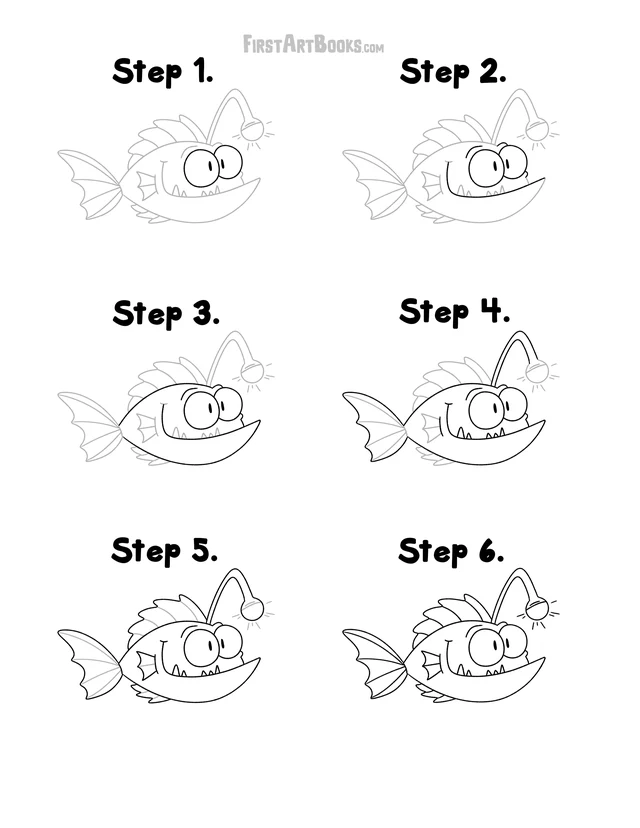
Drawings: a fish, a sea turtle, a pufferfish, a lobster, a seahorse. Free lessons in the sea creatures hub.
Project: an ocean zones poster with animals drawn in the right zone.
More: ocean activities for kids.
Unit 3: Space
Facts to learn:
- Eight planets orbit our sun.
- Astronauts wear spacesuits because there’s no air in space.
- Scientists search for signs of life on other planets.
Drawings: a rocket, an astronaut, a planet, and an invented alien adapted to its planet. Free lessons in the aliens hub.
Project: design an alien for a real planet. How would it survive the cold, heat or gravity?
More: space activities for kids.
Tips
- Label everything. Science words next to the drawing.
- Use real references too. Look at photos of the real animal next to the cartoon.
- Ask “why?” Why does a turtle have a shell? Why are some fish flat?
Fit it into a plan
These units slot into a homeschool year. See homeschool art for parents who can’t draw and the homeschool art planner.
The book that helps
Each unit has a book to go with it: Cartoon Dinosaurs, Fish, Sea Creatures, and More, and Alien Cyborgs for the space unit.
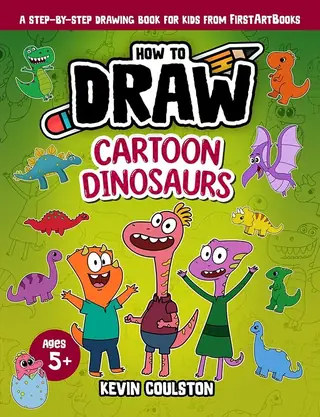 How to Draw: Cartoon Dinosaurs
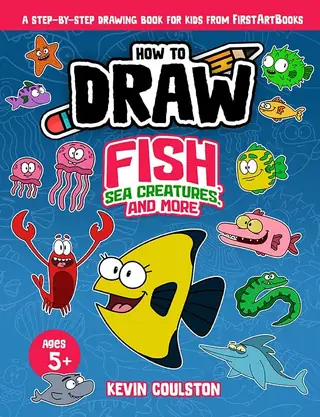 How To Draw: Fish, Sea Creatures, and More
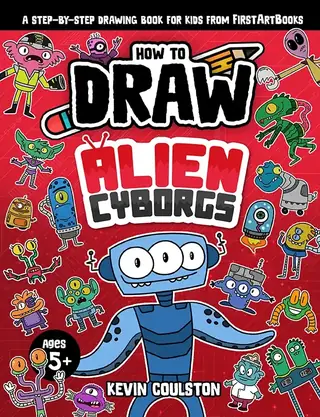 How to Draw: Alien Cyborgs
As an Amazon Associate, FirstArtBooks earns from qualifying purchases.
Get free drawing pages by email
Kevin’s newsletter brings new printable drawing and coloring pages and book news. New subscribers also get the free bonus packs: Christmas, animals, dinosaurs, robots, monsters and more, plus the Classroom Drawing Kit.
Questions
How can art be combined with science?
Have kids draw and label animals, plants or planets they are studying, then make a project such as a fact card or poster.
What are good art and science activities for kids?
Dinosaur fact cards, ocean zone posters and designing an alien for a real planet.
What age are these units for?
Kindergarten to grade 5. Younger kids draw and label; older kids add more facts and writing.