

The easiest way to display kids’ art is a rotating spot: a frame, clipboard wall or string line where new work replaces old work each week. For storage, keep one folder per child per year, save a handful of favorites, photograph the rest and let them go. Displaying art tells kids their work matters, and a simple system keeps the house from drowning in paper.
Why displaying art matters
When a drawing goes on the wall, a child sees that you value their effort. It encourages them to keep drawing, and it gives them a chance to talk about their work with visitors. Displaying work in progress, not just the “best” pieces, shows that practice counts. See how to praise a child’s drawing.
Display ideas
- Rotating frames. Front-opening frames (sometimes called art frames) let you swap a new drawing in without taking the frame down.
- Clipboard wall. Hang a row of clipboards; kids clip up new work themselves.
- String and clothespins. A line across a bedroom wall or along a staircase holds a dozen drawings.
- Fridge of the week. One spot on the fridge, one drawing at a time, chosen by the artist.
- Magnetic paint or corkboard in a kids’ art corner. See set up a kids’ art corner.
- A gallery wall of frames in one color, for the drawings worth keeping up for a while.
Let the artist choose
Kids care about different drawings than we do. Ask “Which one should go up this week?” and let them explain why. That small decision builds pride and gives you a peek into how they think.
A storage system that works
- One folder per child per year. A big art portfolio or a large envelope works.
- Date everything. Write the date and the child’s age on the back.
- End of month or term: sort together. Keep a few favorites, photograph the rest.
- End of year: pick the best 10 to 20 for a keepsake box.
Photograph and let go
Taking a photo of each drawing keeps the memory without the paper. Once a year, print the photos as a photo book; kids love seeing a whole year of their art in one book. Some families make an annual “art book” as a family tradition.
What to keep
- First drawings of people (often around age 3 to 4).
- Drawings with writing or stories.
- Work that shows a big step forward.
- Anything the child says is their favorite.
- A few drawings of the same subject over time, to show growth. See drawing milestones by age.
Turn art into something new
Some drawings deserve a second life as cards, wrapping paper or gifts. See turn kids’ art into gifts. And for a big moment, host an art show at home.
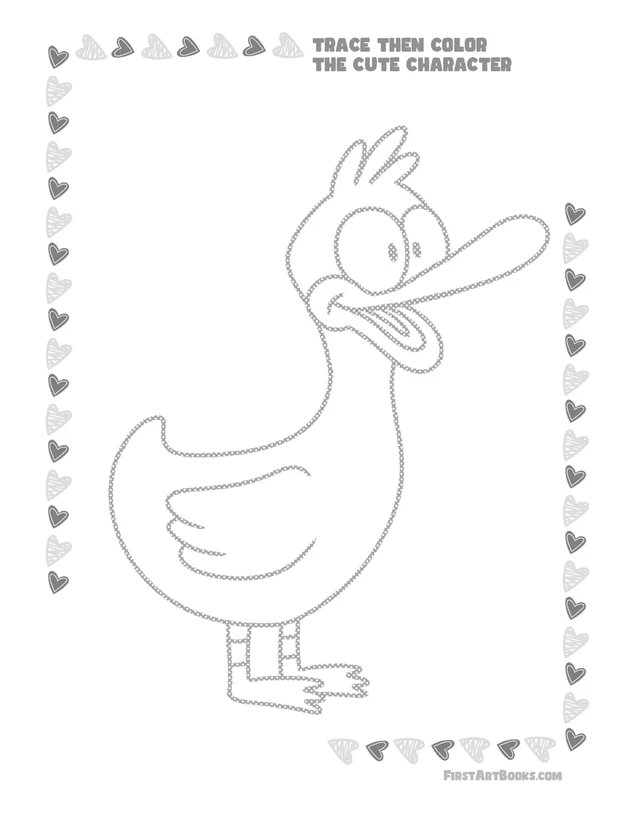
Tip: Drawing books keep practice in one place, so a finished How to Draw or Trace Then Color book becomes a ready-made record of a year’s progress.
The book that helps
A drawing book keeps a whole year of practice in one place, so it doubles as a portfolio. The Sketchbook gives kids pages for their own drawings too.
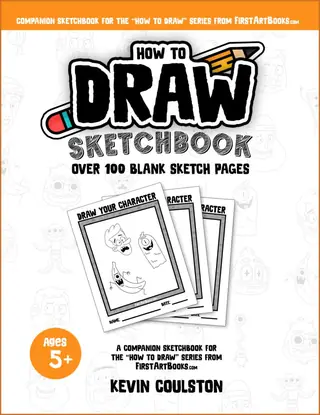 How to Draw: Sketchbook
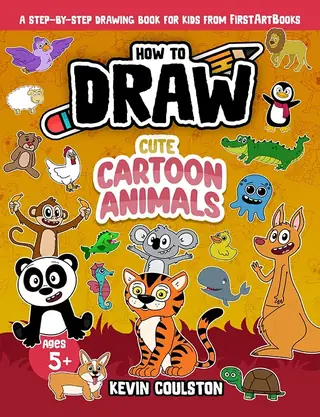 How to Draw: Cute Cartoon Animals
As an Amazon Associate, FirstArtBooks earns from qualifying purchases.
Get free drawing pages by email
Kevin’s newsletter brings new printable drawing and coloring pages and book news. New subscribers also get the free bonus packs: Christmas, animals, dinosaurs, robots, monsters and more, plus the Classroom Drawing Kit.
Questions
How do you display kids’ art without clutter?
Use one rotating display spot, like a front-opening frame or clipboard wall, and swap in new work each week instead of adding more.
How much kids’ art should you keep?
Keep a handful of favorites each term, photograph the rest, and save the best 10 to 20 each year in a keepsake box.
Is it okay to throw away kids’ art?
Yes, especially after photographing it. Involve the child in choosing what to keep, so they feel their best work is honored.