
Step-by-step drawing is good for kids because it breaks a hard task into small, doable pieces. Kids learn to see drawings as simple shapes built up in order, they get a result they’re proud of, and that confidence makes them more willing to draw on their own. It isn’t “just copying” when kids use what they learn to invent their own versions.
The worry
Some parents and teachers worry that step-by-step drawing kills creativity: if every child draws the same cat, where is the imagination? It’s a fair question. The answer is that guided drawing and free drawing do different jobs, and kids need both. See directed drawing in the classroom.
What step-by-step drawing teaches
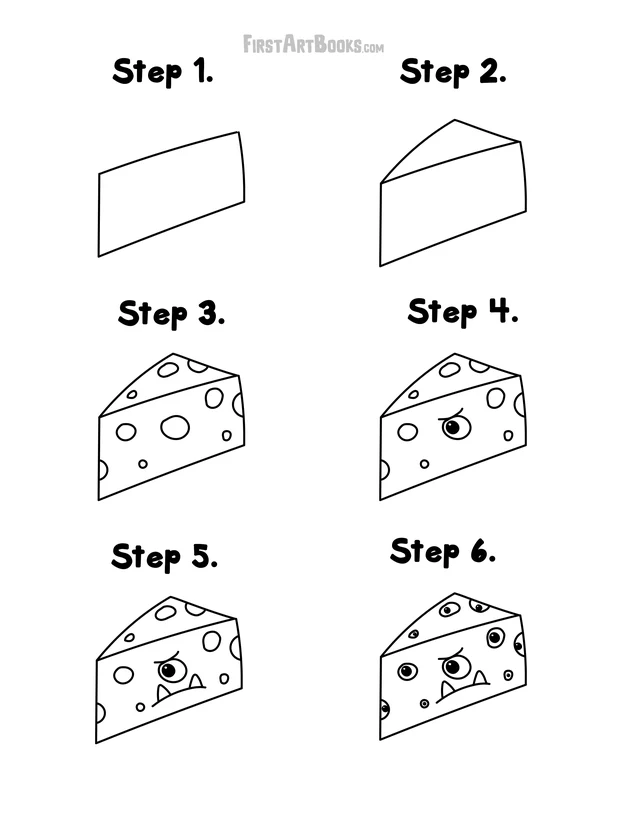
- Seeing in shapes. A cat is a circle, two triangles and an oval. Once kids see that, they can draw almost anything.
- Order. Big shapes first, details last. That’s how professional artists work.
- Proportion and placement. How big is the head compared with the body? Where do the eyes sit?
- Following instructions. A useful skill far beyond art.
- Persistence. Finishing six steps is a small lesson in sticking with something.
- Confidence. A child who draws a great cartoon cat believes they can draw.
Why confidence matters
Many kids stop drawing around 8 to 10 because they can’t get the pictures in their heads onto paper. Guided lessons close that gap. In Kevin’s How to Draw books, a light gray outline shows the whole finished drawing on every step, so kids always know where each line goes. Success comes early, and it keeps kids drawing. See how a How to Draw page works.
Turning guided drawing into creative drawing
The magic happens after the last step. Ask:
- “What would this character look like if it were angry? Sleepy? Tiny?”
- “Can you give it a friend?”
- “Where does it live? Draw its house.”
- “Mix it with another animal.”
Every remix uses the skills from the lesson in a new way. See character design for kids and monster drawing ideas.
How artists really learn
Cartoonists, animators and illustrators learn by copying: model sheets, other artists’ work, life drawing. The goal is never to copy forever, but to build a library of shapes and techniques in your head. Kids are doing the same thing.
A healthy balance
- One guided lesson, then one free page.
- Free drawing time every week with no instructions.
- Celebrate the remixes as much as the “accurate” drawings.
Step-by-step lessons are also a gentle start for kids who find blank paper scary. See perfectionism in kids’ art.
The book that helps
How to Draw books give kids dozens of small wins, and each character is easy to remix into something new.
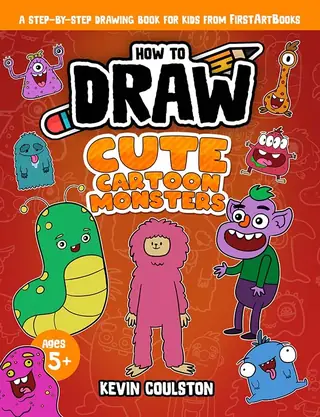 How to Draw: Cute Cartoon Monsters
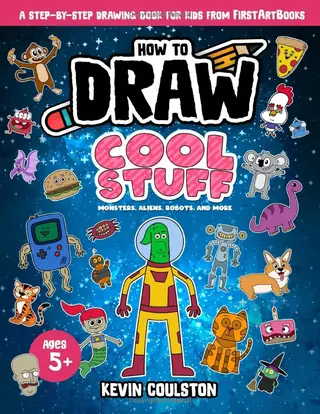 How to Draw: Cool Stuff
As an Amazon Associate, FirstArtBooks earns from qualifying purchases.
Get free drawing pages by email
Kevin’s newsletter brings new printable drawing and coloring pages and book news. New subscribers also get the free bonus packs: Christmas, animals, dinosaurs, robots, monsters and more, plus the Classroom Drawing Kit.
Questions
Does step-by-step drawing limit creativity?
Not when it is balanced with free drawing. Guided lessons build skills and confidence that kids then use creatively.
Is copying drawings bad for kids?
No. Copying is how artists have always learned shapes and techniques. Encourage kids to change and remix what they copy.
What age is step-by-step drawing for?
Most kids are ready around 5. Younger kids can start with tracing.