
Drawing activities are a natural fit for ESL and ELL students because pictures don’t depend on English. Step-by-step lessons that show each step visually, draw-and-label activities, describe-and-draw games and story sequencing let learners succeed right away while building vocabulary and speaking skills.
Why drawing helps English learners
- Low language barrier. A picture-based lesson needs few words.
- Shows understanding. Students can draw what they can’t yet say.
- Builds vocabulary. Drawing gives a reason to learn words: oval, ears, tail, happy.
- Lowers anxiety. Every student can succeed.
- Sparks talk. Students want to explain their drawings.
8 drawing activities for ELL students
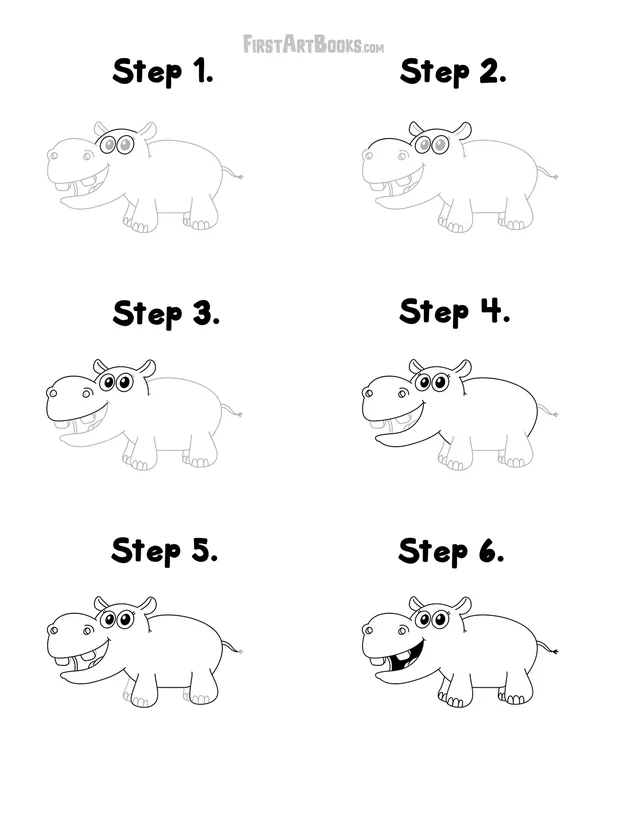
- Visual step-by-step lessons. Each step is shown, not just told. On a How to Draw page, a light gray guide shows the whole finished drawing on every step. See how a How to Draw page works.
- Draw and label. Draw an animal, then label its parts.
- Describe and draw. Partners describe a picture for each other to draw (“a big circle, two small triangles on top”).
- Vocabulary picture cards. Students illustrate new words.
- Feelings faces. Draw and name emotions. See cartoon expressions.
- Story sequencing. Draw first, next, then, last.
- Draw and tell. Draw your weekend, then tell a partner.
- Draw then write. A sentence frame under a drawing: “This is a ___. It likes to ___.” See draw then write prompts.
Language to teach with drawing
- Shapes: circle, oval, square, rectangle, triangle, line, curve.
- Positions: on top, under, next to, inside, between.
- Sizes: big, small, long, short.
- Body parts: head, eyes, ears, nose, mouth, arms, legs, tail.
- Feelings: happy, sad, angry, scared, surprised.
Tips
- Model with gestures. Point and draw as you speak.
- Repeat key words. “Oval. Draw an oval.”
- Use sentence frames. “My monster has ___.”
- Pair students. A partner who shares a home language can help.
- Celebrate home languages. Let students label drawings in both languages.
Related
See directed drawing and the teacher resources.
The book that helps
Step-by-step pages need very little reading, so English learners can succeed from day one, then label and talk about what they drew.
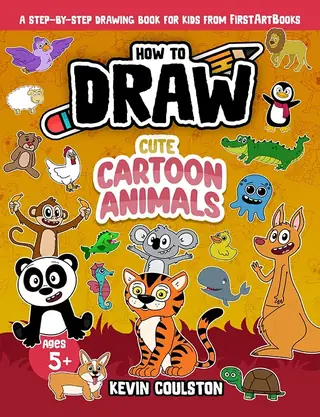 How to Draw: Cute Cartoon Animals
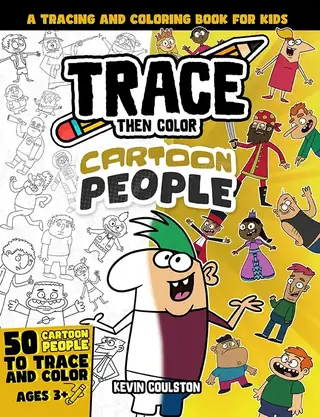 Trace Then Color: Cartoon People
As an Amazon Associate, FirstArtBooks earns from qualifying purchases.
Get free drawing pages by email
Kevin’s newsletter brings new printable drawing and coloring pages and book news. New subscribers also get the free bonus packs: Christmas, animals, dinosaurs, robots, monsters and more, plus the Classroom Drawing Kit.
Questions
Why is drawing good for ELL students?
It lets students show understanding without relying on English, lowers anxiety and builds vocabulary.
What art activities work for English learners?
Visual step-by-step lessons, draw and label, describe and draw, vocabulary cards and story sequencing.
How do you use drawing to teach vocabulary?
Have students draw and label new words, and use shape and position words during directed drawing.