



Grades 3–5
Stress the Word
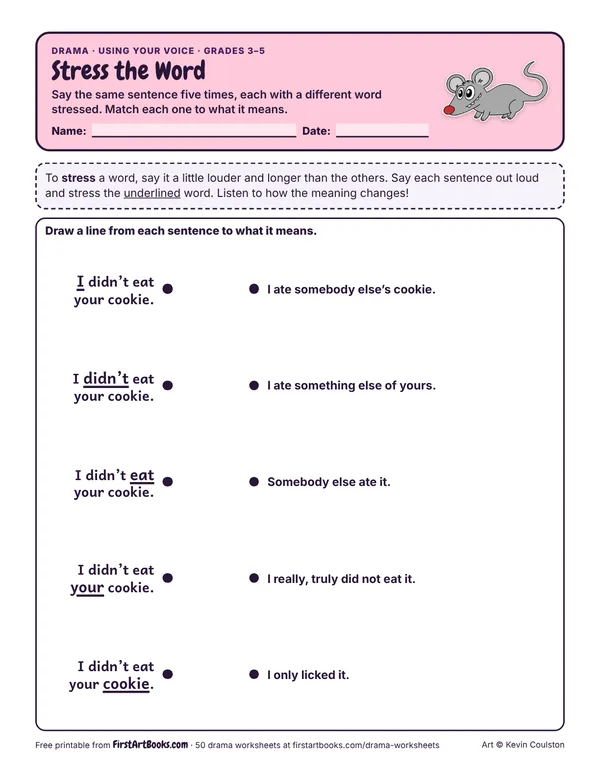
Say the same sentence five times, each with a different word stressed. Match each one to what it means.
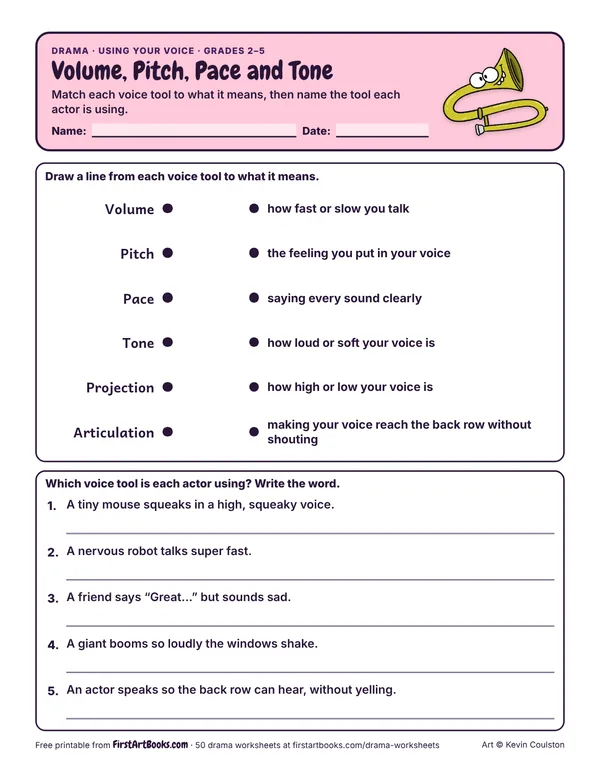
Match each voice tool to what it means, then name the tool each actor is using.
Printed on the sheet:
VolumePitchPaceTone
Say “hello” and change just one tool at a time: louder, higher, faster, sadder. Kids hear each voice tool on its own before they match.
Speeding up on tongue twisters before every sound is clear.
Record kids reading a line two ways and play it back.
US Letter, prints well in black and white. Free for home and classroom use: print as many copies as you need.
Say the same sentence five times, each with a different word stressed. Match each one to what it means.
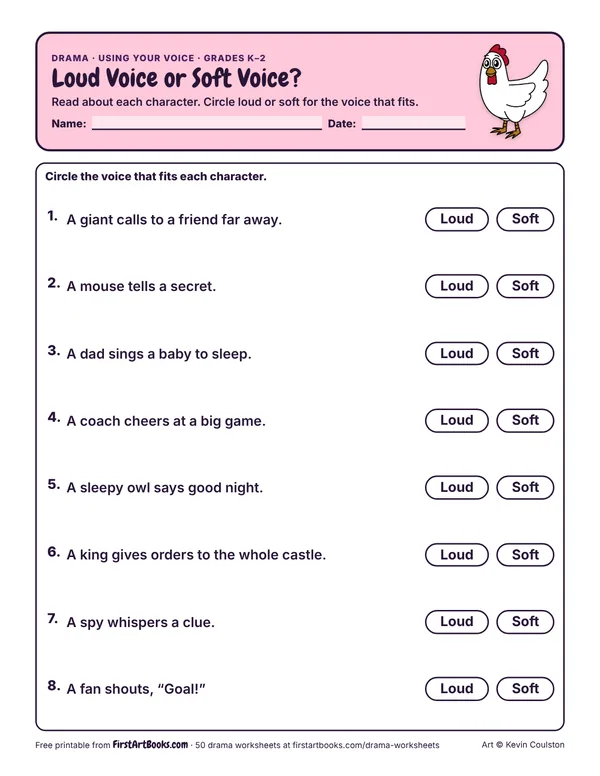
Read about each character. Circle loud or soft for the voice that fits.
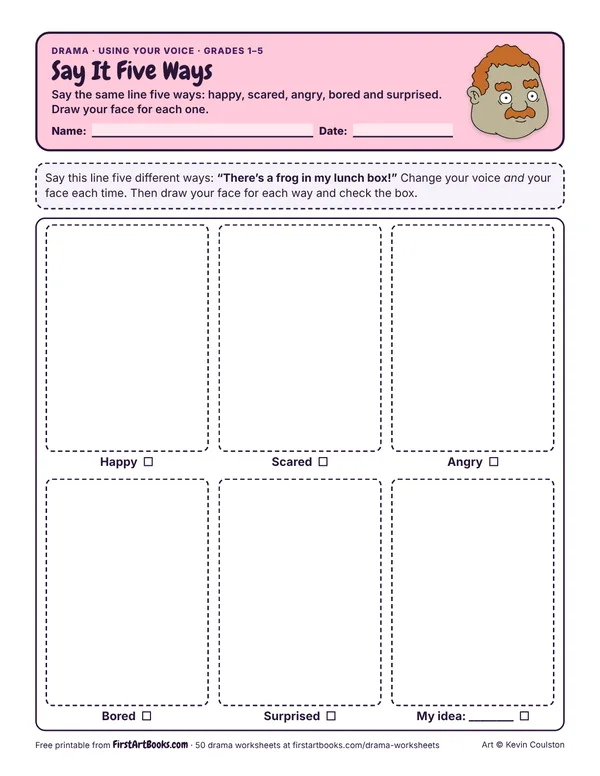
Say the same line five ways: happy, scared, angry, bored and surprised. Draw your face for each one.
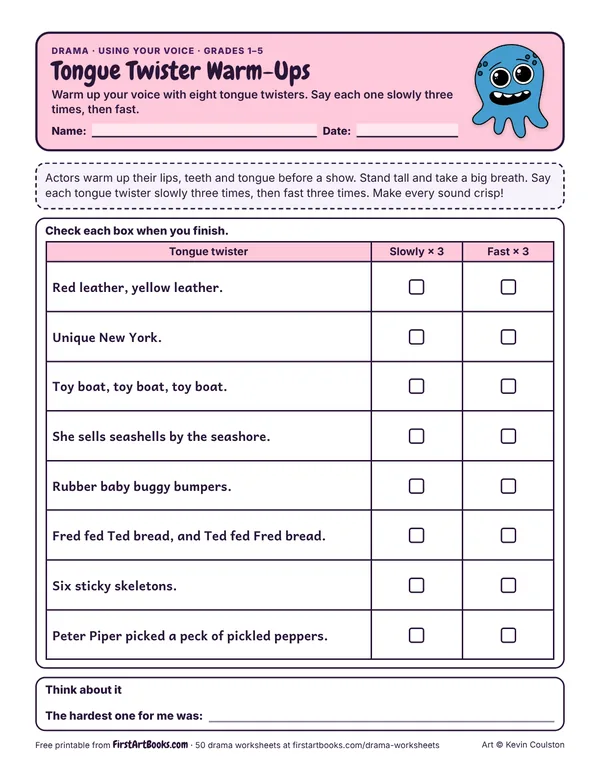
Warm up your voice with eight tongue twisters. Say each one slowly three times, then fast.
12 printable pages: six step-by-step lessons, a grid activity, draw-and-write sheets and teacher notes, sent with your welcome email. After that, new classroom printables by email.