

Grades 3–5
Write About a Chart
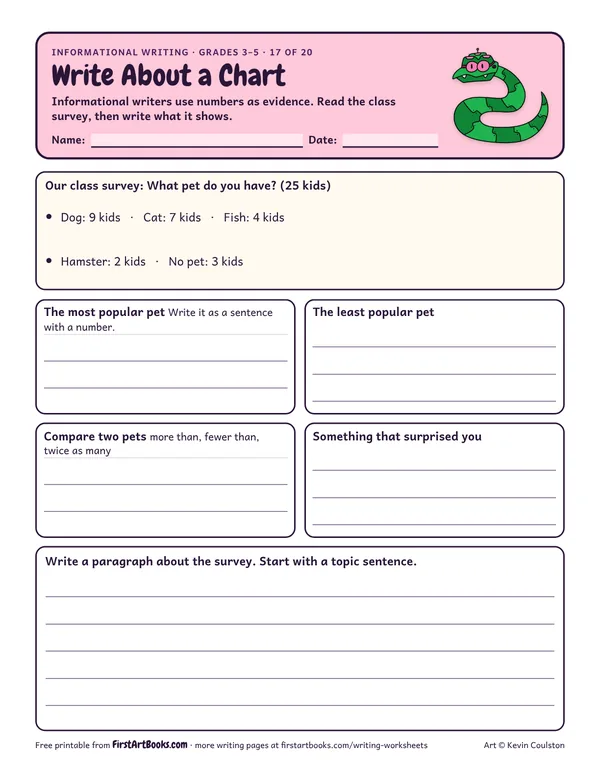
A class pet survey to read and write about: the biggest, the smallest, a comparison and a summary paragraph.
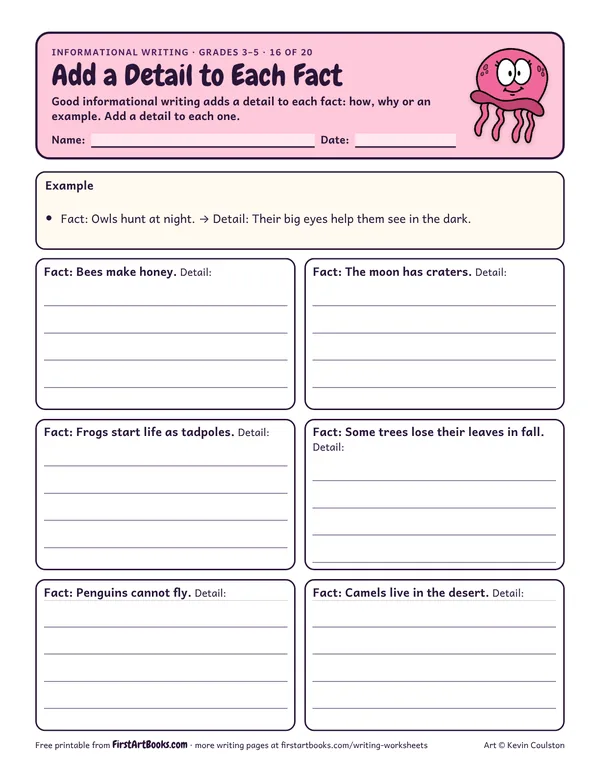
Six true facts, from bees to camels, for kids to stretch with a how, a why or an example.
“Good informational writing adds a detail to each fact: how, why or an example. Add a detail to each one.”
Printed on the sheet:
Model asking how, why or for example about one fact before kids try the rest.
Opinions sneaking into facts. Ask, “Is that a fact you can check?”
Have kids teach their topic to the class in a two-minute talk.
US Letter, prints well in black and white. Free for home and classroom use: print as many copies as you need.
A class pet survey to read and write about: the biggest, the smallest, a comparison and a summary paragraph.
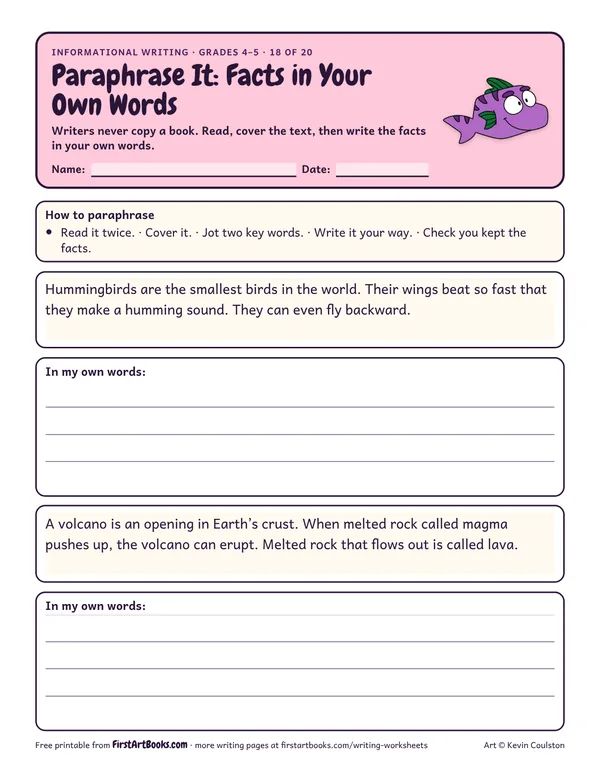
Two short passages, about hummingbirds and volcanoes, to read, cover and paraphrase, with the steps.
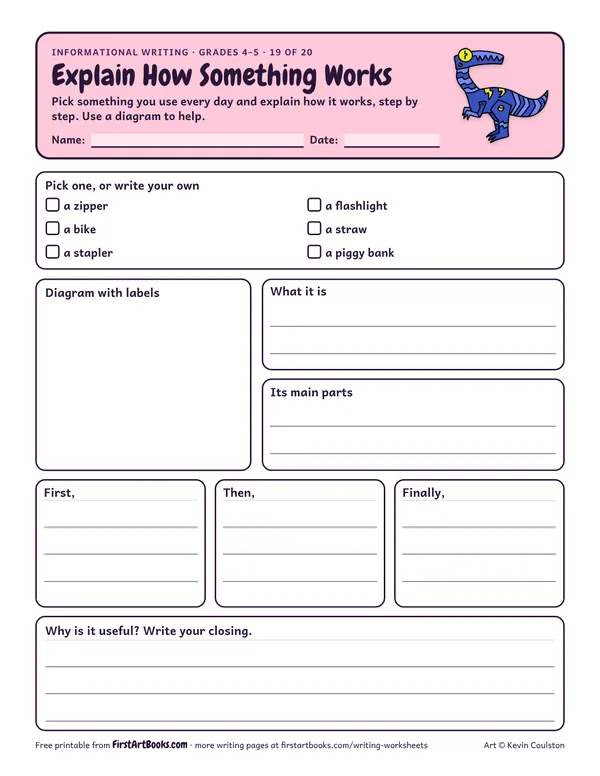
An explanatory planner: what it is, its parts, how it works step by step and why it is useful.
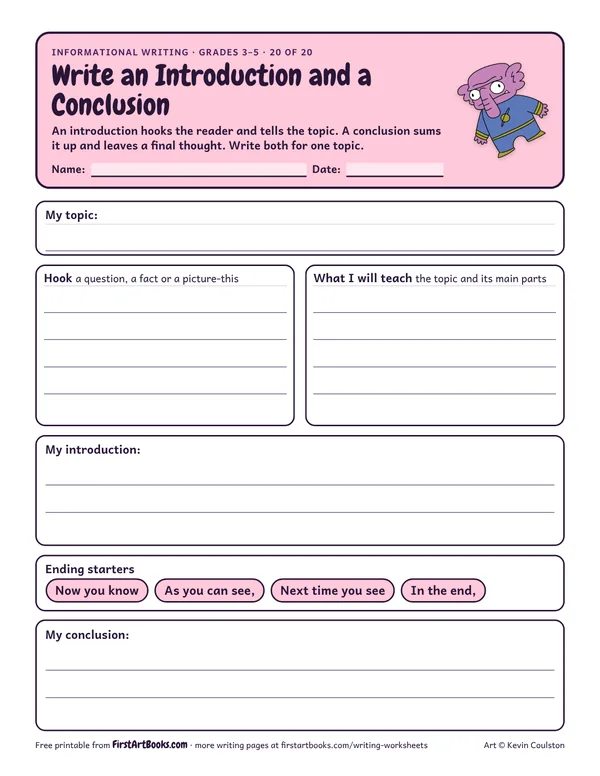
Build the beginning and ending of an informational piece: a hook, the topic, a summary and a final thought.
12 printable pages: six step-by-step lessons, a grid activity, draw-and-write sheets and teacher notes, sent with your welcome email. After that, new classroom printables by email.